Artwork
Landscapes with Figures (one of a pair)
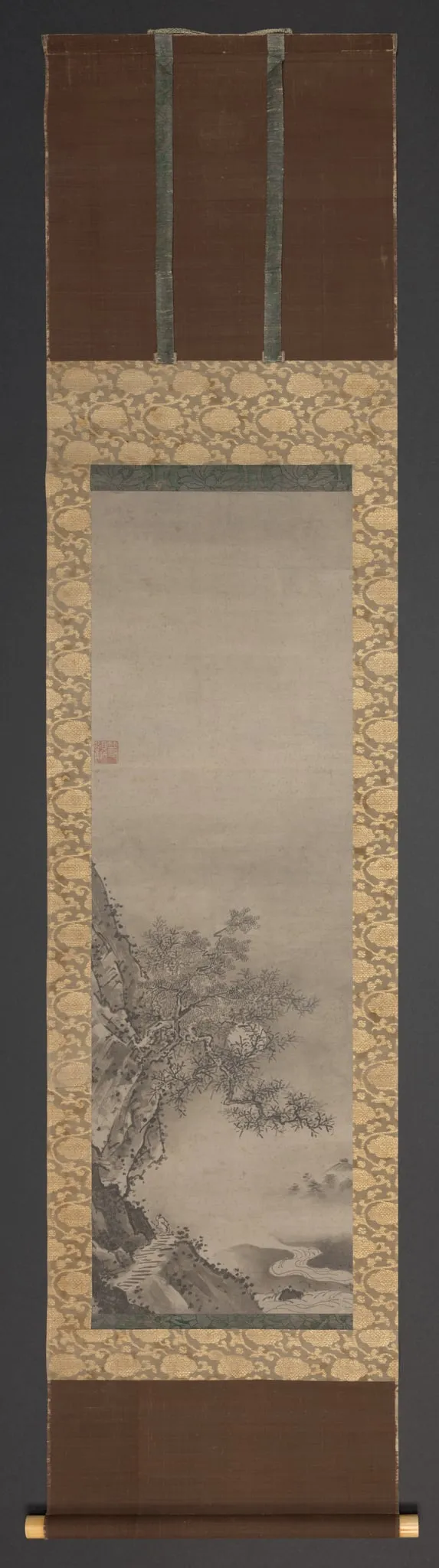
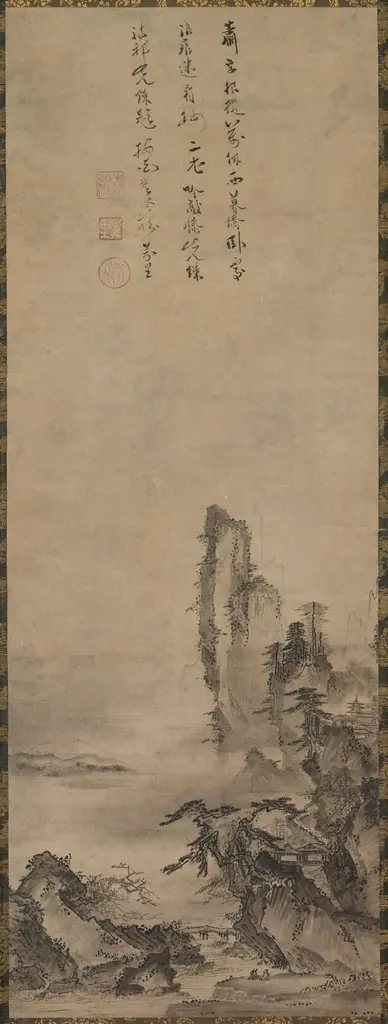
Landscapes with Figures (one of a pair) is an unspecified painting by the Ming dynasty painting artist Shūgetsu Tōkan. It dates from 1500 and is held in the collection of the Cleveland Museum of Art.
About this work
Overview
The scene is enclosed by a gold‑leaf border patterned with stylized flowers, while the upper margin is marked by dark brown bands.
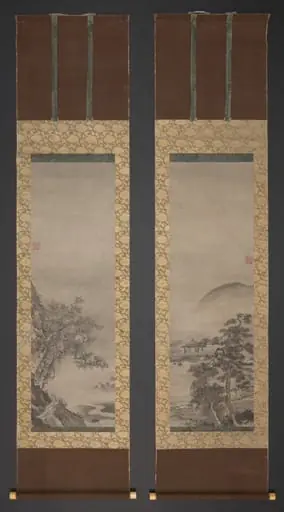
Created around 1500 by the Japanese painter Shūgetsu Tōkan, this vertical composition presents a solitary tree perched on a craggy slope, above a meandering river that winds through undulating hills. The scene is enclosed by a gold‑leaf border patterned with stylized flowers, while the upper margin is marked by dark brown bands. The work is part of a diptych and is currently in the collection of the Cleveland Museum of Art.
Subject & Meaning
The painting emphasizes isolation and tranquility, featuring a lone, twisted tree whose branches reach skyward amid a barren landscape. Below, the river’s gentle curve suggests the passage of time and the continuity of nature. The sparse composition invites contemplation of the relationship between humanity and the natural world, a theme common in Japanese ink landscapes of the era.
Technique & Style
Executed in ink and subtle color on paper, the work employs delicate brushwork characteristic of the Muromachi period’s monochrome tradition. The artist uses varying ink tones to render the tree’s bark and the atmospheric sky, while the gold border and floral motifs provide a decorative counterpoint. The restrained palette and emphasis on negative space create a sense of depth and serenity.
History & Provenance
Shūgetsu Tōkan, active in the early sixteenth century, produced this piece as one half of a paired set, likely intended for display together. The diptych entered the Cleveland Museum of Art’s collection through a 20th‑century acquisition, though earlier ownership records remain limited. Its preservation reflects the museum’s focus on Asian art and the work’s significance within that corpus.
Context
The painting belongs to the Muromachi period (1336–1573), a time when Zen Buddhism heavily influenced Japanese visual culture. Artists of this era favored austere, contemplative landscapes that echoed Zen principles of simplicity and impermanence. Tōkan’s work exemplifies this aesthetic, aligning with contemporary ink‑painting schools that sought to capture the essence of nature rather than its detailed likeness.
Artist & collection

 Untitled
 清 法若真 雲山圖軸|Cloudy Mountains
 明 佚名 琴鶴圖 軸|Playing the zither for a crane
 Lonely Temple and Towering Cliff
 Lonely Temple and Towering Cliff
 Pulling Oars under Clearing Autumn Skies (Distant Mountains)
 Untitled
 明 佚名 朱德潤 怡樂堂圖 卷|Hall of Harmony and Joy
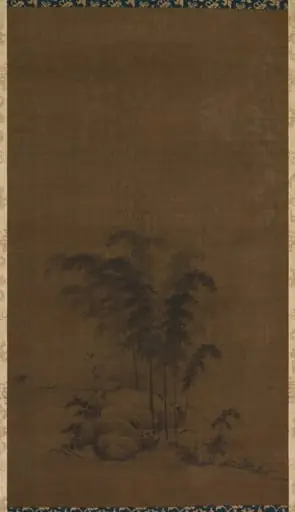 Bamboo Landscape
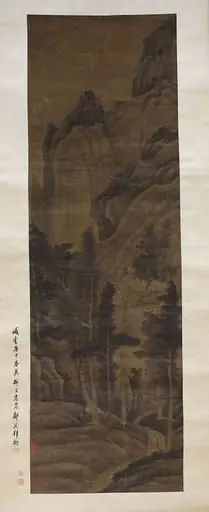 明/清 佚名 董源(僞款) 高樹叠嶂圖 軸|Mountain Landscape
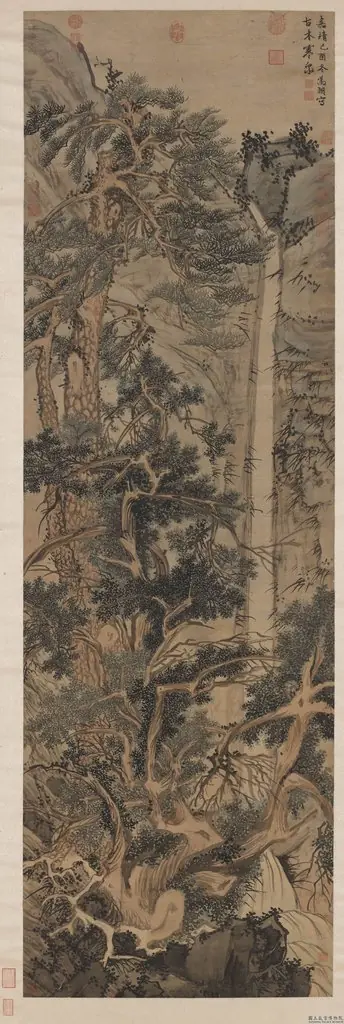 Old Trees by a Cold Waterfall