Artwork
Sketch of Ibaraki-dōji
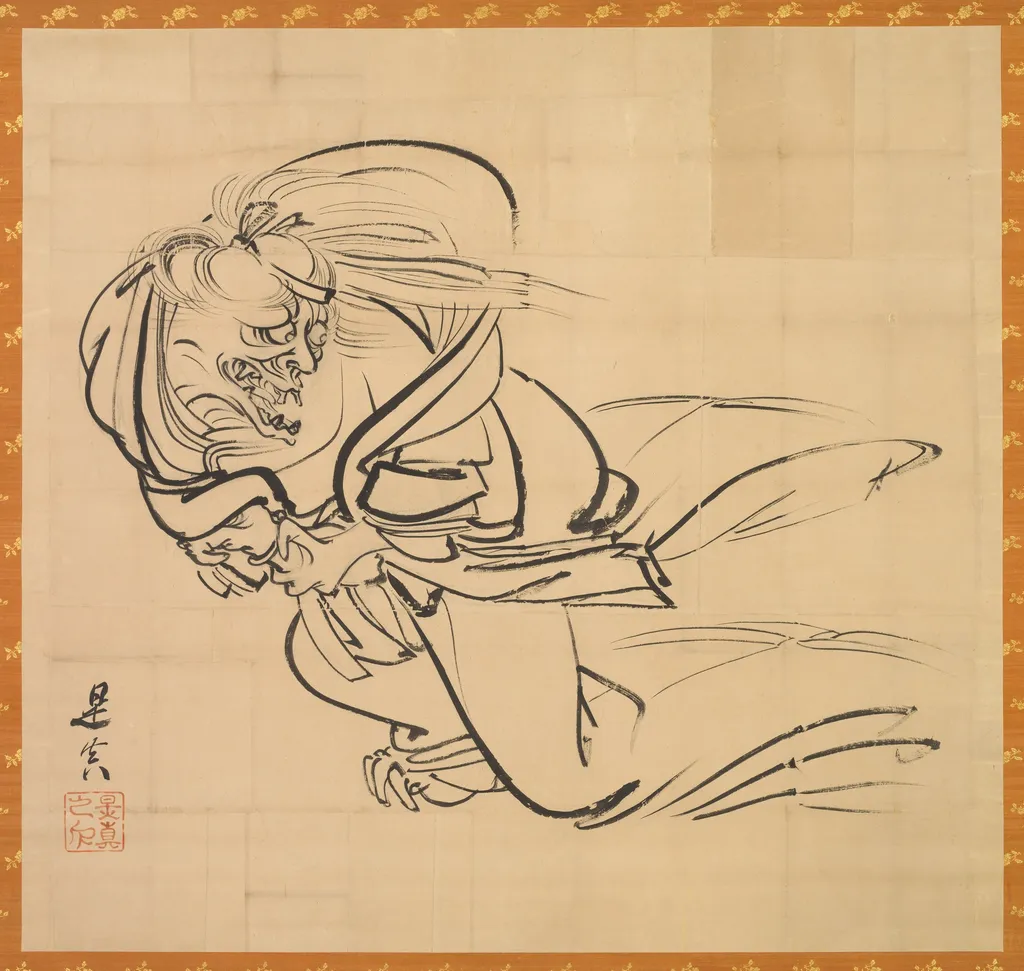
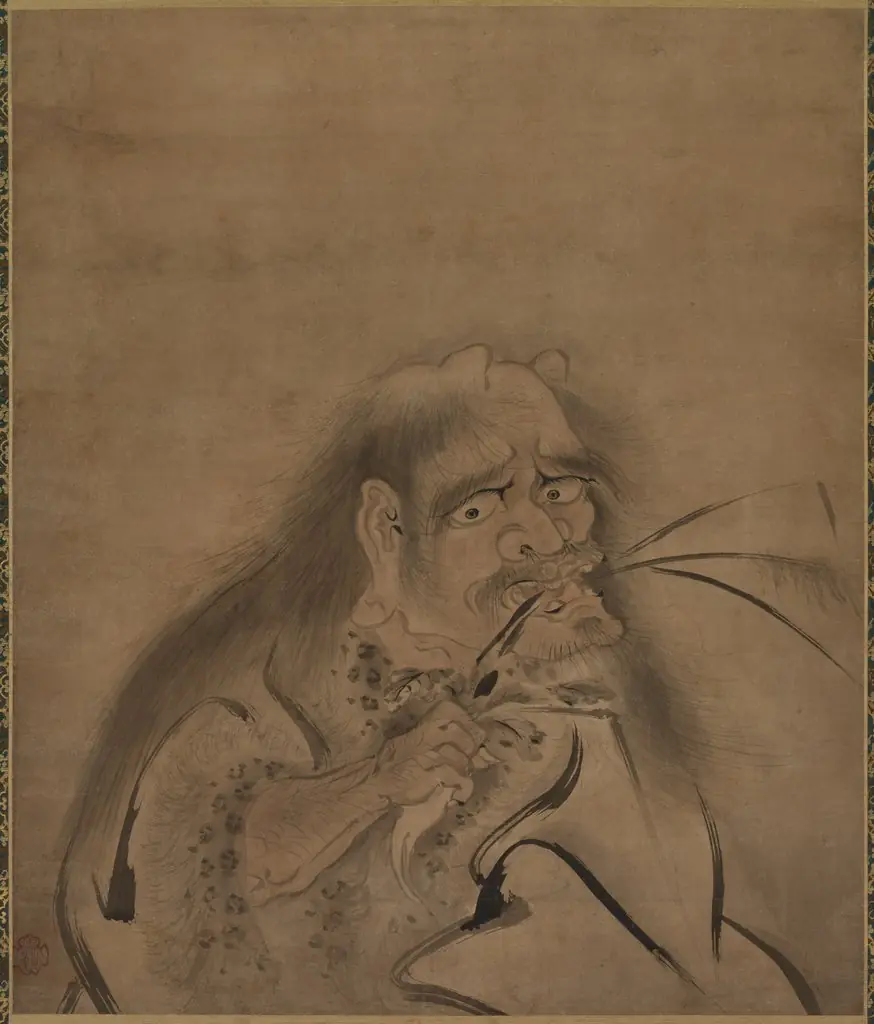
Sketch of Ibaraki-dōji is an unspecified painting by the Ukiyo-e artist Shibata Zeshin. It dates from 1840 and is held in the collection of the Cleveland Museum of Art.
About this work
Overview
Sketch of Ibaraki-dōji is a mid‑nineteenth‑century painting executed in 1840 by the Japanese artist Shibata Zeshin. The work is part of the collection of the Cleveland Museum of Art, where it is displayed as an example of the artist’s dynamic figure studies.
Subject & Meaning
The composition depicts a bearded male figure with long hair, dressed in a flowing robe. He is captured in a twisted pose, arms outstretched, his face contorted in a fierce, open‑mouth expression. The dramatic gesture suggests a moment of intense action or supernatural power, aligning with the legendary demon Ibaraki‑dōji from Japanese folklore.
Technique & Style
The figure’s hair and garment are rendered with fluid strokes that emphasize motion, while a light‑toned background isolates the subject, enhancing contrast.
Zeshin employs bold, sweeping lines and vigorous brushwork to convey movement. The figure’s hair and garment are rendered with fluid strokes that emphasize motion, while a light‑toned background isolates the subject, enhancing contrast. The handling of ink and pigment reflects the artist’s mastery of traditional Japanese painting techniques, particularly the use of expressive line to animate the scene.
History & Provenance
Created in 1840, the painting entered the Cleveland Museum of Art’s collection through acquisition in the twentieth century, though specific details of its earlier ownership remain limited. Its presence in an American museum underscores the broader diffusion of Japanese Edo‑period artworks to Western institutions during the period of increased cultural exchange.
Artist & collection