Artwork
Hanshan and Shide (Kanzan and Jittoku)
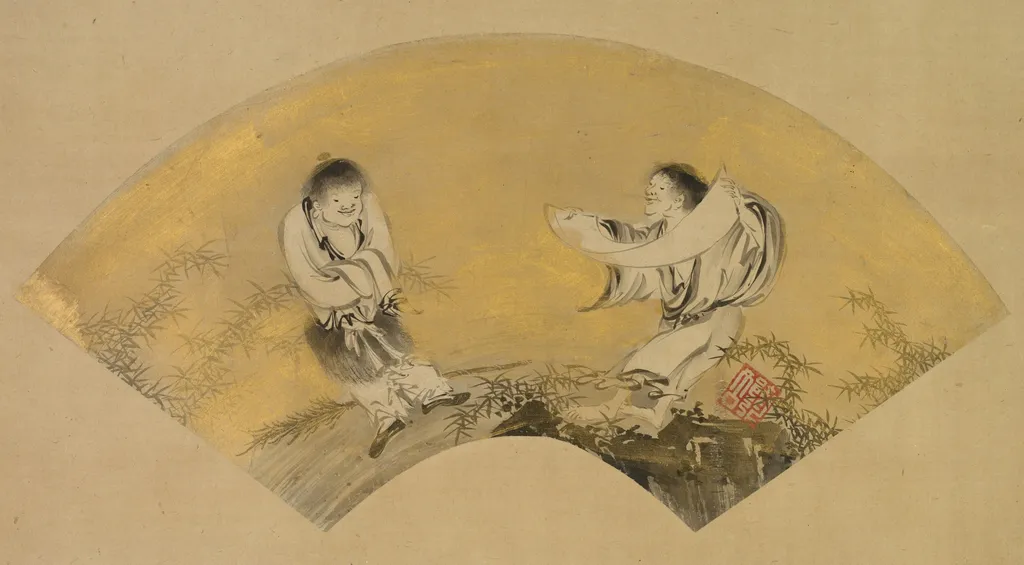
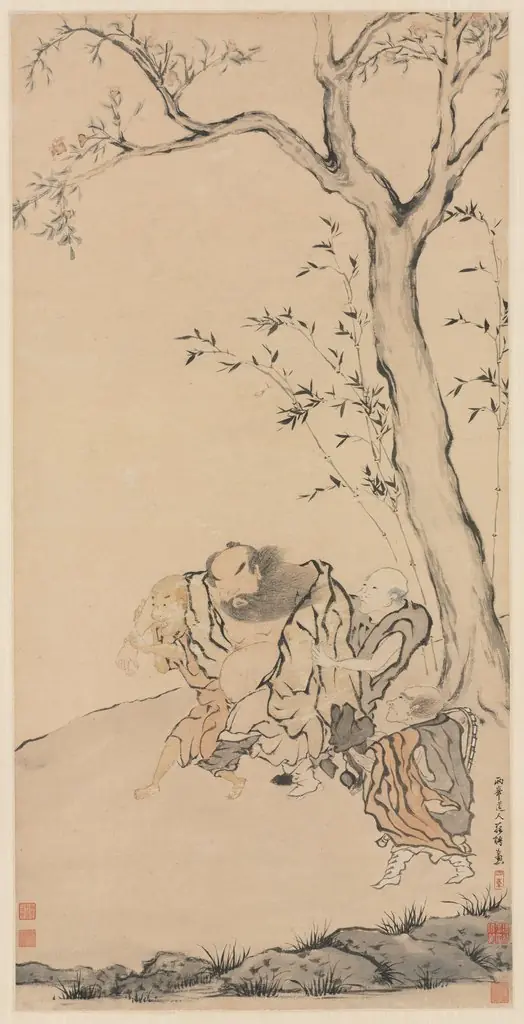
Hanshan and Shide (Kanzan and Jittoku) is an unspecified painting by Shikibu Terutada. It dates from 1550 and is held in the collection of the Cleveland Museum of Art.
About this work
Overview
Shikibu Terutada's painting, *Hanshan and Shide (Kanzan and Jittoku)*, created around 1550, captures two legendary Buddhist figures. This work, now housed at The Cleveland Museum of Art, exemplifies the artist's approach to depicting these eccentric monks. The composition features the pair in a distinctive setting, reflecting their traditional portrayal in East Asian art.
Subject & Meaning
They are frequently depicted together in East Asian art and literature, embodying a form of enlightened eccentricity that challenged monastic conventions.
The painting portrays Hanshan and Shide, two figures revered in Chan (Zen) Buddhism for their unconventional wisdom and playful nature. Their names, meaning "Cold Mountain" and "Stone Deer" respectively, allude to their rustic, often reclusive existence. They are frequently depicted together in East Asian art and literature, embodying a form of enlightened eccentricity that challenged monastic conventions.
Technique & Style
Terutada's style is evident in the depiction of the two monks as round, smiling figures with large eyes and full cheeks, conveying a sense of jovial contentment. They appear to float above a rocky precipice, dressed in simple robes. One figure carries a staff, while the other holds a fan, traditional attributes associated with their characters. Bamboo sprouts from the rocks below, set against a soft yellow background.
Artist & collection