Artwork
H Beard Print Collection
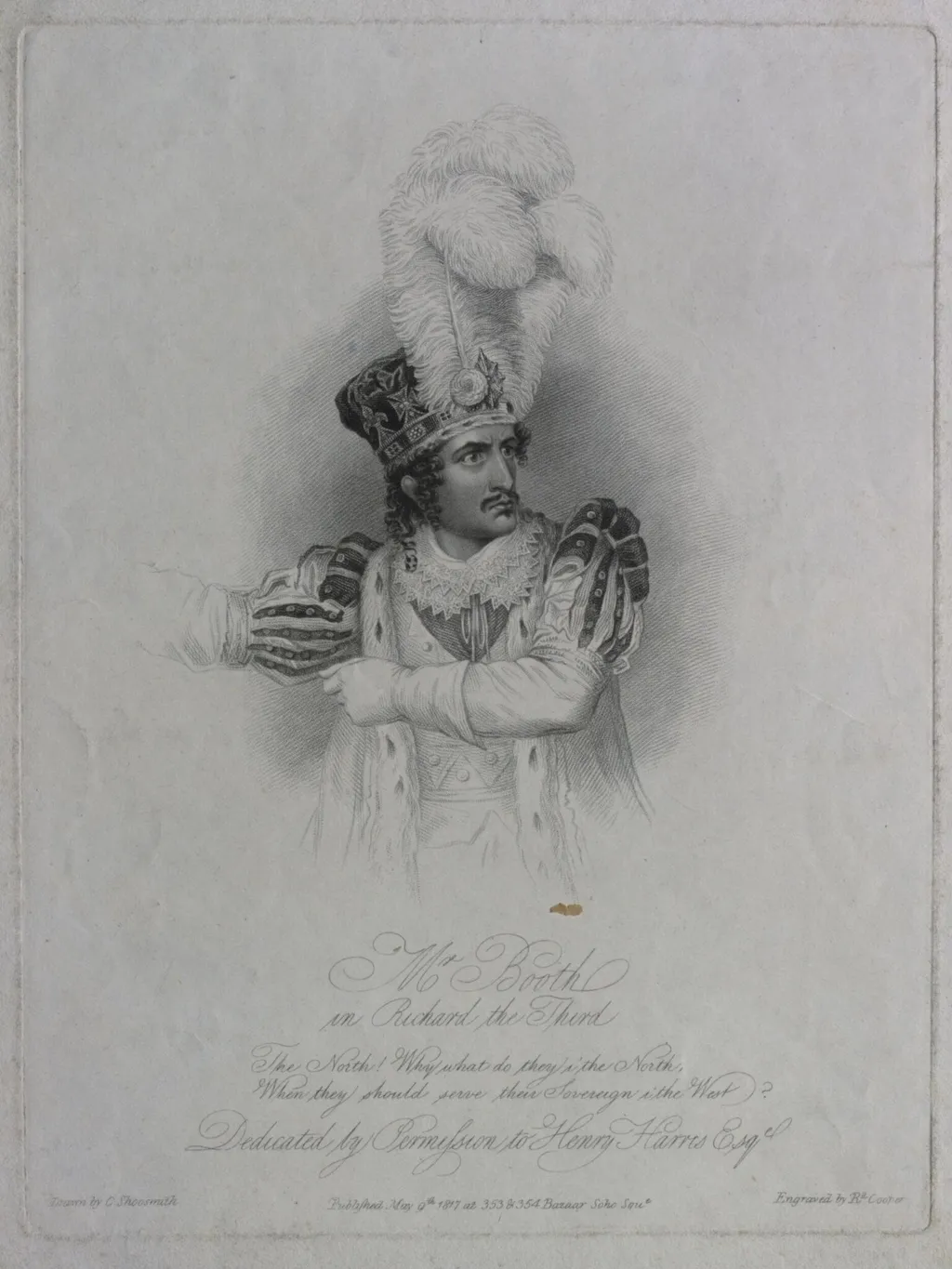
H Beard Print Collection is a print by the Romanticist artist Shoosmith, C.. It dates from 9 and is held in the collection of the Victoria and Albert Museum.
About this work
The H Beard Print Collection is a print created by artist Shoosmith, C. It's a work from the Romanticism movement.
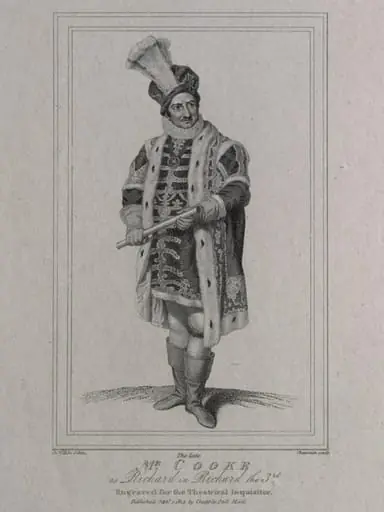
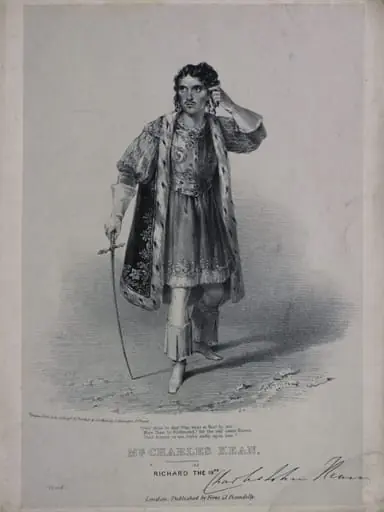
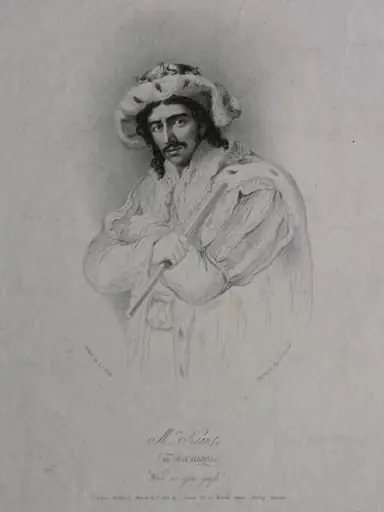
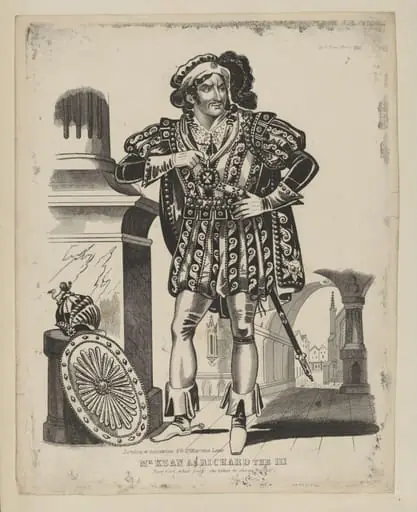
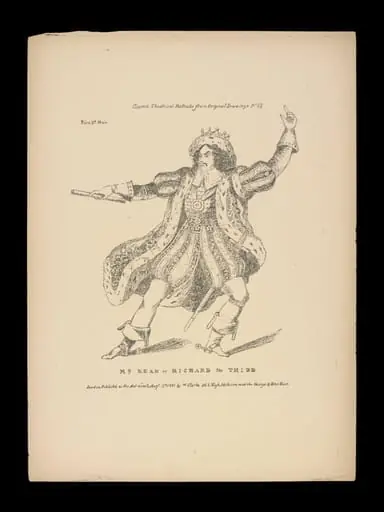
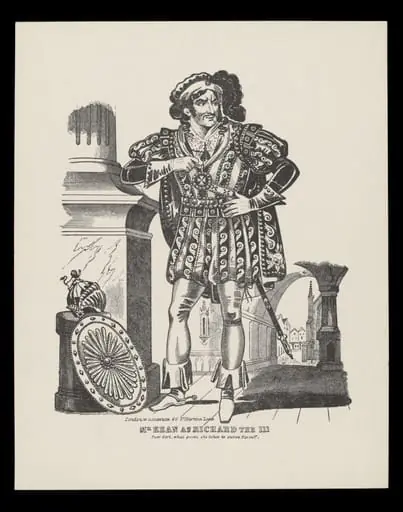
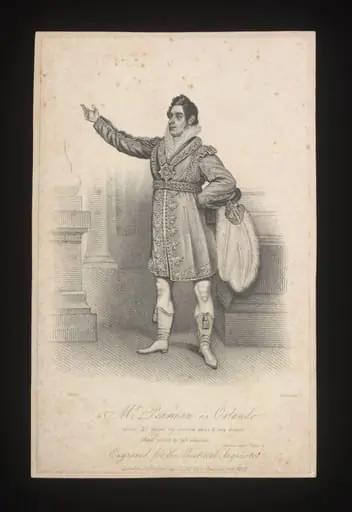
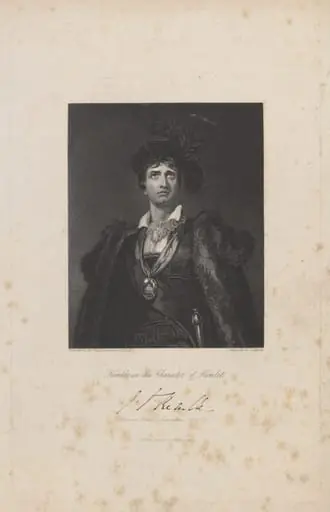
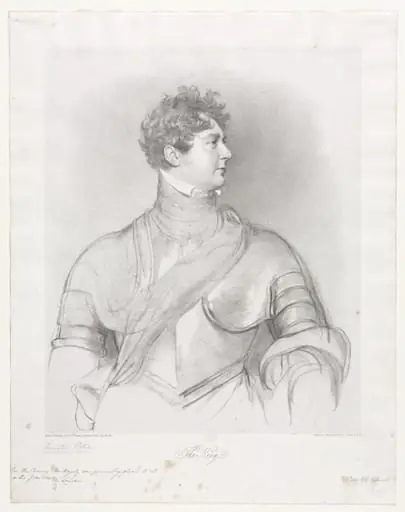
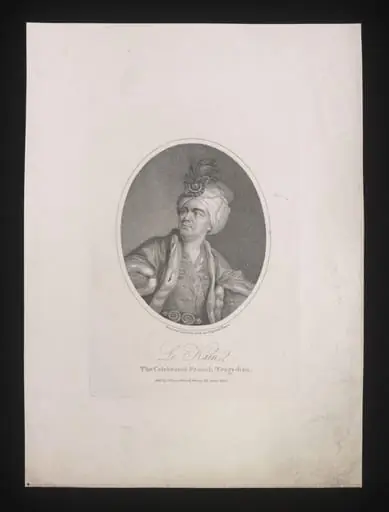
This print depicts Junius Brutus Booth as Richard III. The print was published in 1817 and includes a dedication to Henry Harris Esq.
To learn more about the style and techniques used in this print, look up the technique of sfumato.
Overview
This 1817 print, part of the H Beard Print Collection, portrays the actor Junius Brutus Booth in the role of Richard III. Created by artist C. Shoosmith, it was produced as a commercial theatrical portrait, common in early 19th-century Britain. The image includes a formal dedication to Henry Harris Esq., reflecting the era’s practice of honoring patrons or influential figures in printed works.
Subject & Meaning
The portrayal serves as both a tribute to his performance and a cultural artifact of theatrical celebrity in the early 1800s.
The print captures Junius Brutus Booth, a renowned Shakespearean actor, in the guise of Shakespeare’s villainous king. Rather than emphasizing historical accuracy, it highlights Booth’s dramatic presence on stage, aligning with Romanticism’s focus on intense emotion and individual character. The portrayal serves as both a tribute to his performance and a cultural artifact of theatrical celebrity in the early 1800s.
Technique & Style
Executed in a line-based engraving style typical of theatrical portraiture, the print relies on precise contours and tonal shading rather than the soft blending associated with sfumato. The composition is frontal and static, designed for clarity and reproduction. Details in costume and posture convey character through theatrical convention, not naturalistic depth, distinguishing it from fine art painting of the period.
History & Provenance
The print originates from the H Beard Print Collection, a significant archive of British theatrical imagery. Published in 1817, it was likely distributed to theatergoers and collectors. Its dedication to Henry Harris Esq. suggests a connection to the theatrical or publishing world, possibly as a gift or commission. The work’s survival reflects its role in documenting the era’s performance culture.
Context
In early 19th-century Britain, prints of famous actors in iconic roles were widely circulated, serving as both memorabilia and cultural commentary. Junius Brutus Booth’s portrayal of Richard III was celebrated for its psychological intensity, aligning with Romantic ideals. Such prints helped bridge the gap between live theater and public imagination, making stage performances accessible beyond the auditorium.
Legacy
This print remains a valuable record of early Victorian theatrical life and the rise of actor celebrity. It contributes to the historical understanding of how Shakespearean roles were visually interpreted and disseminated. Though not an artistic innovation, its preservation in collections like H Beard’s ensures its role in documenting the social and cultural dimensions of 19th-century performance.
Artist & collection
Artist
This 19th-century printmaker carved scenes straight onto woodblocks. *H Beard Print Collection (9th May 1817)* shows a busy London street in crisp black-ink lines, carpenters’ tools scattered on a workbench, and a cat…