Artwork
Interior de măcelărie
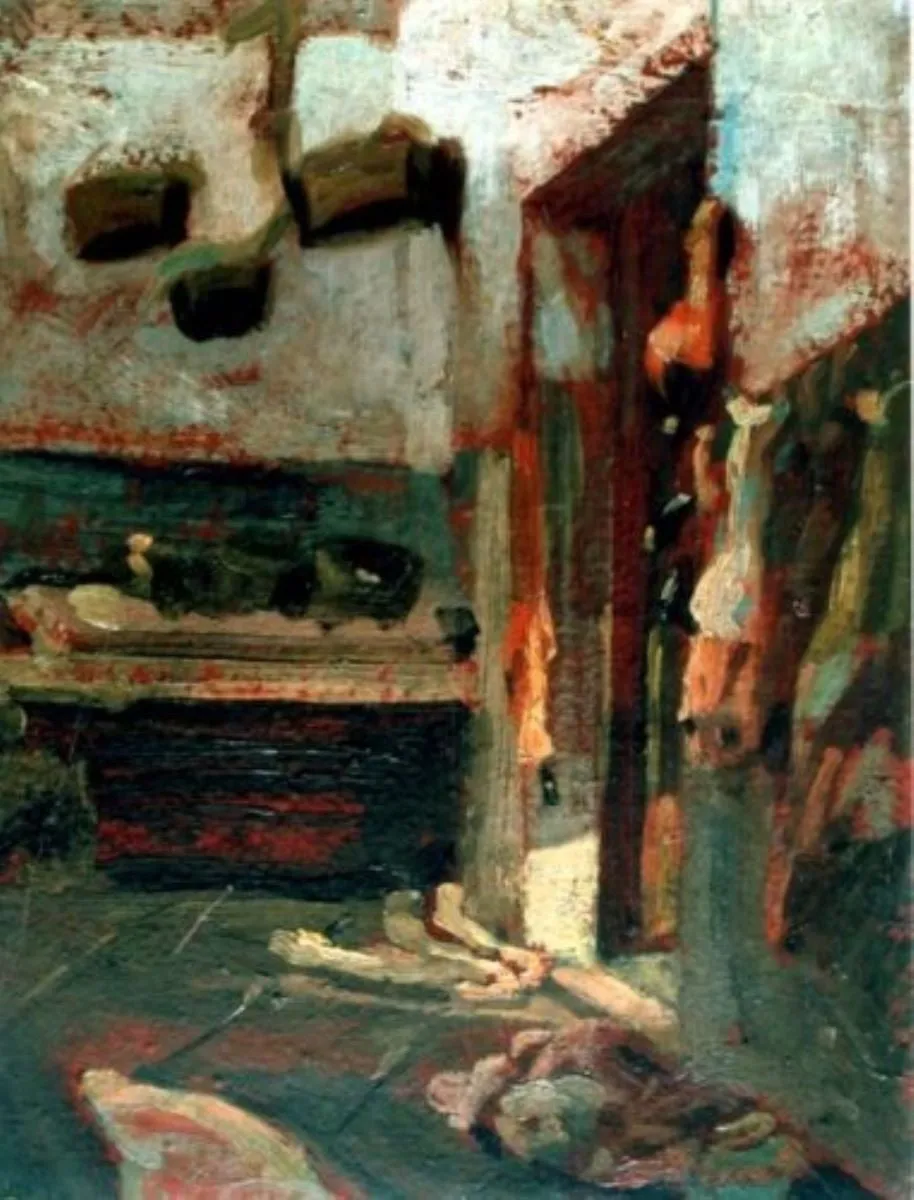
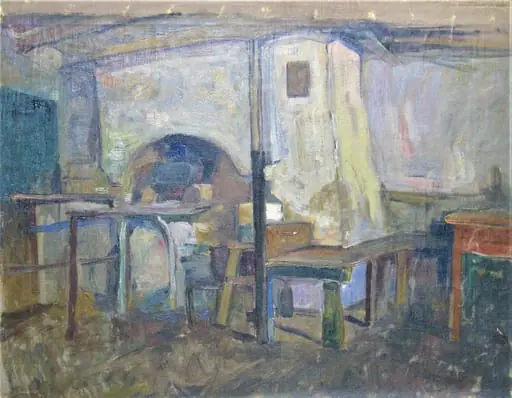
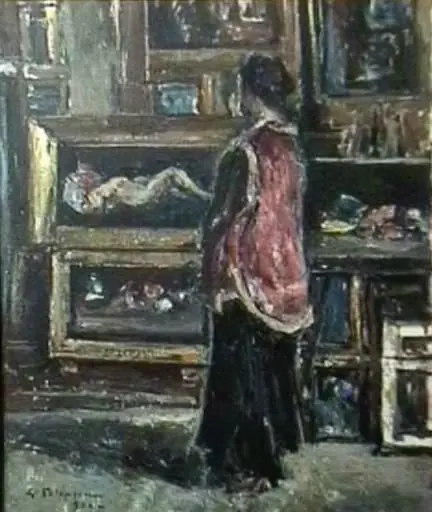
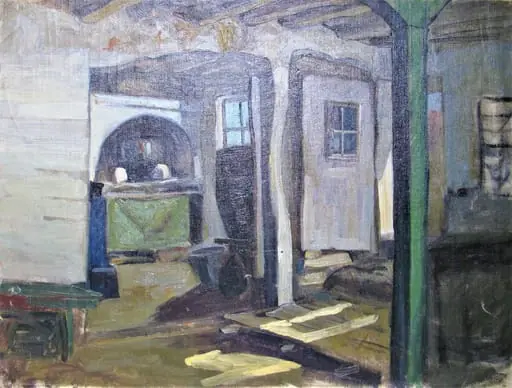
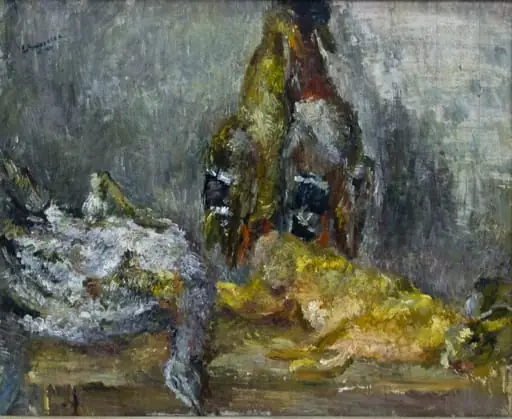
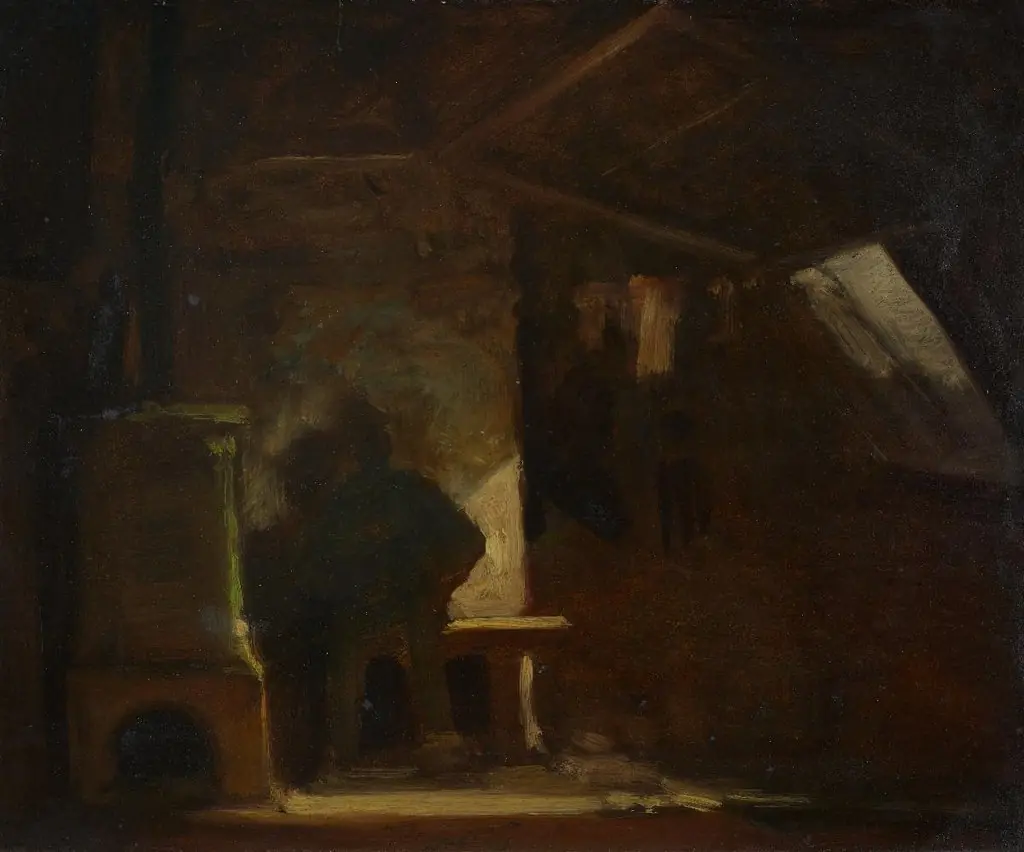
Interior de măcelărie is an unspecified painting by Walter Richard Sicker. It dates from 1949 and is held in the collection of the Romanian Academy in Bucharest.
About this work
Overview
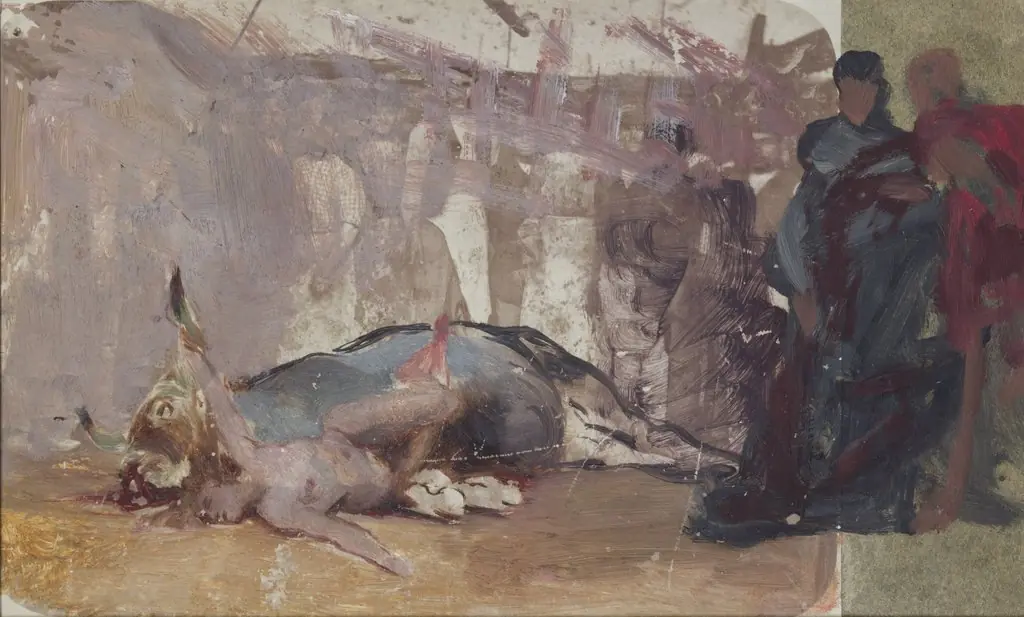
Interior de măcelărie, painted around 1949 by Walter Richard Sicker, is a small-scale work depicting an interior space with an unsettling stillness.
Interior de măcelărie, painted around 1949 by Walter Richard Sicker, is a small-scale work depicting an interior space with an unsettling stillness. It resides in the collection of the Museum of Ethnography. The scene lacks human figures but conveys a sense of recent activity, as if the room had been abandoned moments before. The painting’s raw execution and muted palette contribute to an atmosphere of quiet decay.
Subject & Meaning
The room appears to have been a butcher’s workspace, suggested by the scattered debris and the presence of a birdcage—perhaps a remnant of live poultry awaiting processing. The crooked doorframe and uneven floor littered with organic matter imply neglect. The cage, empty yet intact, introduces a subtle tension between confinement and absence, hinting at themes of transience and the remnants of labor.
Technique & Style
Sicker applied paint thickly and irregularly, using impasto to build texture across walls and surfaces. Brushstrokes are visible and unrefined, avoiding smooth blending or idealized form. The technique mirrors the physical roughness of the depicted space, reinforcing its unvarnished reality. Light enters through a narrow gap in the doorframe, casting a single strip of illumination that heightens the sense of isolation within the clutter.
History & Provenance
The painting entered the Museum of Ethnography’s collection in the late 1950s, acquired directly from the artist’s estate. Its origin as a personal studio piece, rather than a commissioned work, suggests it was not intended for public display. No exhibition records exist prior to its institutional acquisition, and its title, likely assigned later, reflects its subject rather than any known historical context.
Context
Created in the postwar period, the work aligns with a broader European tendency toward unidealized realism, influenced by existential concerns and the persistence of everyday hardship. Sicker, though not widely known, was part of a generation of artists who turned inward, documenting overlooked domestic spaces with emotional honesty rather than narrative clarity. The painting resists symbolic interpretation, favoring sensory presence over explicit meaning.
Legacy
Interior de măcelărie remains a quiet example of mid-century Romanian modernism, valued for its unembellished observation. It has not been widely reproduced or studied, but its presence in the Museum of Ethnography underscores its role as a document of ordinary, transient spaces. The work continues to invite contemplation through its restraint, offering no resolution—only the weight of an abandoned room.
Artist & collection
Artist
Walter Richard Sicker painted scenes of everyday life in plain, direct brushwork.