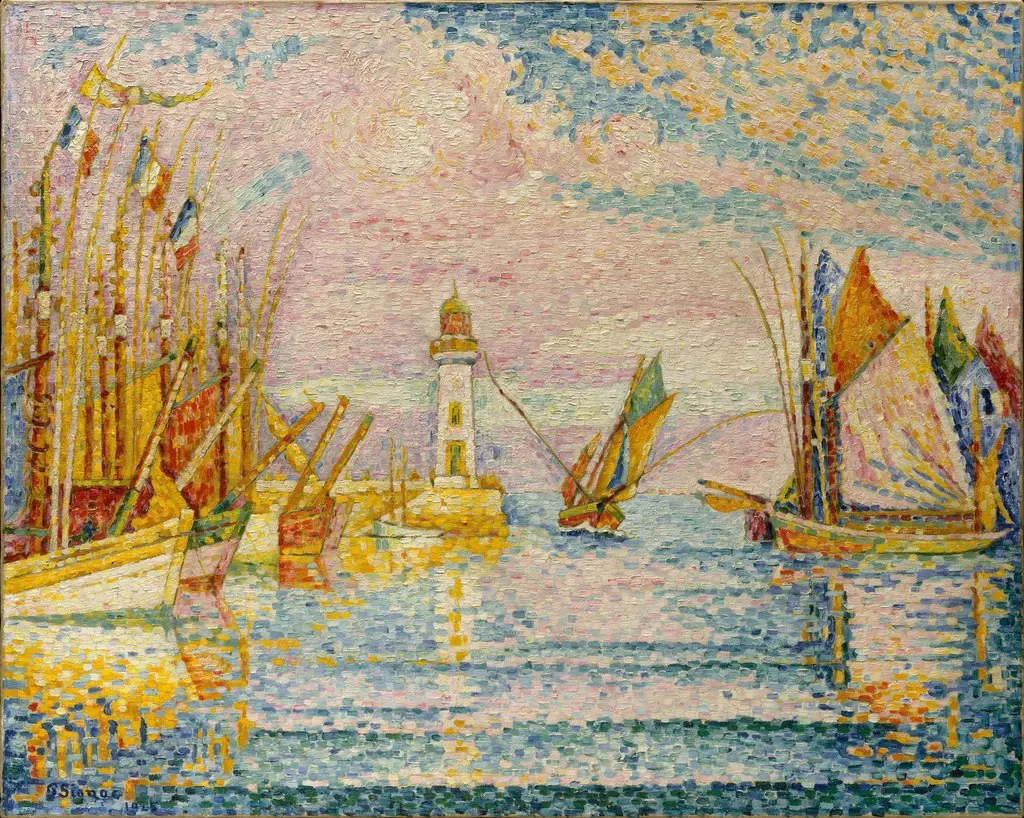
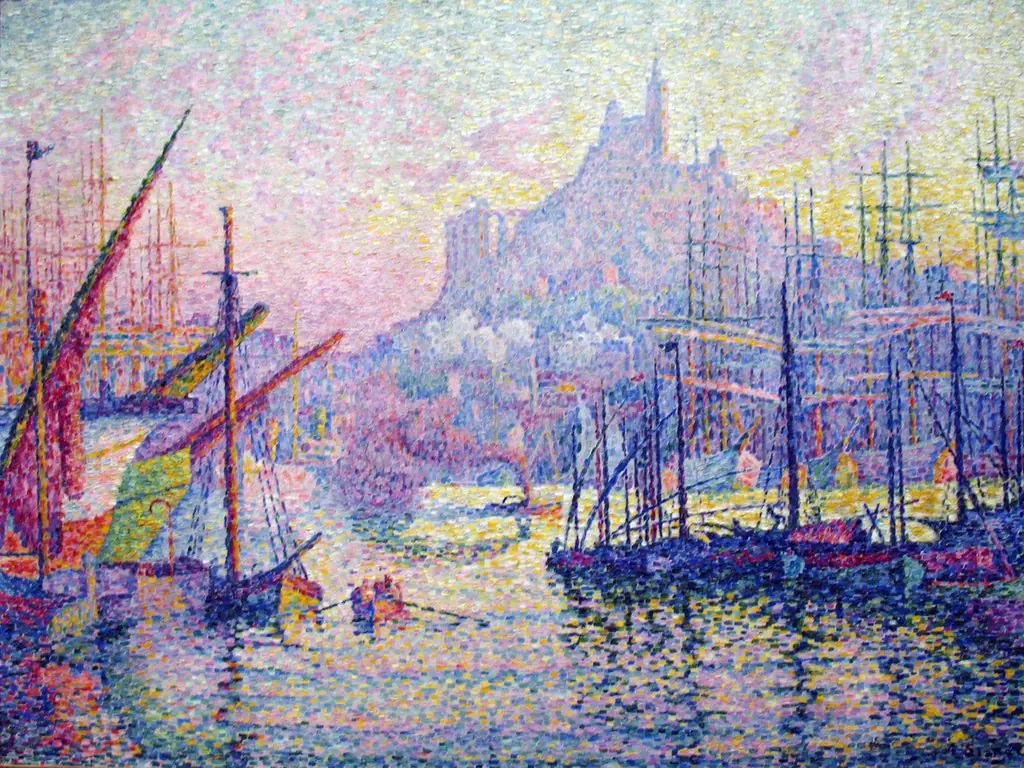
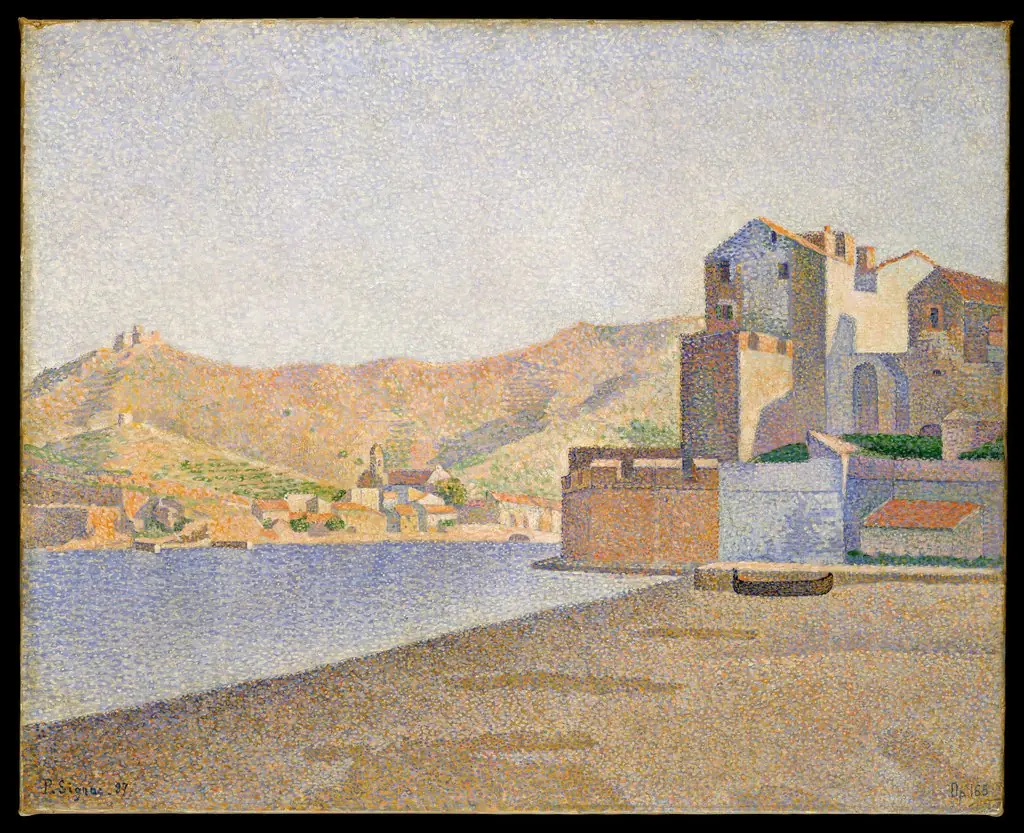
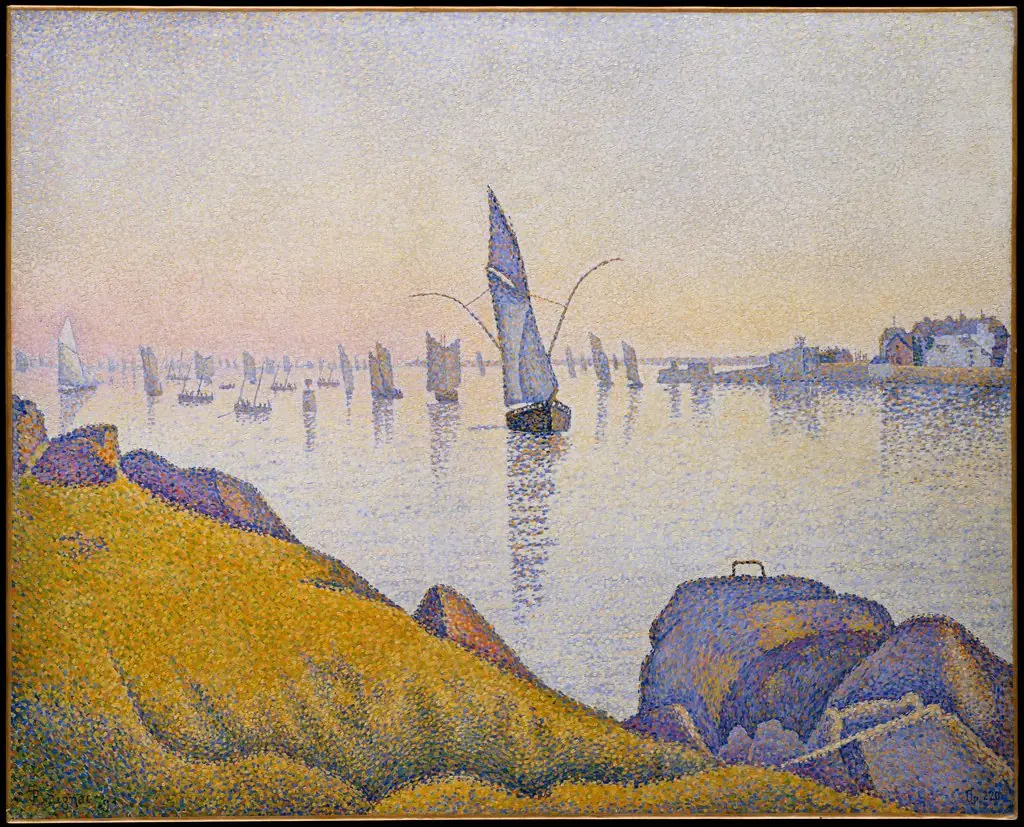
Artwork
The Calanque at Saint Tropez
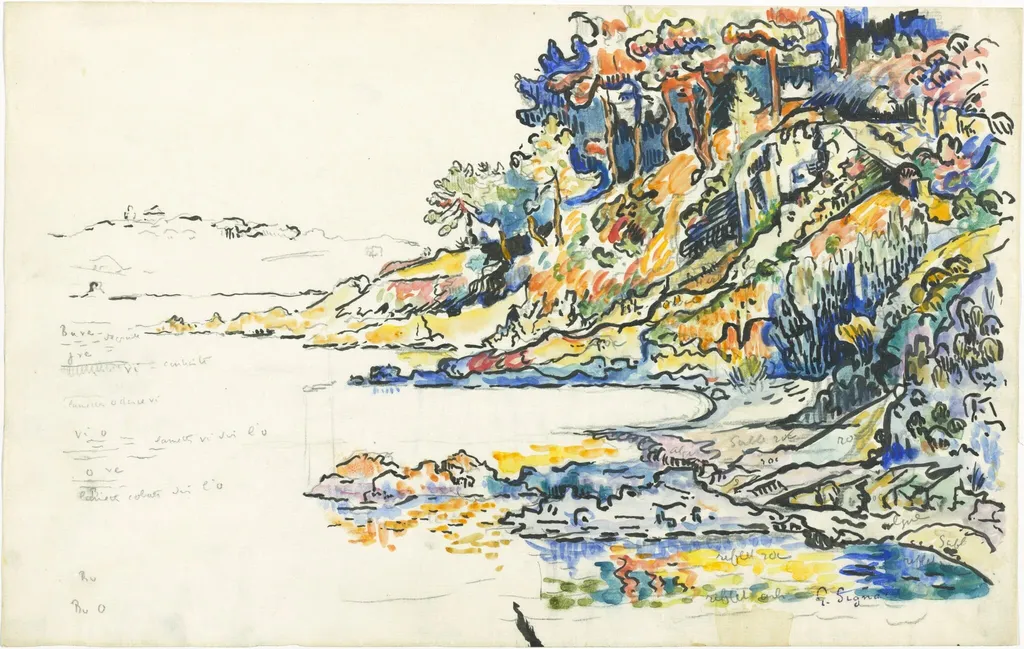
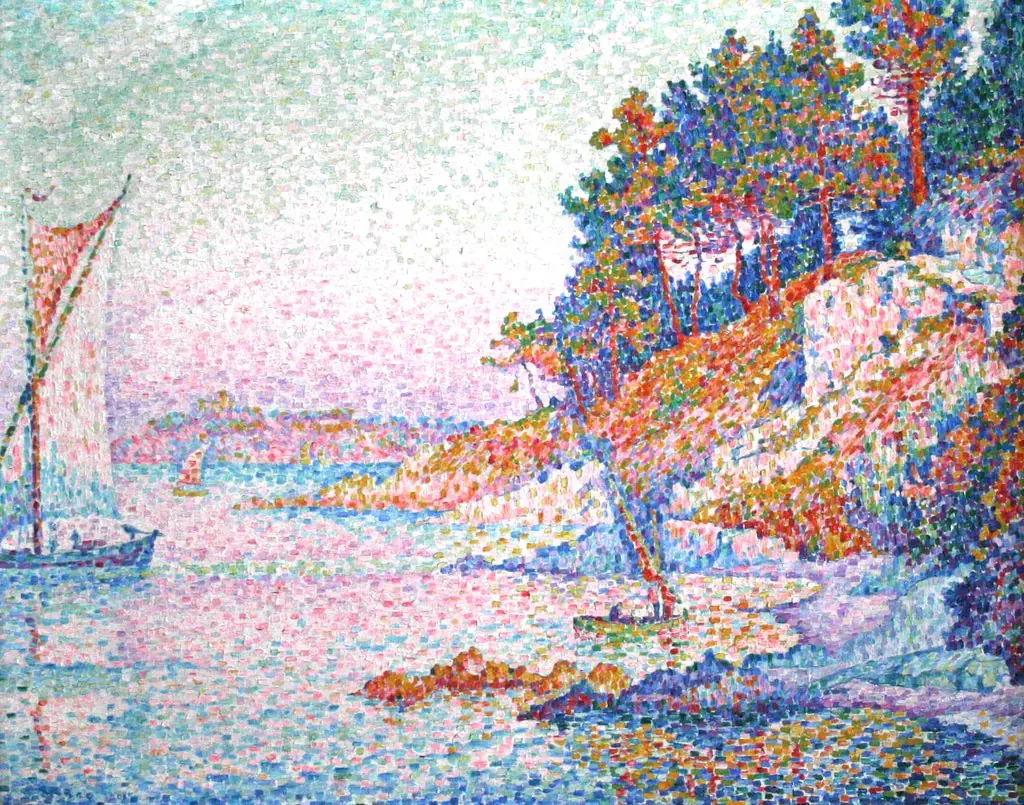
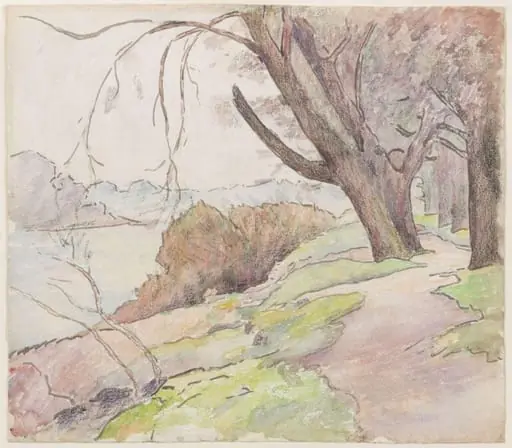
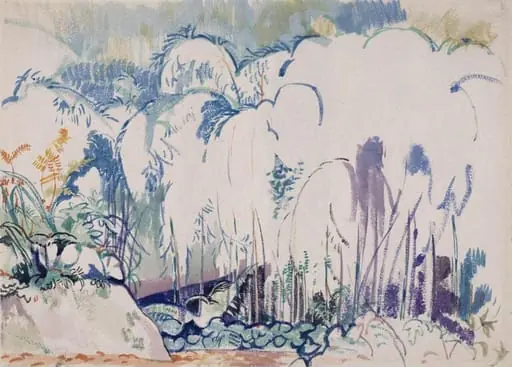
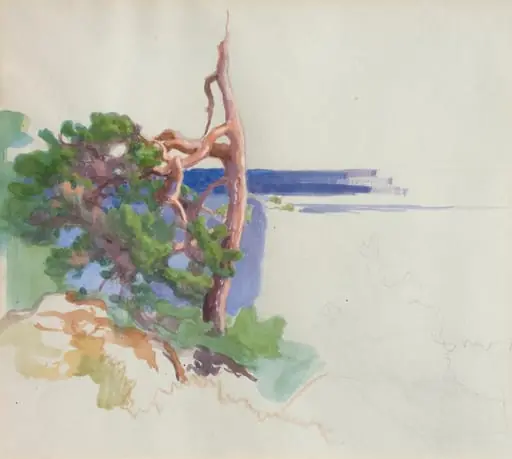
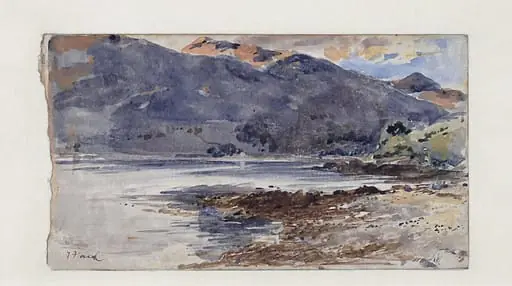
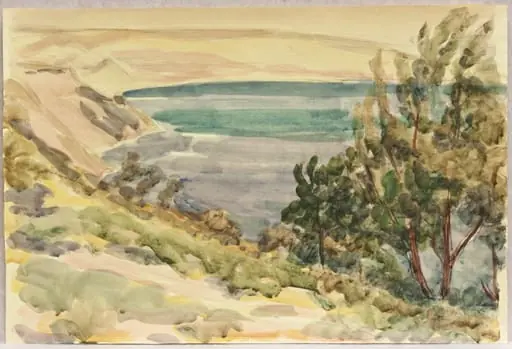
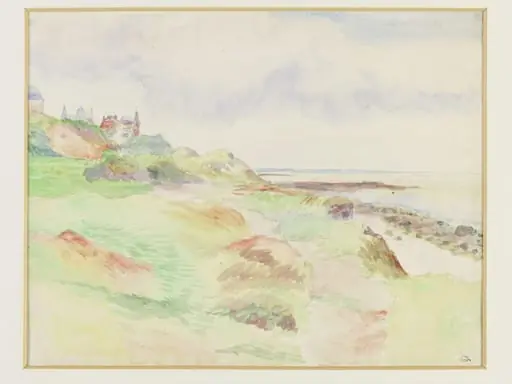
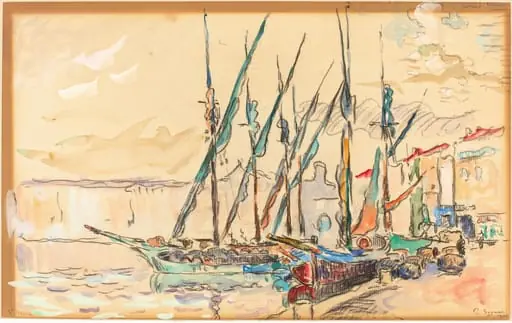
The Calanque at Saint Tropez is a graphite drawing by Paul Signac. It dates from 1906 and is held in the collection of the National Gallery of Art.
About this work
Overview
Executed on laid paper, the work belongs to a series of landscape studies the artist produced during his summers along the French Riviera.
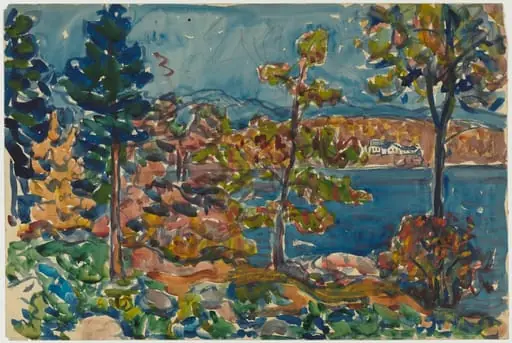
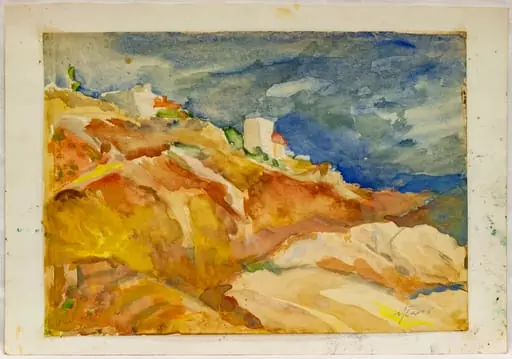
Created in 1906, this watercolor and graphite drawing by Paul Signac captures a coastal inlet near Saint-Tropez. Executed on laid paper, the work belongs to a series of landscape studies the artist produced during his summers along the French Riviera. Unlike his earlier pointillist canvases, this piece embraces a looser, more spontaneous approach, emphasizing the transient effects of light and atmosphere through fluid washes and delicate graphite lines.
Subject & Meaning
The scene portrays a secluded calanque—a narrow, rocky cove—framed by steep cliffs and sparse vegetation. The stillness of the water and the quiet contours of the land suggest a contemplative engagement with nature. Signac’s focus on this unpopulated stretch of coastline reflects his preference for untouched marine environments, where natural forms and light interact without human intrusion, conveying a sense of serene isolation.
Technique & Style
Signac employs watercolor in layered washes to suggest the translucency of sea and sky, while graphite defines the sharp edges of rock formations and the subtle texture of scrubland. His brushwork is deliberate yet fluid, avoiding the rigid dots of Pointillism in favor of expressive strokes that convey volume and movement. The laid paper’s texture enhances the tactile quality of the medium, allowing pigment to settle unevenly and deepen the sense of natural spontaneity.
History & Provenance
This drawing was made during one of Signac’s extended stays in Saint-Tropez, where he rented a house and painted extensively between 1903 and 1910. It likely served as a preparatory study or independent work for his larger oil paintings of the region. The piece remained in the artist’s possession until his death in 1935, after which it entered a private collection before being acquired by its current institution.
Context
In the early 20th century, Signac increasingly turned from urban and harbor scenes to the unspoiled coasts of Provence and the Côte d’Azur. His watercolors from this period reflect a broader shift among artists toward direct observation and personal expression, moving away from the scientific rigor of Neo-Impressionism. These works align with emerging trends in plein air painting and the growing appreciation for Mediterranean light in French art.
Legacy
Signac’s watercolors of the French Riviera influenced later generations of modernists who valued direct engagement with nature over studio-based composition. Though less celebrated than his pointillist oils, these drawings reveal a quieter, more intimate side of his practice. Their emphasis on atmospheric effect and material sensitivity helped bridge the gap between Impressionism and the abstract tendencies of 20th-century landscape art.
Artist & collection

Artist
Paul Victor Jules Signac ( seen-YAHK, French: ; 11 November 1863 – 15 August 1935) was a French Neo-Impressionist painter who, with Georges Seurat, helped develop the artistic technique Pointillism.