Artwork
Talvimaisema
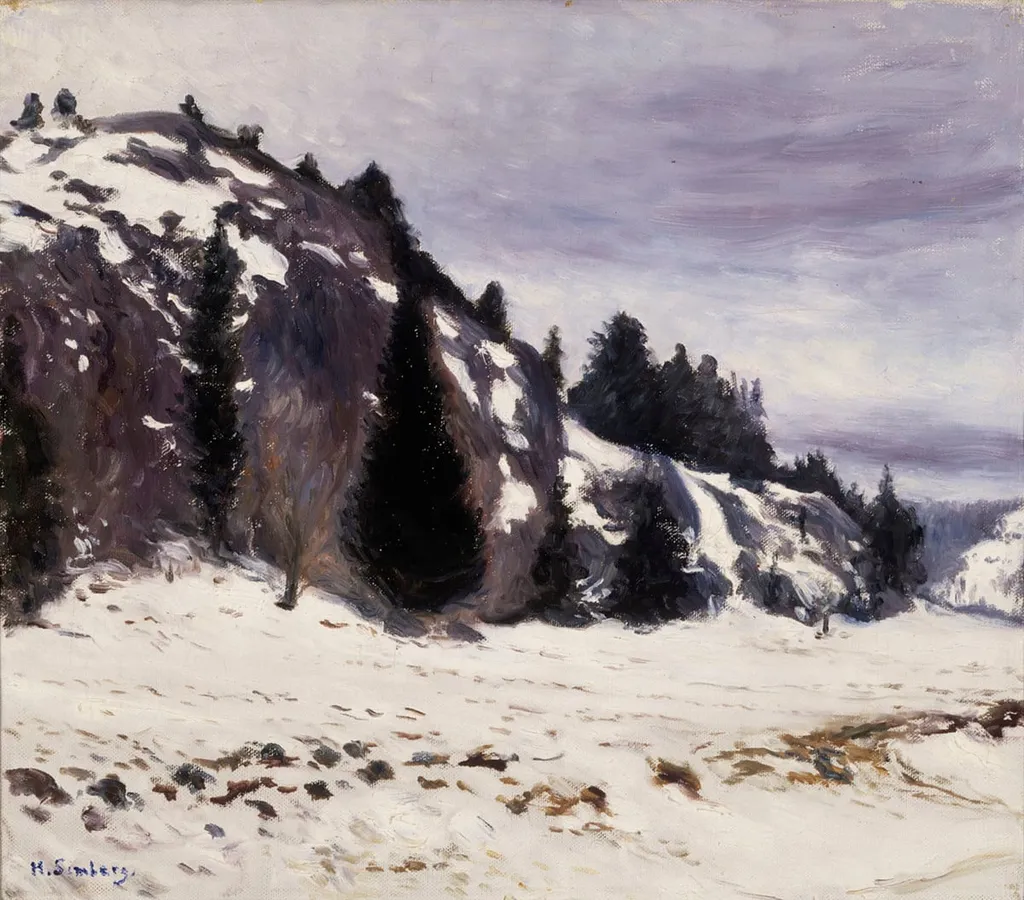
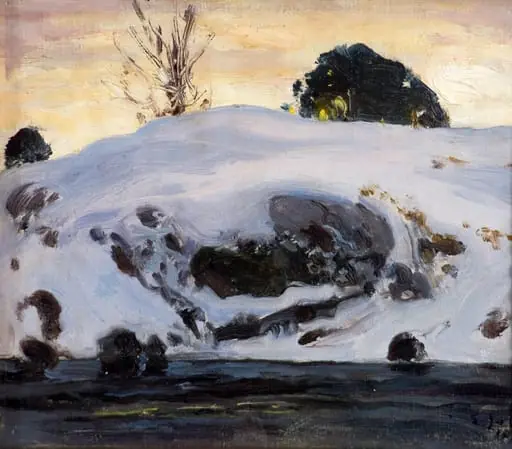
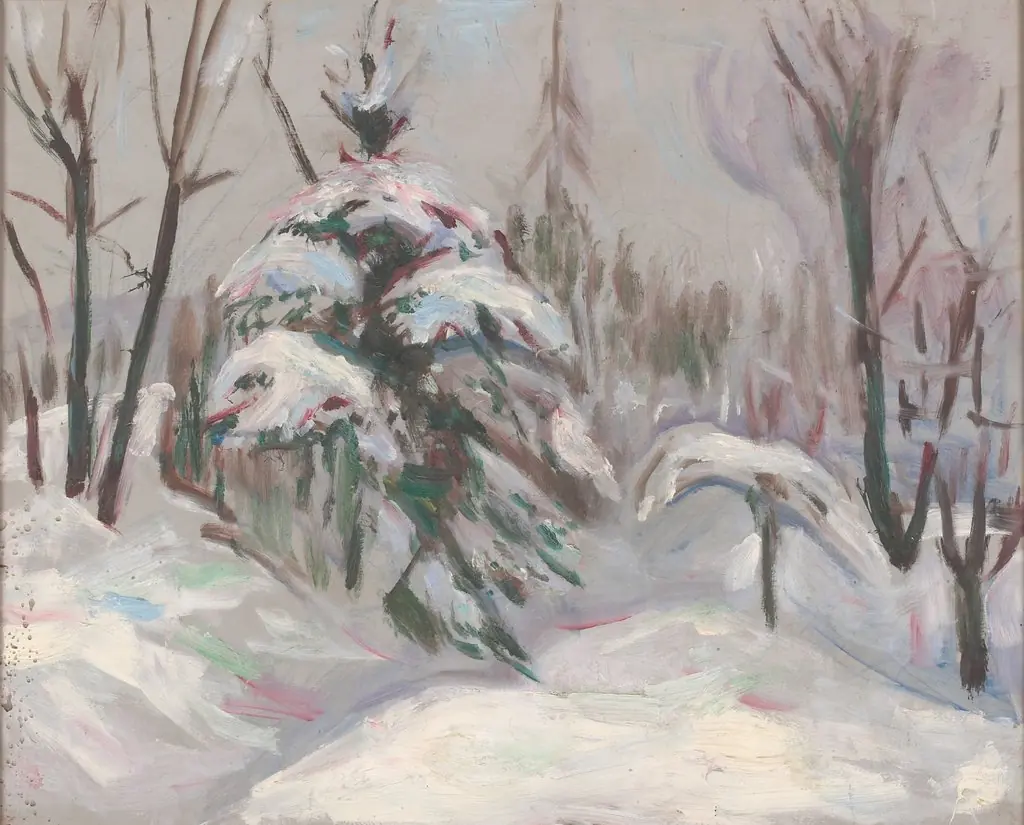
Talvimaisema is an unspecified painting by Hugo Simberg. It is held in the collection of the Finnish National Gallery. This winter landscape presents a quiet, snow-laden scene with gentle topography and sparse vegetation.
About this work
Overview
Subtle variations in tone and texture convey depth without dramatic contrast, reinforcing the scene’s tranquil mood.
This winter landscape presents a quiet, snow-laden scene with gentle topography and sparse vegetation. The composition centers on a softly rounded hill blanketed in snow, flanked by bare trees on the left. The sky, overcast yet broken by faint blue openings, casts a uniform, cool light across the terrain. Subtle variations in tone and texture convey depth without dramatic contrast, reinforcing the scene’s tranquil mood.
Subject & Meaning
The painting captures a moment of winter stillness, devoid of human presence or activity. The untouched snow, silent trees, and muted sky suggest isolation and introspection. Rather than emphasizing seasonal hardship, the work invites contemplation of nature’s quiet endurance. The absence of movement or disturbance reinforces a sense of temporal suspension, as if the landscape exists outside the flow of daily life.
Technique & Style
Rendered with restrained realism, the artist employs fine brushwork to differentiate snow textures—from powdery drifts to firm-packed surfaces—and to suggest the brittle structure of bare branches. Color is limited to grays, icy blues, and whites, with no saturated hues. Light is diffused and even, avoiding strong shadows; this subtle tonal gradation enhances the atmosphere of calm without relying on chiaroscuro for dramatic effect.
History & Provenance
The work’s origin and early ownership are not documented in available records. It appears to be a standalone piece, not part of a known series or commissioned project. Its preservation suggests it was retained within private collections, possibly by individuals drawn to its subdued aesthetic. No public exhibitions or critical reviews from its time are currently traceable.
Context
Created during a period when landscape painting increasingly favored emotional resonance over narrative, this work aligns with broader 19th-century trends in Northern European art that valued quiet observation of nature. Unlike dramatic Romantic vistas, it reflects a more intimate, personal response to seasonal change, resonating with contemporaneous literary and philosophical ideals of solitude and natural harmony.
Legacy
Though not widely exhibited or reproduced, the painting contributes to a quieter strand of winter landscape tradition that prioritizes atmosphere over spectacle. Its restrained palette and meditative tone have influenced later artists seeking to evoke stillness through minimal means. It remains a quiet example of how simplicity in subject and technique can convey profound emotional depth.
Artist & collection