Artwork
Nel Monastero dei Santi Quattro (In the Monastery of the Four Saints)
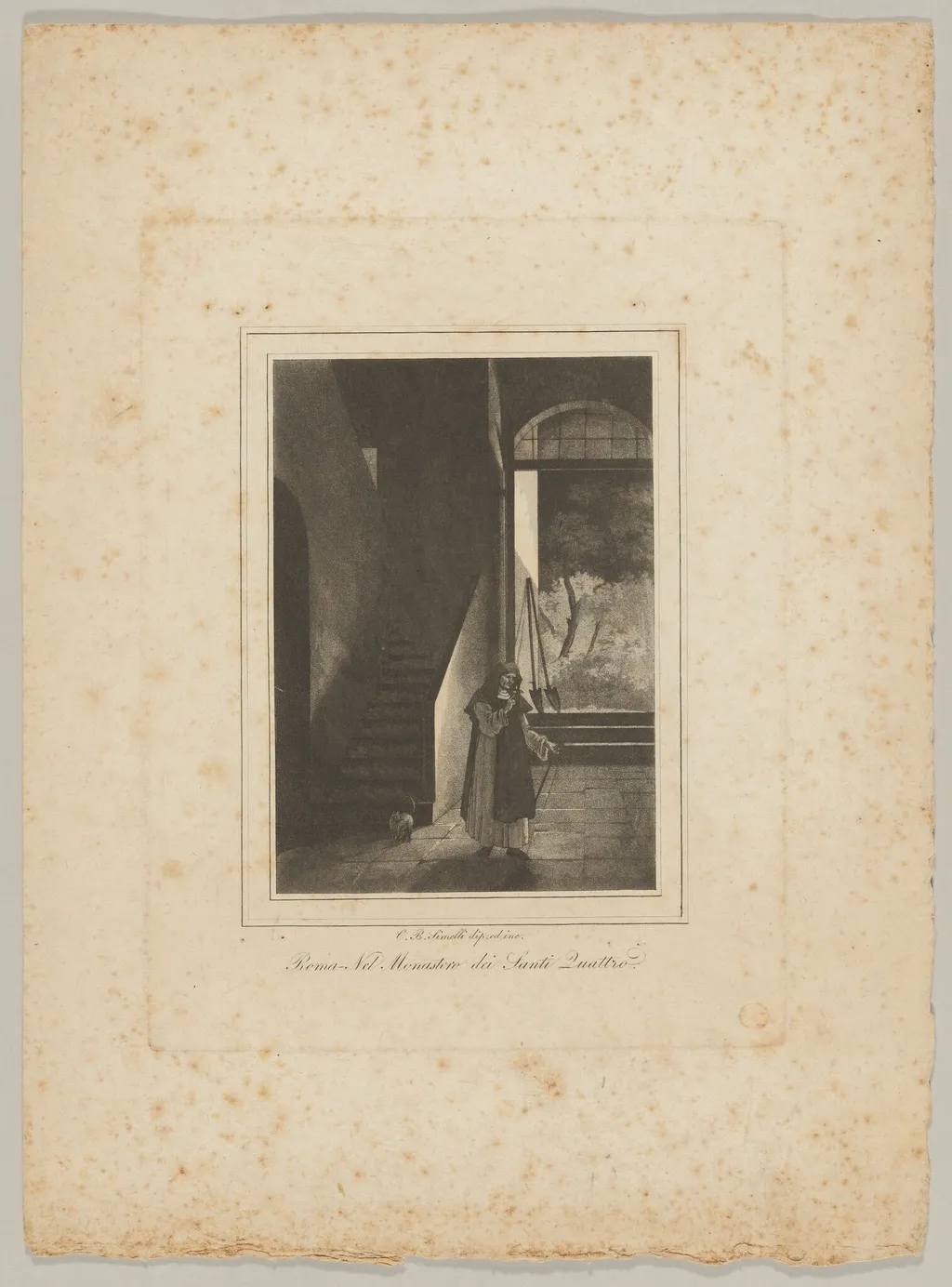
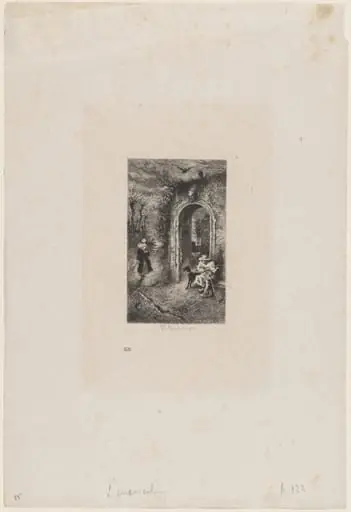
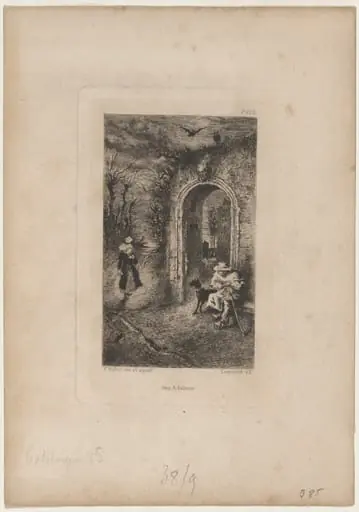
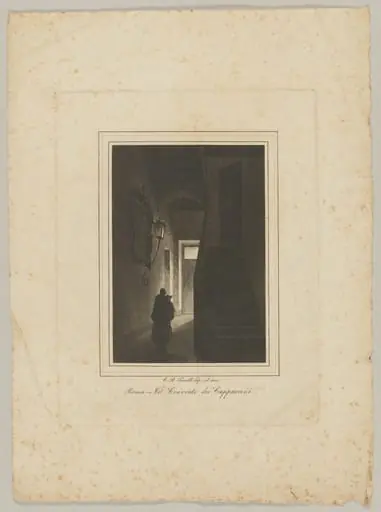
Nel Monastero dei Santi Quattro (In the Monastery of the Four Saints) is an ink print by the Romanticist artist Carlo Baldassare Simelli. It dates from 1840 and is held in the collection of the National Gallery of Art.
About this work
Overview
Carlo Baldassare Simelli created this etching and aquatint around 1840, depicting an interior scene within a monastic setting.
Carlo Baldassare Simelli created this etching and aquatint around 1840, depicting an interior scene within a monastic setting. The work is rendered in monochrome tones on wove paper, emphasizing subtle gradations of light and shadow. It is part of the collection at the National Gallery of Art in Washington, D.C., where it is cataloged as a print rather than a painting, reflecting its medium and production method.
Subject & Meaning
A solitary woman, dressed in a long garment with her hair neatly gathered, stands in a quiet interior holding a broom. Her gaze is directed toward a window, suggesting contemplation or pause in routine labor. The setting implies a cloistered environment, possibly a convent, where daily tasks intersect with moments of stillness. The figure’s posture and the dim lighting evoke introspection without narrative clarity.
Technique & Style
Simelli employed etching and aquatint to achieve a range of soft grays, creating depth through delicate tonal transitions rather than sharp lines. The technique allows for atmospheric effects, enhancing the hushed mood of the scene. Architectural elements like arches and stairs are rendered with restrained precision, grounding the composition in a tangible space while maintaining an overall sense of quietude.
History & Provenance
The print was produced in the mid-19th century and entered the National Gallery of Art’s collection through established acquisition channels. Its provenance prior to institutional ownership is not widely documented, but its presence in a major American museum reflects its recognition as a representative example of Italian printmaking from the period.
Context
Simelli worked during a time when Italian artists increasingly turned to intimate, everyday scenes influenced by Romantic sensibilities. While not overtly dramatic, this print aligns with broader trends favoring emotional restraint and quiet observation. Monastic interiors, often devoid of religious iconography, became subjects for artists exploring solitude and routine.
Legacy
Though not widely reproduced or studied, the work contributes to the understanding of 19th-century Italian printmaking beyond grand historical themes. It exemplifies how artists used print media to capture subtle human moments within institutional spaces, offering a counterpoint to the more theatrical imagery of the era.
Artist & collection

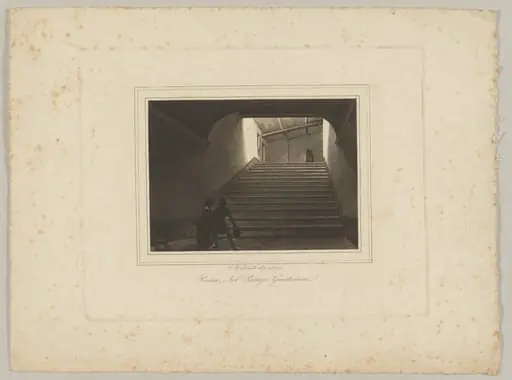 Nel Palazzo Giustiniani (In the Palazzo Giustiniani)
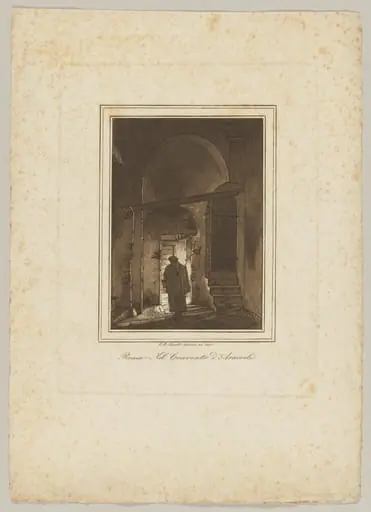 Nel Convento d’Aracoeli (In the Aracoeli Convent)
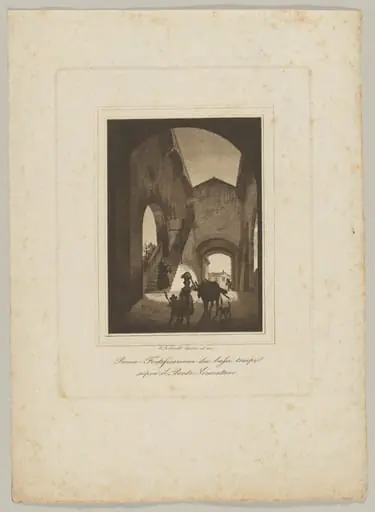 Fortificazioni dei bassi tempi sopra il Ponte Nomentano (Fortifications of the Ponte Nomentano)
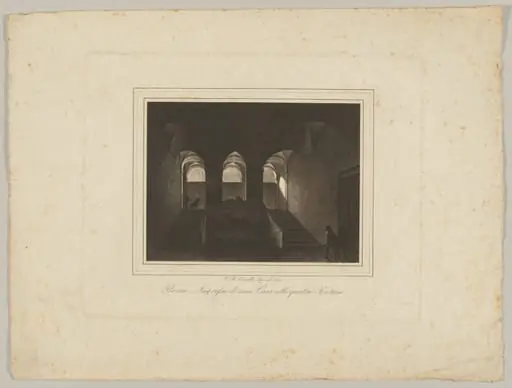 Ingresso di una Casa alle quattro Fontane (Entrance to a House at the Four Fountains)
 Nel Convento dei Cappuccini (In the Capuchin Convent)