Artwork
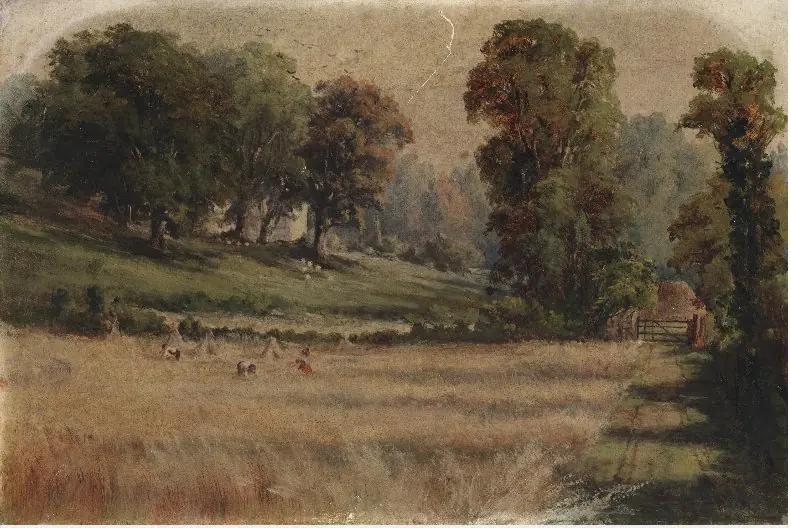
Eel Pots: Sketch from nature at Chilton
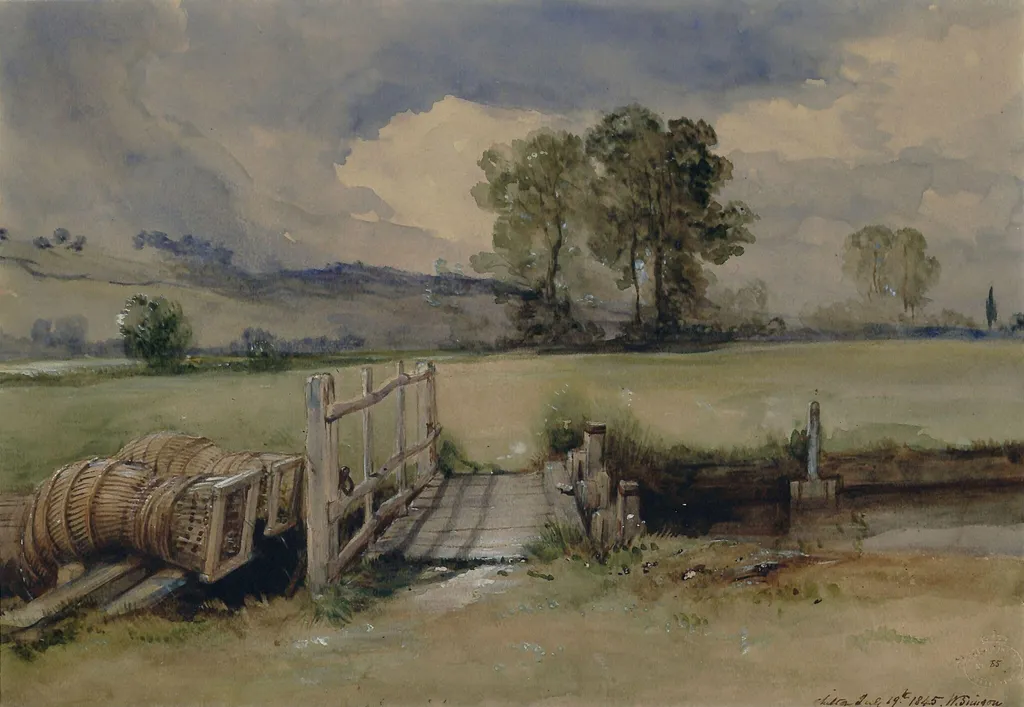
Eel Pots: Sketch from nature at Chilton is a watercolor work on paper by the British Romanticist artist Simson. It dates from 19 and is held in the collection of the Victoria and Albert Museum.
About this work
Overview
Eel Pots: Sketch from nature at Chilton is a watercolour work by Simson, dated 1819. It is part of the Victoria and Albert Museum’s collection. The piece captures a quiet rural scene near Chilton, likely observed directly from life. Its modest scale and intimate subject reflect the artist’s interest in everyday landscapes rather than grand vistas.
Subject & Meaning
The painting depicts a low wooden bridge crossing a waterway, flanked by woven eel pots resting on the bank. These traps, used for seasonal eel fishing, imply local livelihoods tied to the river. The absence of figures emphasizes solitude and the quiet rhythm of rural work. The scene conveys observation over narrative, valuing the unadorned details of place and practice.
Technique & Style
Simson employed transparent watercolour washes to suggest soft light and atmospheric depth. The sky is rendered with muted greys, blending gently into the hazy distance of trees and fields. Brushwork is loose yet deliberate, avoiding sharp outlines. This approach aligns with Romantic-era sketching traditions, where immediacy and mood took precedence over polished finish.
History & Provenance
The work was created in 1819 during Simson’s travels in the Chilton area. It remained in private hands until acquired by the Victoria and Albert Museum, where it is preserved as part of a broader collection of 19th-century British watercolours. Its survival as a sketch rather than a finished piece suggests it was valued for its documentary quality.
Context
In early 19th-century England, watercolour sketching flourished as both amateur pastime and professional practice. Artists like Simson documented rural life amid industrial change. Eel fishing, once common in English rivers, was a fading tradition, making such scenes records of a shifting landscape and economy.
Legacy
Though not widely exhibited, the work contributes to understanding how British artists recorded vernacular life with sensitivity. Its preservation in a major museum underscores the value placed on topographical watercolours as historical documents. It remains a quiet testament to the observation of ordinary places at a time of rapid transformation.
Own this work as a print
Artist & collection
Artist
This artist made watercolors of everyday scenes in the 1840s. They left a small but precise record—like *Eel Pots: Sketch from nature at Chilton* (19 July 1845), a sheet of quick lines and muted washes that catches a…

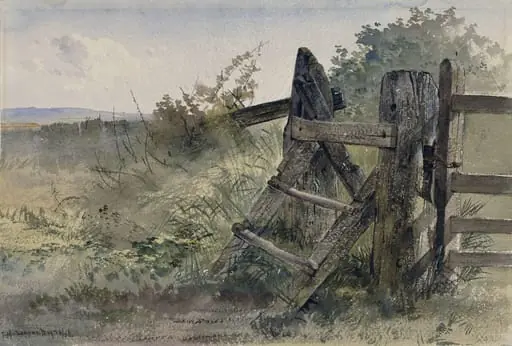 Near Leasowe Church, Chesire
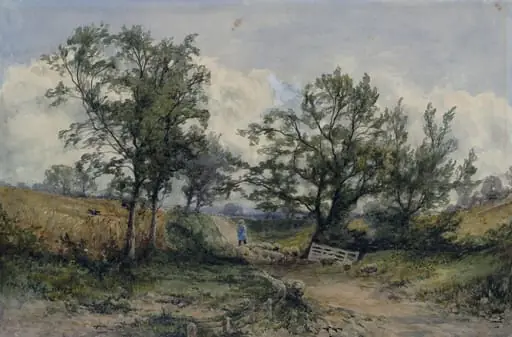 Landscape with sheep and cornfield
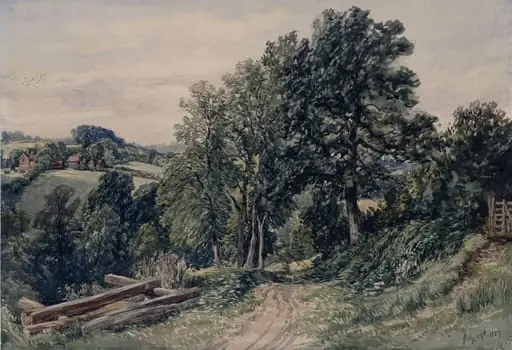 Landscape and cottages, with sawpit, Tedstone, Herefordshire
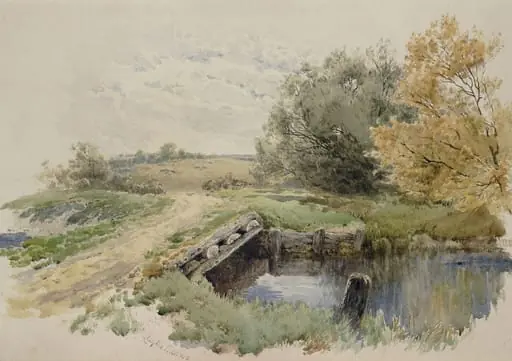 Landscape with bridge over stream
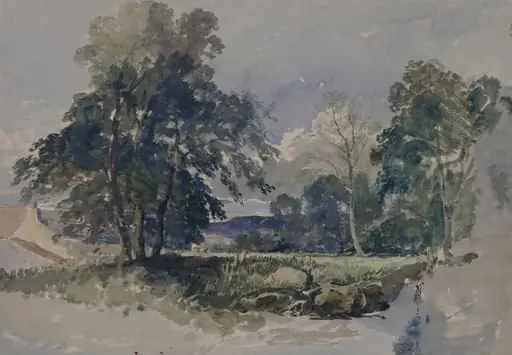 Woody Landscape with rocks and a cottage
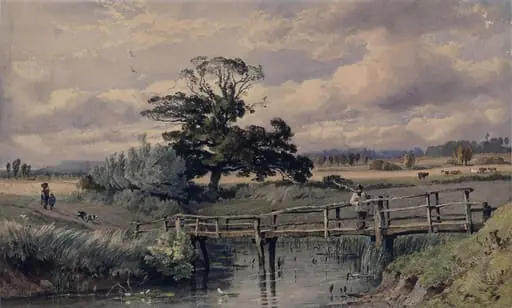 Landscape
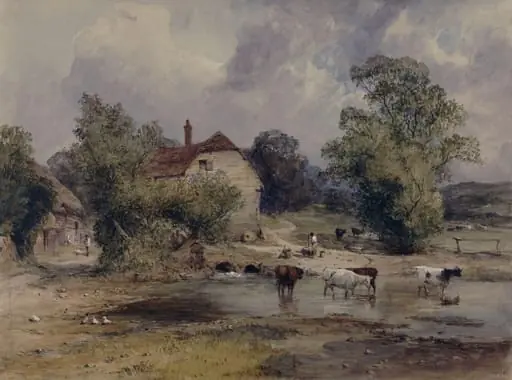 Mill at Droxford, Hampshire
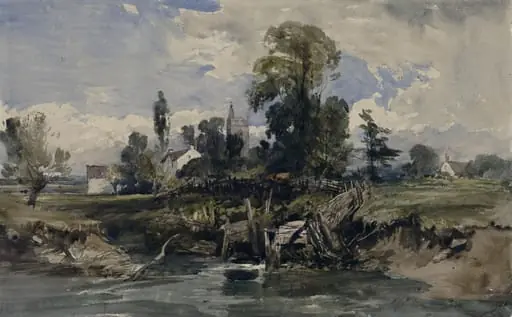 Landscape; with church and houses
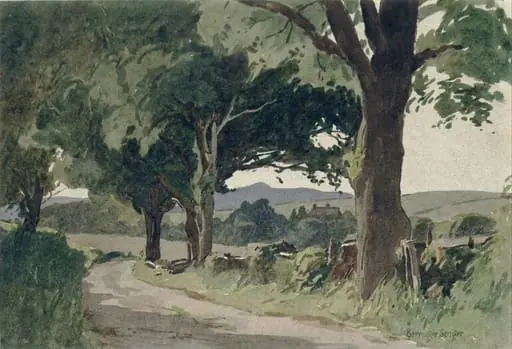 Untitled
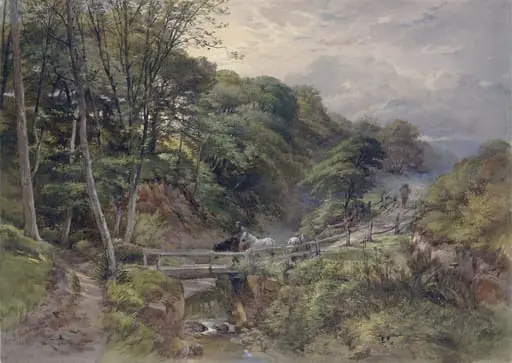 A Yorkshire Beck
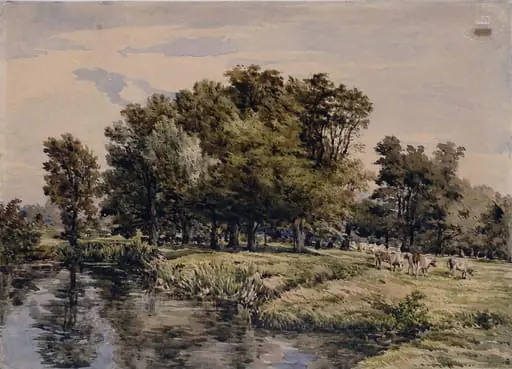 Trees and Cattle
 A Landscape Sketch