Artwork
Marly-le-Roi
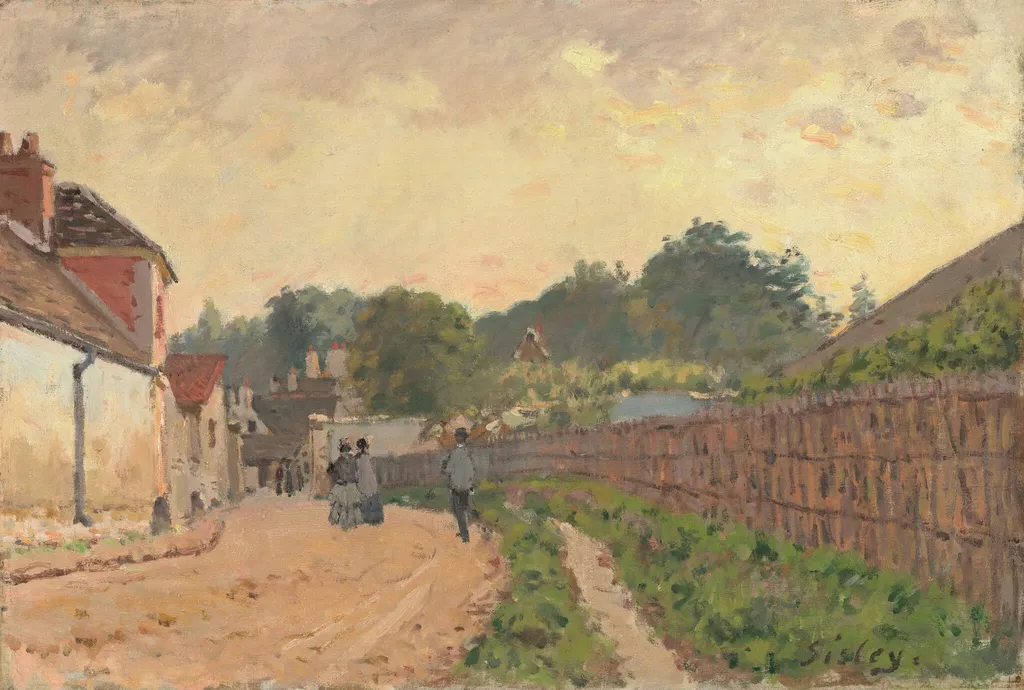
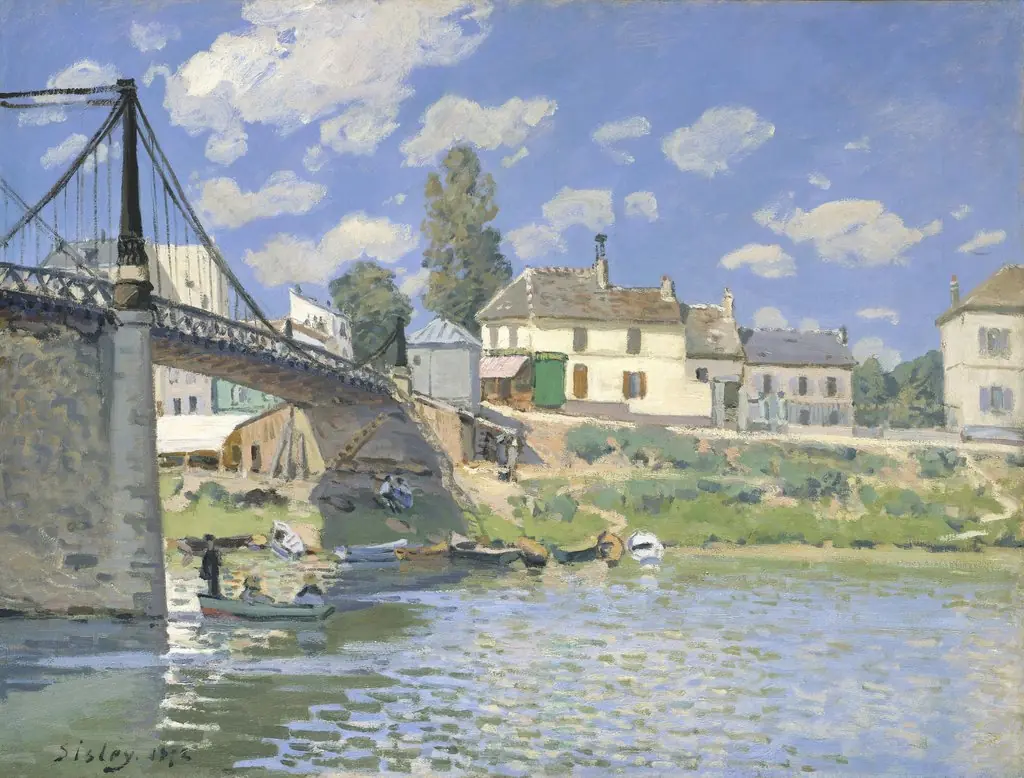
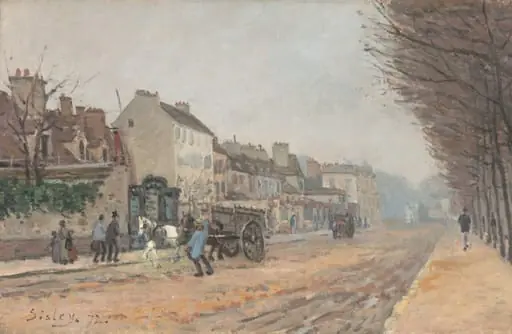
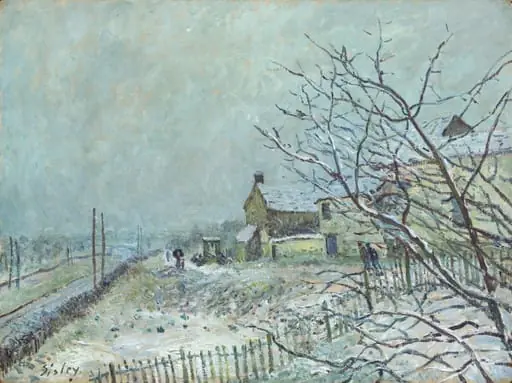
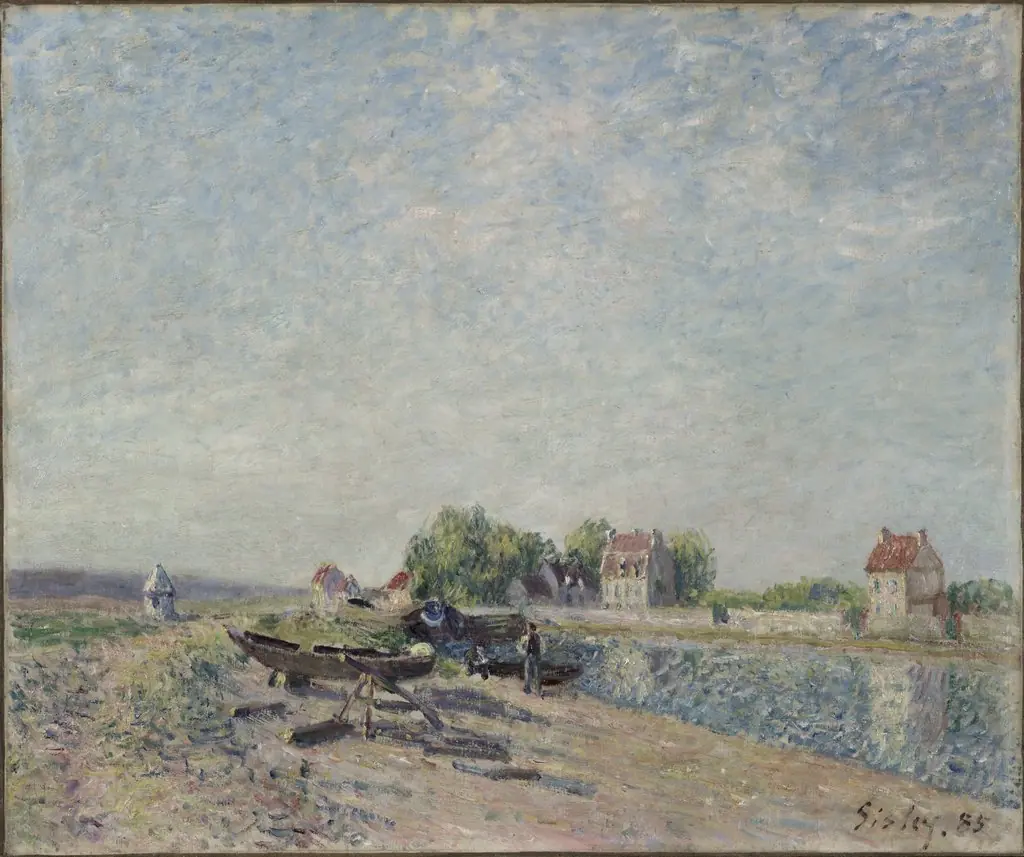
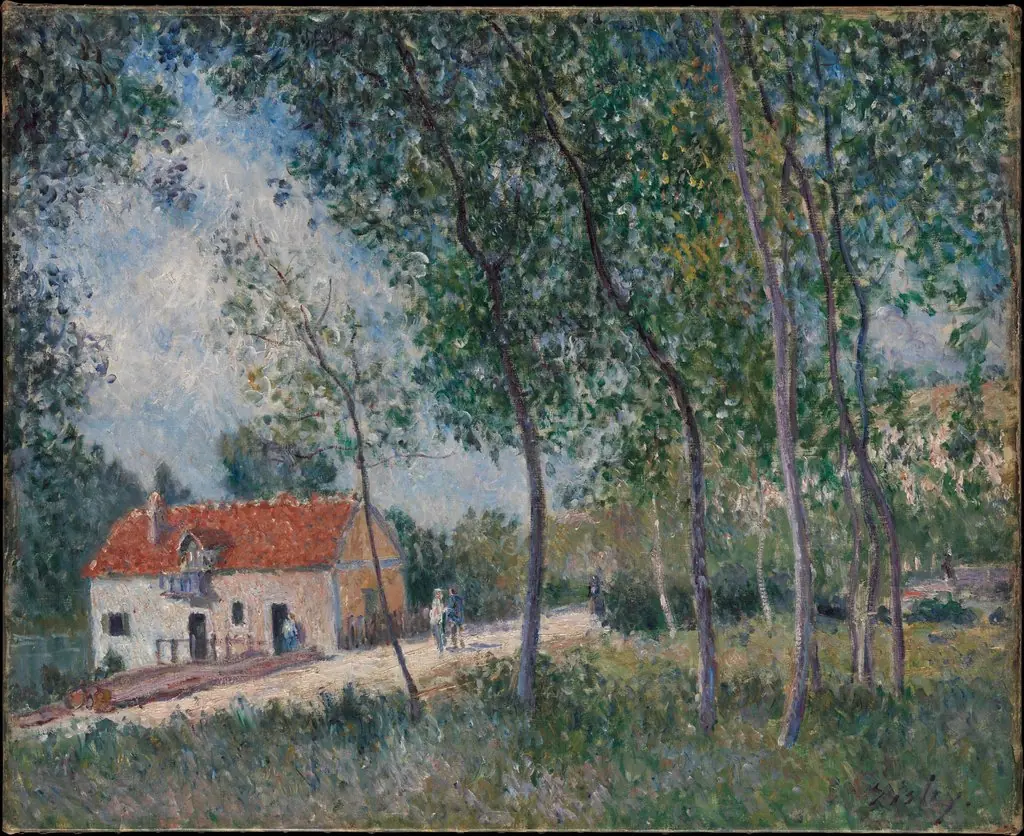
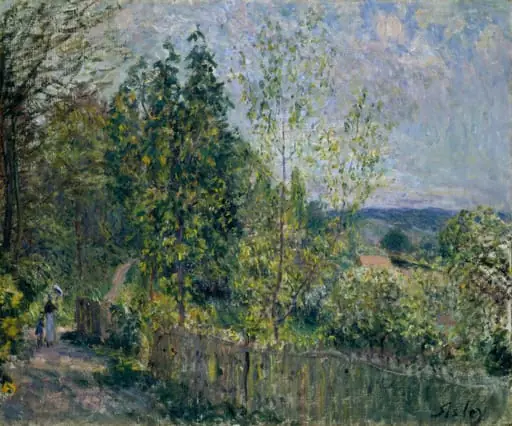
Marly-le-Roi is an oil painting by the Impressionist artist Alfred Sisley. It dates from 1875 and is held in the collection of the National Gallery of Art.
About this work
Overview
Alfred Sisley’s oil on canvas, titled *Marlow‑le‑Roi*, dates from around 1875. Executed during the artist’s mature period, the work presents a quiet countryside scene near the town of Marly‑le‑Roi, situated west of Paris. The composition is anchored by a winding dirt track that leads the eye through the middle of the picture, framed by modest structures and a low wooden fence.
Subject & Meaning
The painting captures a tranquil rural setting, where a modest road bisects a landscape dotted with small buildings on the left and a fence on the right. In the distance, a stand of trees and a few indistinct figures suggest everyday life, while a soft, overcast sky lends a gentle, atmospheric mood that emphasizes the ordinary beauty of the locale.
Technique & Style
Sisley employed the plein‑air approach typical of the Impressionist circle, applying loose, rapid brushstrokes to convey the fleeting effects of light and air. The subtle modulation of illumination across the road, structures, and foliage creates depth, while the muted palette and delicate handling of the cloudy sky reinforce the sense of a momentary, weather‑influenced observation.
Context
Created during a period when Sisley, a French‑born artist who later acquired British nationality, was deeply involved with the Impressionist movement, the work reflects his consistent focus on natural scenery. It exemplifies his dedication to painting outdoors and his interest in portraying the interplay of light, atmosphere, and landscape without idealizing the scene.
Own this work as a print
Artist & collection
Artist
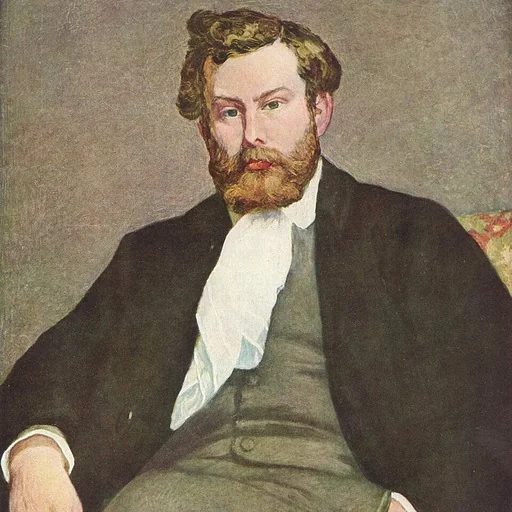
Alfred Sisley (; French: ; 30 October 1839–29 January 1899) was a French-Born British Impressionist landscape painter who was born to British parents, but spent most of his life in France.