Artwork
The Assumption of the Virgin
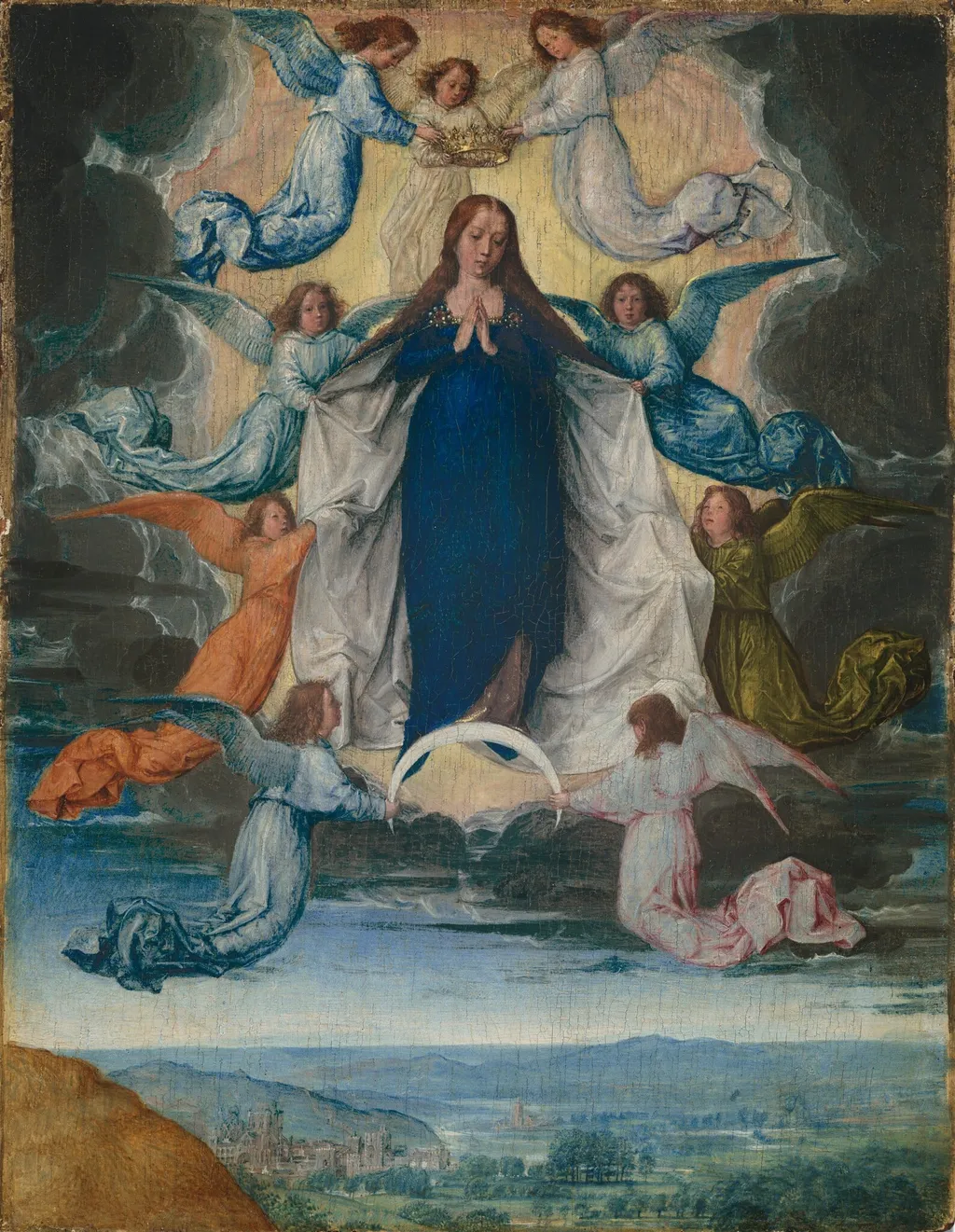
The Assumption of the Virgin is an oil painting by the Northern Renaissance artist Michel Sittow. It dates from 1500 and is held in the collection of the National Gallery of Art.
About this work
Overview
Michel Sittow's painting, The Assumption of the Virgin, created around 1500, is an oil on panel work depicting a central event in Christian theology.
Michel Sittow's painting, The Assumption of the Virgin, created around 1500, is an oil on panel work depicting a central event in Christian theology. This religious composition portrays the Virgin Mary's ascent into heaven, a common theme in art from the late medieval and early Renaissance periods. The artwork showcases Sittow's skill in rendering spiritual narratives through detailed figural representation.
Subject & Meaning
The painting centers on the Virgin Mary, shown in a blue garment with hands clasped in prayer, signifying her devotion and spiritual purity. She is encircled by a host of angels, who participate in her celestial journey. Some angels are depicted holding a crown, symbolizing her queenship of heaven, and flowing fabric, emphasizing the ethereal nature of the scene. This imagery conveys the miraculous elevation of Mary's body and soul.
Technique & Style
Executed in oil on panel, The Assumption of the Virgin demonstrates the meticulous approach characteristic of Northern Renaissance painting. Sittow's technique is evident in the precise rendering of drapery, where the folds and textures of the Virgin's blue dress and the angels' garments are carefully delineated. This attention to detail contributes to the painting's sense of realism and its portrayal of a sacred, heavenly moment, aligning with the artistic innovations of its era.
Own this work as a print
Artist & collection