Artwork
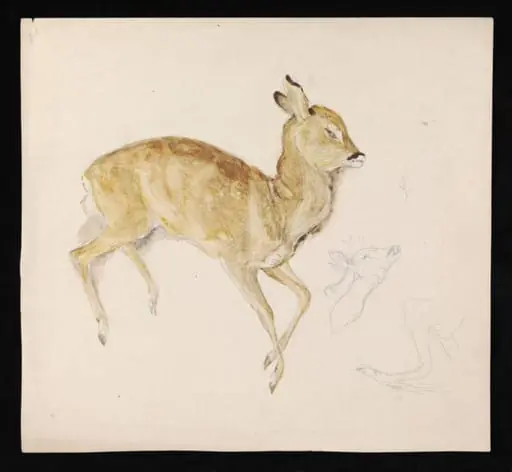
Antelope, probably a Dinken of the genus Cephalophus
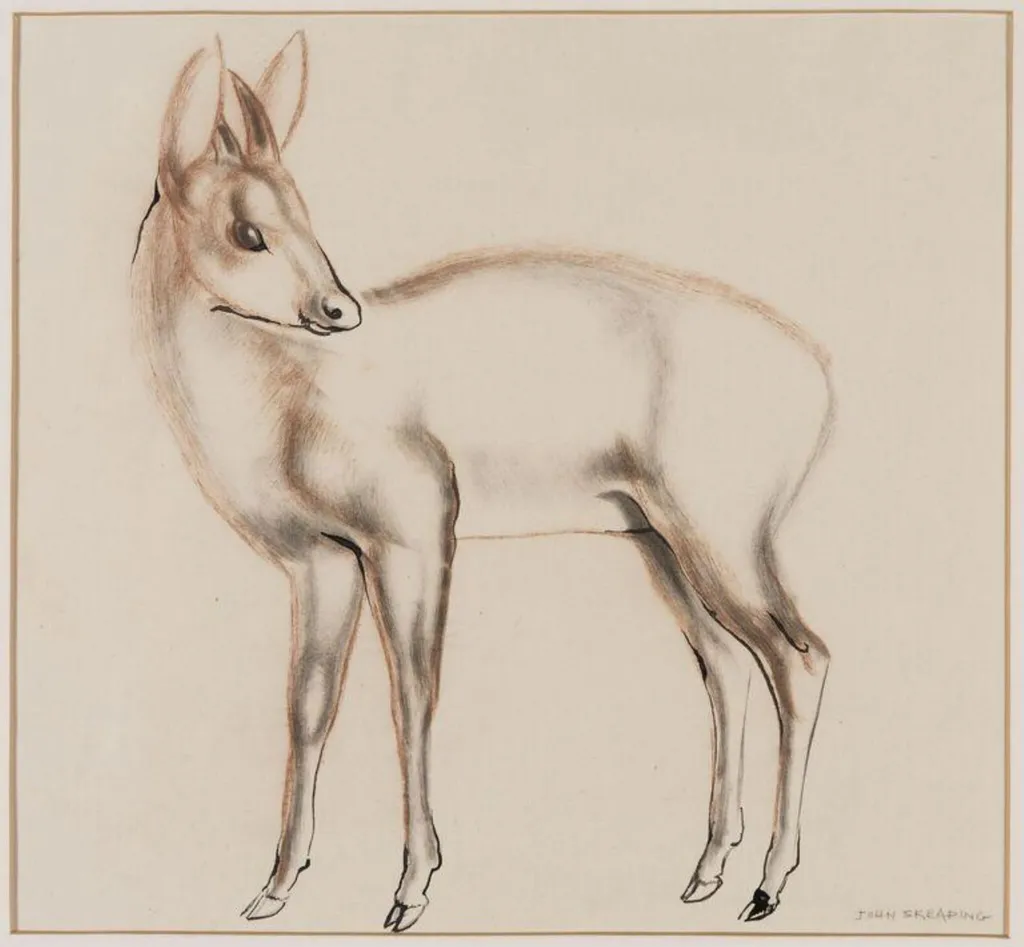
Antelope, probably a Dinken of the genus Cephalophus is a drawing by John Rattenbury Skeaping. It is held in the collection of the Victoria and Albert Museum.
About this work
Overview
A pencil and watercolor drawing by John Rattenbury Skeaping portrays a small antelope in profile, rendered with restrained precision.
A pencil and watercolor drawing by John Rattenbury Skeaping portrays a small antelope in profile, rendered with restrained precision. The animal stands motionless against a neutral background, its form defined by minimal yet deliberate strokes. The work belongs to a series of zoological studies Skeaping produced during his time in East Africa, reflecting his interest in natural observation over idealized representation.
Subject & Meaning
The depicted animal is likely a duiker, a small forest-dwelling antelope of the genus Cephalophus. Its calm posture and subtle head turn suggest quiet alertness rather than fear. Skeaping’s focus on the creature’s natural stillness implies an intent to capture its presence as it exists in the wild, avoiding anthropomorphism or dramatic narrative.
Technique & Style
Skeaping employed loose, fluid lines for the body and limbs, conveying movement and texture with economy. The head, in contrast, is rendered with finer, more controlled strokes, emphasizing anatomical detail. Washes of light brown and muted ochre suggest fur tone, while the absence of background elements directs attention entirely to the animal’s form and posture.
History & Provenance
Created during Skeaping’s fieldwork in East Africa in the early 20th century, the drawing was likely made from direct observation in the wild or from specimens in local collections. It remained in private hands for decades before being acquired by a public institution, where it is now preserved as part of a broader collection of naturalist drawings from the colonial era.
Context
Skeaping’s work emerged amid a broader British scientific interest in African fauna, often linked to colonial expeditions. Unlike ornamental natural history illustrations, his drawings prioritize observational accuracy over decorative flourish. This piece aligns with contemporaneous efforts by naturalists to document species before habitat loss and hunting altered their populations.
Legacy
Though not widely exhibited, Skeaping’s drawings are valued for their quiet integrity and technical restraint. They offer a counterpoint to the more theatrical wildlife art of his time, preserving a record of species that have since faced decline. His approach influenced later naturalist illustrators who favored understated realism over romanticized depictions.
Artist & collection
Artist
John Skeaping spent his life among animals, sketching horses in stables before breakfast and deer in the dusk.