Artwork
Xintang (Immortal's Peak)
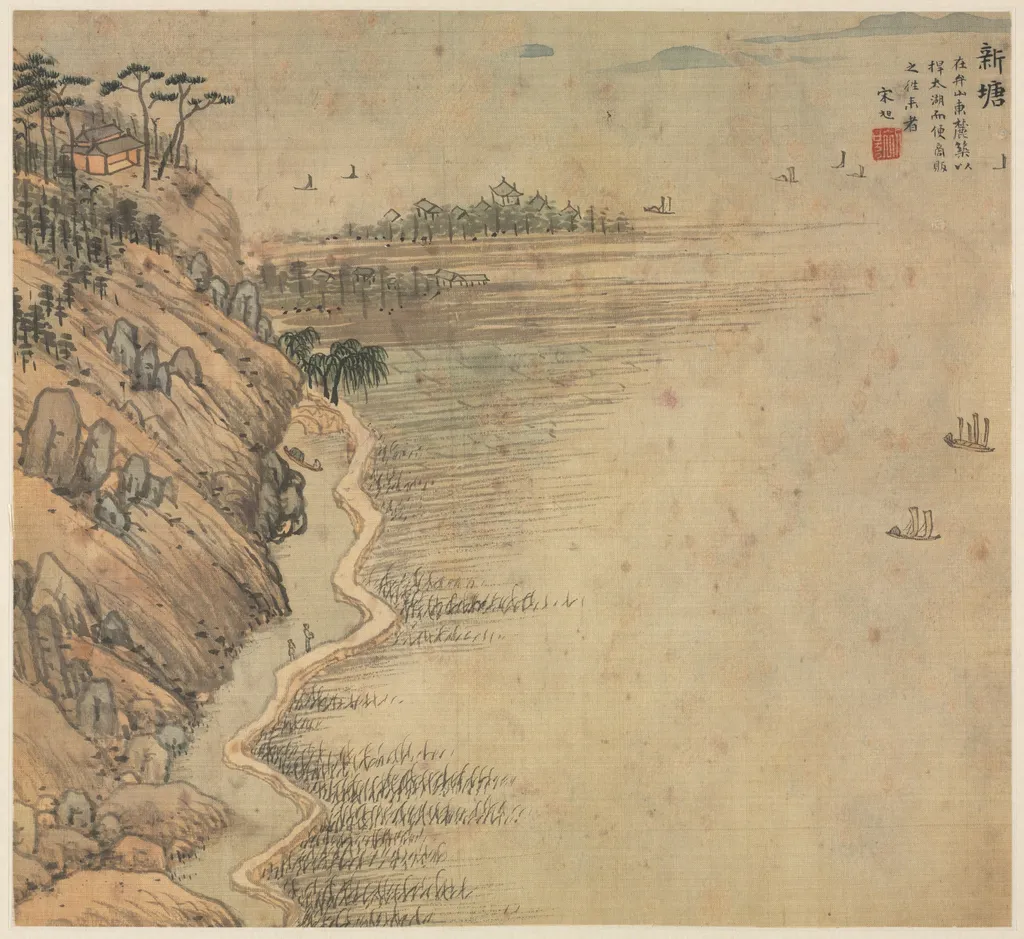
Xintang (Immortal's Peak) is an unspecified painting by the Ming dynasty painting artist Song Xu. It dates from 1594 and is held in the collection of the Cleveland Museum of Art.
About this work
Overview
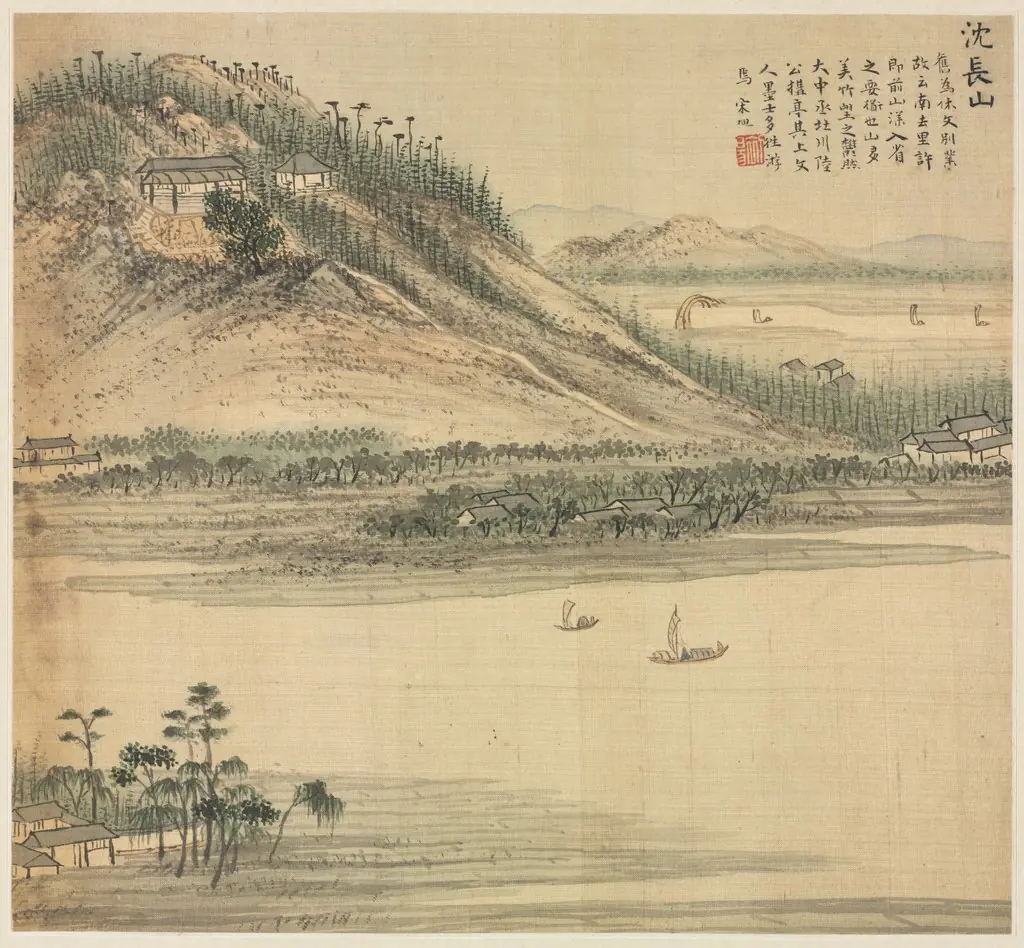
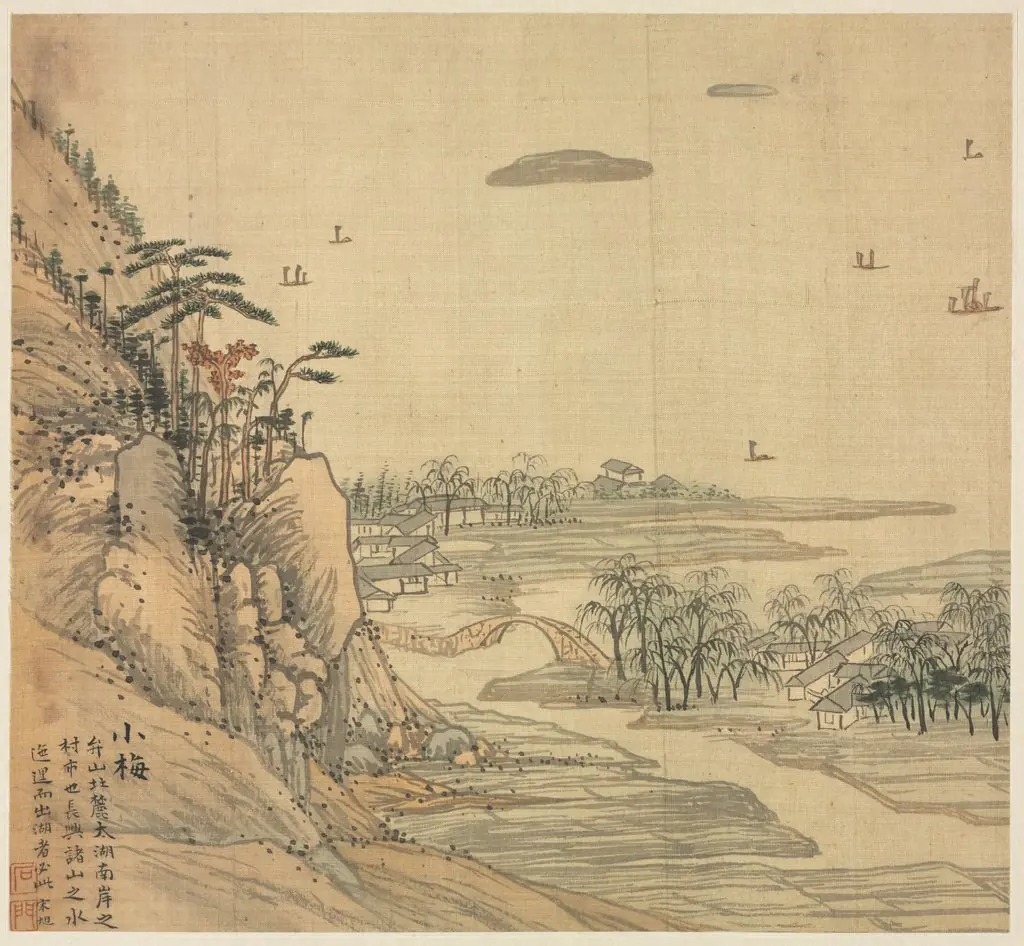
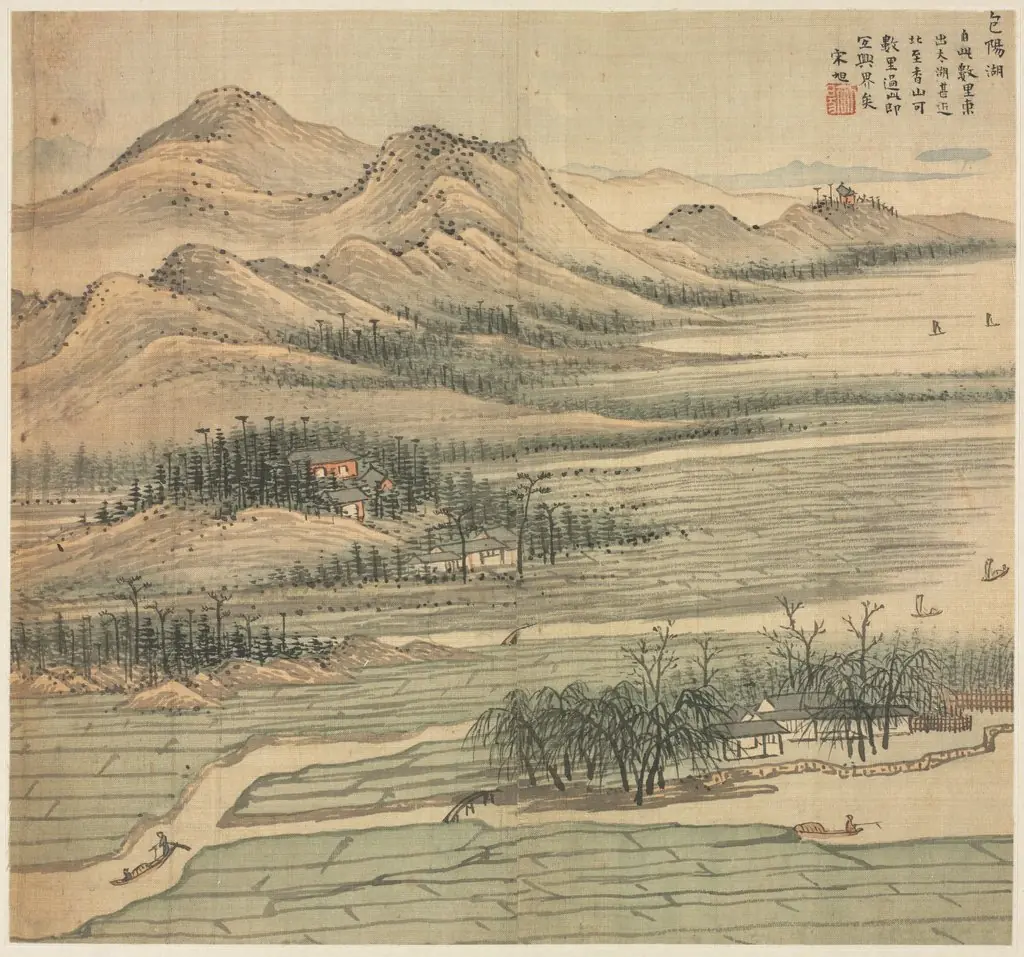
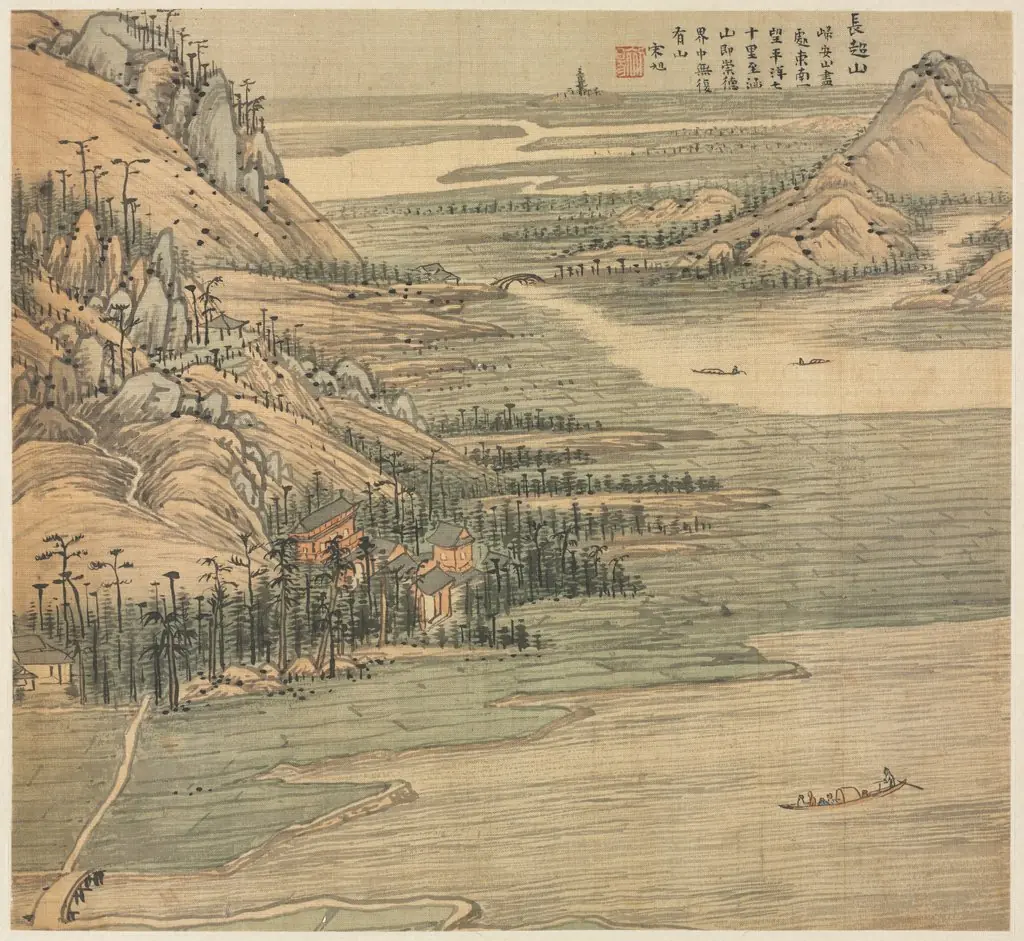
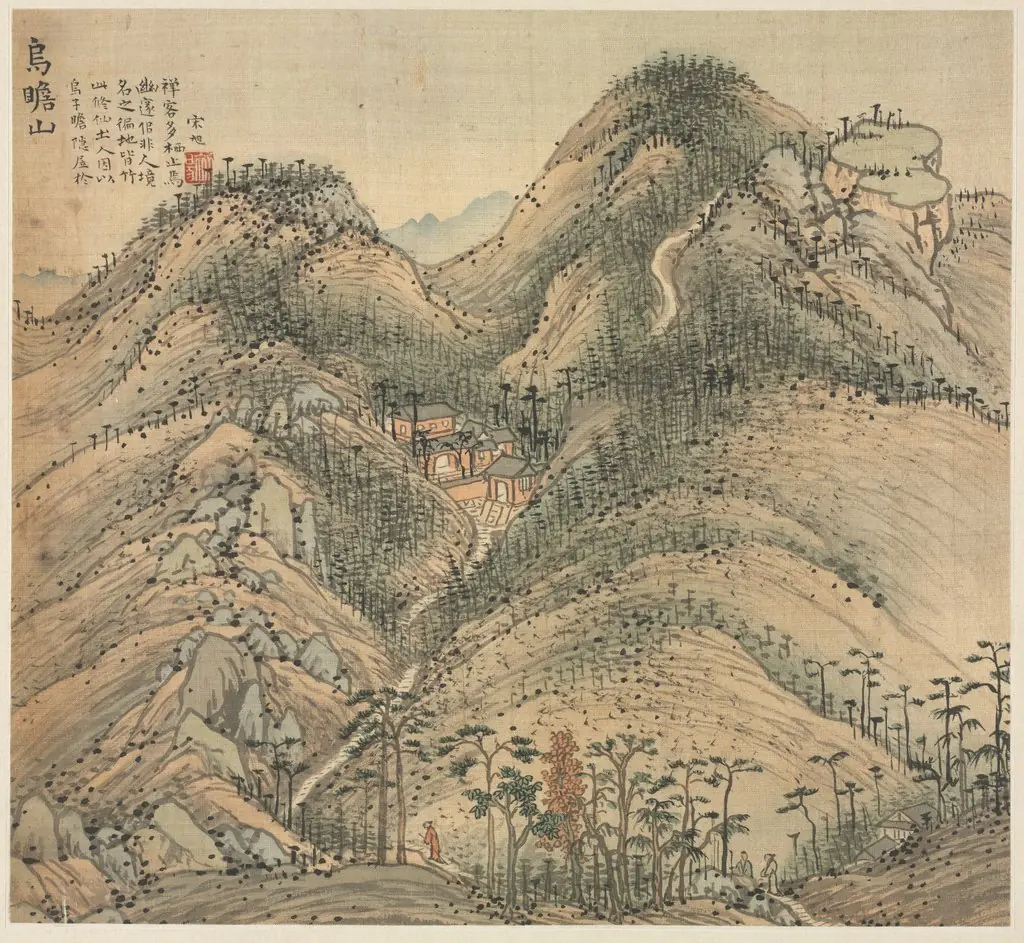
Song Xu's painting, Xintang (Immortal's Peak), completed in 1594, offers a serene depiction of a natural landscape.
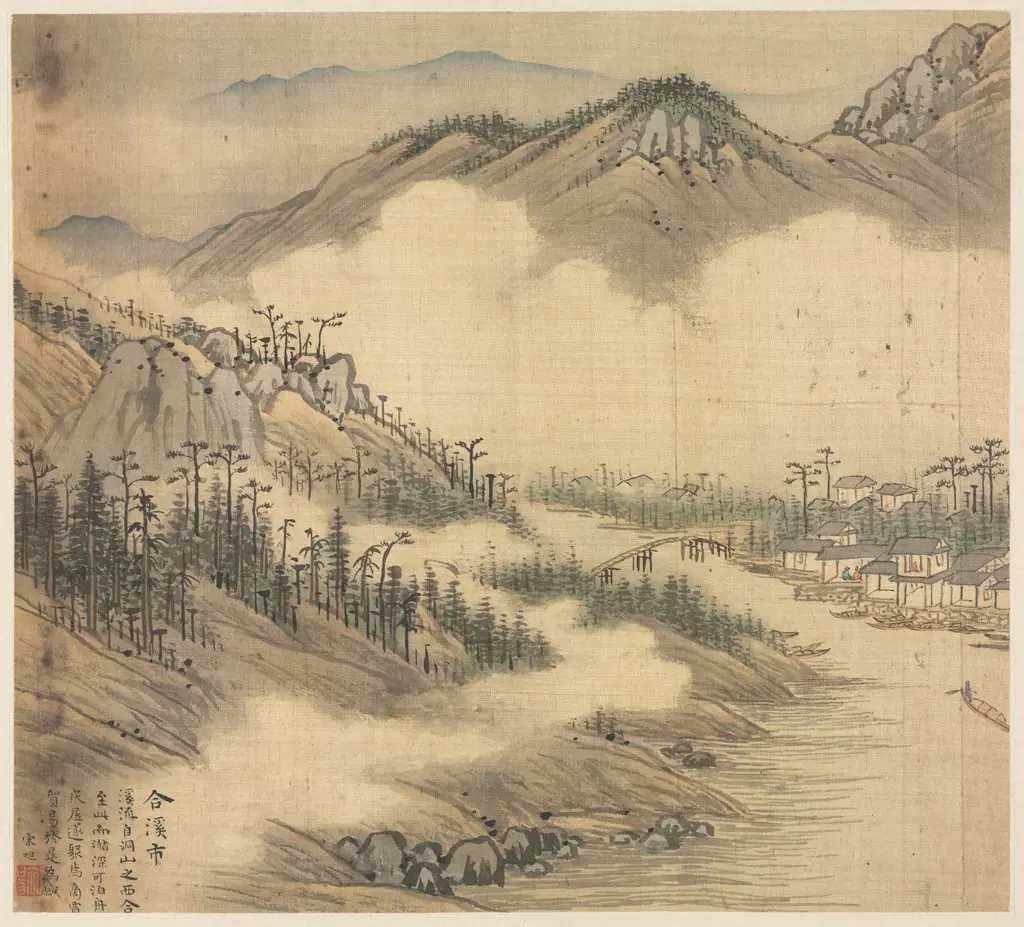
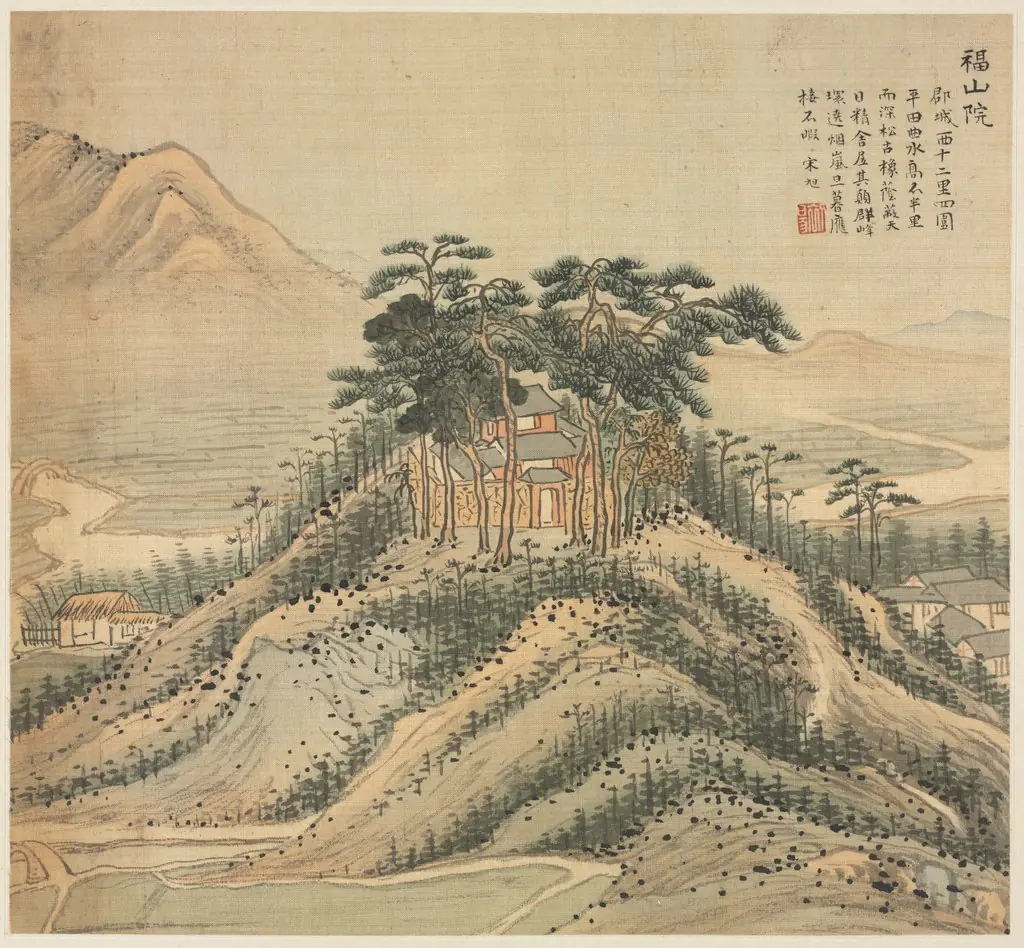
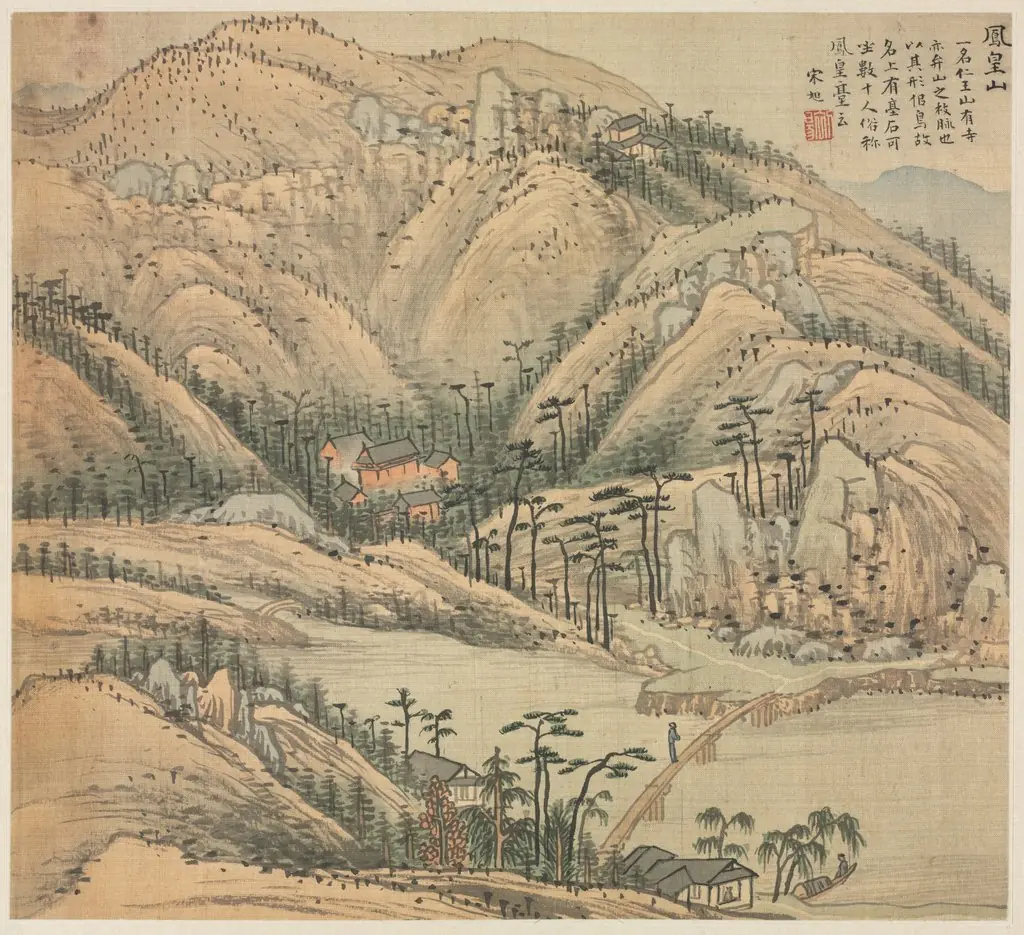
Song Xu's painting, Xintang (Immortal's Peak), completed in 1594, offers a serene depiction of a natural landscape. This work, currently part of The Cleveland Museum of Art's collection, showcases a tranquil environment featuring a winding river, a village, and a prominent hillside. The piece exemplifies the artist's approach to capturing natural settings with a sense of calm and contemplative quietude, inviting viewers into a peaceful, imagined world.
Subject & Meaning
The composition centers on a quiet river that gracefully meanders through a village setting. A rocky hillside rises on the left, subtly integrated with a few small buildings nestled within its contours. Trees are scattered across the terrain, while additional dwellings line the distant shore, suggesting human presence within nature. The calm water, punctuated by a pair of boats near the far edge, contributes to the overall sense of stillness and natural harmony depicted in the scene.
Technique & Style
The artist employed a palette of soft, muted colors, which significantly enhances the painting's peaceful and understated atmosphere. The application of paint is characterized by light, almost calligraphic brushstrokes, lending the composition a delicate and ethereal quality. This technique contributes to a gentle, dreamlike impression, reflecting a stylistic choice that prioritizes subtlety and evocative suggestion over sharp, defined detail, creating a sense of quiet introspection.
Own this work as a print
Artist & collection