Artwork
H Beard Print Collection
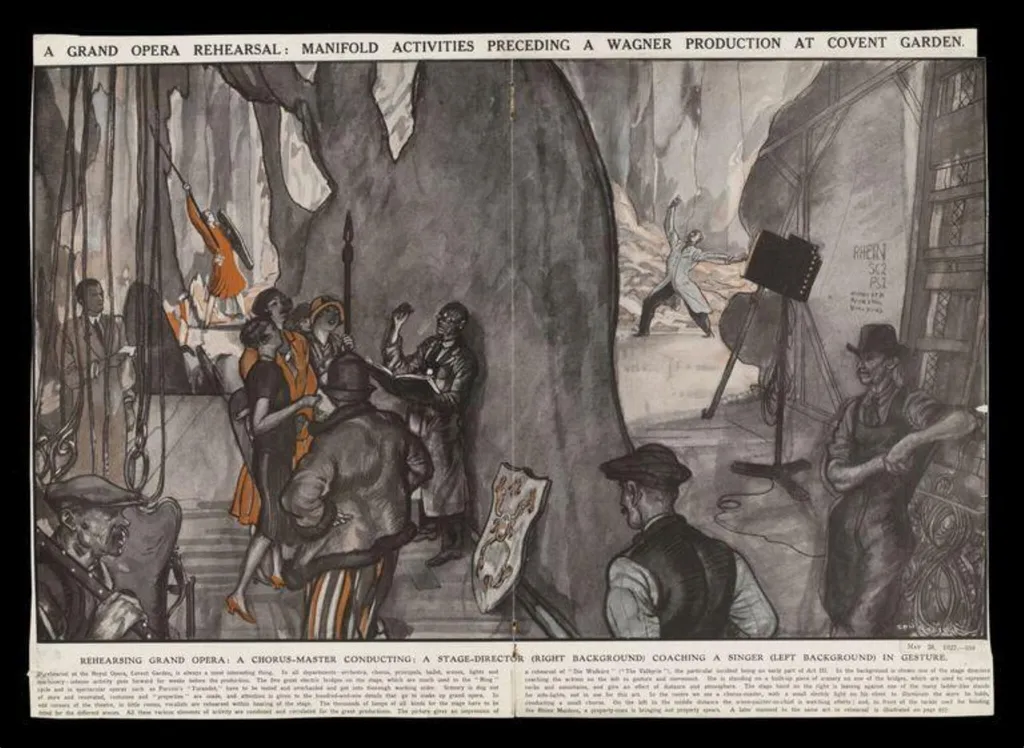
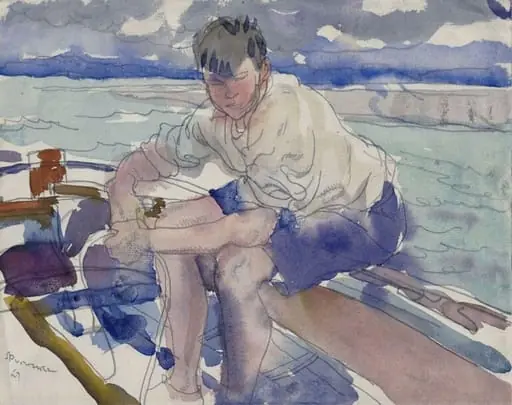
H Beard Print Collection is a print by Stephen Spurrier. It dates from 28 and is held in the collection of the Victoria and Albert Museum.
About this work
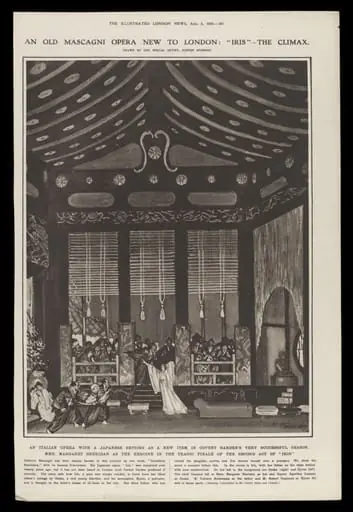
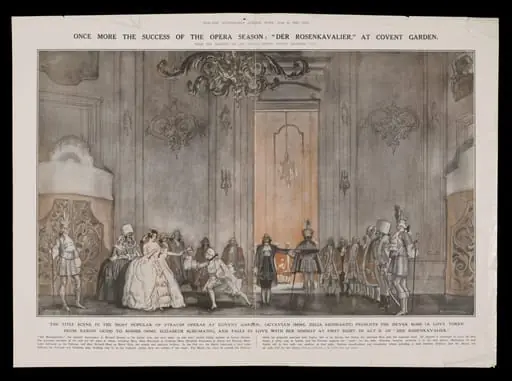
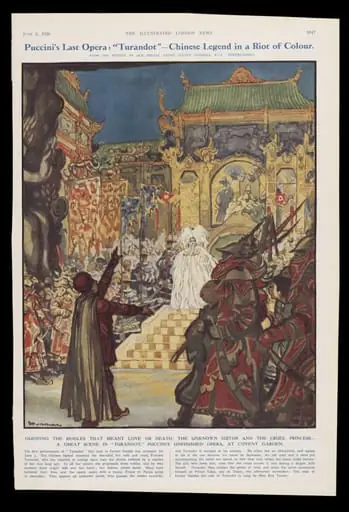
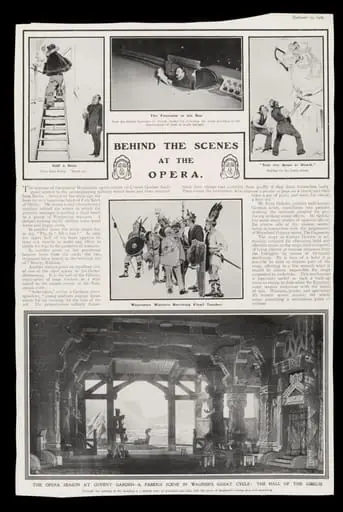
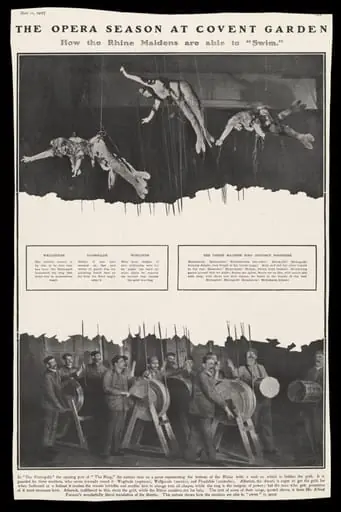
This print shows the view from backstage during a rehearsal of Wagner’s “Die Walküre.” Stephen Spurrier made it in 1927. It’s a print, not a painting.
The scene is Act III at Covent Garden. The image was published in an illustrated review, so people could read about the opera and see the setup at once.
Look up the Victoria and Albert Museum next.
Overview
The work is a printed image, not a painted composition, and reflects the intersection of journalism and theatrical documentation in the early 20th century.
This 1927 print by Stephen Spurrier captures a backstage perspective during a rehearsal of Act III of Wagner’s Die Walküre at London’s Covent Garden. Created as a reproductive illustration for an illustrated periodical, it documents the operational atmosphere of opera production rather than the performance itself. The work is a printed image, not a painted composition, and reflects the intersection of journalism and theatrical documentation in the early 20th century.
Subject & Meaning
The scene portrays the backstage area during rehearsal, revealing the spatial dynamics between performers, stagehands, and set pieces. Rather than focusing on the drama on stage, the print emphasizes the mechanical and human infrastructure supporting the performance. It offers a rare glimpse into the unseen labor and preparation behind grand opera, transforming the rehearsal into a subject worthy of visual record.
Technique & Style
Spurrier employed a precise, linear draftsmanship typical of illustrative printmaking of the era. The composition uses clear outlines and tonal contrasts to distinguish figures from the complex stage machinery. The perspective is deliberately low and angled, mimicking the view from the wings, which enhances the sense of immersion in the backstage environment without theatrical embellishment.
History & Provenance
The print was produced for publication in an illustrated review, likely intended to accompany articles on the 1927 Covent Garden season. Its purpose was informational, serving readers who sought visual context alongside written critiques. The Victoria and Albert Museum holds examples of such works, reflecting their value as historical records of performance culture rather than fine art objects.
Context
In the 1920s, illustrated periodicals played a key role in bringing high culture to a broader public. Opera houses like Covent Garden were increasingly documented through photography and print, bridging elite performances and middle-class audiences. Spurrier’s image aligns with this trend, offering a candid, non-idealized view of rehearsal life at a time when opera was becoming more accessible through media.
Legacy
Though not widely exhibited as fine art, the print endures as a documentary artifact of early 20th-century opera production. It contributes to the visual archive of British theatrical history, preserving details of stage design, costume placement, and rehearsal protocols. Its significance lies in its function as a witness to the everyday rhythms of a major cultural institution.
Artist & collection

Artist
Stephen Orr Spurrier is an American retired football coach and player, who is also commonly referred to by his nicknames, the Head Ball Coach or the ol' Ball Coach.