Artwork
Portret de țărancă
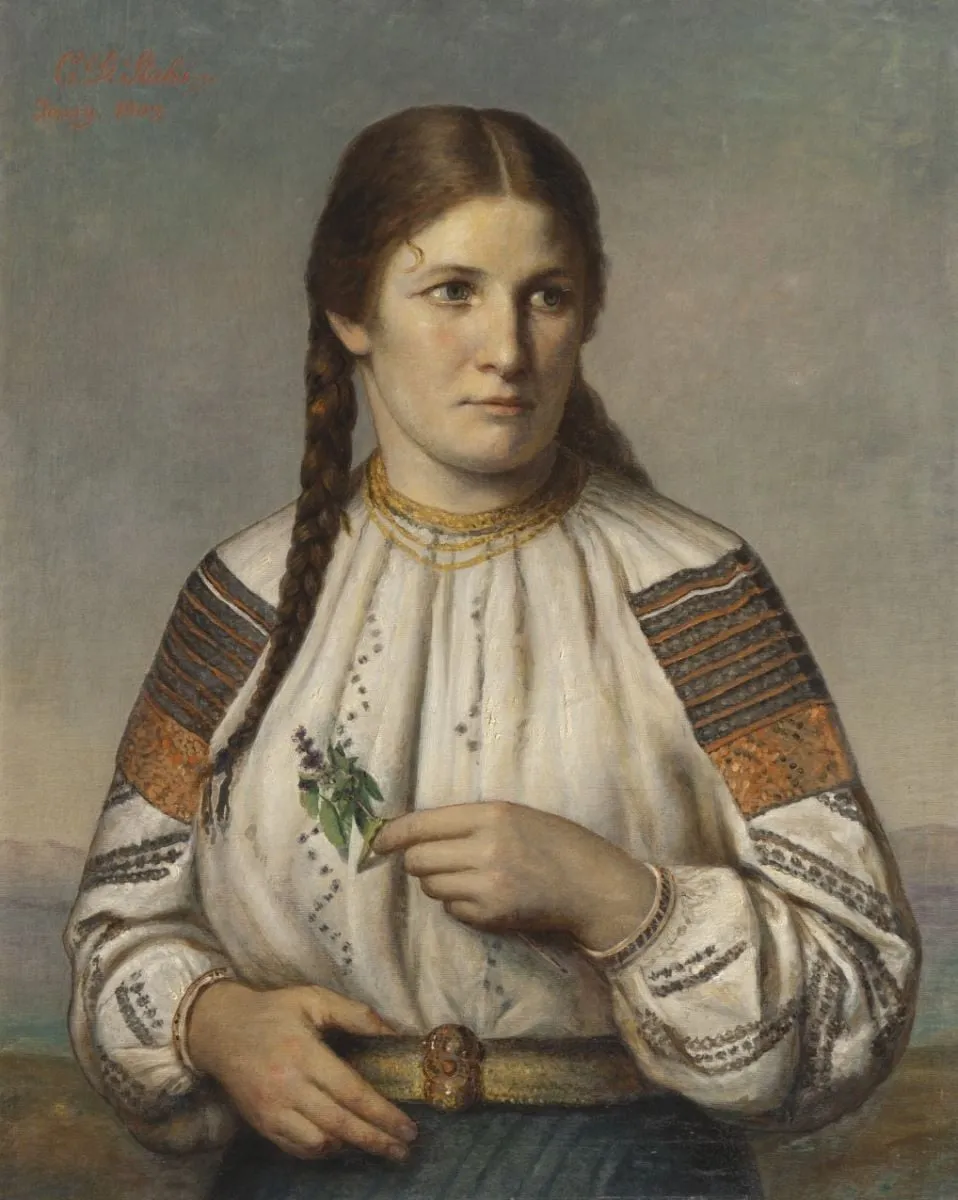
Portret de țărancă is a print by the Academic Art artist Constantin D. Stahi. It dates from 1902 and is held in the collection of the National Museum of Art of Romania. Painted in 1902 by Constantin D.
About this work
Overview
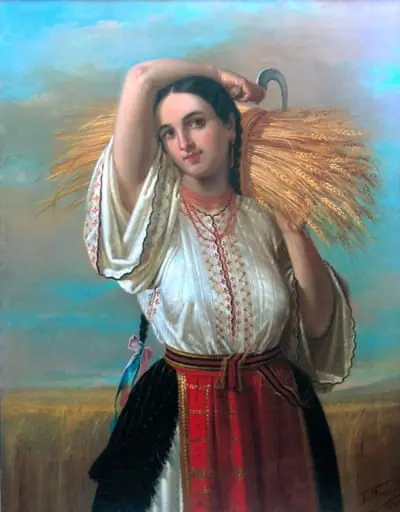
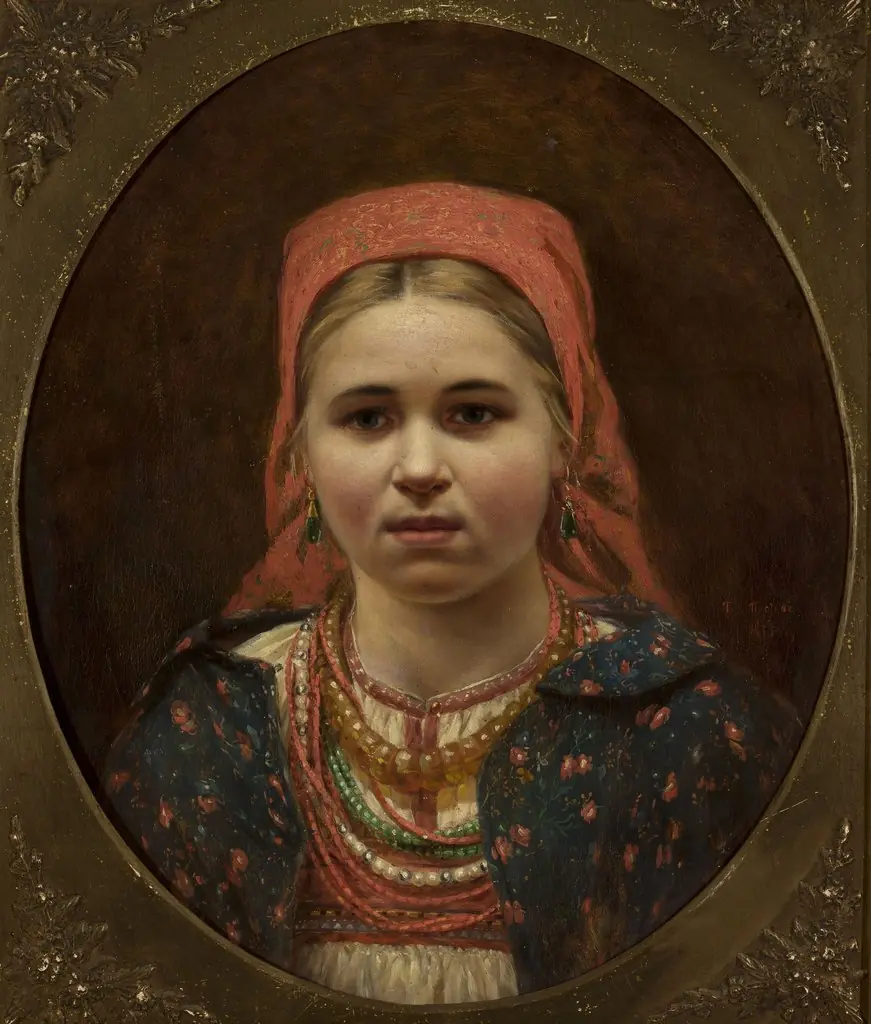
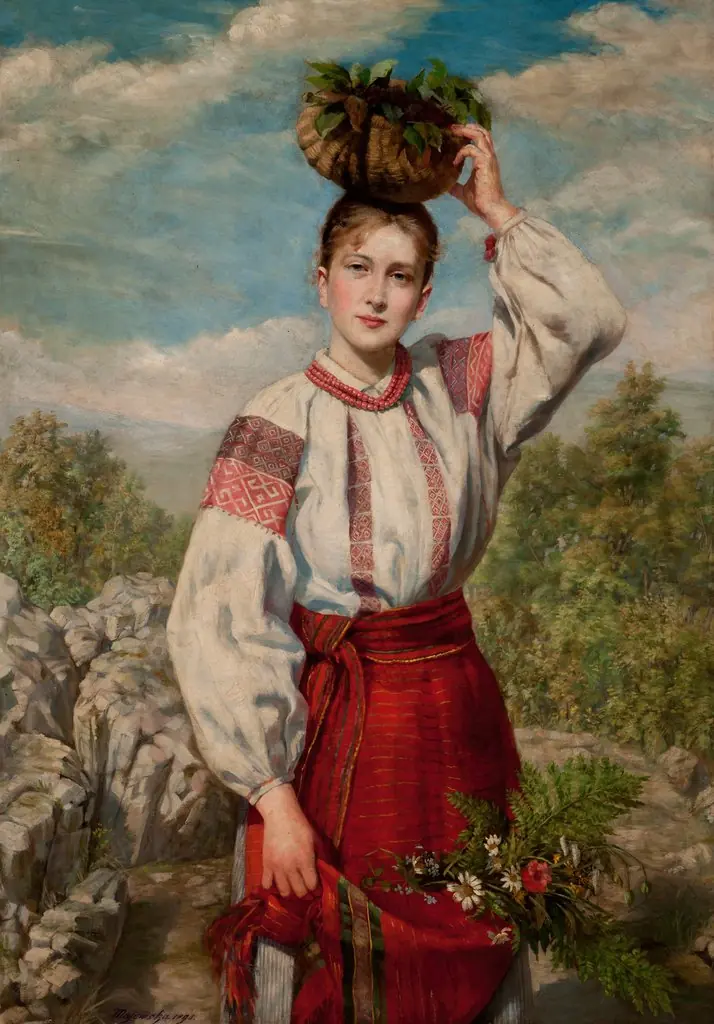
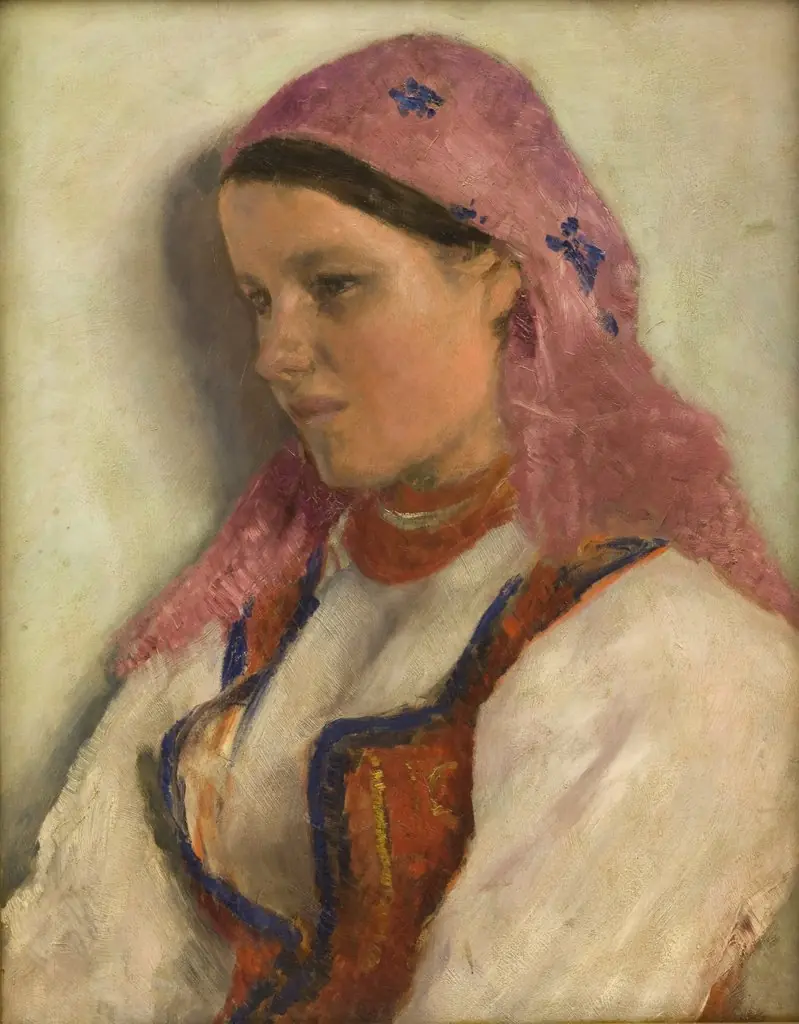
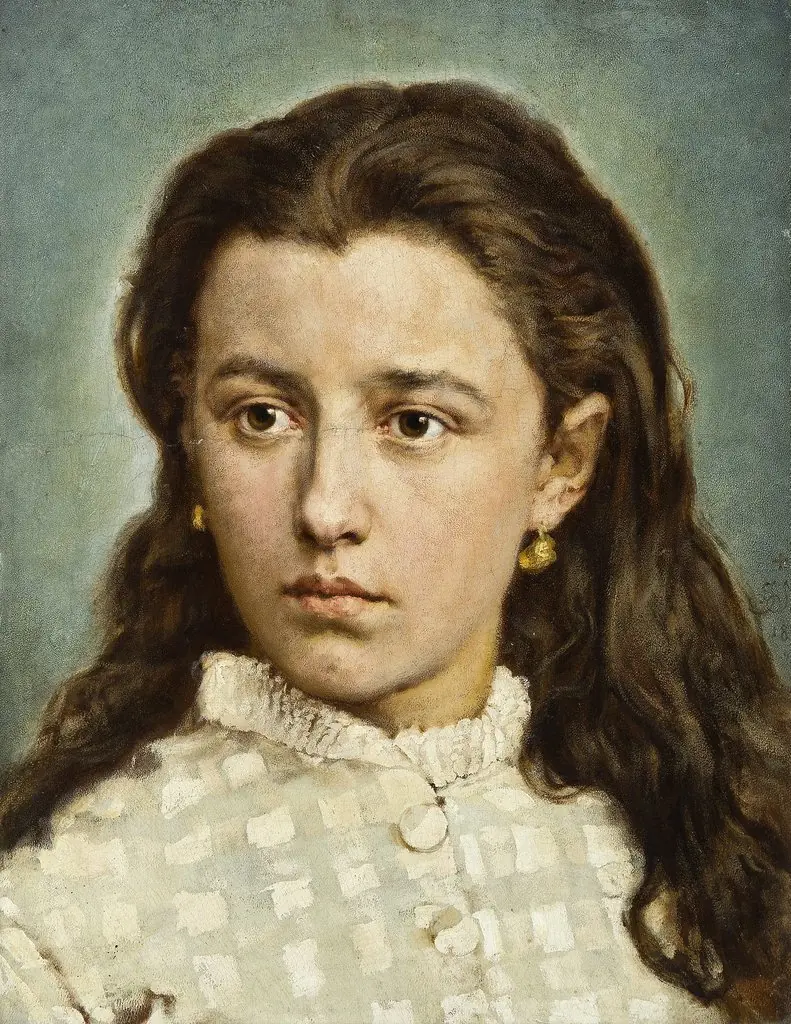
Painted in 1902 by Constantin D. Stahi, this portrait depicts a rural Romanian woman with quiet dignity. The composition is deliberately restrained, eliminating extraneous detail to center the subject’s presence. The plain, blurred background ensures attention remains fixed on her expression and attire, reflecting a deliberate focus on individual character over narrative context.
Subject & Meaning
The subject is a peasant woman, portrayed not as an idealized figure but as a person grounded in daily life. Her simple clothing and the small purple flower she holds suggest modesty and a connection to nature. The gesture of resting her hand on her belt conveys stillness and self-possession, hinting at inner resilience rather than overt symbolism.
Technique & Style
Stahi employs subtle chiaroscuro to model form through soft gradations of light and shadow. The folds of her blouse and the texture of her braided hair are rendered with delicate tonal shifts, avoiding harsh outlines. The color palette is muted except for the vivid stripes on her sleeves, which draw the eye without overwhelming the composition’s quiet tone.
History & Provenance
Created in 1902, the painting emerged during a period when Romanian artists increasingly turned to rural life as a source of national identity. While its early ownership is undocumented, it has remained within Romanian cultural collections, reflecting its recognition as a representative work of early 20th-century portraiture in the region.
Context
At the turn of the century, Romanian painters sought to define a distinct visual language rooted in local traditions. Stahi’s portrait aligns with this movement, portraying ordinary people with psychological depth rather than romanticized stereotypes. The work reflects broader cultural efforts to elevate folk life as worthy of artistic attention.
Legacy
The painting endures as a quiet example of Romanian realist portraiture. It does not seek dramatic impact but instead offers a sustained, empathetic gaze at a common subject. Its influence lies in its restraint — a model for later artists who valued authenticity over embellishment in depicting rural life.
Artist & collection