Artwork
Portret de fată
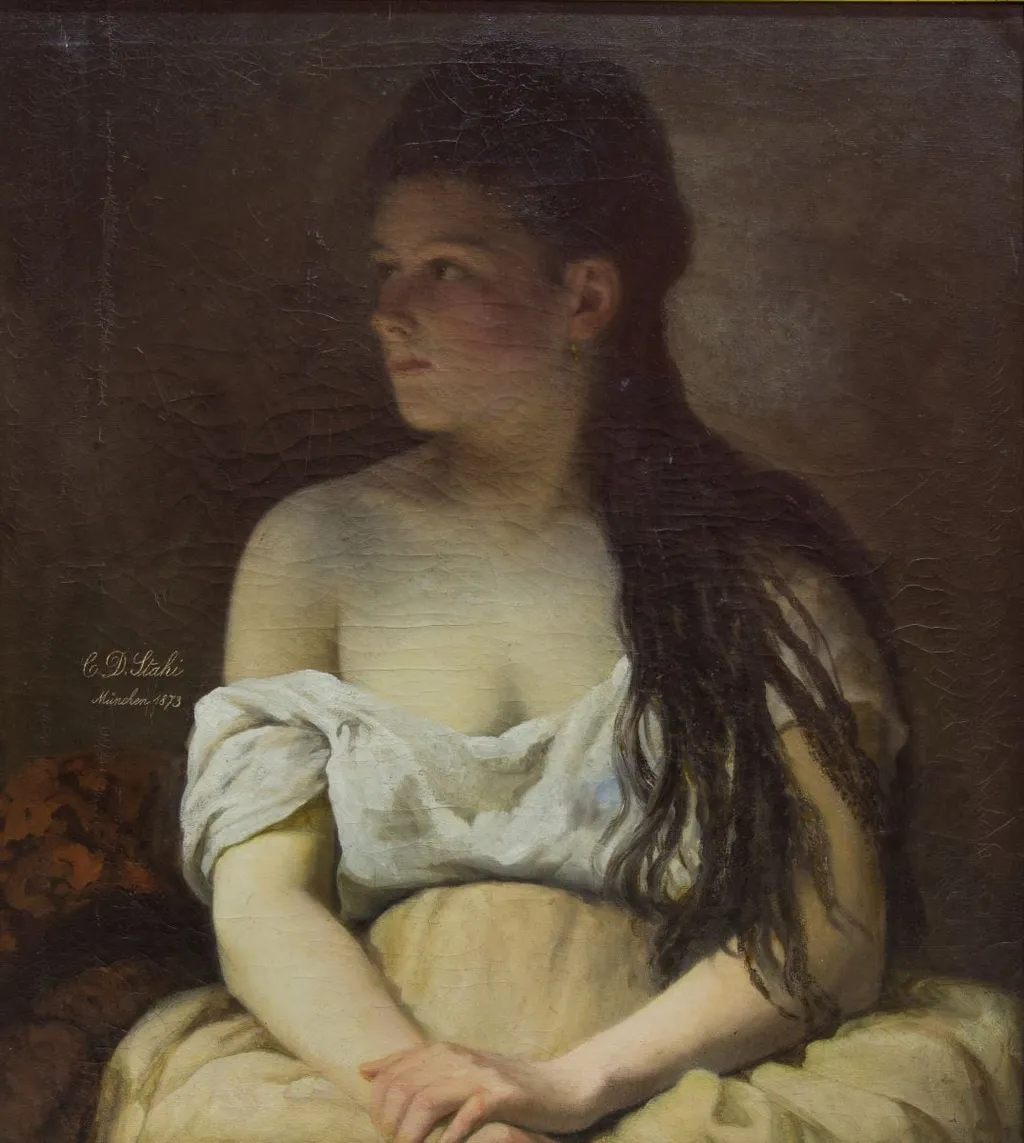
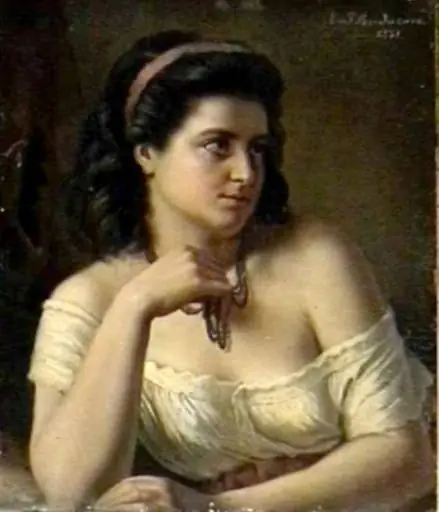
Portret de fată is a print by the Impressionist artist Constantin Dimitrie Stahi. It dates from 1873 and is held in the collection of the National Museum of Art of Romania.
About this work
Overview
Painted in 1873 by Constantin Dimitrie Stahi, this portrait depicts a young woman in a quiet, intimate pose. Unlike the formal, idealized portraits common in academic circles, the work embraces a more immediate and unembellished approach. The subject is rendered with a sense of presence rather than grandeur, reflecting a broader shift toward personal observation in 19th-century Romanian art.
Subject & Meaning
The absence of context invites focus on her individuality, aligning with Realist ideals of honoring ordinary subjects without embellishment.
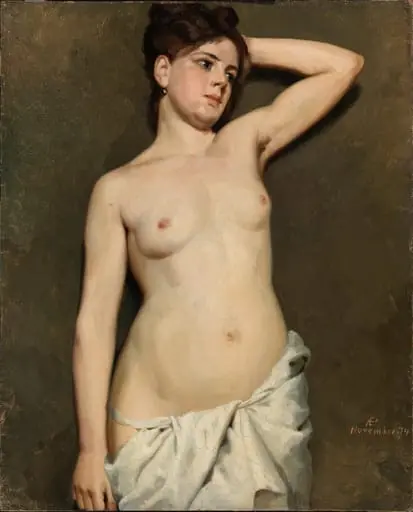
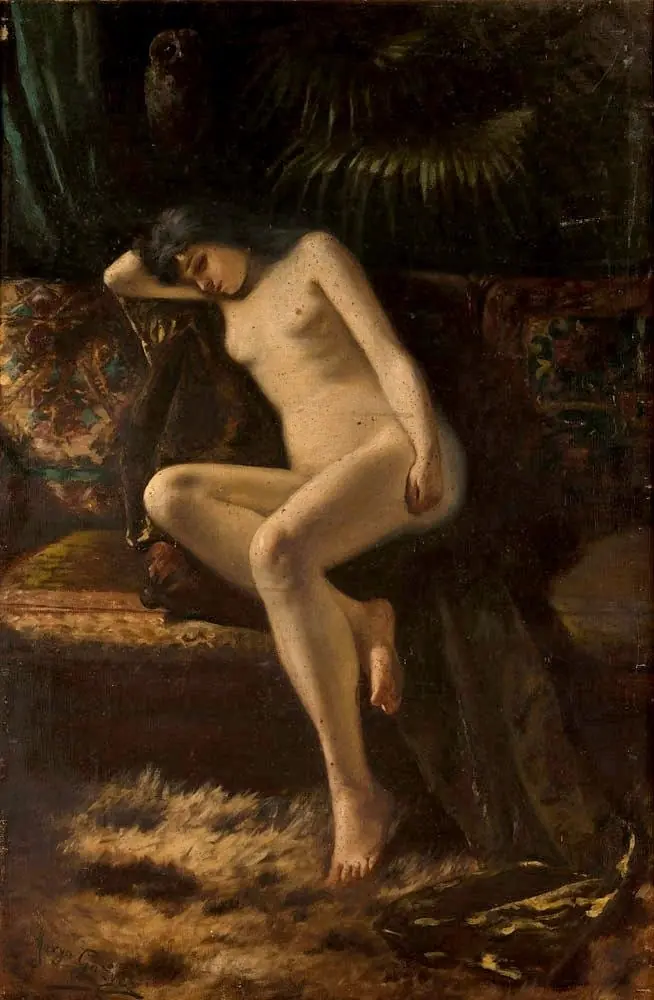
The sitter, unnamed and unadorned, is shown in a natural, unposed stance—legs crossed, arms relaxed. Her simple white drapery and pulled-back hair suggest modesty and everyday life. There is no narrative flourish or symbolic object; her quiet dignity emerges from stillness and direct gaze. The absence of context invites focus on her individuality, aligning with Realist ideals of honoring ordinary subjects without embellishment.
Technique & Style
Stahi employs loose, fluid brushwork that avoids the polished finish typical of academic portraiture. Skin tones are suggested with soft, blended strokes rather than precise modeling, lending a tactile, almost fleeting quality. The dark, indistinct background isolates the figure, enhancing emotional immediacy. This technique prioritizes atmosphere and sensation over detail, marking a departure from traditional methods of the period.
History & Provenance
Created during a period of cultural awakening in Romania, the portrait reflects the influence of European Realism on local artists. While little is documented about its early ownership, it entered public collections in the 20th century as part of efforts to preserve national artistic heritage. Its survival and display underscore its significance as an early example of Romanian Realist portraiture.
Context
In the 1870s, Romanian artists increasingly turned away from historical and mythological themes toward depictions of contemporary life. Stahi’s portrait aligns with this movement, echoing the work of French and Russian Realists who valued authenticity over idealization. The painting’s quiet intensity reflects a broader regional interest in capturing the inner life of ordinary people through visual art.
Legacy
The portrait stands as a quiet milestone in Romanian art, demonstrating how local painters adapted international Realist principles to their own cultural context. Its emphasis on psychological presence over social status influenced subsequent generations of artists seeking to portray individuals with honesty and restraint. It remains a touchstone for discussions of identity and representation in 19th-century Eastern European art.
Artist & collection
Artist
Constantin Dimitrie Stahi made small prints of everyday life in 19th-century Romania.