Artwork
Marysia with the dog Burek on Ceylon
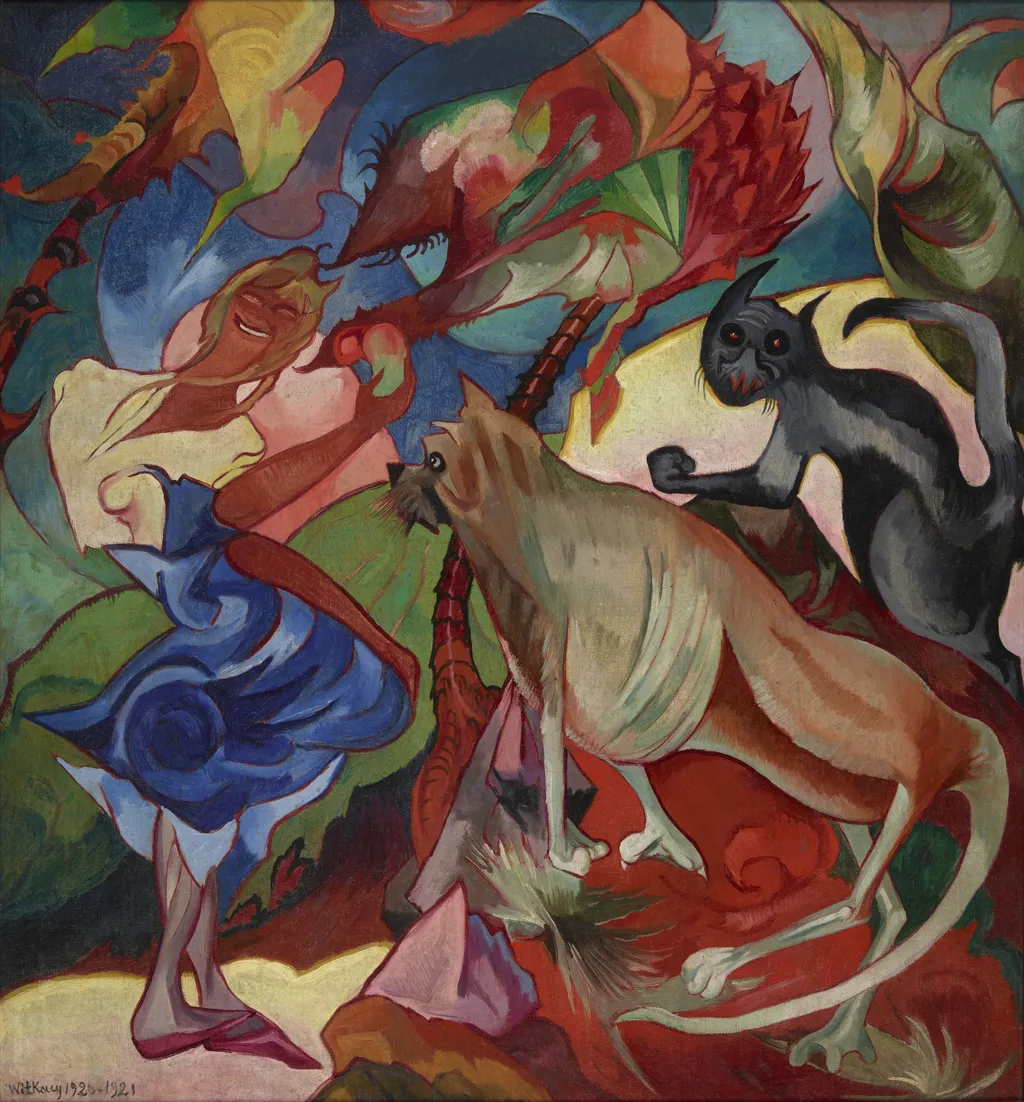
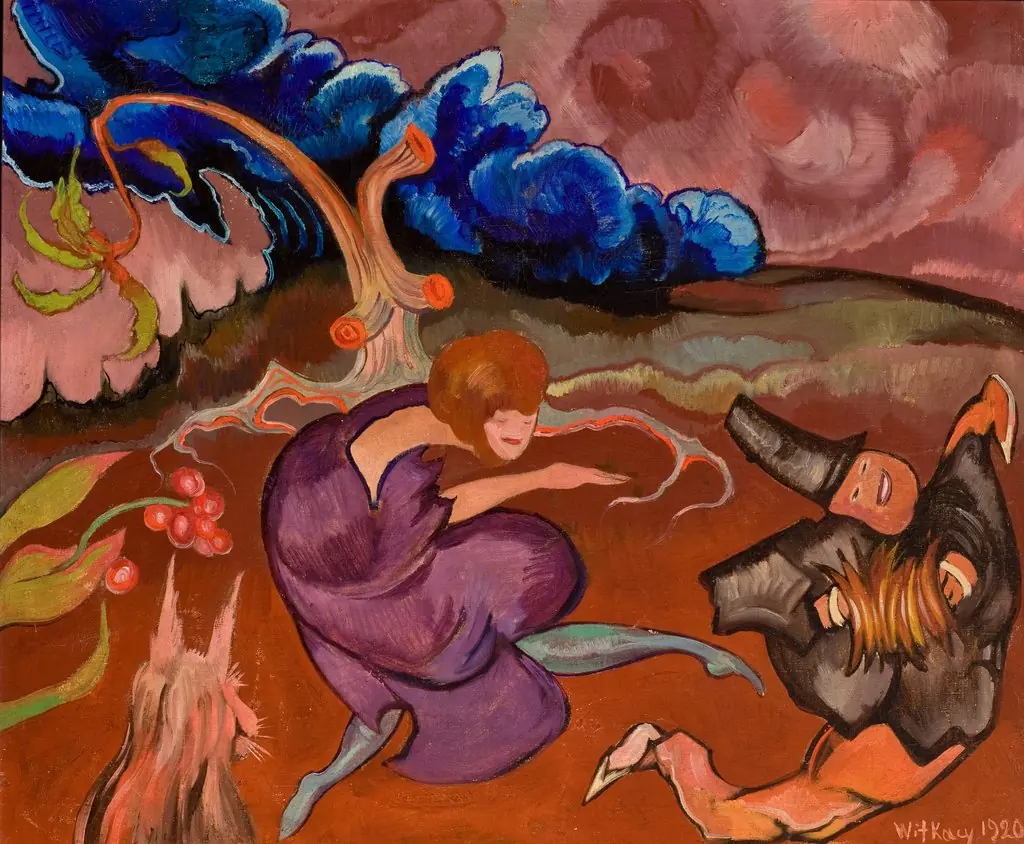
Marysia with the dog Burek on Ceylon is an oil painting by Stanisław Ignacy Witkiewicz. It dates from 1920 and is held in the collection of the National Museum in Kraków.
About this work
Overview
Though titled with reference to Ceylon, the location is likely imagined rather than observed.
Painted in 1920 by Stanisław Ignacy Witkiewicz, known as Witkacy, this oil-on-canvas work portrays a woman named Marysia and her dog Burek in a tropical setting. Though titled with reference to Ceylon, the location is likely imagined rather than observed. The piece belongs to the National Museum in Kraków’s collection and reflects Witkacy’s engagement with personal symbolism and expressive form during a period of intense artistic experimentation.
Subject & Meaning
The figures—Marysia and Burek—are rendered with intimate familiarity, suggesting a private moment rather than a public portrait. The choice of a tropical backdrop, unrelated to the artist’s Polish context, hints at psychological or emotional displacement. The dog, a constant companion in Witkacy’s life, may symbolize loyalty or emotional grounding amid personal and societal upheaval following World War I.
Technique & Style
Witkacy employed thick, textured brushwork to convey the tactile qualities of fabric and fur, using impasto to emphasize surface and movement. Bold, non-naturalistic colors heighten the scene’s emotional resonance over realism. The composition places the figures centrally against a dense, swirling foliage, creating a sense of enclosed intimacy that contrasts with the exotic setting, reinforcing the painting’s introspective tone.
History & Provenance
The painting entered the National Museum in Kraków’s collection in the mid-20th century, following the artist’s death in 1939. Its preservation reflects growing institutional interest in Witkacy’s multifaceted output beyond his literary works. No significant alterations or restorations are documented, and the work has remained in public hands since its acquisition, consistently displayed as part of Poland’s modernist heritage.
Context
Created during a period when Witkacy was developing his theories of 'pure form' and rejecting traditional representation, this painting aligns with his broader rejection of realism. Though set in a locale he never visited, the scene reflects his fascination with psychological landscapes and the tension between personal memory and invented environments. It emerged alongside his philosophical writings on the collapse of cultural certainties after the war.
Legacy
The painting contributes to the understanding of Witkacy as a figure who blurred boundaries between art, philosophy, and autobiography. While not widely exhibited internationally, it remains a key example of Polish modernism’s emotional intensity and formal innovation. Its enduring presence in Kraków underscores its role in preserving the artist’s unique vision of inner experience rendered through visual means.
Own this work as a print
Artist & collection
Artist
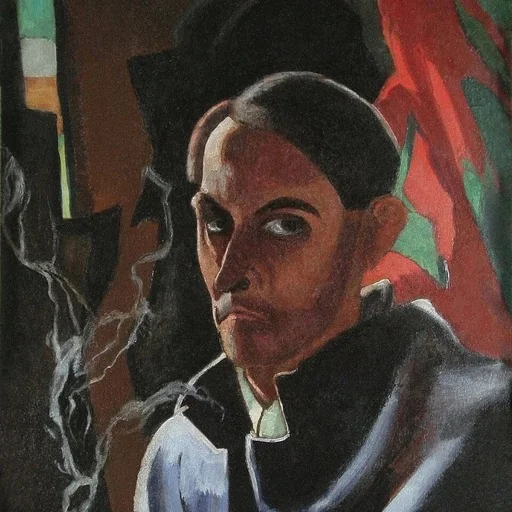
Stanisław Ignacy Witkiewicz (Polish: ; 24 February 1885 – 18 September 1939), commonly known as Witkacy, was a Polish writer, painter, philosopher, theorist, playwright, novelist, and photographer active before World War I and during the…