Artwork
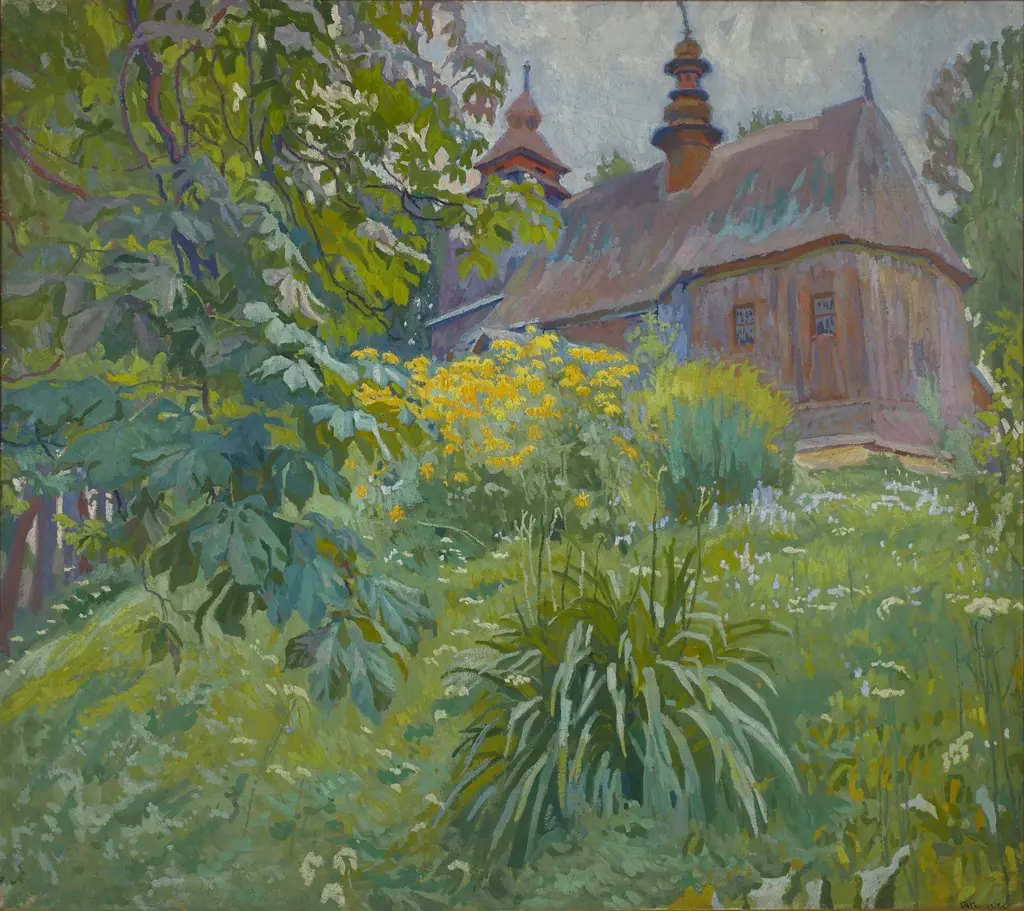
Church at Wola Radziszowska
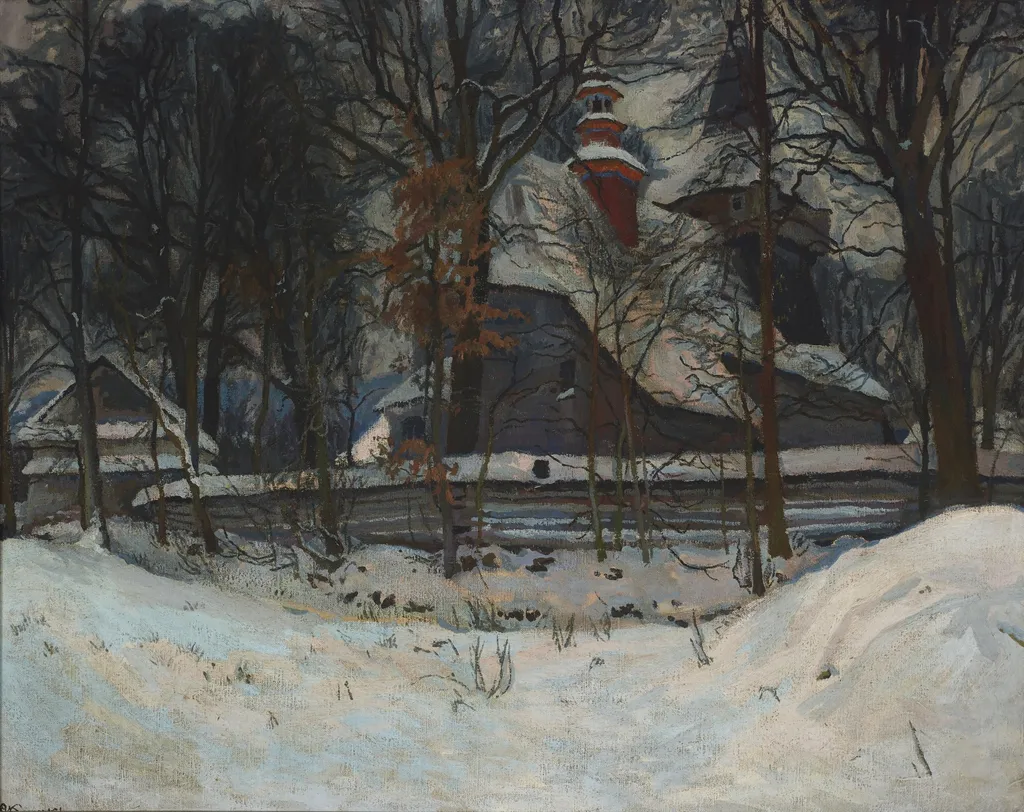
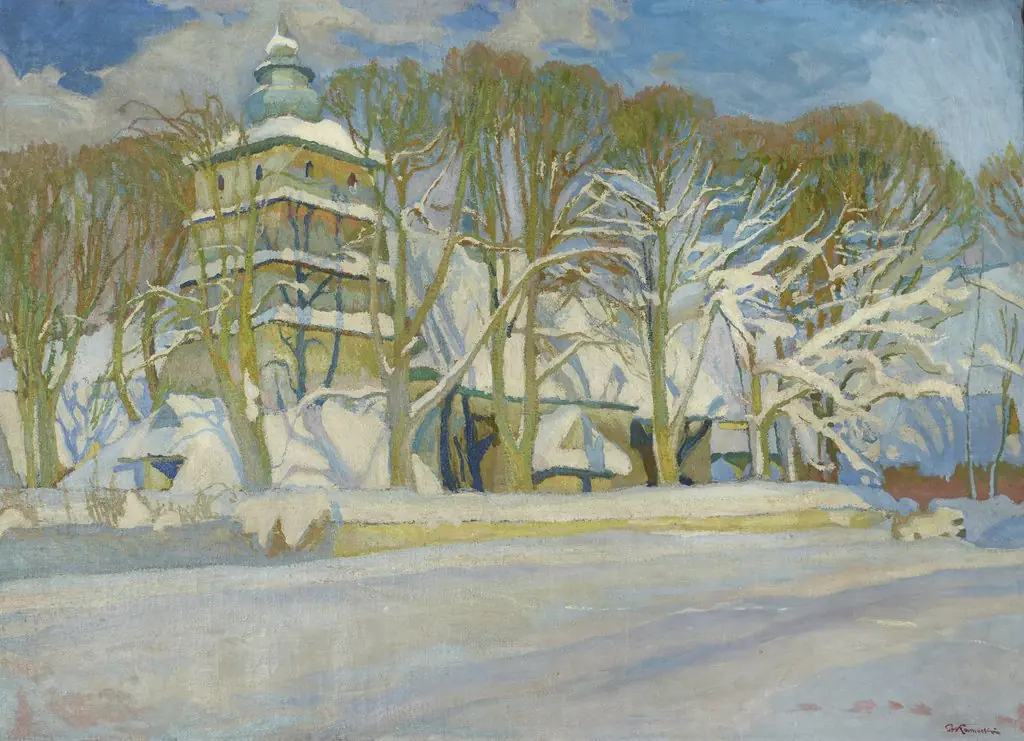
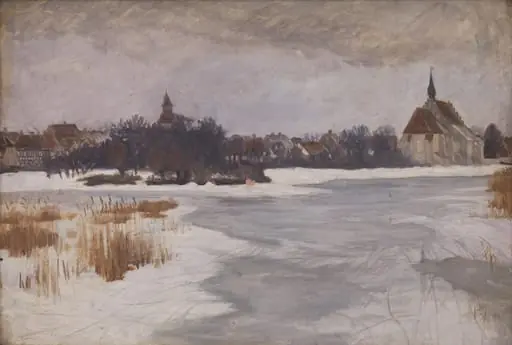
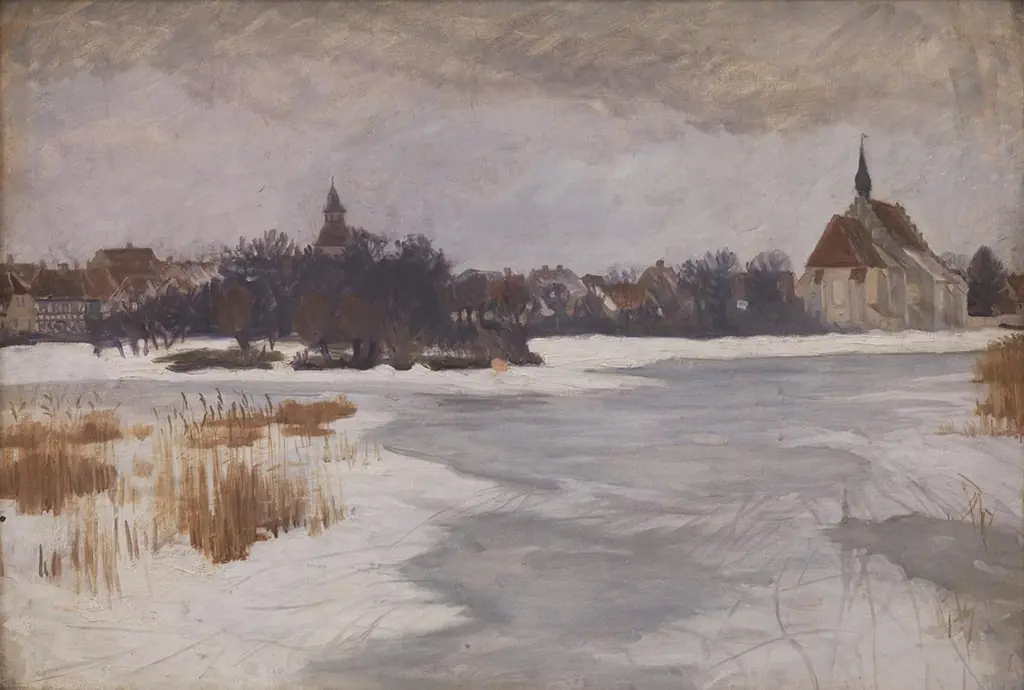
Church at Wola Radziszowska is an oil painting by Stanisław Kamocki. It dates from 1907 and is held in the collection of the National Museum in Kraków.
About this work
Overview
The work is part of the National Museum in Kraków’s collection, representing Kamocki’s interest in Polish rural scenes during the early 20th century.
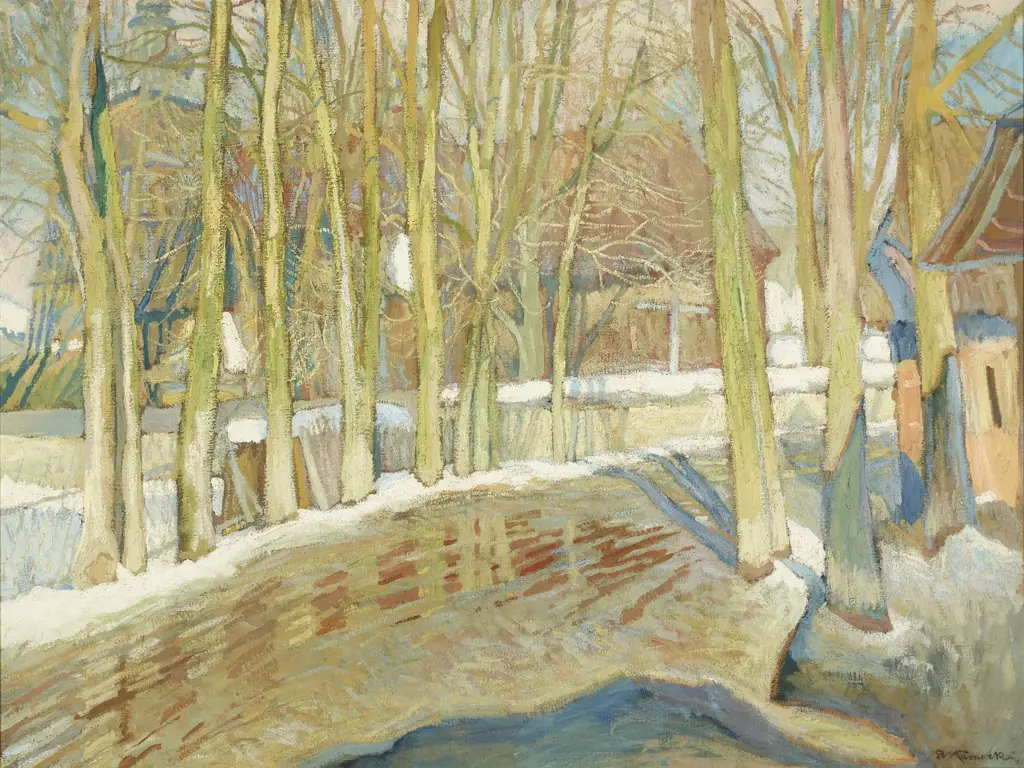
Painted in 1907 by Stanisław Kamocki, this oil on canvas depicts a quiet winter landscape centered on a small parish church in Wola Radziszowska. The work is part of the National Museum in Kraków’s collection, representing Kamocki’s interest in Polish rural scenes during the early 20th century. Its subdued palette and gentle composition reflect a contemplative approach to nature, characteristic of his mature style.
Subject & Meaning
The painting presents a solitary church surrounded by snow-laden, leafless trees and a narrow frozen stream. The absence of human figures emphasizes stillness and isolation, suggesting a meditation on solitude and the endurance of spiritual spaces within the natural world. The church, though modest, anchors the scene as a quiet symbol of continuity amid seasonal change.
Technique & Style
Kamocki employed soft, blended brushwork to render the snow-covered ground and hazy winter air. Colors are restrained—cool grays, muted browns, and a faint red from the church’s roof—creating harmony without contrast. The delicate handling of light suggests diffuse daylight, enhancing the scene’s calmness. Details are minimized, favoring atmosphere over precision.
History & Provenance
Created in 1907, the painting remained in private hands until it entered the National Museum in Kraków’s collection. Its acquisition aligns with the museum’s early 20th-century efforts to document regional Polish art. No significant alterations or restorations are recorded, and the work has been consistently displayed as an example of Kamocki’s landscape oeuvre.
Context
Painted during a period of growing national consciousness in partitioned Poland, Kamocki’s work avoided overt political themes. Instead, he focused on rural tranquility, resonating with cultural ideals of authenticity and rootedness. This painting reflects broader artistic trends in Poland that valued quiet, introspective depictions of the countryside over grand historical narratives.
Legacy
While not widely reproduced, the painting is recognized in scholarly circles as a representative example of Kamocki’s mature landscape style. It contributes to understanding how Polish artists of the era engaged with nature not as spectacle but as a quiet, enduring presence. Its presence in Kraków’s national collection ensures continued access for study and reflection.
Own this work as a print
Artist & collection