Artwork
Proposed Wall Decoration No. 2, Old Corcoran Gallery of Art
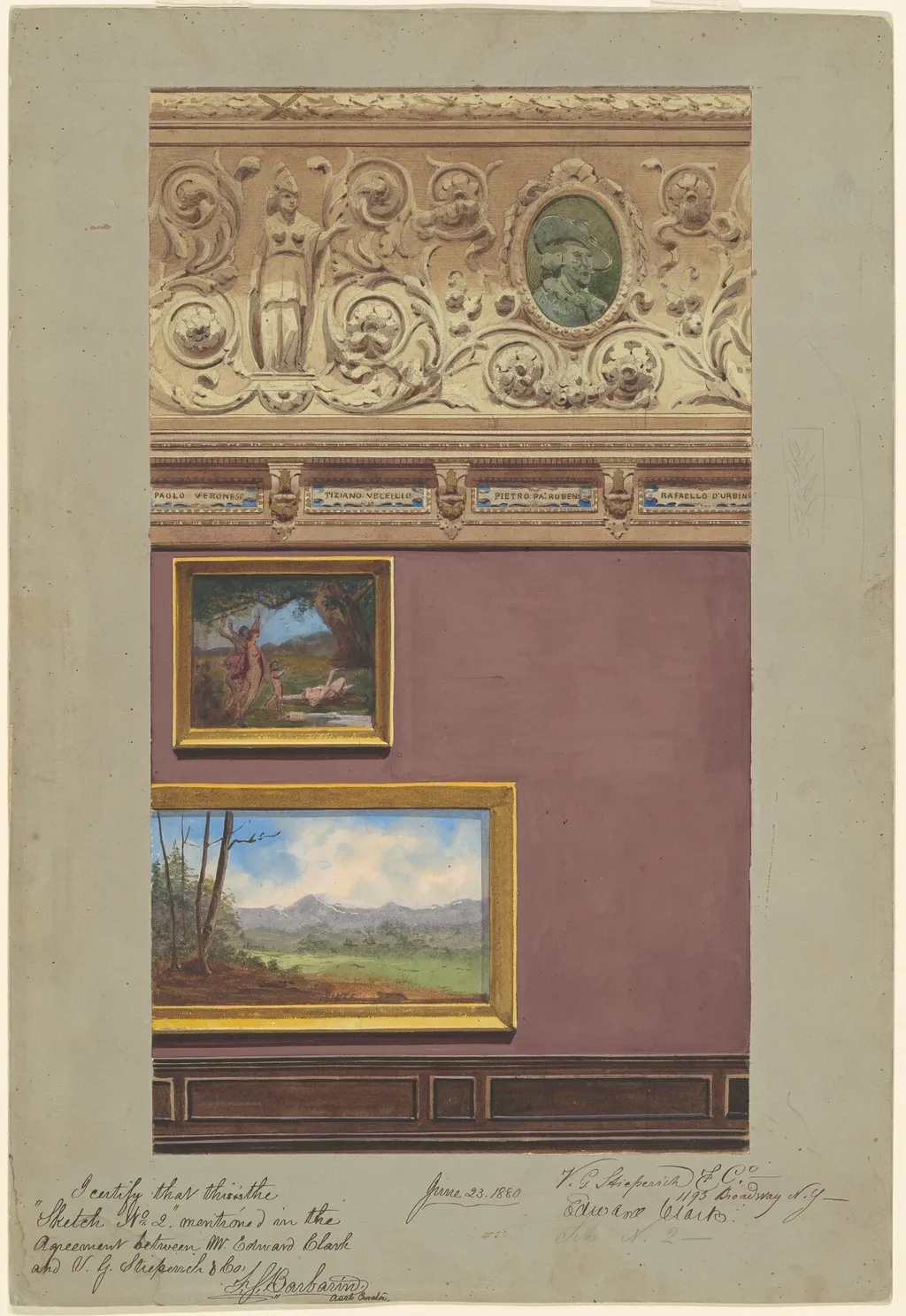
Proposed Wall Decoration No. 2, Old Corcoran Gallery of Art is a watercolor drawing by the Impressionist artist Vincent G. Stiepevich. It dates from 1880 and is held in the collection of the National Gallery of Art. Vincent G.
About this work
Overview
Vincent G. Stiepevich’s Proposed Wall Decoration No. 2, Old Corcoran Gallery of Art, is a watercolor drawing executed on wove paper that has been mounted to a board. Completed in 1880, the work measures a modest size and is part of the National Gallery of Art’s collection in Washington, D.C. It functions as a design proposal rather than a finished decorative scheme.
Subject & Meaning
The frieze incorporates swirling motifs, stylized faces, and a central green oval portrait, while the wall surface below is rendered in a deep red hue.
The composition depicts an interior wall prepared for exhibition, featuring two framed pictures positioned side by side beneath an ornamental frieze. The frieze incorporates swirling motifs, stylized faces, and a central green oval portrait, while the wall surface below is rendered in a deep red hue. The framed images suggest a landscape with trees and mountains and a genre scene of figures within a forest, illustrating the intended visual program for the gallery space.
Technique & Style
Stiepevich employed watercolor over an initial graphite sketch, allowing for a delicate tonal range and soft edges. The medium’s translucency conveys the proposed color palette of the wall and decorative border, while the graphite underdrawing defines the architectural elements and framing. The style is illustrative and schematic, emphasizing planning over painterly finish, typical of 19th‑century interior design proposals.
History & Provenance
Created in 1880, the drawing was likely produced as a presentation for the Old Corcoran Gallery of Art, an institution that later merged with the Corcoran Gallery. The work entered the National Gallery of Art’s holdings through donation, though specific acquisition details remain limited. Its preservation on board ensures stability for display and study.
Context
The piece reflects a period when American museums sought to emulate European decorative traditions, as indicated by the inclusion of names such as Paolo Veronese and Titian within the ornamental border. Though the referenced masters did not contribute actual works, their mention signals an aspirational alignment with historic artistic standards in the gallery’s visual planning.
Artist & collection


 Design for Ornamental Ceiling
 Interior of The Temple, Rievaulx Terrace, Yorkshire
 Udkast til kamindekoration
 Interior, Fitzwilliam Museum
 Untitled
 A Gallery in the Old Museum
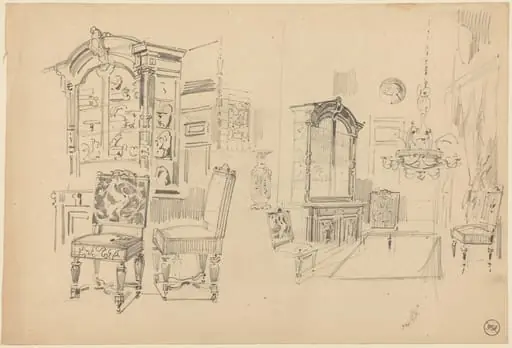 Two Studies of an Interior with Furniture
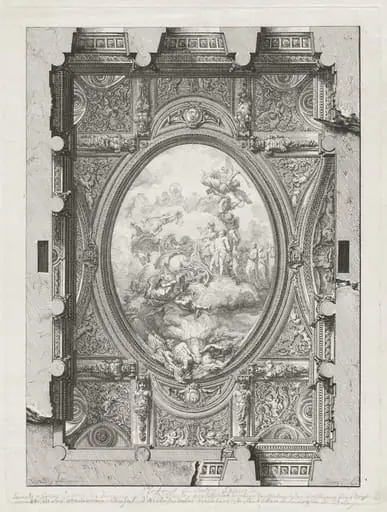 Design for the Ceiling of the Salon of the Palazzo Spinola, Genoa
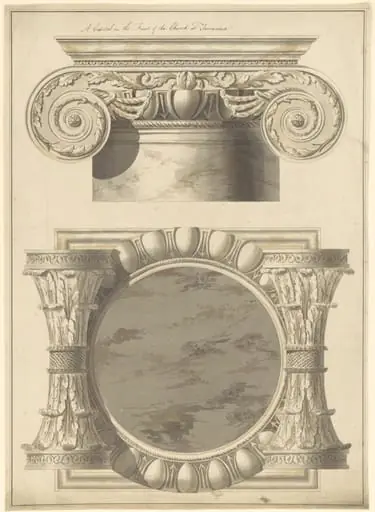 Plan and elevation of a capital in the front of the church at Terracina
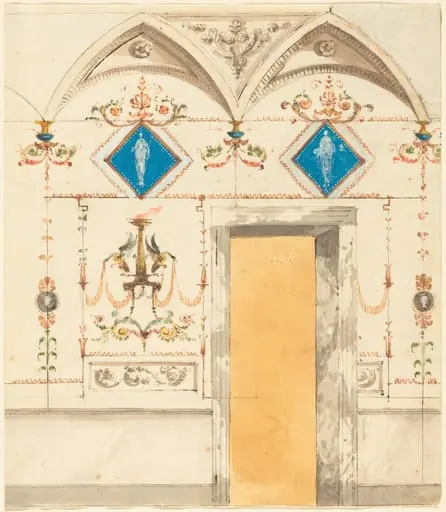
![Design for a Wall of a Music Room [recto], by Italian 18th Century](https://artifactworldgallery.com/img/italian-18th-century--design-for-a-wall-of-a-music-room-recto--1582534309a804bd-w320.webp)