Artwork
Mountain Market in Clearing Mist, from Eight Views of Xiao-Xiang
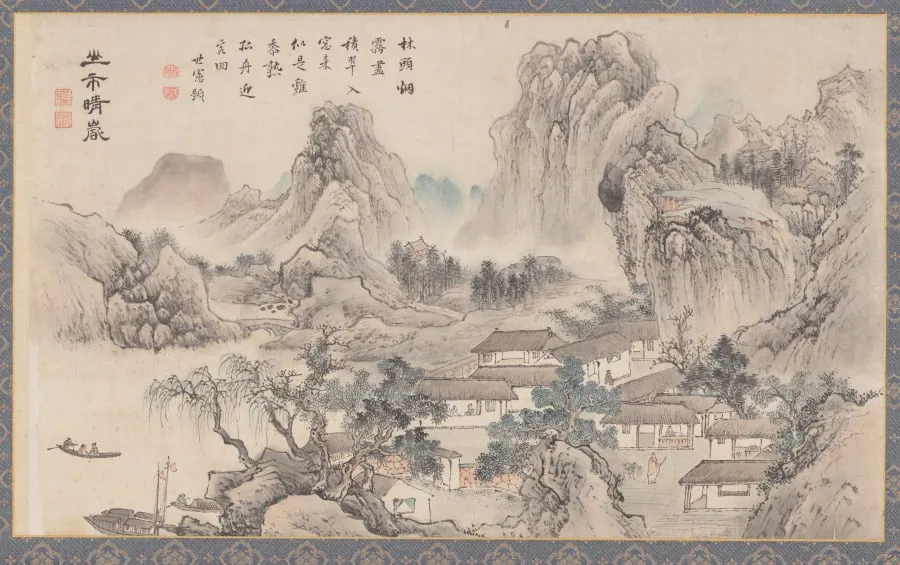
Mountain Market in Clearing Mist, from Eight Views of Xiao-Xiang is an unspecified painting by the Nihonga artist Tani Bunchō. It dates from 1788 and is held in the collection of the Cleveland Museum of Art.
About this work
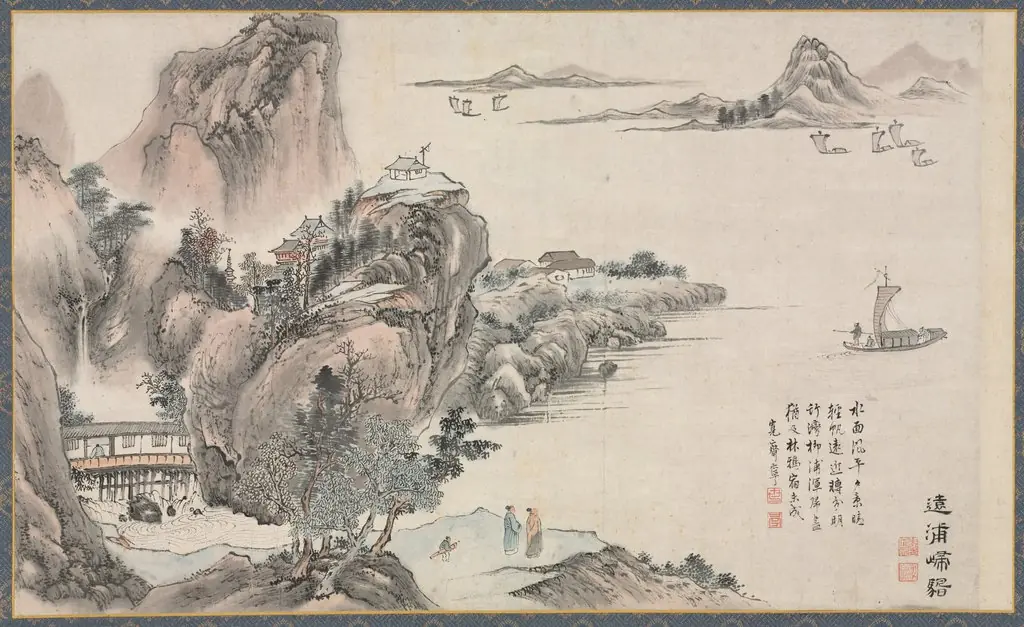
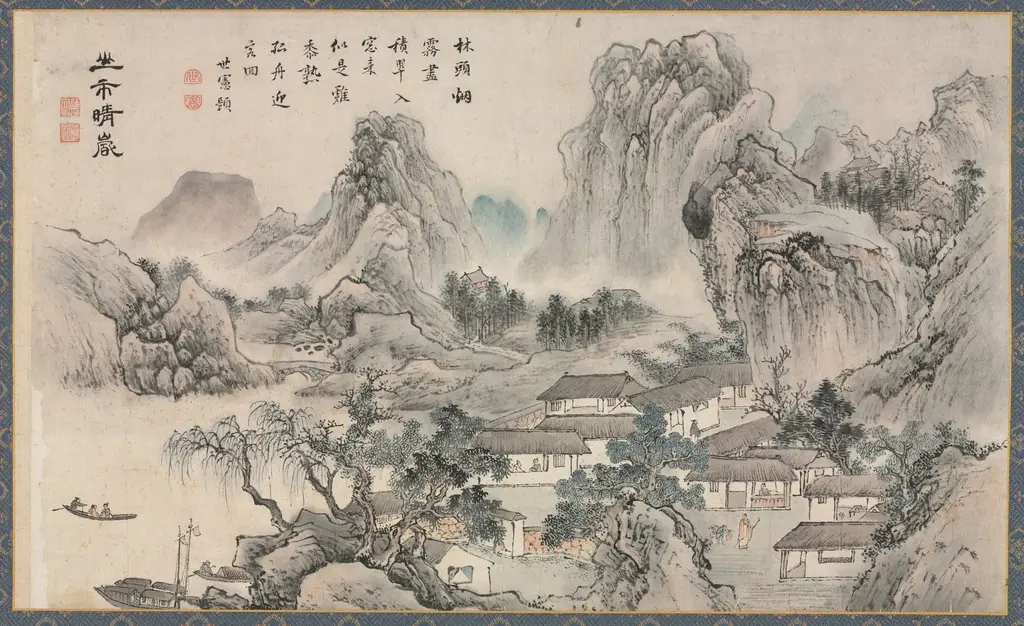
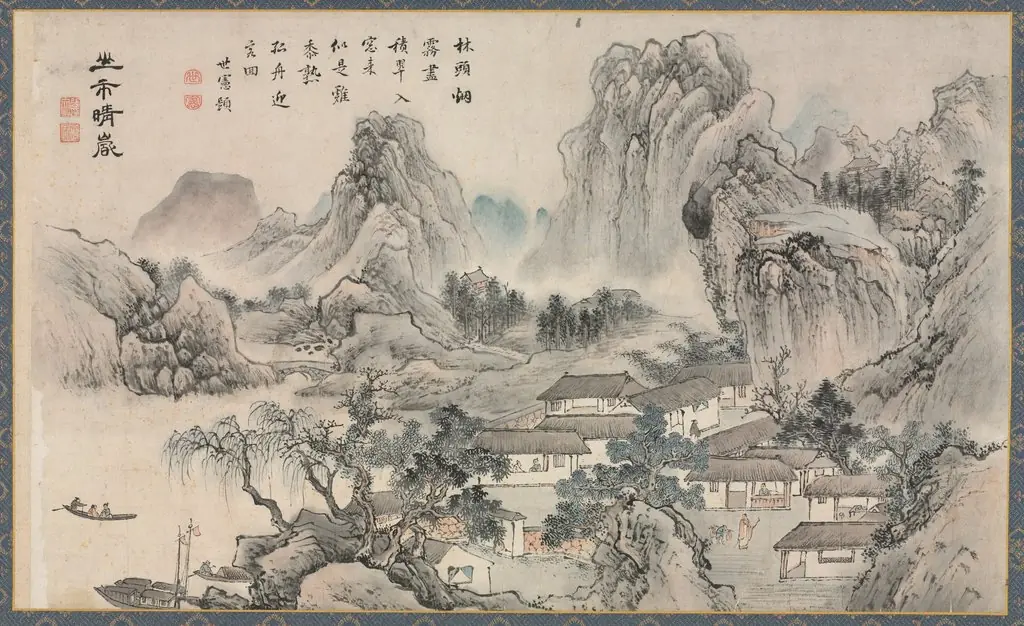
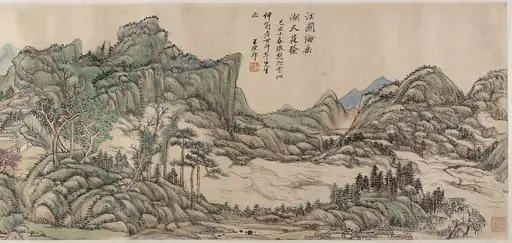
A misty valley frames a small wooden bridge. Figures cross it carrying goods. Soft peaks loom in the distance.
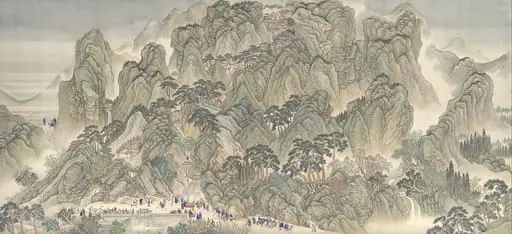
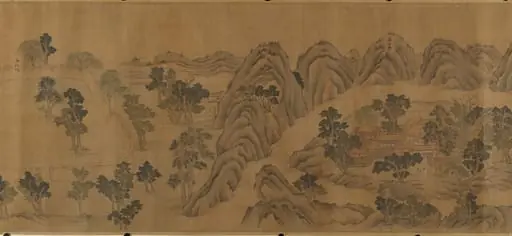
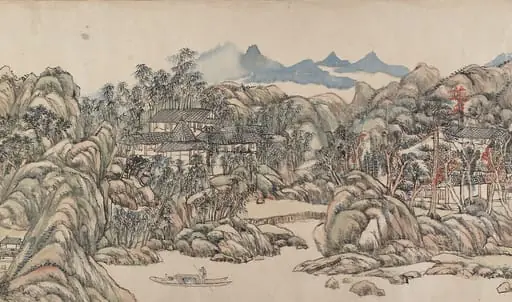
This is part of a set showing Eight Views of Xiao-Xiang, an old Chinese theme. Artists in Japan reused it for centuries. The brushwork blends ink with delicate color.
Look up Tani Bunchō (Japanese, 1763–1841) to see more of his album leaves.
Overview
The work belongs to a series of album leaves illustrating the Eight Views of Xiao‑Xiang, a motif that originated in Chinese poetry and painting and later circulated in Korean and Japanese art. The scene depicts a mist‑shrouded valley where a modest wooden bridge spans the river, traversed by figures bearing merchandise, with soft, distant peaks completing the composition.
Subject & Meaning
The composition captures the atmospheric qualities of the Xiang River’s banks, where shifting mists have long symbolized the mutable moods of human experience. By presenting a market scene within this ethereal setting, the artist juxtaposes everyday commercial activity with the contemplative ambience of the landscape, echoing the poetic tradition that links natural phenomena to inner states.
Technique & Style
Executed with a combination of ink wash and subtle coloration, the brushwork balances bold outlines for the bridge and figures with delicate washes that render the surrounding mist and distant hills. The interplay of monochrome ink and faint pigments reflects a Japanese adaptation of Chinese literati techniques, emphasizing both line and atmospheric tone.
History & Provenance
The album leaves were likely commissioned by emerging Japanese Confucian scholars who sought to align themselves with Chinese cultural models. While the exact patron remains unidentified, contemporary inscriptions suggest a scholarly audience in Japan during the late eighteenth to early nineteenth century, a period of heightened interest in Chinese literary themes.
Context
The Eight Views of Xiao‑Xiang theme persisted across East Asia for centuries, serving as a visual shorthand for particular seasonal and emotional associations. Japanese artists repeatedly revisited the motif, integrating native aesthetic sensibilities while preserving its Chinese origins, thereby creating a cross‑cultural dialogue that informed the broader canon of landscape painting.
Artist & collection