Artwork
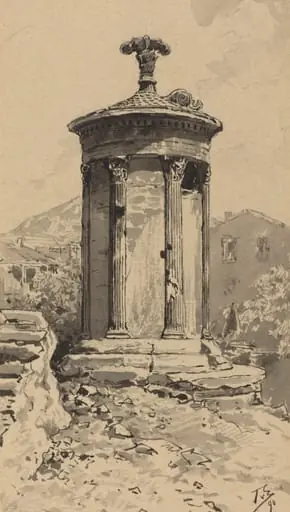
Turnul lui Lisicrates
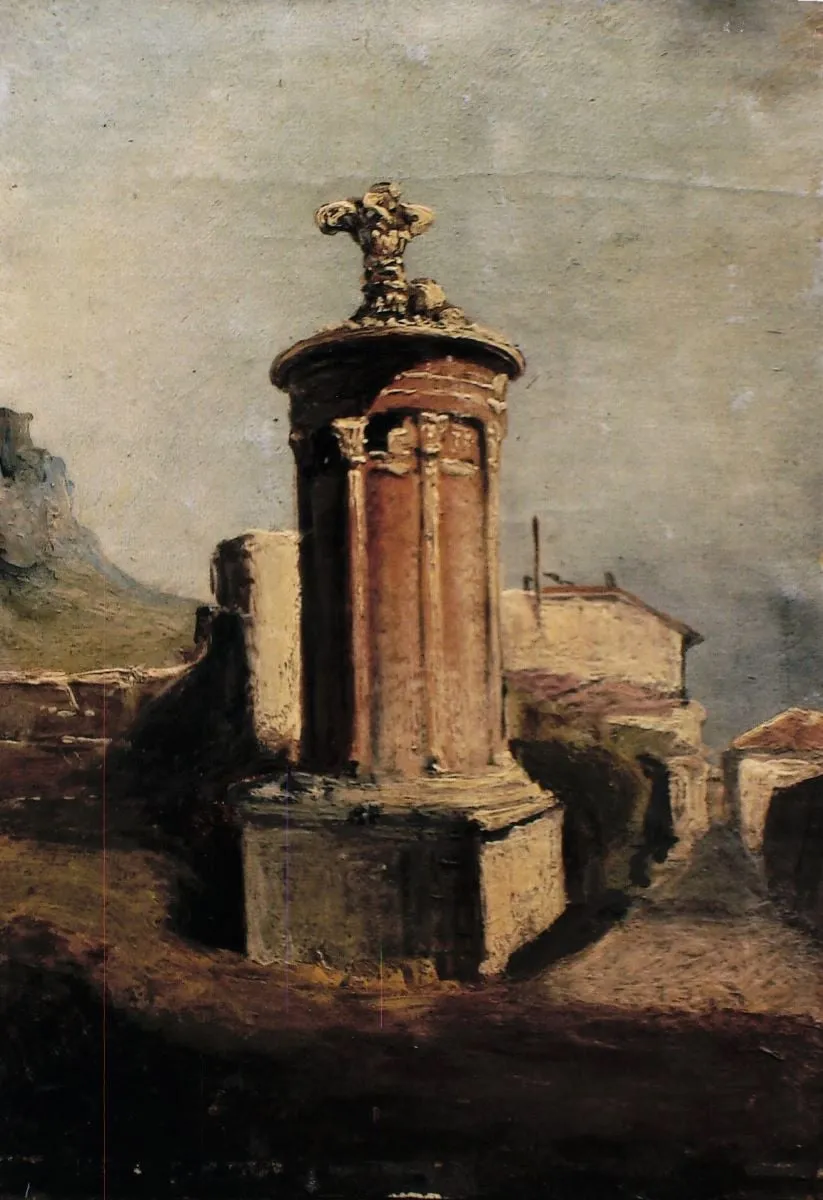
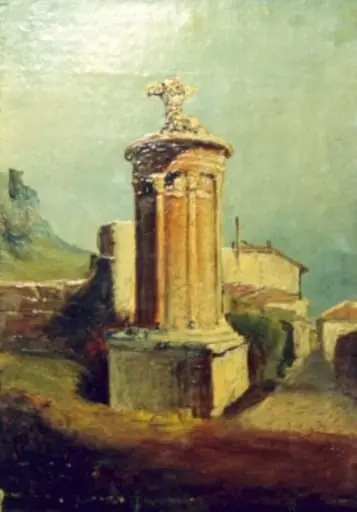
Turnul lui Lisicrates is an unspecified painting by Gheorghe Tattarescu. It dates from 1867 and is held in the collection of the Bucharest Municipality Museum.
About this work
Overview
Created circa 1867 by Gheorghe Tattarescu, this oil painting depicts a solitary stone tower rendered in a clear, orderly manner. The work belongs to the collection of the Museum of Ethnography and exemplifies the artist’s turn toward classical motifs within a Romanian landscape setting.
Subject & Meaning
The central figure is an ancient‑style tower, its walls adorned with finely incised leaf motifs reminiscent of Greek decorative schemes. Though imagined rather than a specific site, the tower evokes a sense of timeless solidity and the enduring influence of classical architecture on the visual imagination.
Technique & Style
Tattarescu employs a neoclassical vocabulary, using precise brushwork and a restrained palette to model light and shadow across the stone. The illumination falls from one side, accentuating the relief of the carvings and producing crisp chiaroscuro that underscores the structural clarity prized by neoclassical aesthetics.
History & Provenance
The painting was produced during the middle phase of Tattarescu’s career, when he was actively promoting neoclassicism in Romanian art. It entered the Museum of Ethnography’s holdings in the early 20th century, where it has remained part of the permanent display of 19th‑century Romanian painting.
Context
Tattarescu’s work reflects a broader 19th‑century Romanian interest in aligning national culture with the ideals of antiquity. By integrating a Greek‑inspired architectural element into a local landscape, the artist participates in a cultural dialogue that sought to legitimize modern Romanian art through classical precedent.
Artist & collection
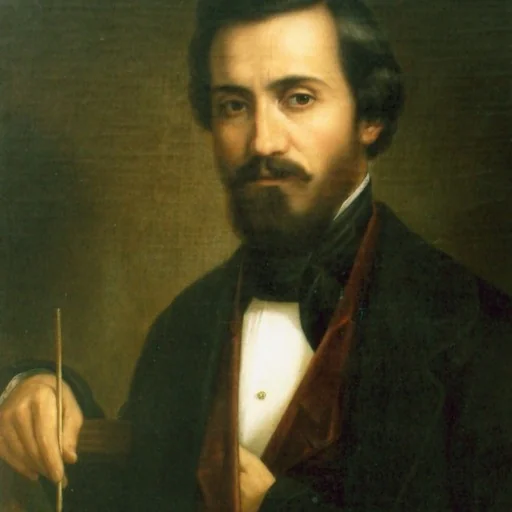
Artist
Gheorghe Tattarescu (Romanian pronunciation: ; October 1818 – October 24, 1894) was a Romanian painter and a pioneer of neoclassicism in his country's modern painting.