Artwork
Casă țărănească
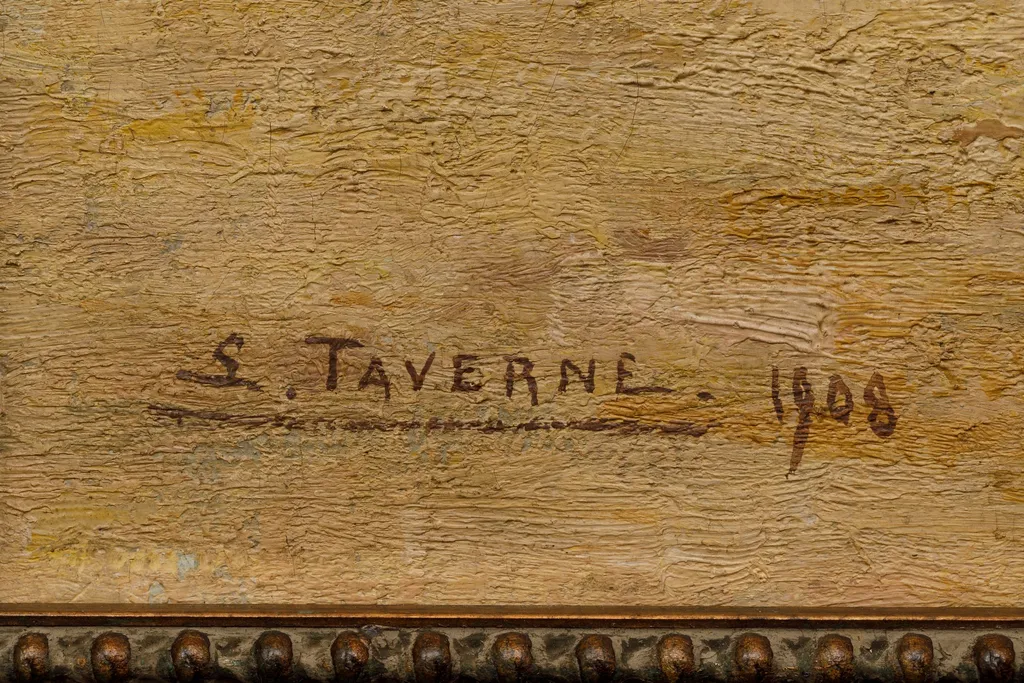
Casă țărănească is an unspecified painting by Louis Taverne. It dates from 1850 and is held in the collection of the National Museum of Art of Romania.
About this work
The wood’s natural color is a mix of yellows and browns, with some areas showing signs of age or damage.
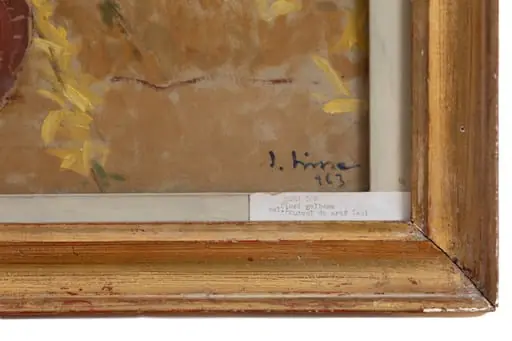
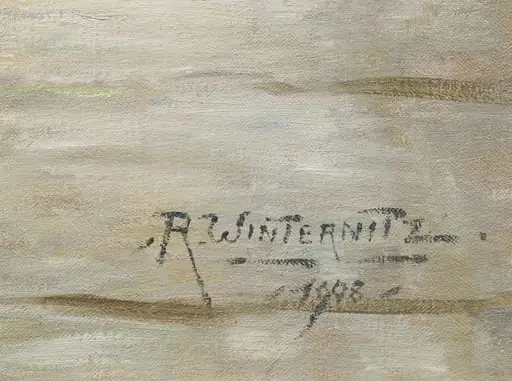
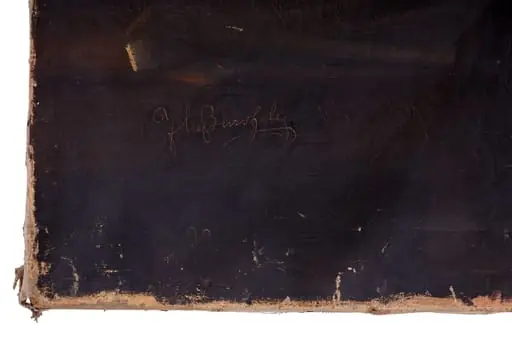
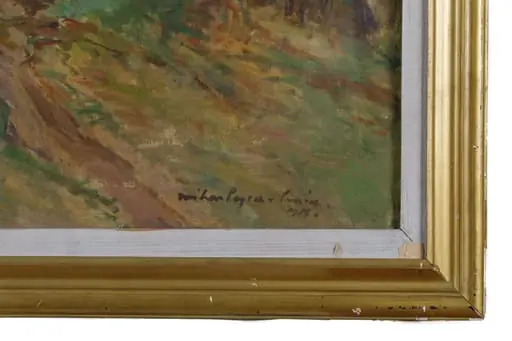
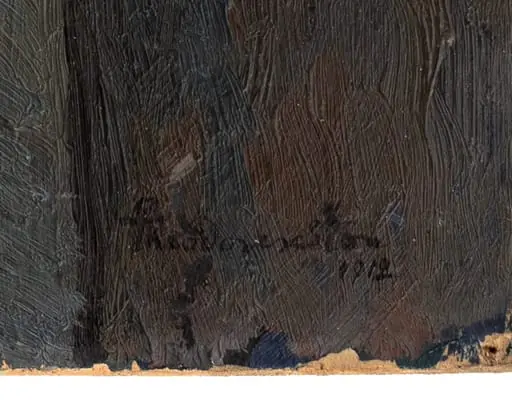
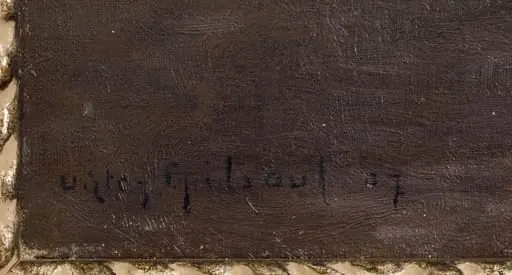
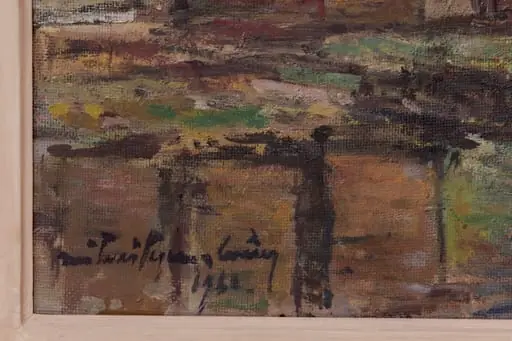
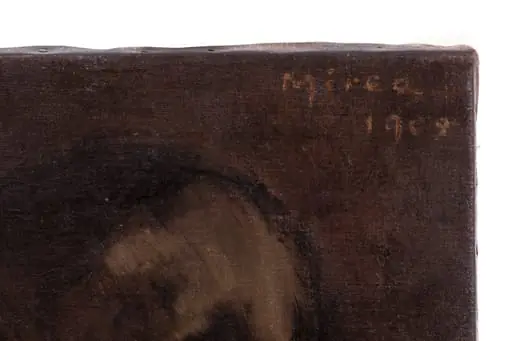
This is a close-up of a faded wooden panel with dark, uneven letters carved or painted into the grain. The wood looks old and worn, with a rough texture and patches of discoloration. At the bottom edge, there’s a dark trim with round, metal studs spaced evenly apart.
The text reads *"S. Taverne 1904"*—likely a signature and date—but the rest is hard to make out. The wood’s natural color is a mix of yellows and browns, with some areas showing signs of age or damage.
Want to see more by this artist? Check out Taverne, Louis.
Overview
Louis Taverne’s piece titled *Casă țărănească* dates from around 1850. It consists of a weathered wooden panel whose surface bears dark, uneven lettering that appears either carved or painted into the grain. The wood shows extensive aging, with a rough texture, discoloration, and a dark trim at the lower edge punctuated by evenly spaced round metal studs.
Subject & Meaning
The panel’s inscription, partially legible, includes the name “S. Taverne 1904,” suggesting a later addition of a signature and date that does not correspond to the work’s original creation. The ambiguous text and rustic material evoke a rural domestic setting, aligning with the title’s reference to a peasant house.
Technique & Style
The work employs a simple, utilitarian approach, relying on the natural grain of the wood as a visual element. The lettering, whether incised or painted, contrasts sharply with the yellow‑brown tones of the aged timber, while the metal studs add a functional, decorative detail typical of 19th‑century rural furniture.
History & Provenance
Recorded as a circa 1850 creation, the panel’s later signature dated 1904 indicates it may have been re‑marked or restored in the early twentieth century. No further documentation of ownership or exhibition history is presently available, leaving its provenance largely undocumented.
Artist & collection
Artist