Artwork
H Beard Print Collection
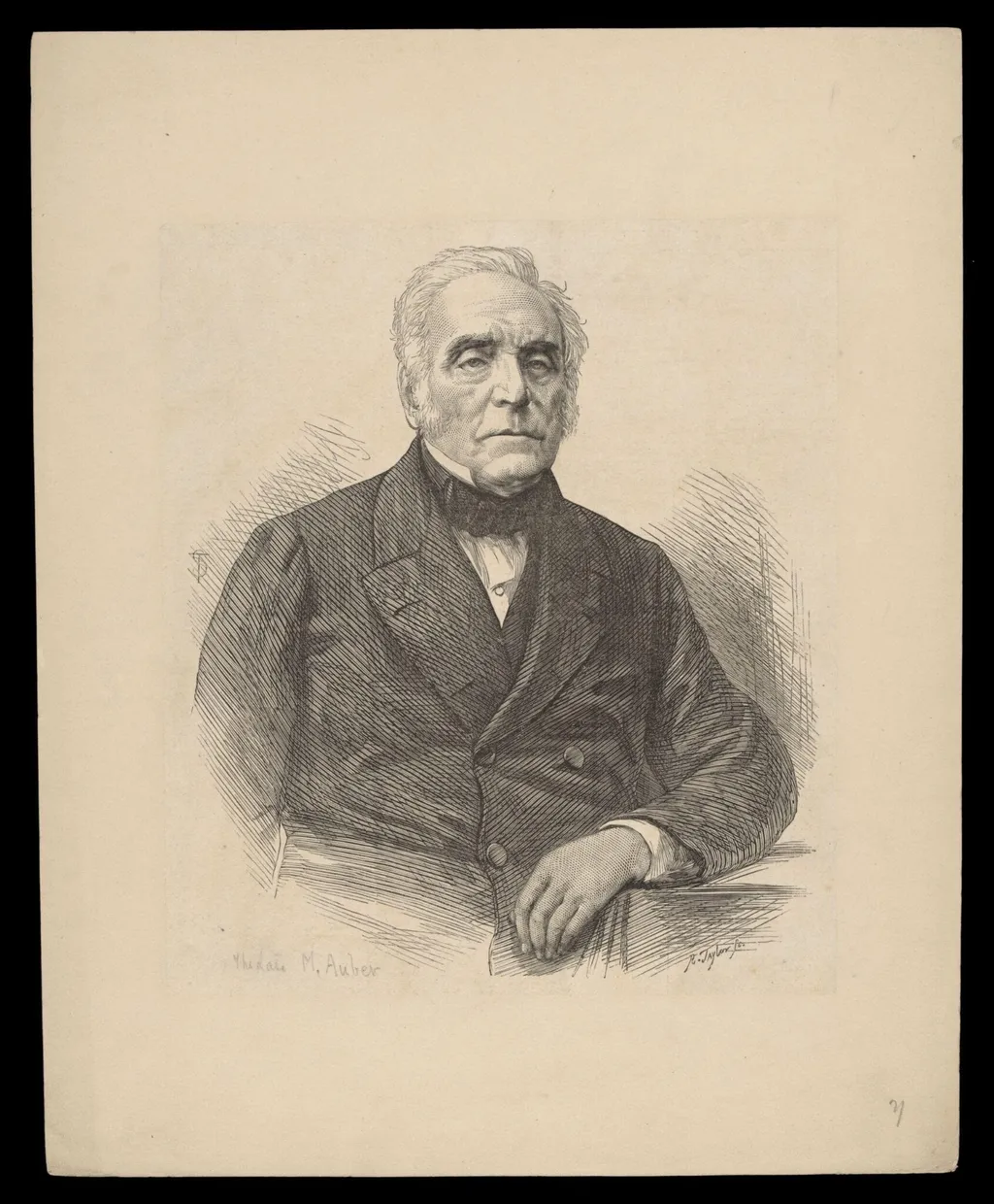
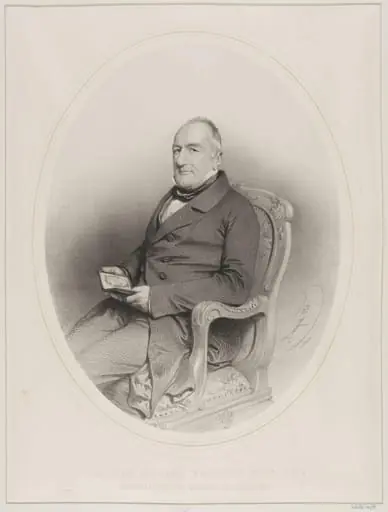
H Beard Print Collection is a print by R. Taylor. It dates from 1850 and is held in the collection of the Victoria and Albert Museum.
About this work
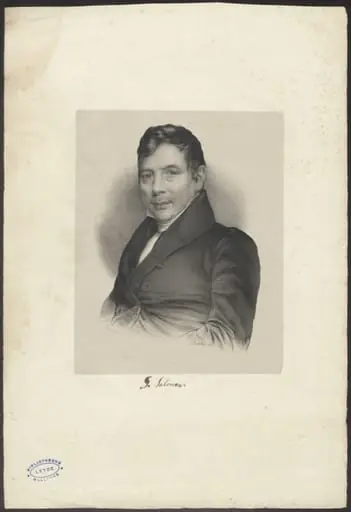
The print is a portrait of Daniel Auber.
It's interesting because it's from the 19th century, which was a time when printmaking was becoming more popular. The fact that it's a print of a specific person suggests that Daniel Auber was someone important or well-known.
You can learn more about this type of art by looking at the work of the artist, Taylor, R.
Overview
Its existence reflects the growing public interest in celebrity composers and the role of prints in disseminating their images.
This 19th-century print portrays the French composer Daniel Auber, produced during a period when reproductive printmaking expanded access to portraiture beyond elite commissions. The work belongs to the H. Beard Print Collection, a compilation focused on musical figures of the era. Its existence reflects the growing public interest in celebrity composers and the role of prints in disseminating their images.
Subject & Meaning
Daniel Auber was a prominent composer of opéra comique, celebrated in his lifetime for works like 'La Muette de Portici.' This portrait captures him as a respected cultural figure, likely intended for distribution among music lovers and amateur musicians. The image serves not merely as likeness but as a symbol of artistic achievement accessible to a broader audience through print.
Technique & Style
Executed as a line-based print, likely an engraving or lithograph, the portrait emphasizes clean contours and subtle tonal gradations to convey Auber’s dignified bearing. The style is restrained, typical of mid-19th-century reproductive prints, prioritizing clarity and recognition over expressive flourish. Details such as attire and facial structure are rendered with precision to ensure authoritative representation.
History & Provenance
The print originates from the collection assembled by H. Beard, a 19th-century British enthusiast of musical portraiture. It was likely produced by a commercial printmaker, possibly R. Taylor, whose name appears in related works. The print’s survival in a curated archive suggests it was valued for its documentation of musical culture, rather than as a rare artistic object.
Context
During the 1830s–1870s, advances in print technology allowed images of composers to circulate widely in sheet music covers, periodicals, and private collections. Auber’s portrait fits within this trend, aligning with the rise of public concerts and music journalism. Such prints helped construct the public persona of artists, bridging the gap between elite performance and middle-class cultural consumption.
Legacy
Though Auber’s operas are less frequently performed today, this print endures as a historical artifact of 19th-century musical culture. It illustrates how print media shaped public memory of artists, preserving their likenesses for generations. The work remains a resource for scholars studying the intersection of music, portraiture, and mass reproduction in the Victorian era.
Artist & collection
Artist
R. Taylor made late-19th-century prints that captured everyday London life. In *George Speaight Punch & Judy Collection* (December 1885) and two prints from the *H Beard Print Collection* (1887 and the 1800s), Taylor’s…