Artwork
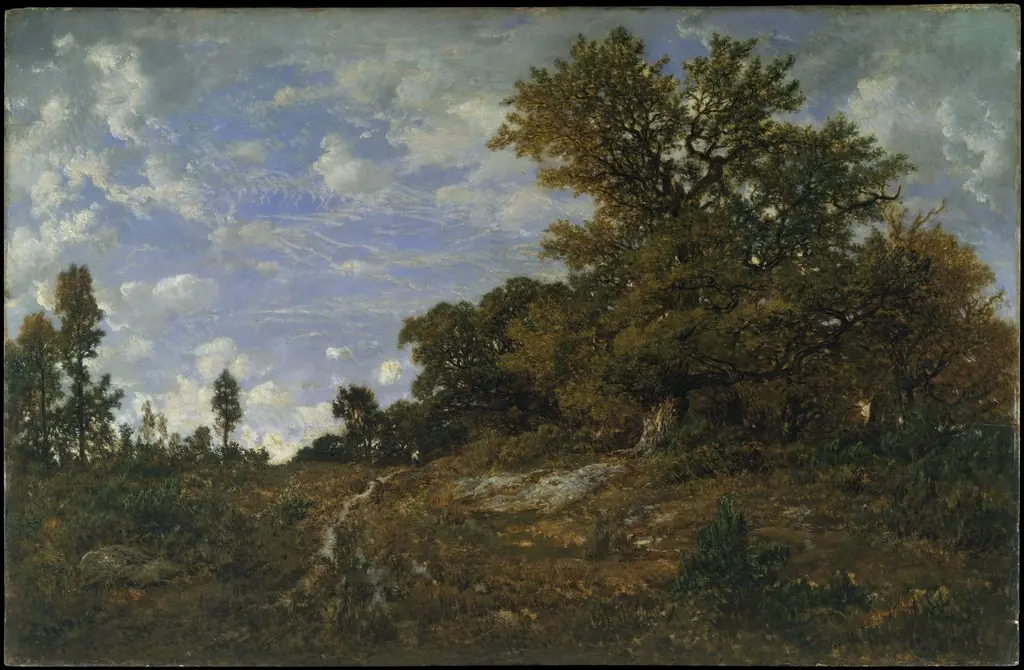
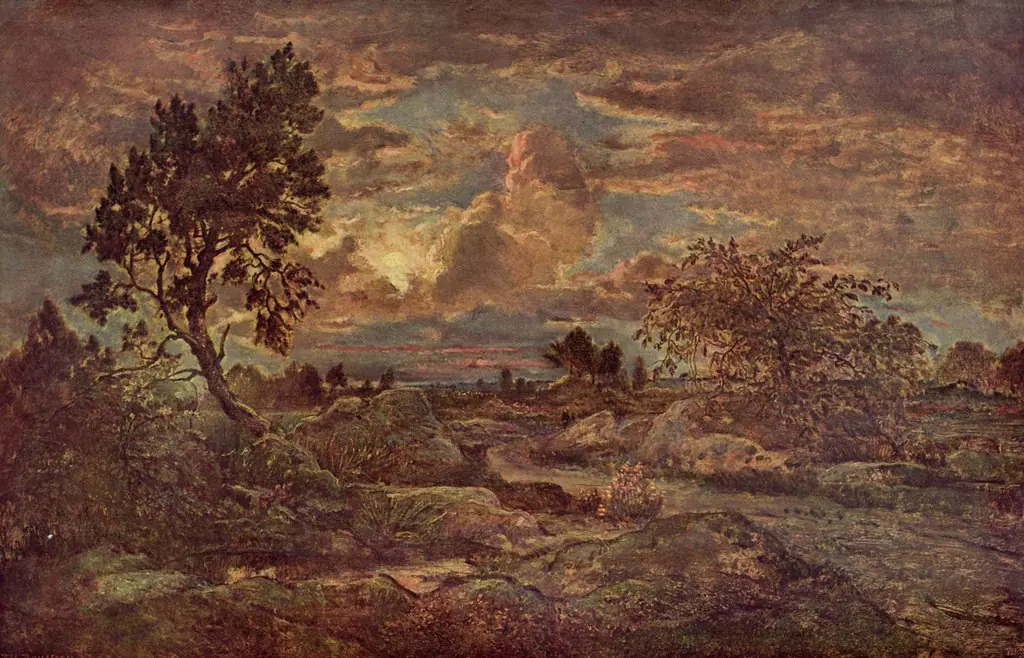
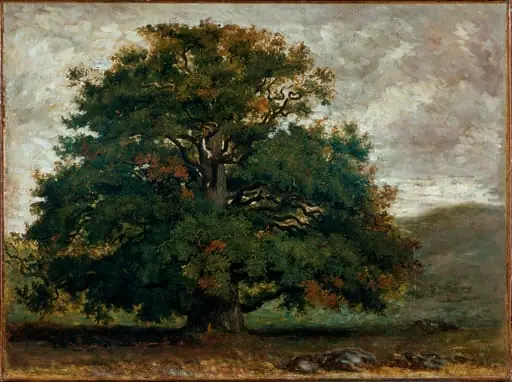
A Tree in Fontainebleau Forest
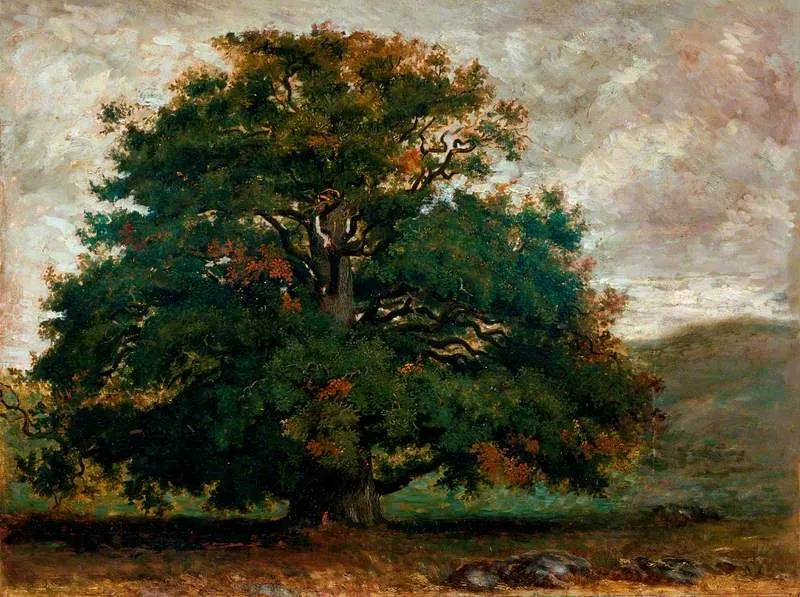
A Tree in Fontainebleau Forest is an oil painting by the Barbizon school artist Théodore Rousseau. It dates from 1840 and is held in the collection of the Victoria and Albert Museum.
About this work
Overview
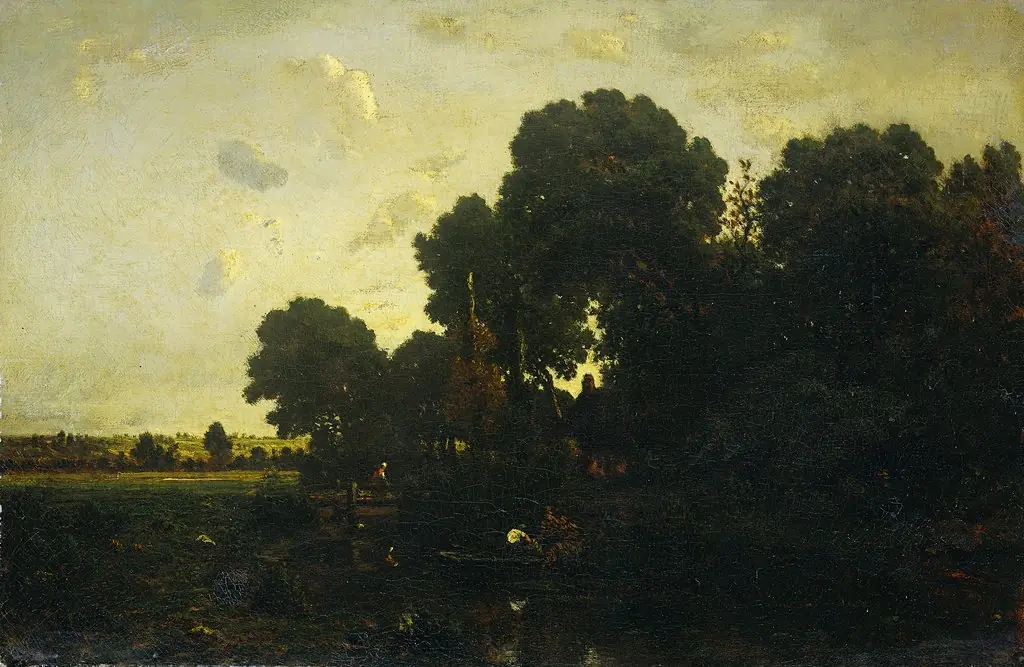
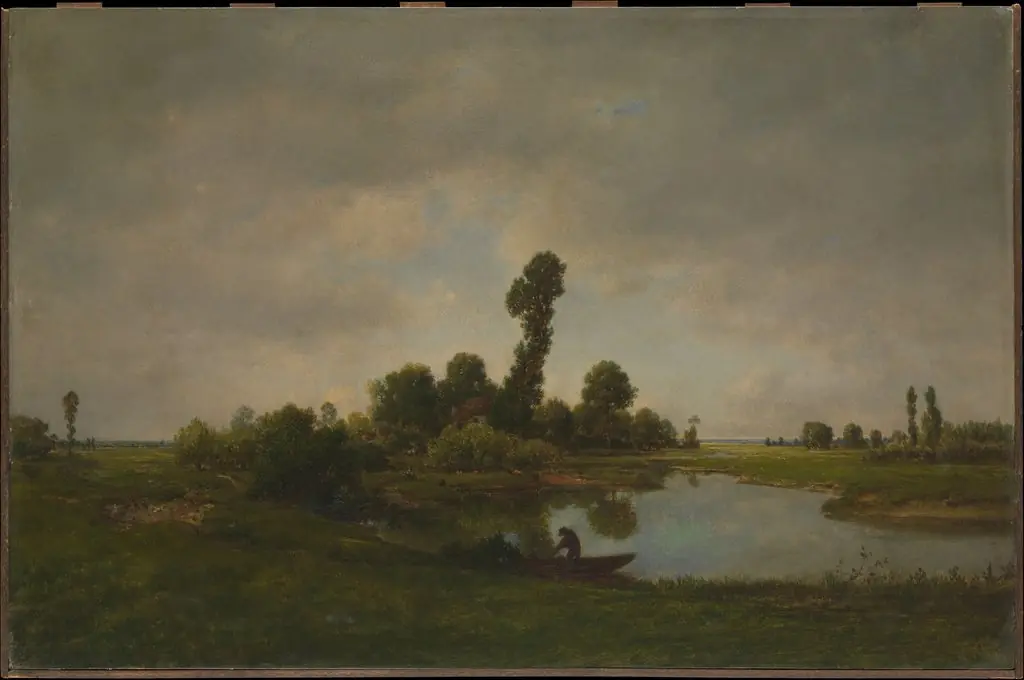
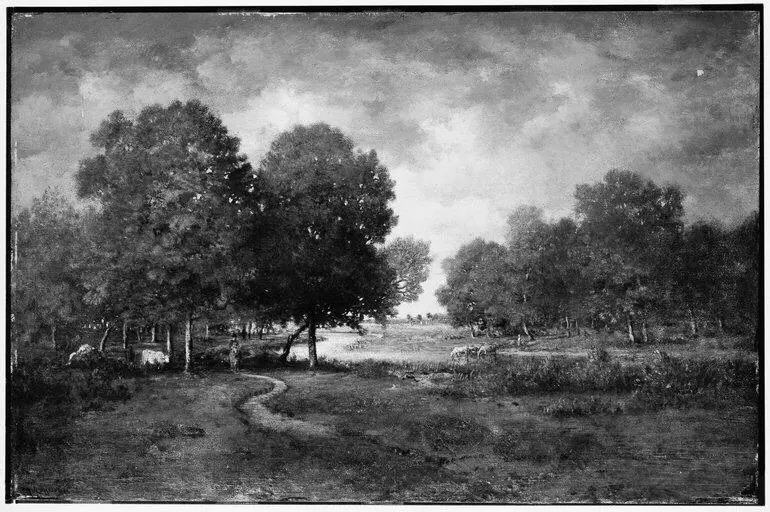
Théodore Rousseau’s 1840 oil painting depicts a solitary tree dominating a forest clearing in the Fontainebleau region. The composition centers on the massive trunk and spreading branches, set against a muted sky and a forest floor strewn with leaves, rocks and underbrush. The muted palette and calm atmosphere convey a quiet, contemplative view of the natural world.
Subject & Meaning
The work presents a single, robust tree as the focal point, surrounded by smaller vegetation that emphasizes its stature within the landscape. By isolating the tree, Rousseau invites reflection on the endurance of nature and the subtle interplay of light and shadow that defines the forest’s quiet rhythm.
Technique & Style
Executed in oil on canvas, the painting employs a restrained palette of dark greens, browns and soft grays. Rousseau’s brushwork renders the bark’s texture and the foliage’s delicate layers, while the background’s subdued tones allow the tree to emerge with clarity. The approach reflects the naturalistic sensibility of the Barbizon school.
History & Provenance
Created during Rousseau’s early period, the canvas became part of the Victoria and Albert Museum’s collection, where it remains on display. Its acquisition reflects the museum’s interest in 19th‑century French landscape painting and the role of the Barbizon artists in shaping modern approaches to depicting nature.
Artist & collection
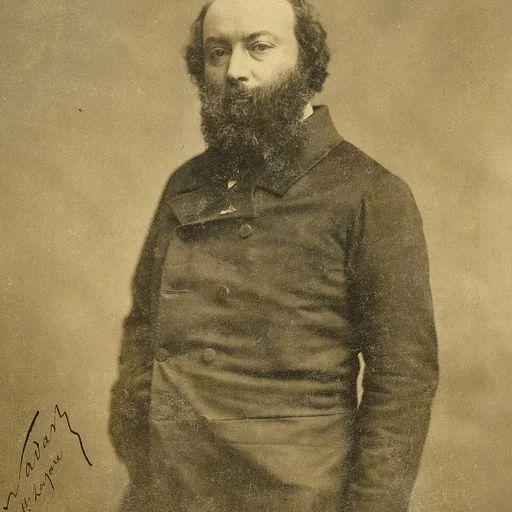
Artist
Étienne Pierre Théodore Rousseau (French pronunciation: ; 15 April 1812 – 22 December 1867) was a French painter of the Barbizon school.