Artwork
Marshlands
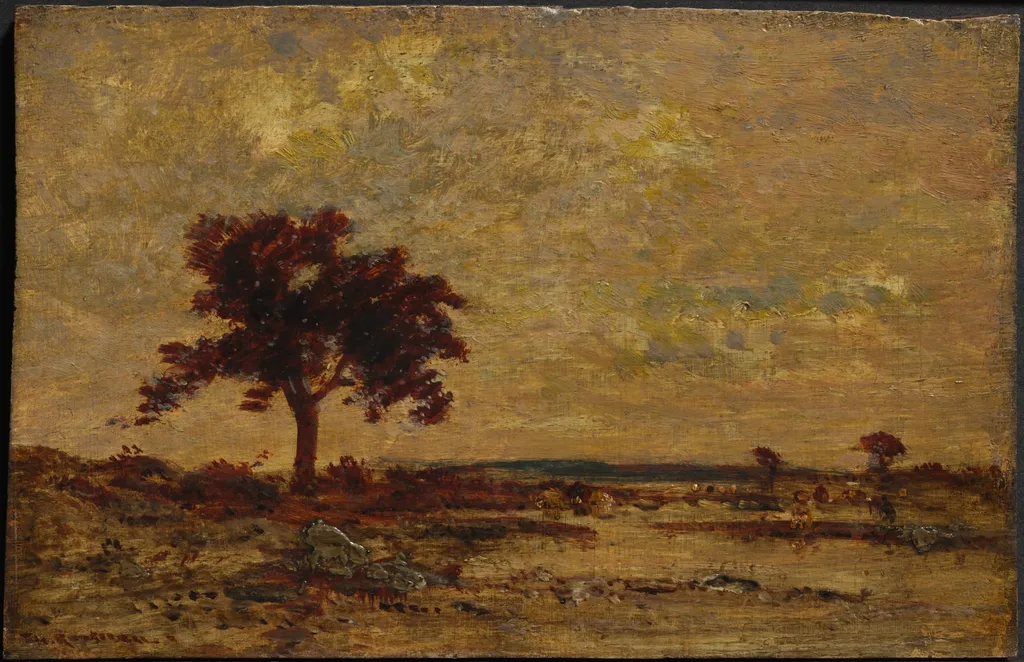
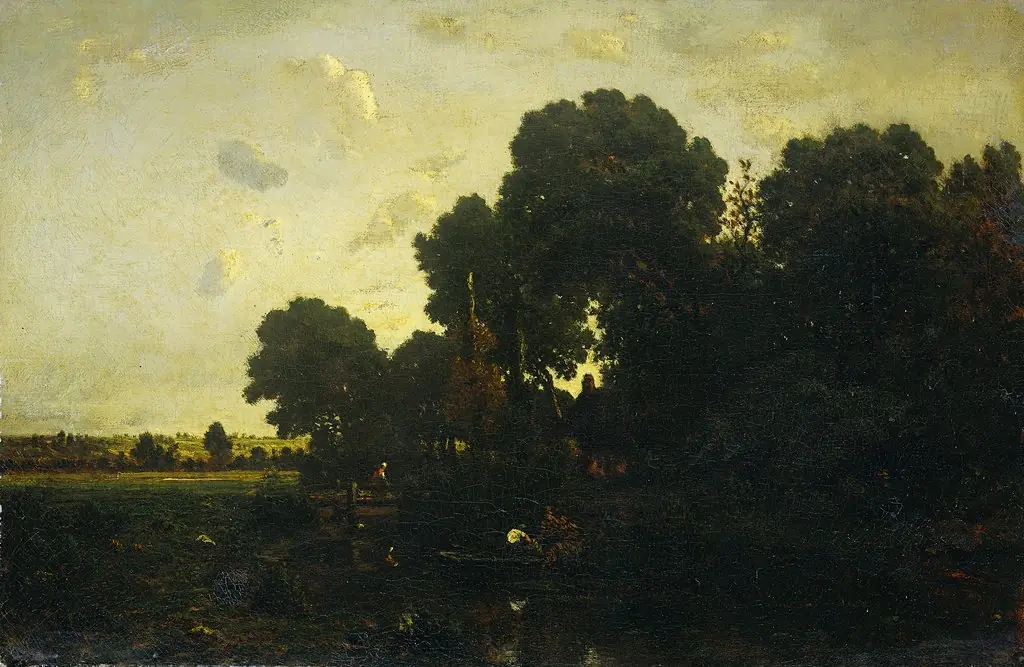
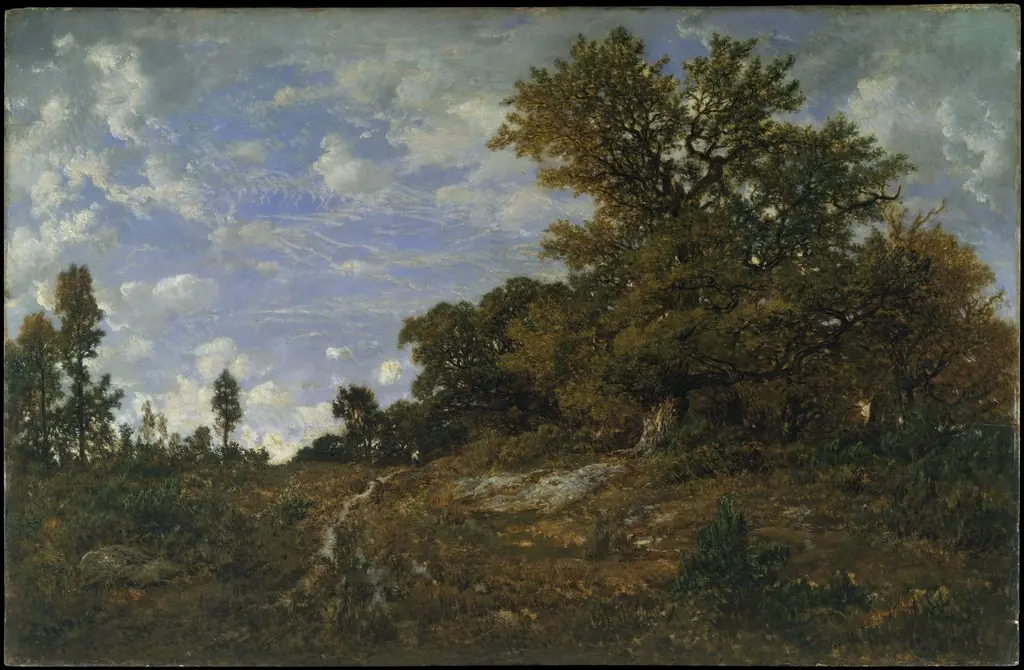
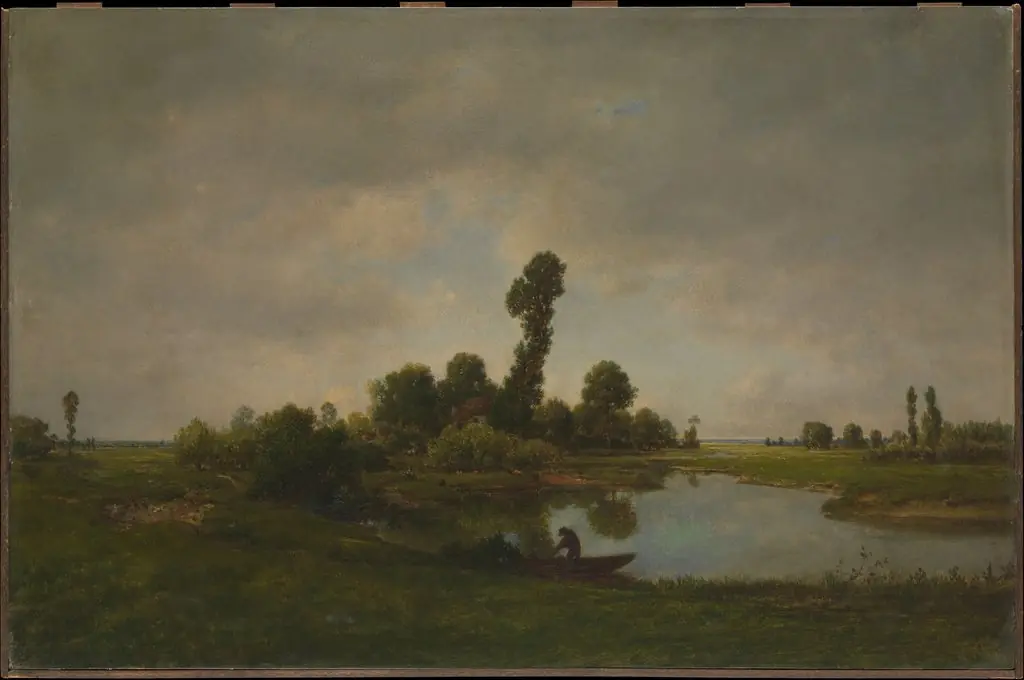
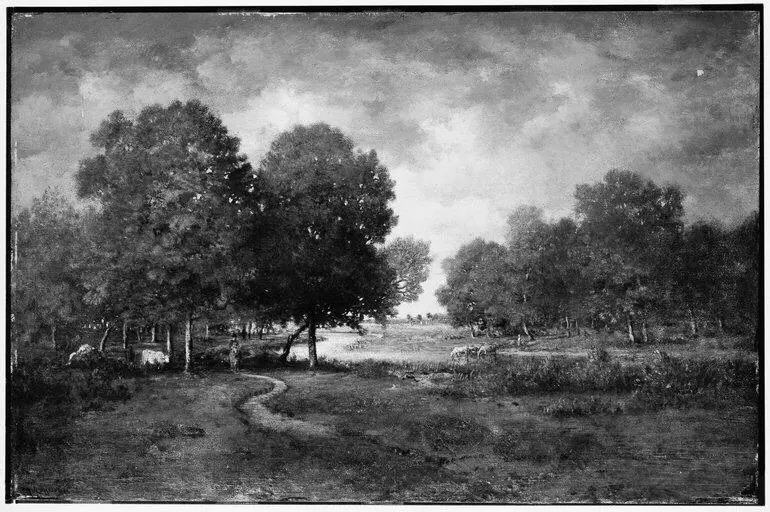
Marshlands is an unspecified painting by the Barbizon school artist Théodore Rousseau. It dates from 1850 and is held in the collection of the Cleveland Museum of Art.
About this work
Overview
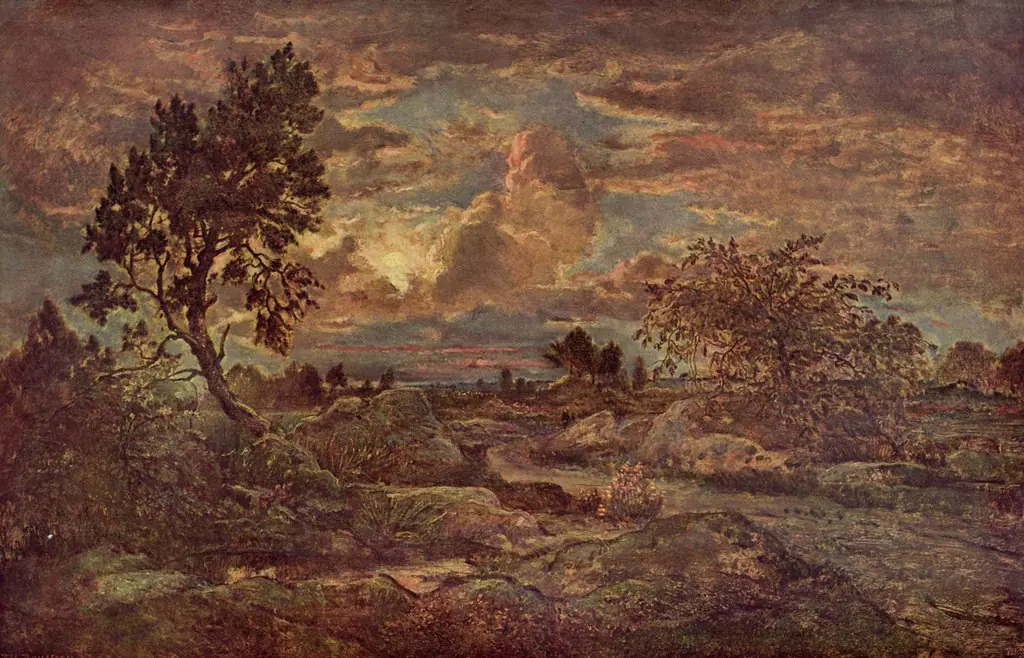
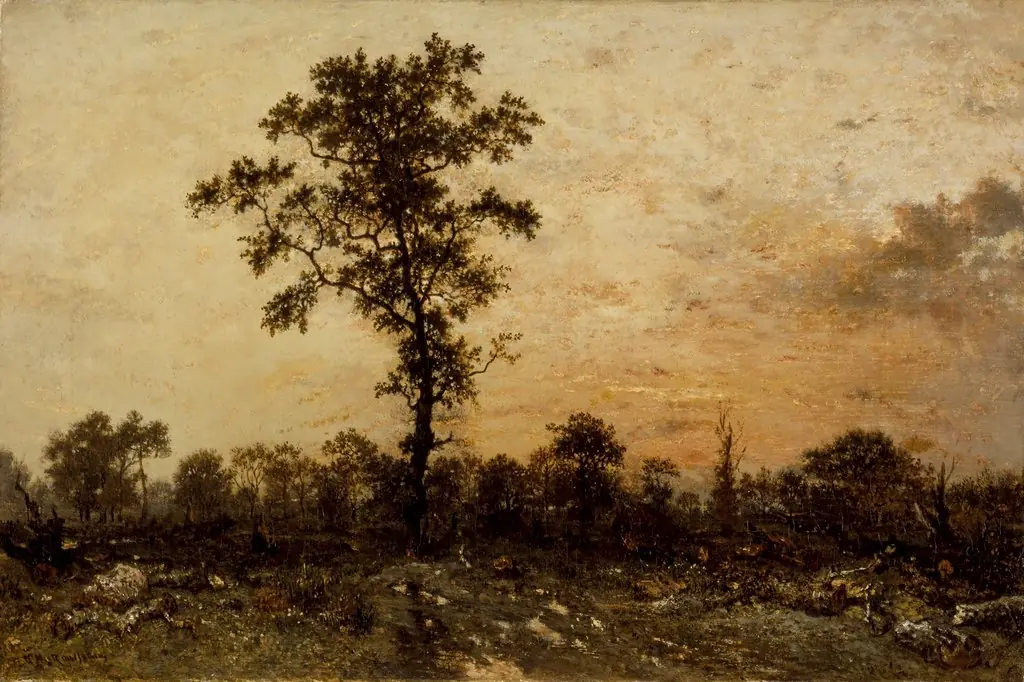
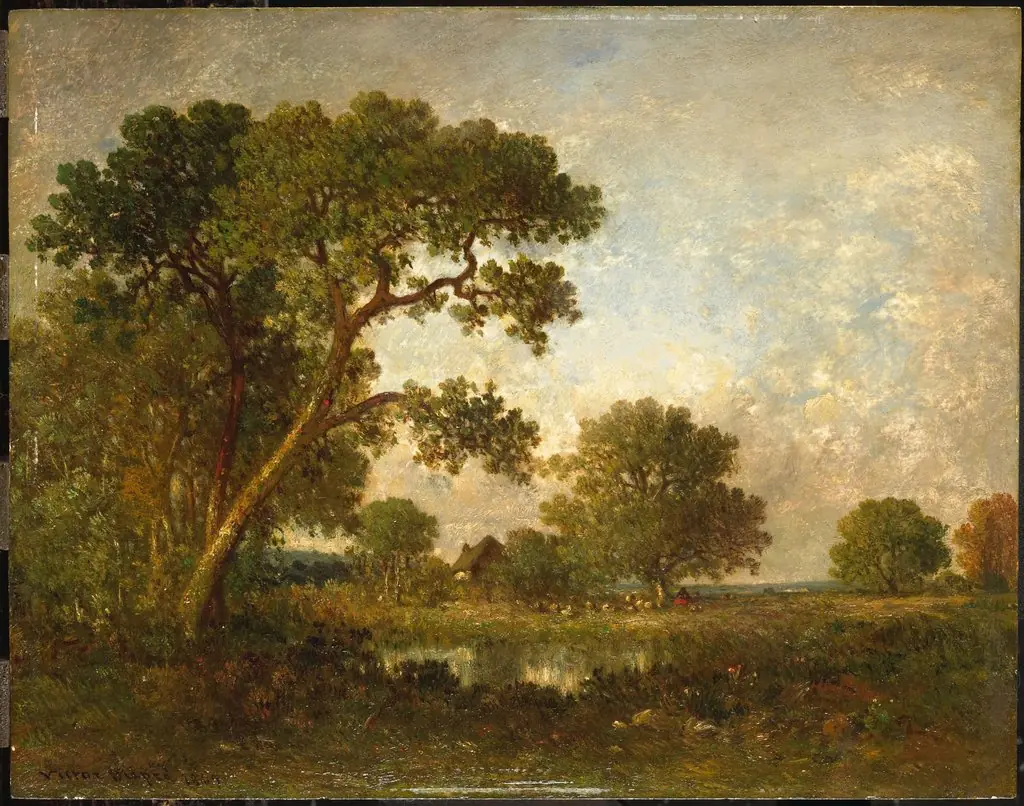
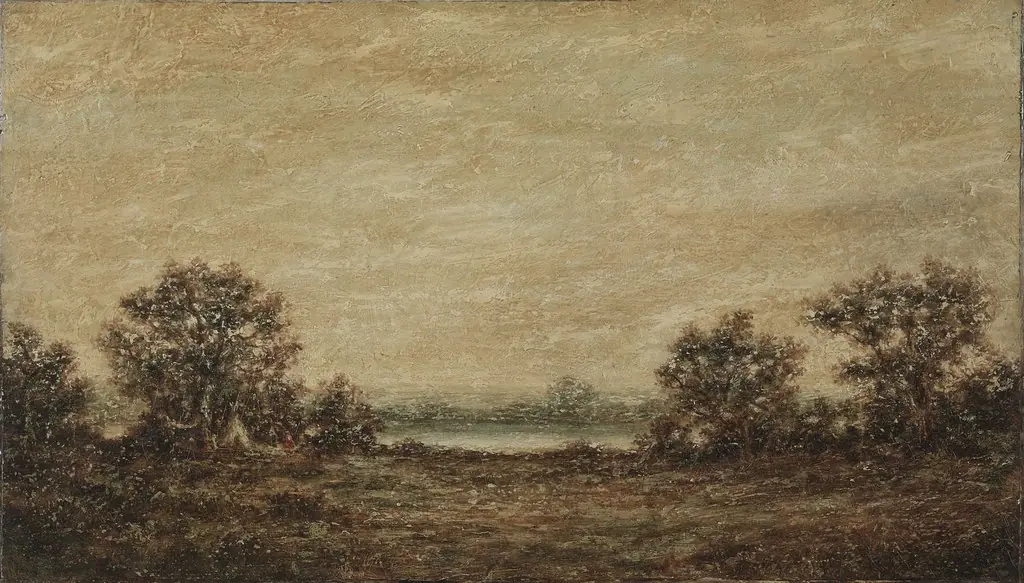
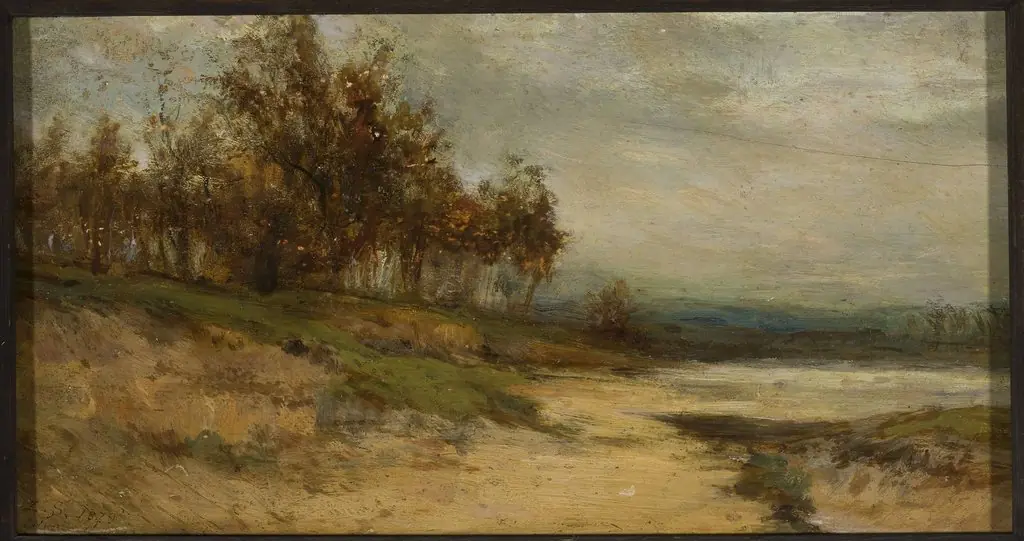
Created in 1850 by French landscape painter Théodore Rousseau, *Marshlands* exemplifies the Barbizon school’s commitment to portraying the countryside with fidelity. The work is housed in the Cleveland Museum of Art, where it remains a representative example of mid‑nineteenth‑century naturalist painting.
Subject & Meaning
The canvas presents a solitary tree rooted in a flat, soggy terrain that stretches toward a muted horizon. The ground is rendered in mottled browns and greys, suggesting mud and unevenness, while the sky shifts between pale yellow and a subdued orange. The tree’s dark‑red branches evoke the waning light of late autumn, hinting at the passage of season and the quiet endurance of nature.
Technique & Style
Rousseau employs a vigorous impasto application, laying thick, rough brushstrokes that give the surface a tactile, almost unfinished quality. The paint is applied quickly, leaving blotchy areas that convey a sense of immediacy and rawness. This handling of material aligns with the Barbizon emphasis on direct observation and a painterly approach to texture.
History & Provenance
After its completion, the painting entered the European art market before eventually being acquired by the Cleveland Museum of Art. Its presence in the museum’s collection underscores the institution’s focus on 19th‑century French landscape painting and provides a point of reference for the development of naturalist techniques within the Barbizon movement.
Artist & collection
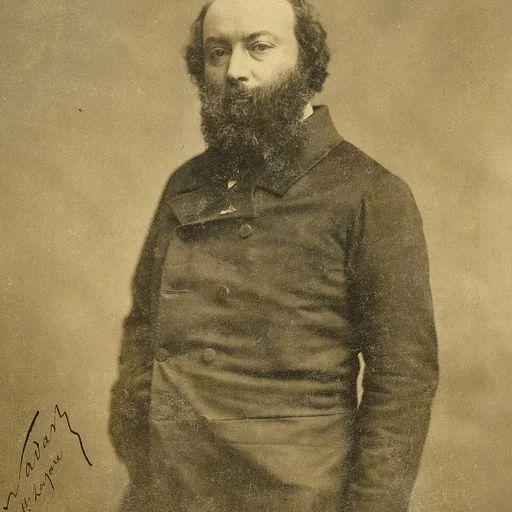
Artist
Étienne Pierre Théodore Rousseau (French pronunciation: ; 15 April 1812 – 22 December 1867) was a French painter of the Barbizon school.