Artwork
Wooded Stream
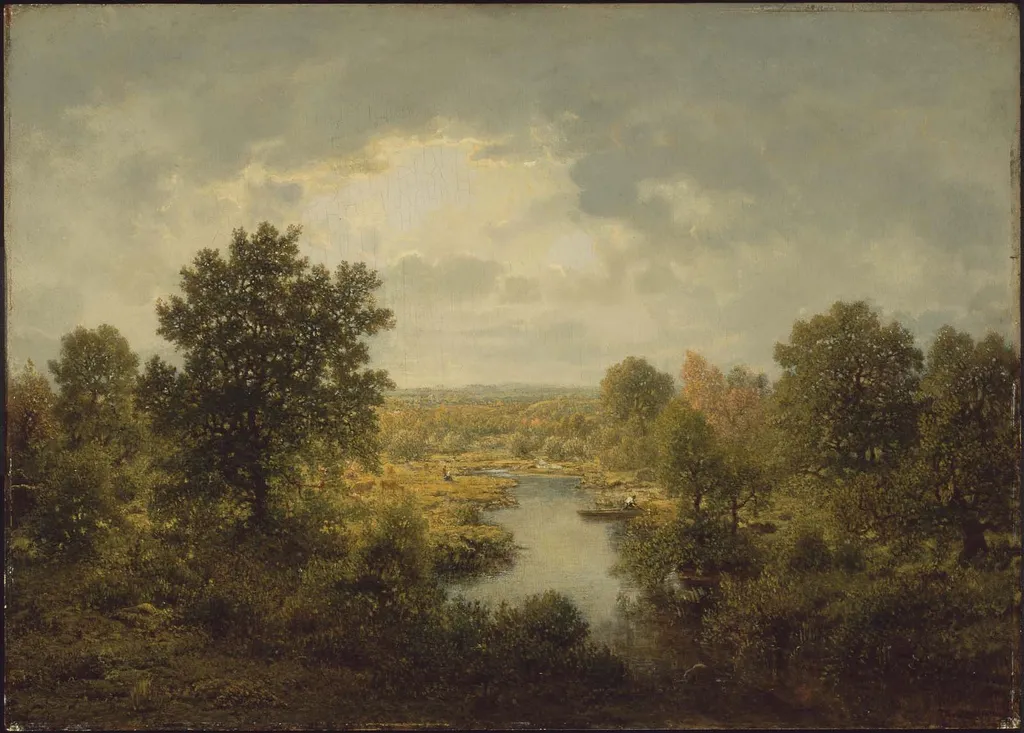
Wooded Stream is an unspecified painting by the Barbizon school artist Théodore Rousseau. It dates from 1859 and is held in the collection of the Museum of Fine Arts Boston.
About this work
Overview
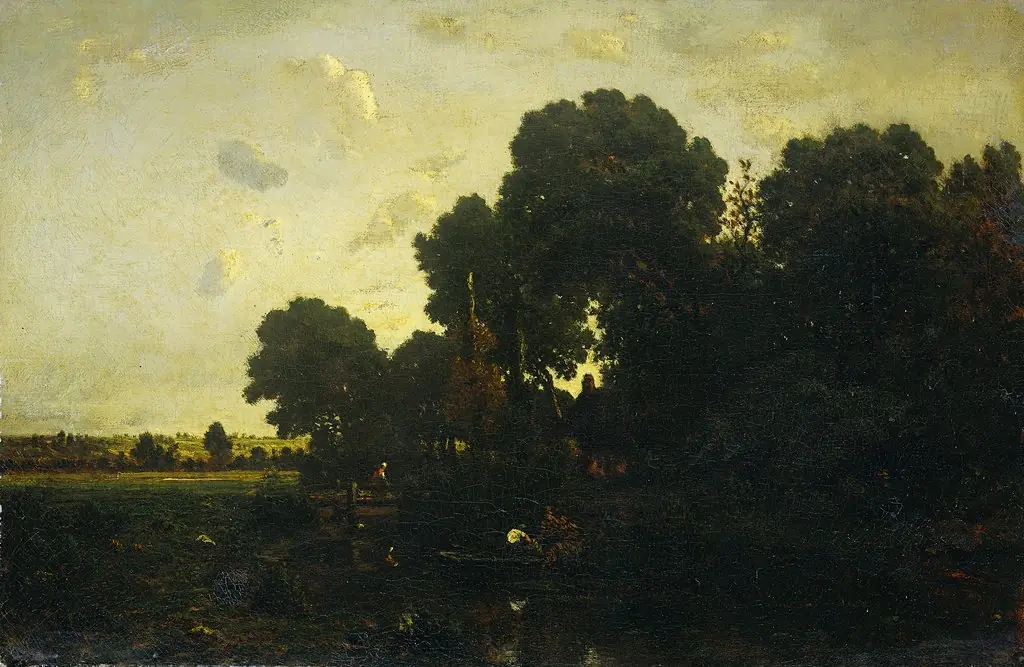
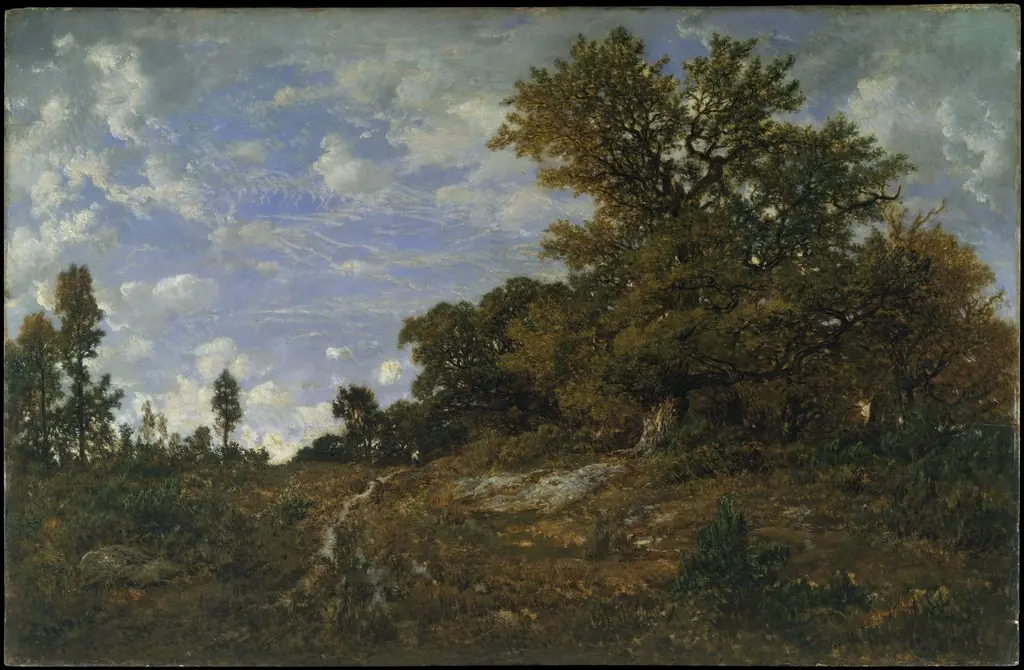
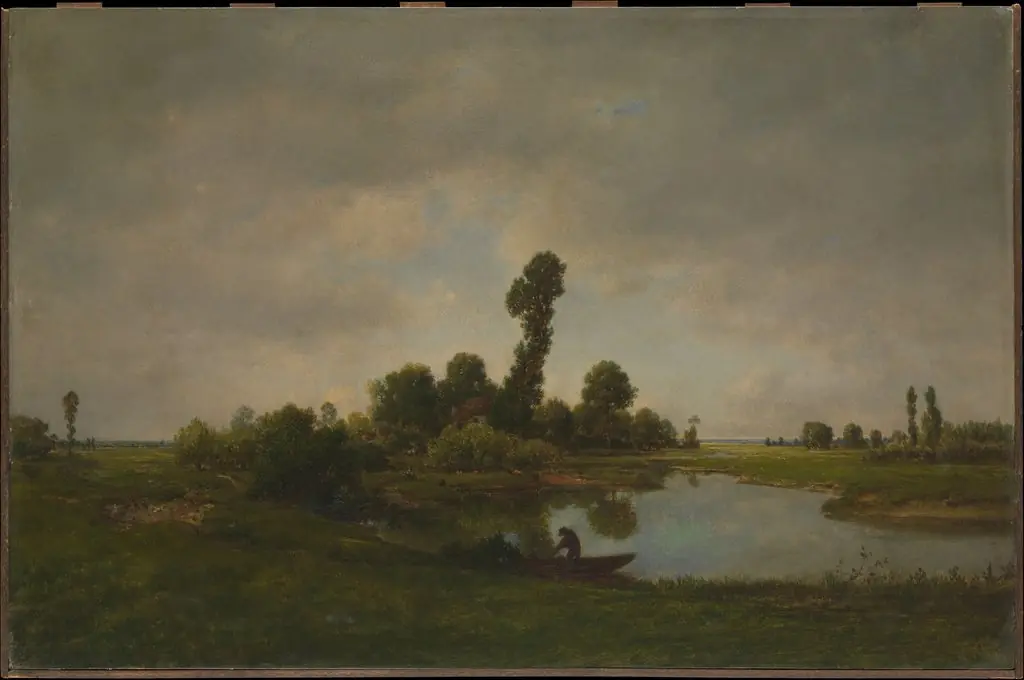
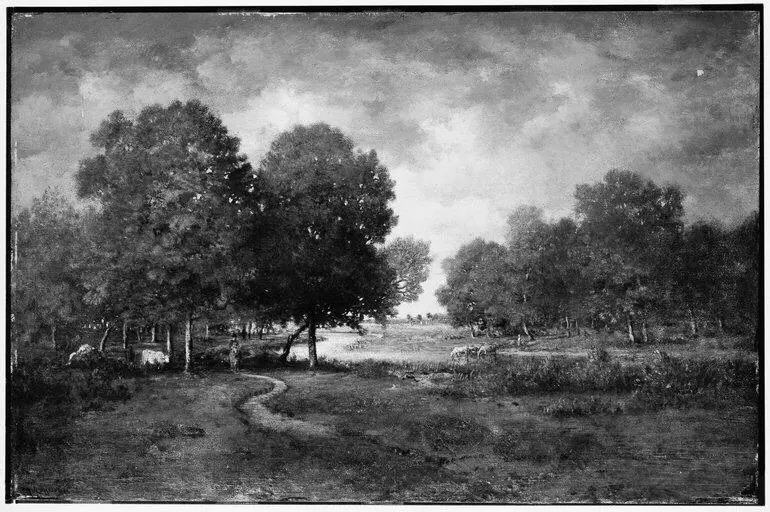
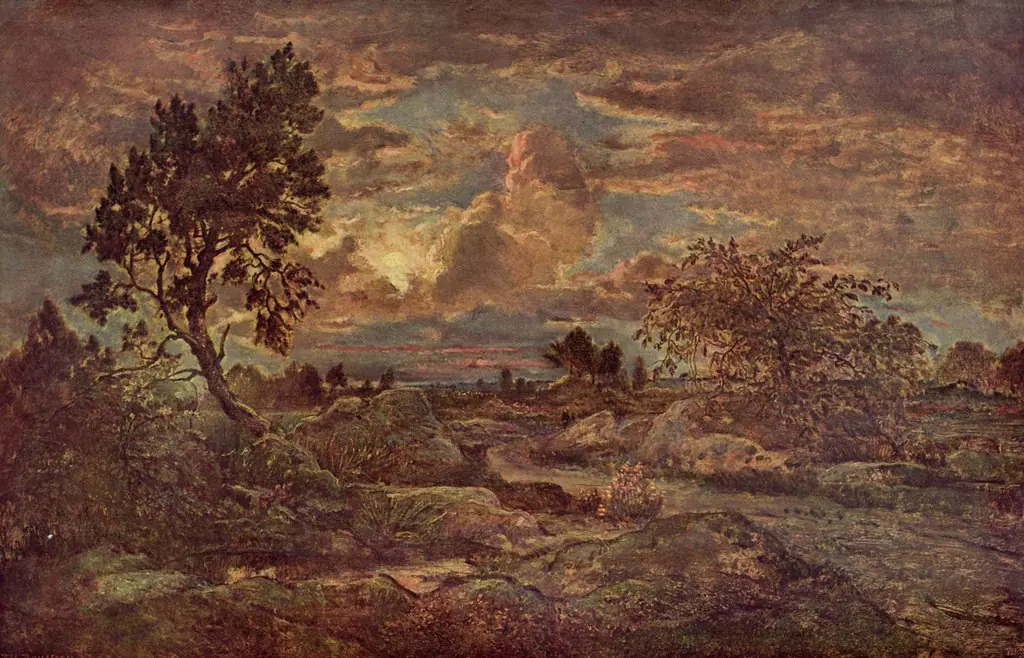
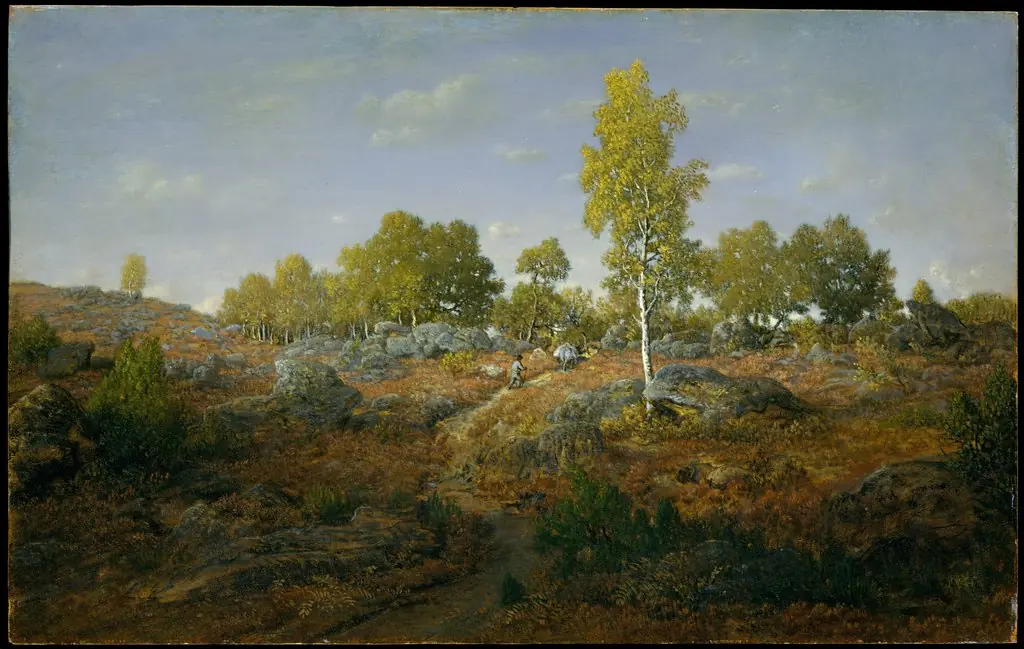
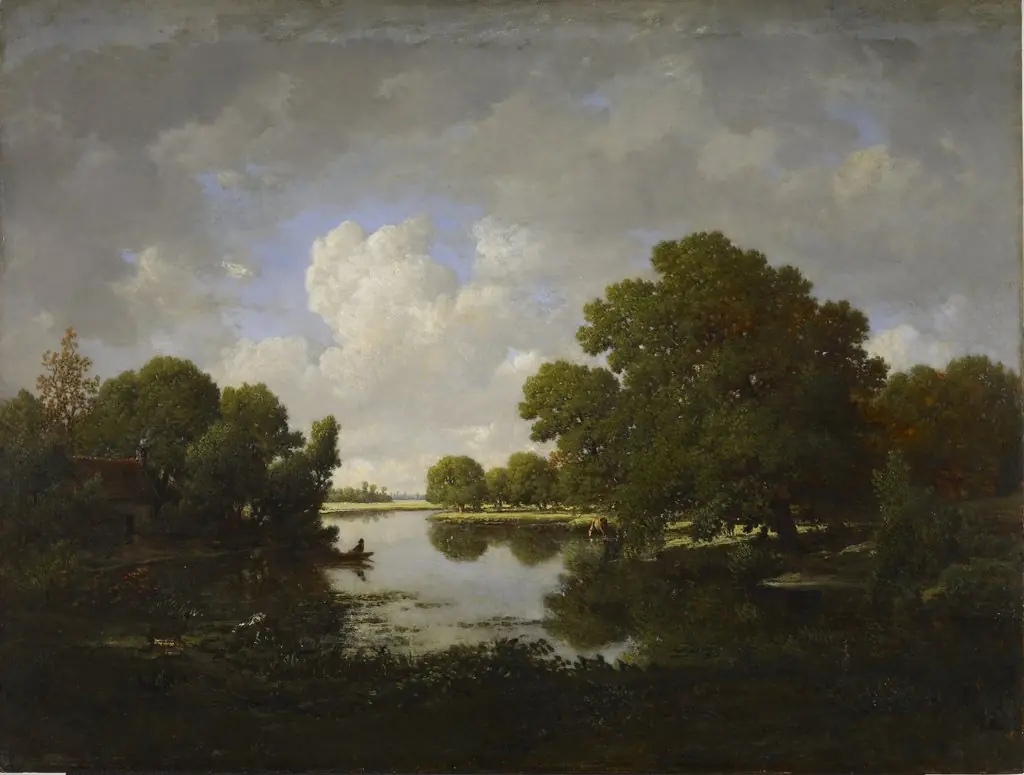
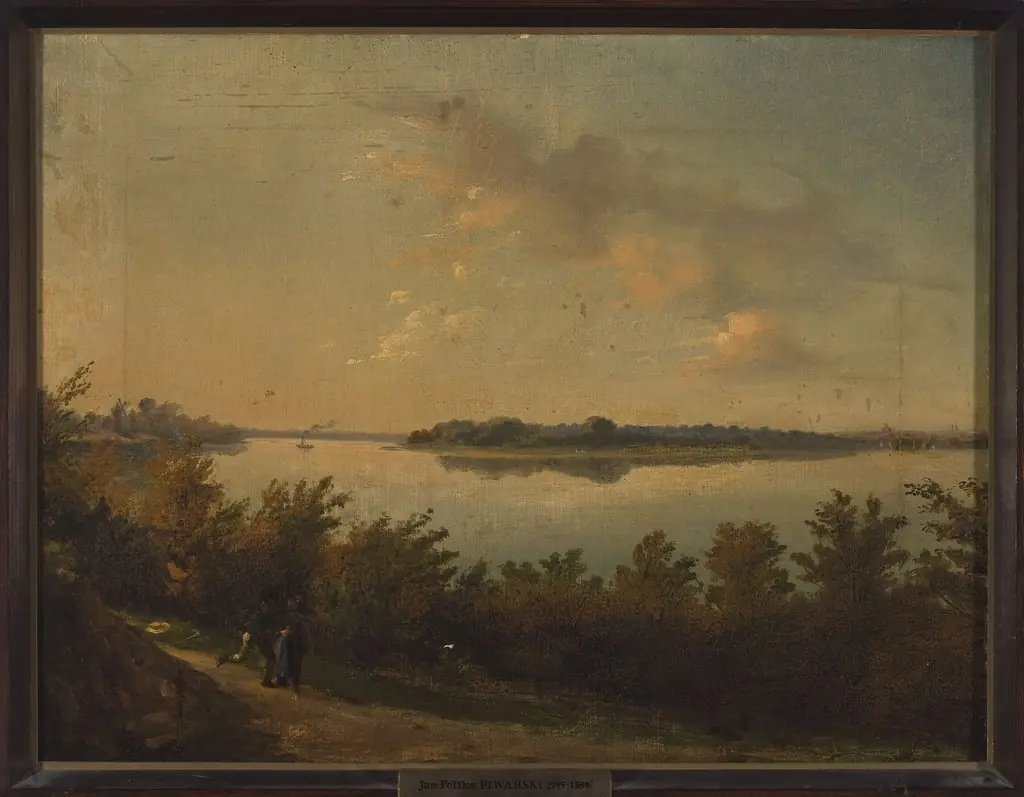
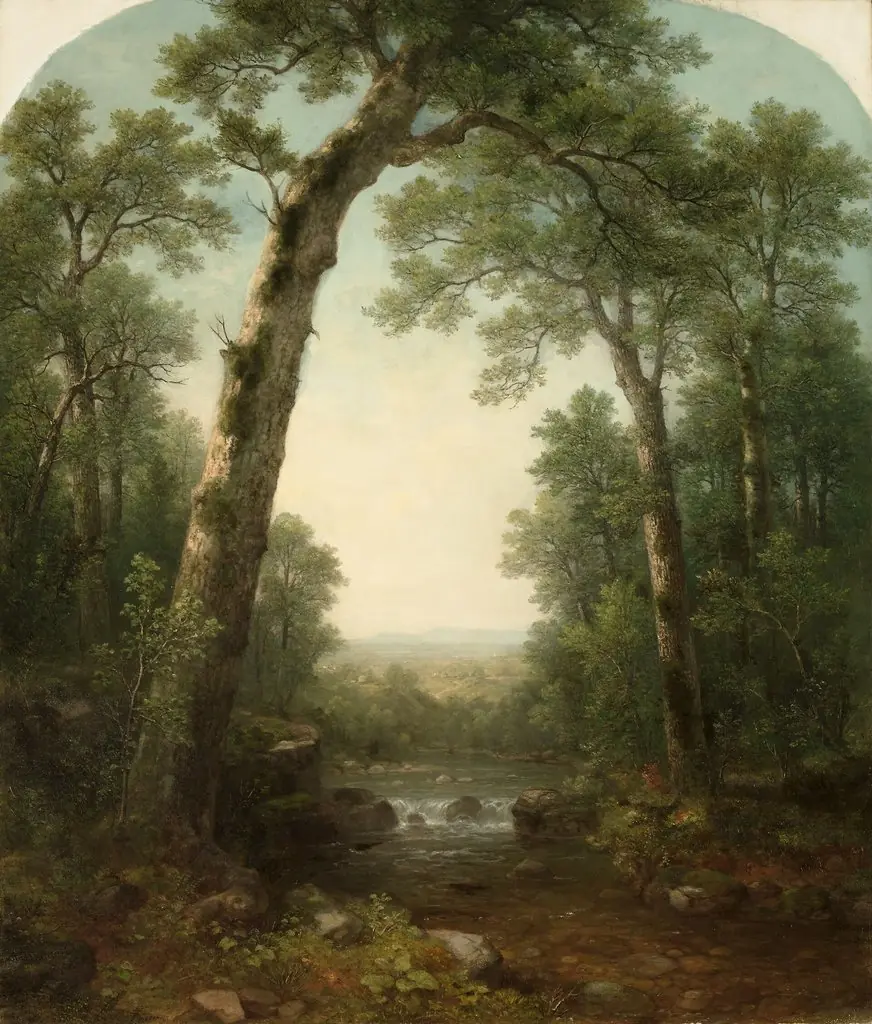
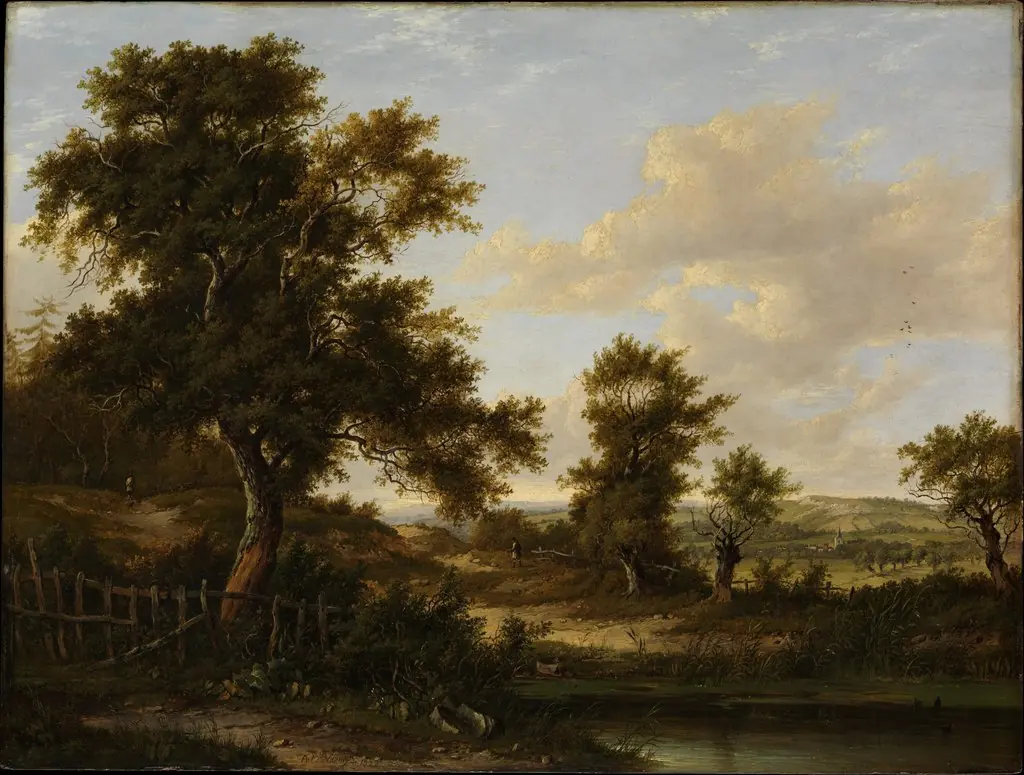
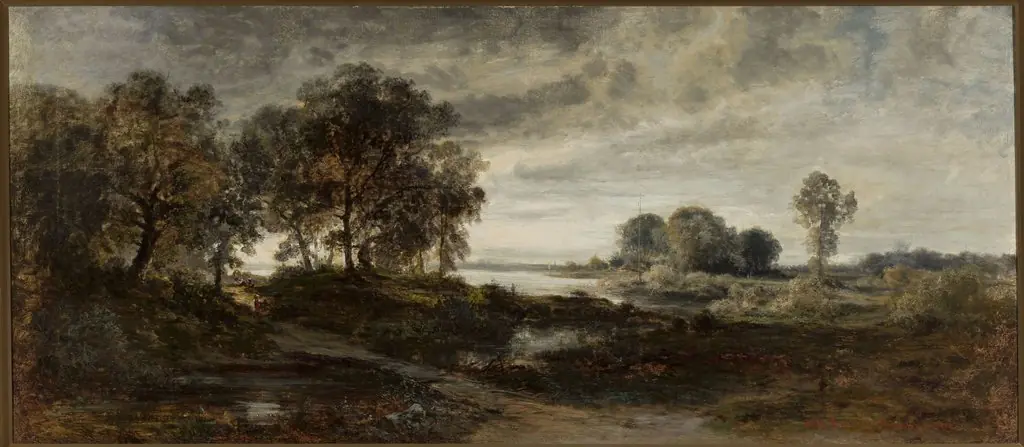
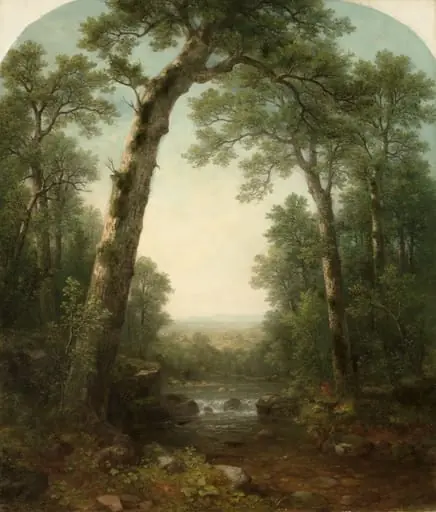
Wooded Stream, painted by Théodore Rousseau in 1859, is a characteristic example of the Barbizon school's emphasis on naturalistic landscapes. The work captures a serene, intimate forest scene with a winding stream.
Subject & Meaning
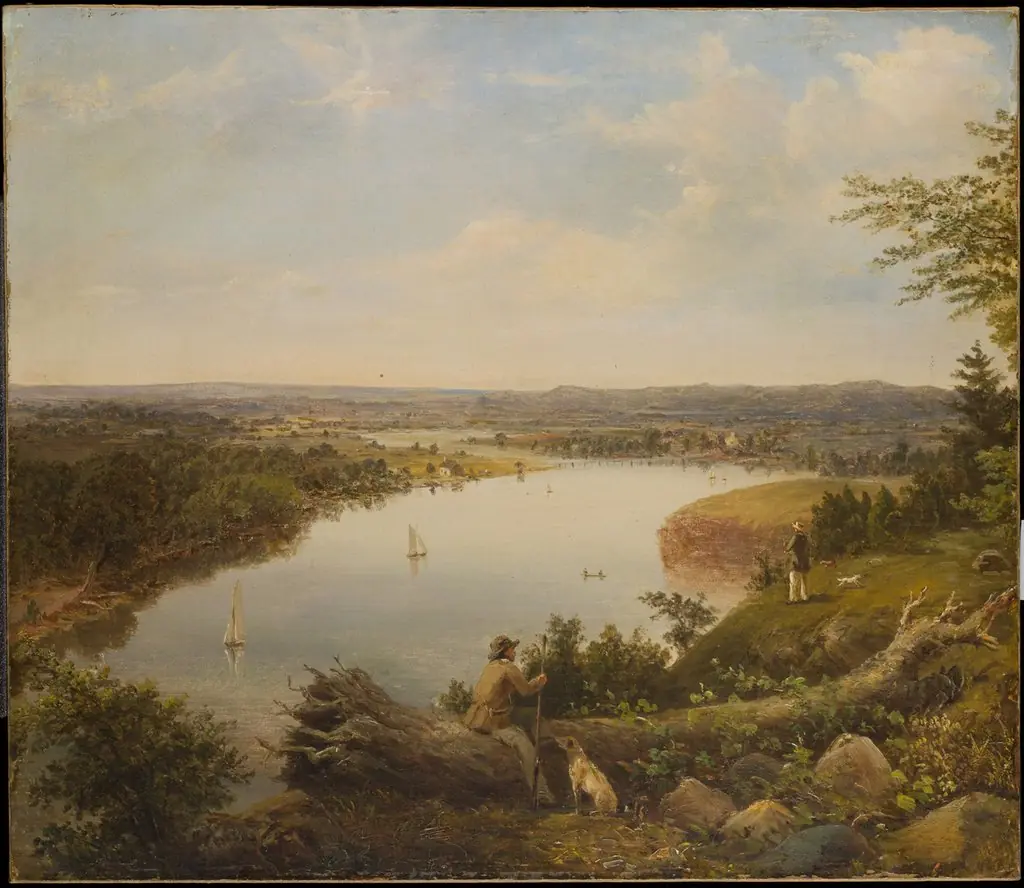
The painting focuses on the tranquil interplay between a wooded landscape and a meandering stream, conveying a sense of peace and highlighting the natural beauty of the rural environment. A small boat adds to the calm atmosphere.
Technique & Style
Rousseau employs a detailed, observational approach, characteristic of the Barbizon style, to depict the varied foliage (with hues of green, yellow, and orange) and the reflective stream, set against a vast, serene backdrop.
History & Provenance
Created in 1859 by Théodore Rousseau, a prominent Barbizon school artist, the painting reflects the movement's core principles of naturalism and direct observation of rural landscapes.
Context
Wooded Stream sits within the broader 19th-century European movement towards outdoor, naturalistic painting, with the Barbizon school influencing later artistic developments in landscape representation.
Legacy
As a work by a leading Barbizon figure, Wooded Stream contributes to the school's enduring influence on the development of landscape painting, emphasizing the beauty of everyday natural scenes.
Artist & collection
Artist
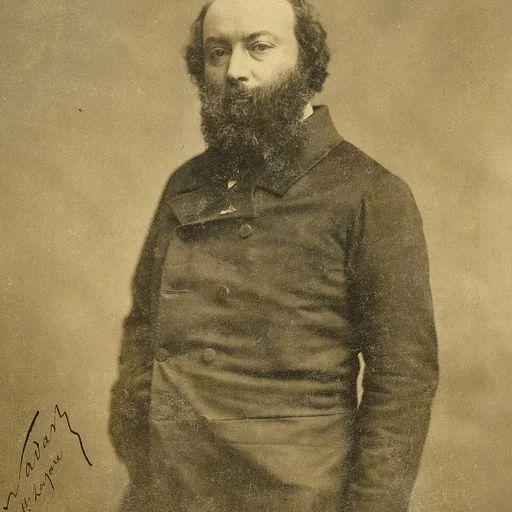
Étienne Pierre Théodore Rousseau (French pronunciation: ; 15 April 1812 – 22 December 1867) was a French painter of the Barbizon school.