Artwork
A Donkey House in Tunis
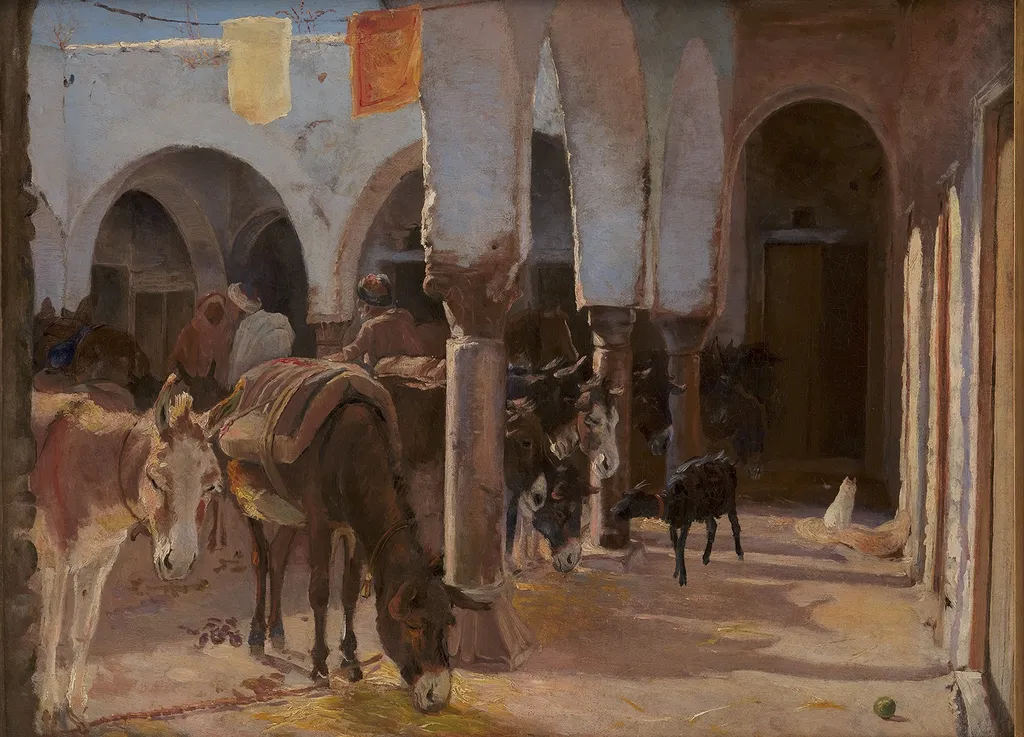
A Donkey House in Tunis is an unspecified painting by the Impressionist artist Theodor Philipsen. It dates from 1892 and is held in the collection of the Statens Museum for Kunst.
About this work
Overview
In 1892 the Danish artist Theodor Philipsen painted a scene titled A Donkey House in Tunis. The work captures a sun‑dappled courtyard in North Africa, where an arched arcade frames a donkey laden with bags, a goat grazing nearby, and a few figures seated in the shade. The composition balances light and shadow across the weathered stone walls.
Subject & Meaning
The picture presents a modest urban space in Tunis, emphasizing everyday activity rather than grand narrative. The presence of the donkey and goat highlights the role of working animals in the local economy, while the seated figures suggest a moment of rest. The arrangement invites viewers to contemplate the quiet rhythm of daily life in a Mediterranean setting.
Technique & Style
Philipsen applied thick, visible brushstrokes that give the surface a tactile quality, a hallmark of his Impressionist approach. The impasto paint builds texture on the stone and the animals’ fur, allowing the bright patches of sunlight to contrast sharply with the deeper shadows. This handling of paint enhances the sense of atmosphere and materiality in the scene.
History & Provenance
The painting is part of the collection of Denmark’s national gallery, Statens Museum for Kunst. Philipsen, who was of Jewish descent, is known for both landscape and animal subjects, and he also worked in wax and clay on a smaller scale. A Donkey House in Tunis remains a representative example of his late‑career output within the Impressionist movement.
Artist & collection
Artist
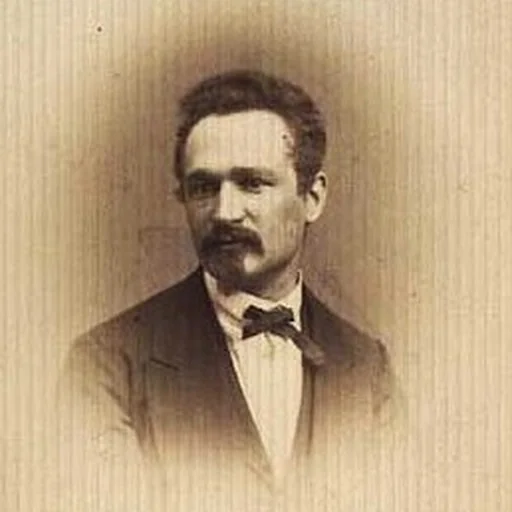
Theodor Esbern Philipsen (10 June 1840 – 3 March 1920) was a Danish painter of Jewish ancestry, known for landscapes and animal portraits. He also did small figures in wax and clay.