Artwork
Landscape after Ruisdael
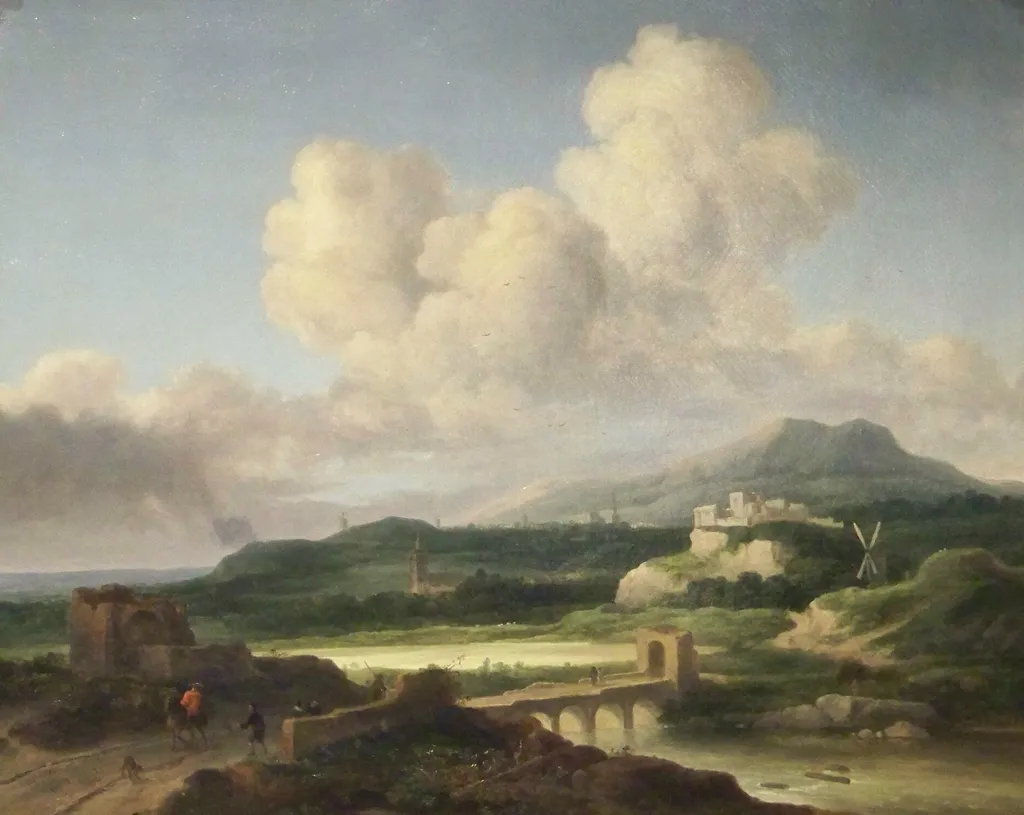
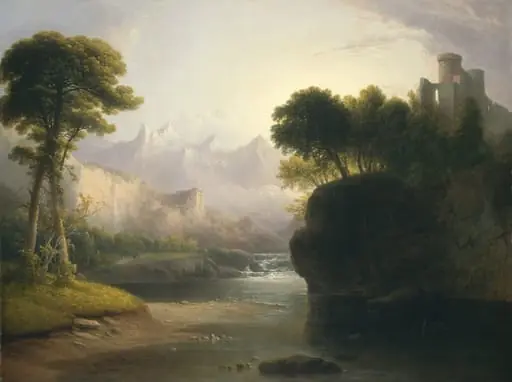
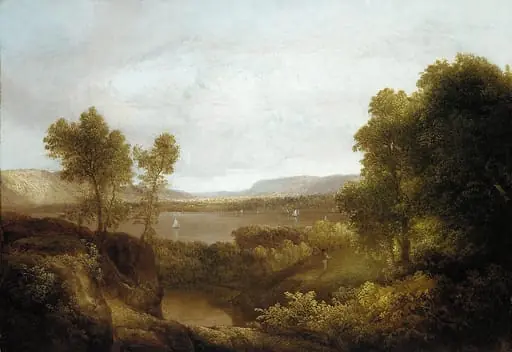
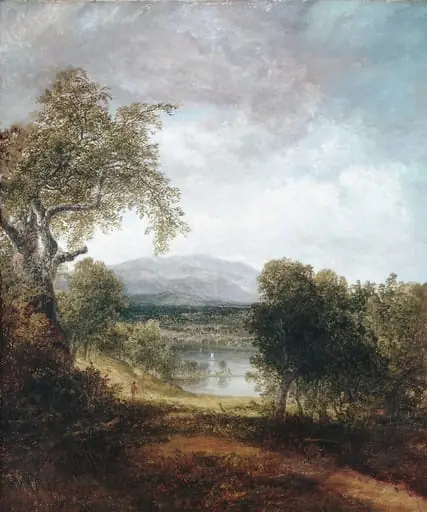
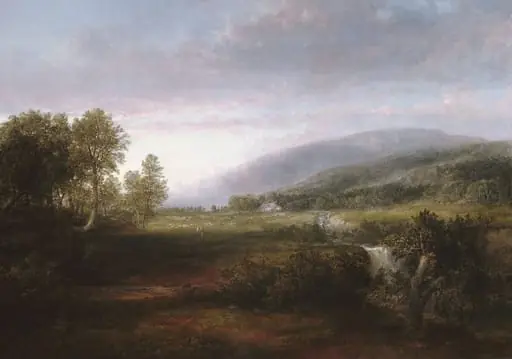
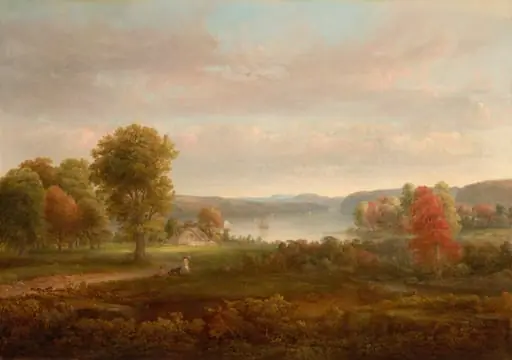
Landscape after Ruisdael is an oil painting by the Hudson River School artist Thomas Doughty. It dates from 1846 and is held in the collection of the Brooklyn Museum.
About this work
Overview
Thomas Doughty's 1846 oil painting, "Landscape after Ruisdael," presents a serene rural vista. This work, executed in oil paint, captures a tranquil countryside with natural and architectural elements. The painting is part of the collection at the Brooklyn Museum, offering a glimpse into Doughty's approach to landscape art during the mid-19th century.
Subject & Meaning
The composition features a winding river flowing through rolling green hills, spanned by a stone arch bridge. In the distance, a small village is nestled on a rise, identifiable by a prominent church steeple and a windmill. The scene evokes a sense of peaceful solitude, with human presence suggested rather than actively depicted, emphasizing the natural environment.
Technique & Style
Doughty employed oil paint to render a detailed landscape, paying particular attention to atmospheric effects. The sky is depicted with heavy, cloud-laden forms, suggesting an impending change in weather. A key aspect of the work is the artist's manipulation of light and shadow, which creates depth and a lifelike quality, illuminating certain areas while others recede into shade.
Context
His work reflects an appreciation for the dramatic and evocative qualities found in Ruisdael's compositions.
The title "Landscape after Ruisdael" indicates Doughty's engagement with the tradition of Dutch Golden Age landscape painting, particularly referencing Jacob van Ruisdael. This suggests Doughty's study and reinterpretation of earlier masters, a common practice among artists seeking to learn from and build upon established artistic conventions. His work reflects an appreciation for the dramatic and evocative qualities found in Ruisdael's compositions.
Artist & collection