Artwork
William Rush Carving His Allegorical Figure of the Schuylkill River
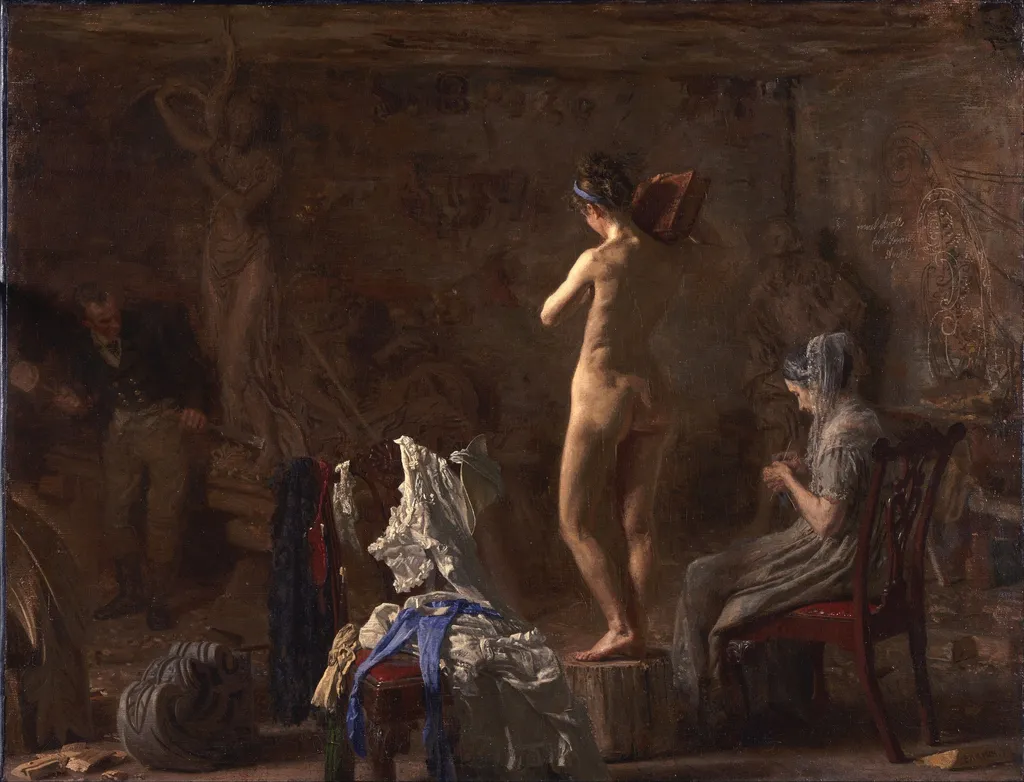
William Rush Carving His Allegorical Figure of the Schuylkill River is an oil painting by the Realist artist Thomas Eakins. It dates from 1888 and is held in the collection of the Philadelphia Museum of Art.
About this work
Overview
Thomas Eakins’ 1888 oil painting captures sculptor William Rush in the act of carving an allegorical representation of the Schuylkill River.
Thomas Eakins’ 1888 oil painting captures sculptor William Rush in the act of carving an allegorical representation of the Schuylkill River. The work presents a quiet, interior scene in which Rush, dressed in period attire, works on a marble figure of a woman, rendered in a classical contrapposto stance. The composition is dominated by muted, dark tones that focus attention on the interaction between artist and material.
Subject & Meaning
The central figure, William Rush, is shown shaping a female form that symbolizes the Schuylkill River, a motif that links Philadelphia’s civic identity to classical allegory. By portraying the sculptor at a moment of creation, Eakins emphasizes the labor and concentration inherent in artistic production, while the river’s personification underscores the connection between the city’s geography and its cultural aspirations.
Technique & Style
Eakins employs a restrained palette and strong chiaroscuro to model the figures, creating a sense of three‑dimensionality that mirrors the sculptural process depicted. The painter’s realist approach is evident in the precise rendering of textures—the wood block, the metal tools, and the drapery of Rush’s clothing—while the subdued background recedes, allowing the illuminated central action to dominate the viewer’s eye.
History & Provenance
Created during a period when Eakins was systematically investigating the mechanics of artistic labor, the painting belongs to a series that includes both canvases and photographs exploring similar themes. It was likely exhibited shortly after its completion and entered a private collection before being acquired by a regional museum, where it remains part of the institution’s holdings on American realism.
Context
The work reflects Eakins’ commitment to portraying everyday Philadelphia life with unembellished accuracy. By selecting a local 18th‑century sculptor as his subject, Eakins situates the painting within a broader narrative of American art history, linking the city’s early artistic endeavors to the emerging realist movement of the late nineteenth century.
Legacy
Eakins’ focus on the act of creation in this painting contributed to a lasting interest in the depiction of artistic processes within American art. The piece continues to be cited in scholarly discussions of realism and the representation of labor, illustrating how a single, intimate moment can illuminate broader cultural and historical themes.
Own this work as a print
Artist & collection
Artist
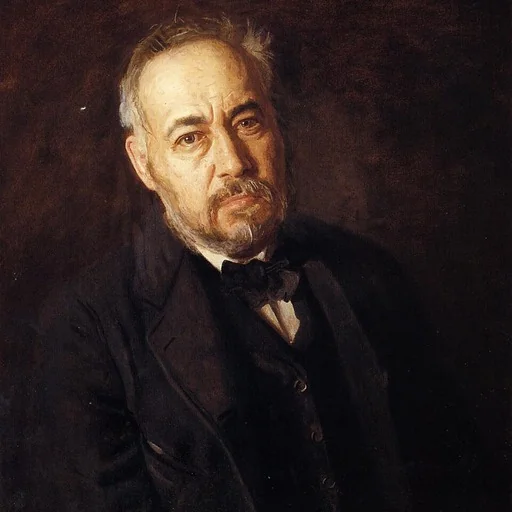
Thomas Cowperthwait Eakins (; July 25, 1844 – June 25, 1916) was an American realist painter, photographer, sculptor, and fine arts educator.