Artwork
Sleeping Dog
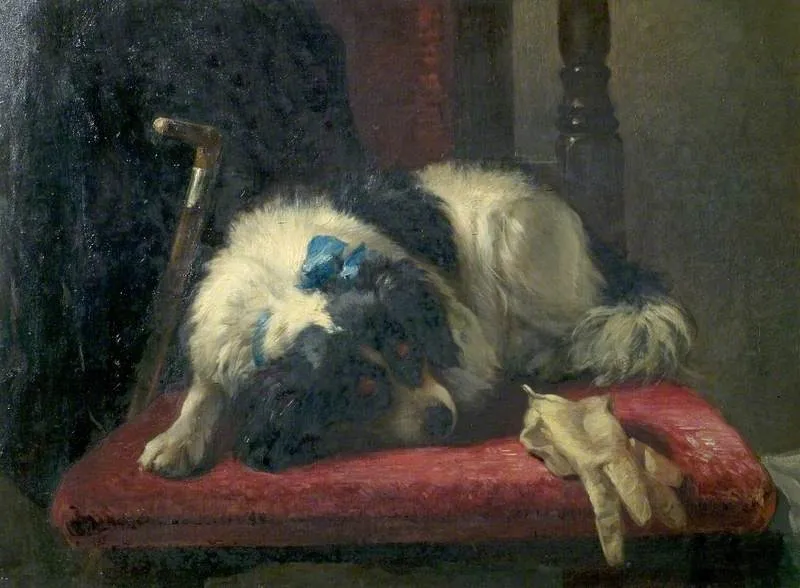
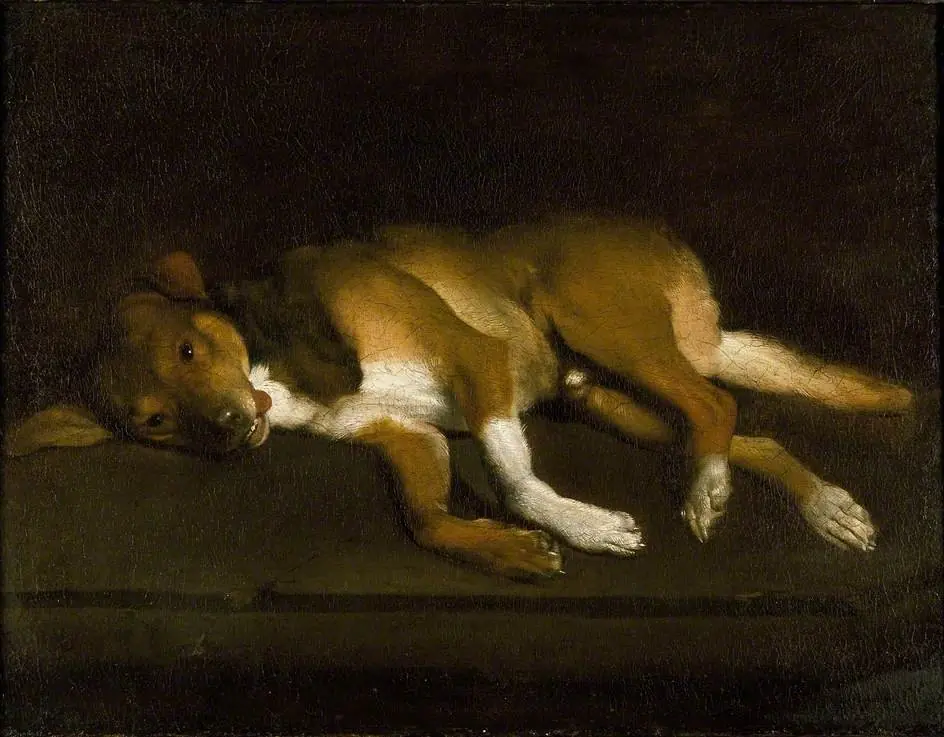
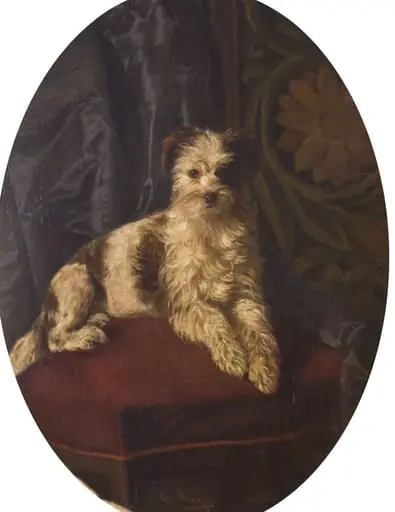
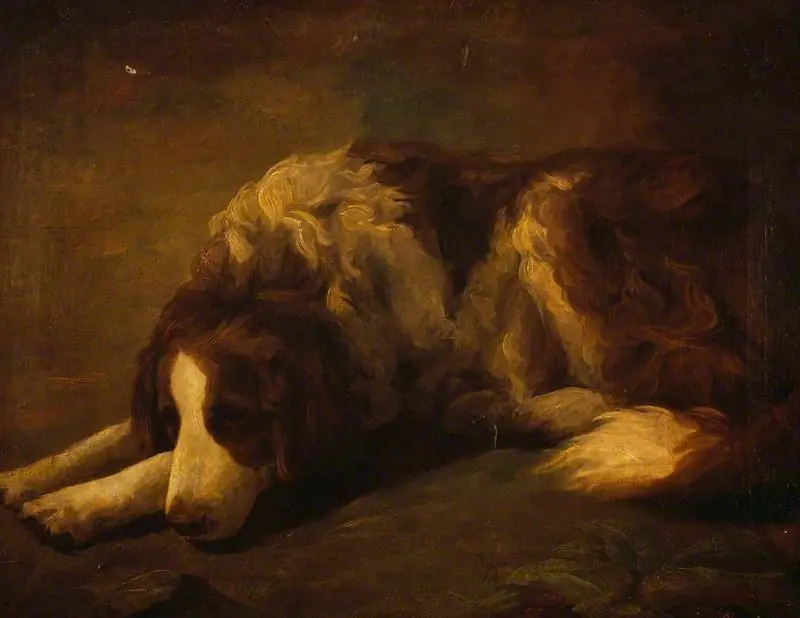
Sleeping Dog is an oil painting by Thomas Earl. It dates from 1853 and is held in the collection of the Derby Museum and Art Gallery.
About this work
Overview
The animal’s closed eyes and relaxed posture convey stillness, while nearby objects—a cane and white gloves—hint at human presence without showing it.
Painted around 1853 by Thomas Earl, this oil on canvas depicts a white dog with black markings resting on a red cushion. The animal’s closed eyes and relaxed posture convey stillness, while nearby objects—a cane and white gloves—hint at human presence without showing it. The dark background and subtle lighting isolate the figure, emphasizing quiet intimacy. The work is held in the collection of Derby Museum and Art Gallery.
Subject & Meaning
The dog, adorned with a blue ribbon, appears to be a cherished companion, possibly belonging to an elderly or infirm owner. The cane and gloves, placed just beyond the animal’s reach, suggest the human’s recent departure or absence. The scene evokes solitude and loyalty, transforming a simple domestic moment into a quiet meditation on companionship and the passage of time.
Technique & Style
Earl employs chiaroscuro to model the dog’s form, using soft contrasts between light and shadow to define its fur and the cushion’s folds. The palette is restrained, with the blue ribbon and red fabric providing subtle accents against muted tones. Brushwork is precise yet unobtrusive, favoring texture over detail, especially in the fur and fabric, enhancing the painting’s calm, contemplative mood.
History & Provenance
The painting entered the Derby Museum and Art Gallery’s collection in the 19th century, likely through local donation or acquisition. Thomas Earl, a lesser-known artist active in the Midlands, produced domestic scenes and animal portraits, often reflecting middle-class life. While little documentation survives about the painting’s early ownership, its preservation suggests it was valued within its original context.
Context
In mid-19th century Britain, pet portraiture grew in popularity among the middle class, reflecting changing attitudes toward animals as emotional companions. Unlike grand hunting scenes, Earl’s work focuses on quiet domesticity. The inclusion of personal items like gloves and a cane aligns with broader trends in genre painting that emphasized everyday life over idealized narratives.
Legacy
Though not widely exhibited beyond regional collections, the painting remains a quiet example of Victorian-era animal portraiture. Its restrained composition and emotional subtlety distinguish it from more theatrical contemporaries. It continues to be studied for its depiction of human-animal bonds and its use of light to convey stillness, offering insight into domestic aesthetics of the period.
Artist & collection