Artwork
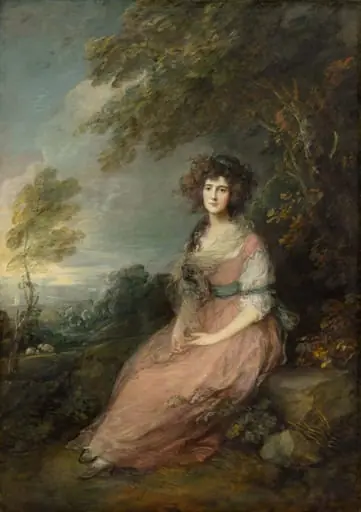
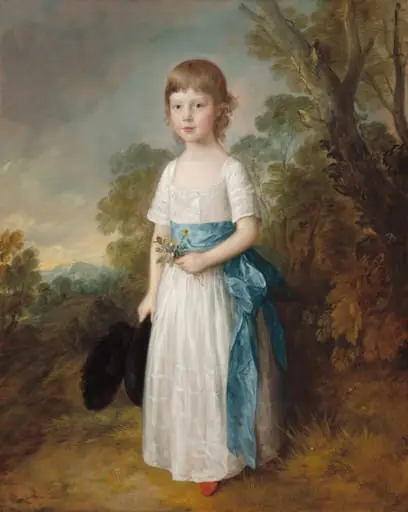
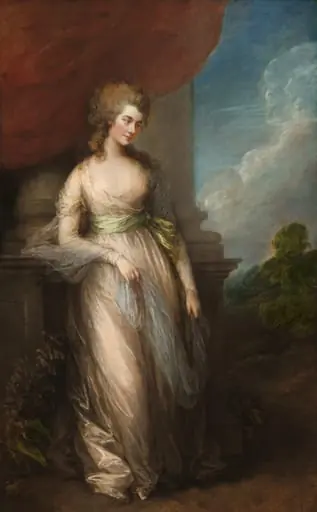
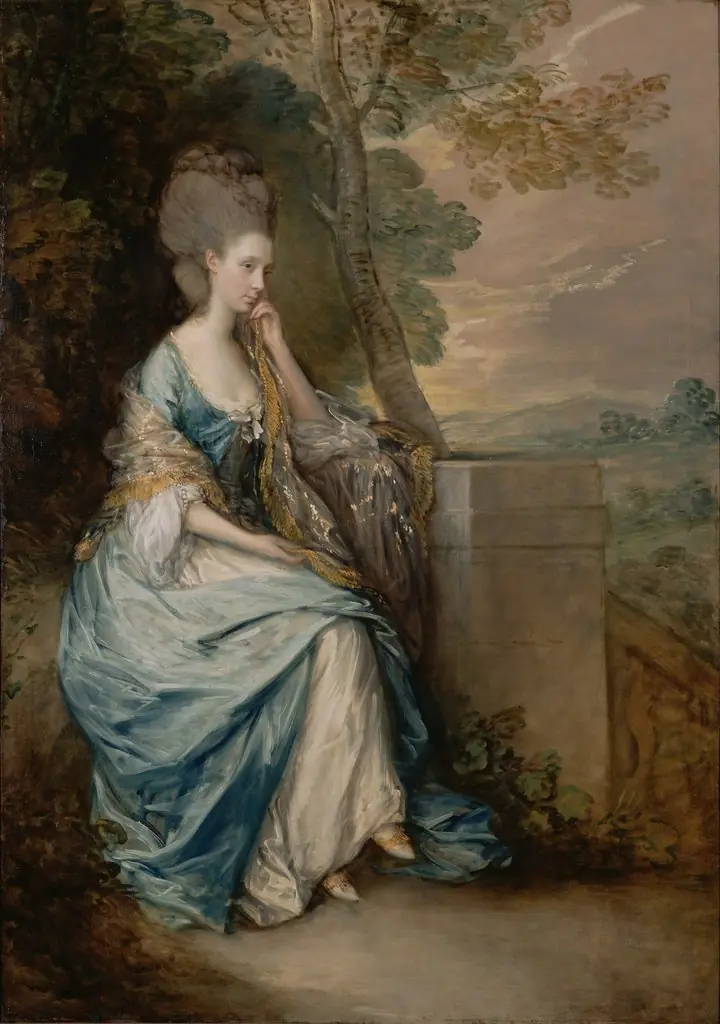
Portrait of Selina Thistlethwayte of Norman Court, full-length in blue and white dress
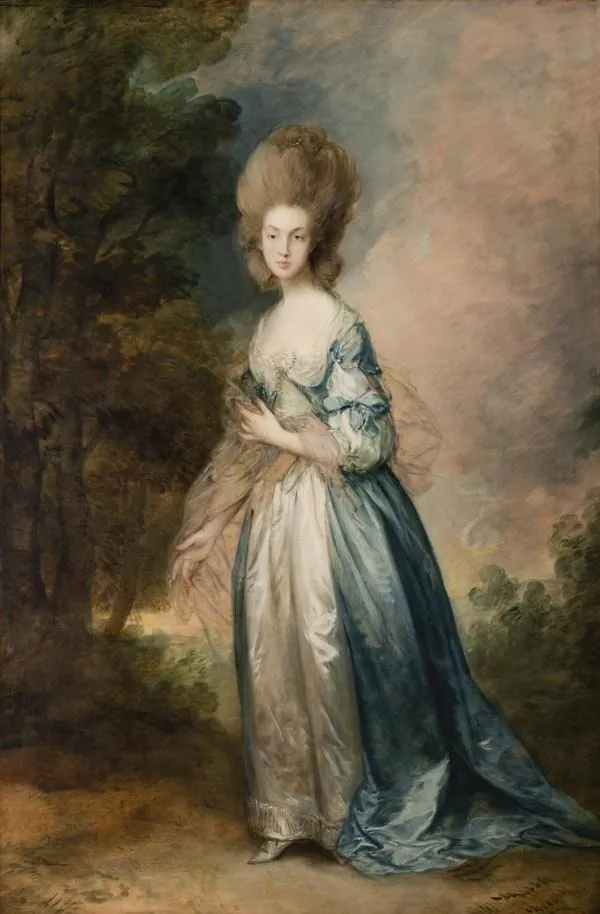
Portrait of Selina Thistlethwayte of Norman Court, full-length in blue and white dress is an oil painting by the Rococo painting artist Thomas Gainsborough. It is held in the collection of the National Galleries Scotland.
About this work
Overview
Painted in 1790 by Thomas Gainsborough, this full-length oil portrait captures Selina Thistlethwayte of Norman Court in a graceful, standing pose.
Painted in 1790 by Thomas Gainsborough, this full-length oil portrait captures Selina Thistlethwayte of Norman Court in a graceful, standing pose. The work exemplifies Gainsborough’s signature blend of portraiture and landscape, placing the sitter within a softly rendered natural setting. His use of light, fluid brushwork, and a restrained color palette reflects the elegance of late 18th-century British artistic sensibilities.
Subject & Meaning
Selina Thistlethwayte, a member of the landed gentry, is depicted in formal attire, her clasped hands and upright posture conveying poise and social refinement. The choice of a blue and white dress, paired with an elaborate hairstyle, signals her status and adherence to contemporary fashion. The landscape background, while not specific to a known location, reinforces her connection to the rural estate associated with her family.
Technique & Style
Gainsborough employed thin, layered oil glazes to achieve luminous fabric textures and subtle transitions in the dress’s folds. The background is rendered with loose, atmospheric brushstrokes, creating depth without competing with the figure. His delicate handling of light across the silk and lace details, along with the soft focus of the trees and sky, demonstrates his mastery in merging portraiture with landscape elements.
History & Provenance
Commissioned by the Thistlethwayte family, the painting remained in their possession at Norman Court, their Hampshire estate, for generations. It entered a public collection in the 20th century, where it has been studied as a representative example of Gainsborough’s later portraiture. Its continuous private ownership until then contributes to its well-preserved condition and intact provenance.
Context
Created during the twilight of the Rococo aesthetic in Britain, the portrait reflects a transition toward more naturalistic composition while retaining aristocratic formality. Gainsborough’s work stood apart from the rigid conventions of his contemporaries by integrating the sitter into a poetic, almost idealized natural world — a trend that influenced later Romantic portraiture.
Legacy
This portrait remains a key example of Gainsborough’s ability to merge individual character with environmental harmony. Though not widely exhibited, it is frequently referenced in scholarly studies of 18th-century British portraiture for its technical subtlety and the quiet dignity it bestows upon its subject, embodying the era’s evolving ideals of gentility.
Artist & collection
Artist
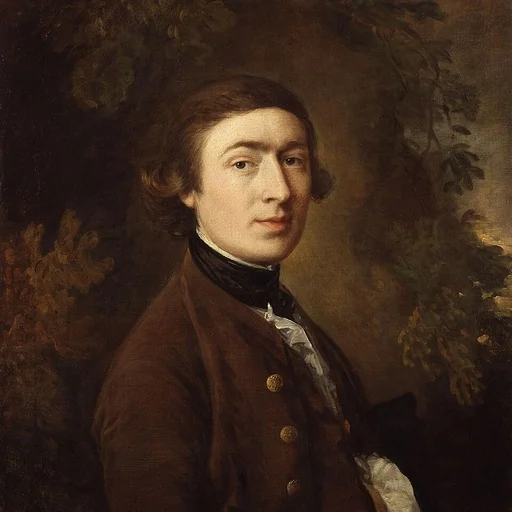
Thomas Gainsborough (; 14 May 1727 (baptised) – 2 August 1788) was an English painter, draughtsman and printmaker who specialised in portrait and landscape painting.