Artwork
Portrait of a Child
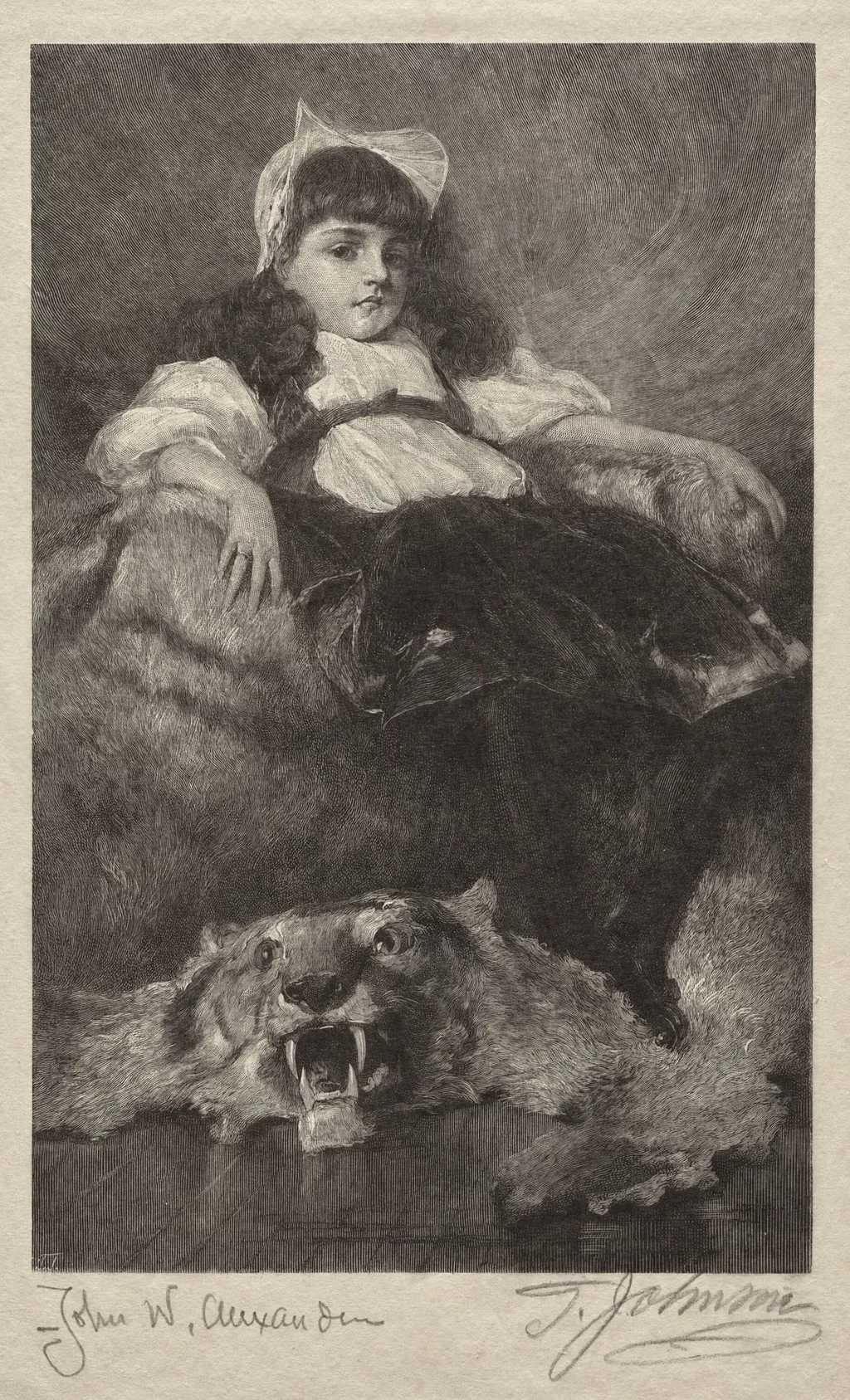
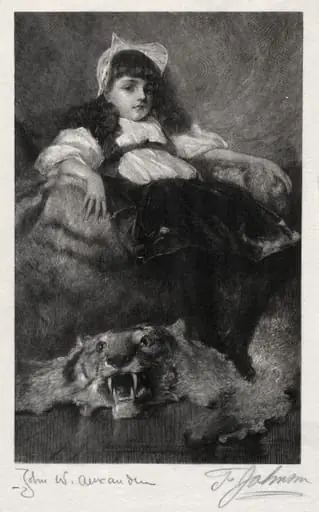
Portrait of a Child is a print by the Impressionist artist Thomas George Johnson. It dates from 1887 and is held in the collection of the Cleveland Museum of Art.
About this work
Overview
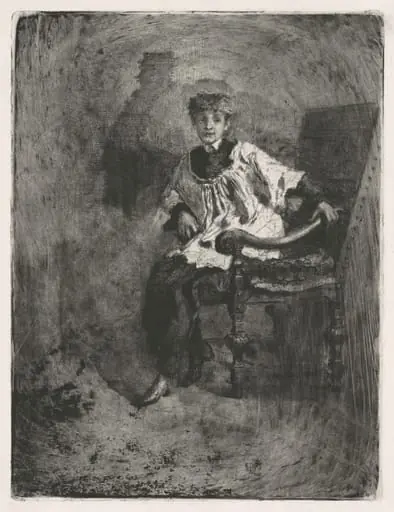
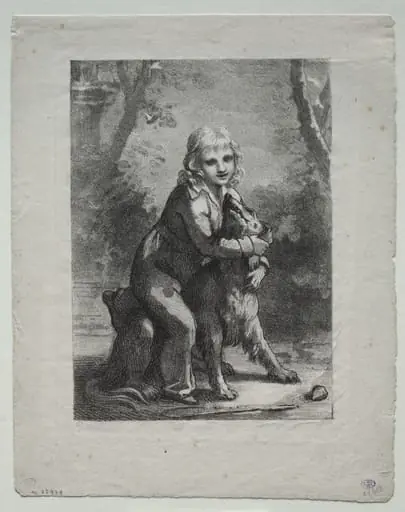
The work presents a quiet, contemplative image of a young girl seated in a dimly lit interior, accompanied by a taxidermied animal at her feet.
Portrait of a Child is a late 19th-century print by Thomas George Johnson, dated around 1887. It is part of the collection at The Cleveland Museum of Art. The work presents a quiet, contemplative image of a young girl seated in a dimly lit interior, accompanied by a taxidermied animal at her feet. The composition emphasizes stillness and solitude, with minimal environmental detail to focus attention on the figure.
Subject & Meaning
The subject is a girl dressed in a white shirt and dark skirt, wearing a white headscarf. She sits with composed posture, one arm resting on the chair, the other resting gently in her lap. Her gaze is directed outward, away from the viewer, suggesting inward reflection. The presence of a large, preserved animal—possibly a big cat—introduces an element of domesticated wildness, hinting at themes of control, mortality, or childhood encounters with the natural world.
Technique & Style
Johnson employs chiaroscuro to model the girl’s form against a dark, undefined background, enhancing the three-dimensionality of her figure and clothing. The contrast between her pale attire and the deep shadows creates a sculptural effect. Lines are restrained, textures are subtly rendered, and the print’s tonal range is carefully modulated to evoke a mood of quiet gravity rather than narrative drama.
History & Provenance
The work was created by Thomas George Johnson, a British artist active in the late 1800s, known for intimate portraiture and domestic scenes. It entered The Cleveland Museum of Art’s collection through documented acquisition, though its earlier ownership history remains largely unrecorded. As a print, it may have been produced in limited editions, contributing to its rarity and preservation in institutional hands.
Context
In the late Victorian era, portraits of children often reflected ideals of innocence and moral purity. The inclusion of a taxidermied animal aligns with contemporary trends in domestic decoration and scientific curiosity, where exotic specimens were displayed as symbols of empire and control. Johnson’s restrained approach diverges from overt sentimentality, offering instead a subdued meditation on childhood within a world shaped by colonial and natural history.
Legacy
Though not widely exhibited or reproduced, Portrait of a Child remains a quiet example of late 19th-century British printmaking that resists theatricality. Its emotional reserve and formal precision have drawn scholarly attention for its departure from conventional child portraiture. The work endures as a subtle record of how domestic spaces and objects were used to frame the psychological presence of youth during a period of social and imperial transformation.
Artist & collection