Artwork
The Angerstein Children
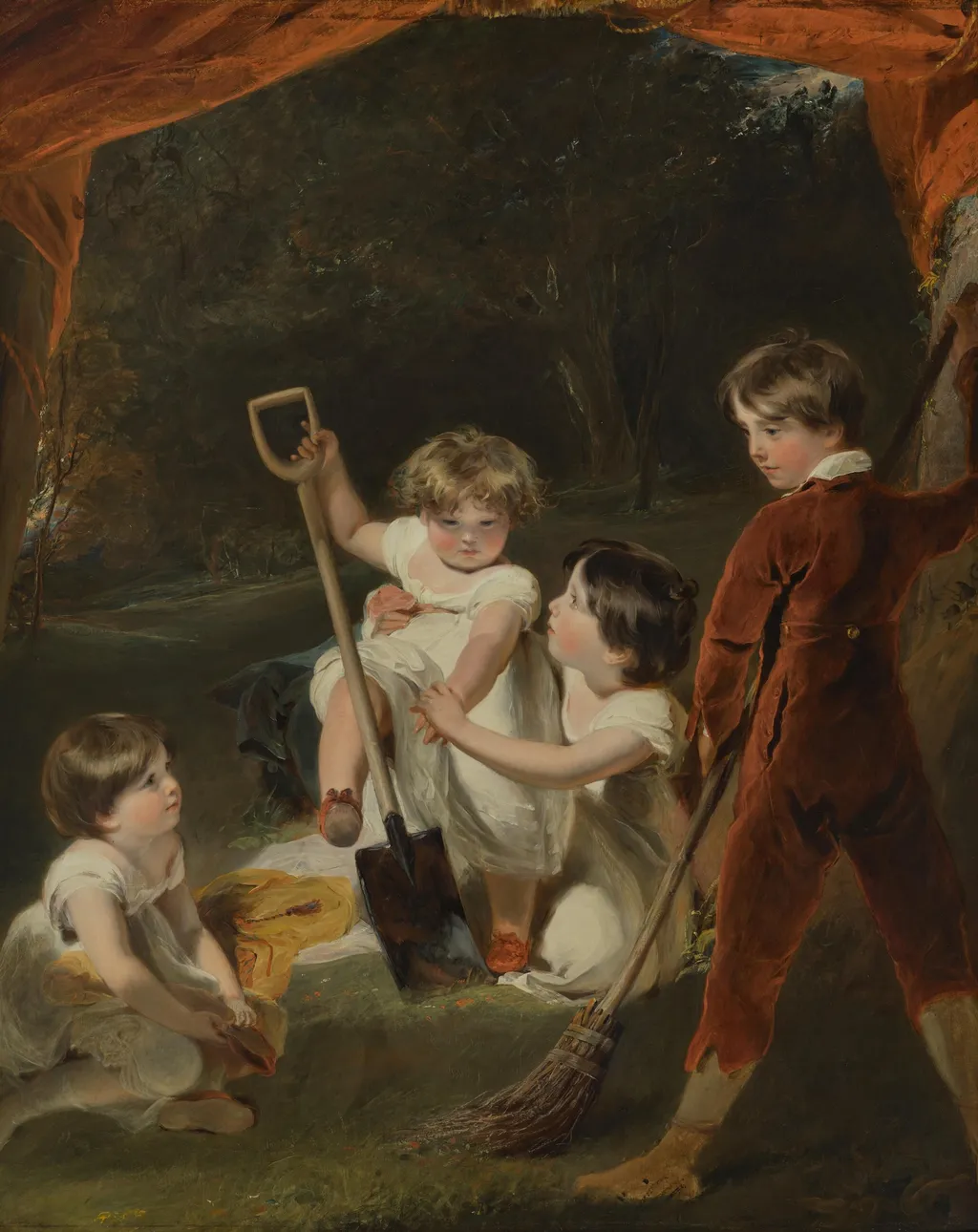
The Angerstein Children is an oil painting by Thomas Lawrence. It dates from 1807 and is held in the collection of the Gemäldegalerie Berlin.
About this work
Overview
Painted in 1807 by Thomas Lawrence, this oil portrait captures the four children of John Julius Angerstein, a wealthy art collector and patron.
Painted in 1807 by Thomas Lawrence, this oil portrait captures the four children of John Julius Angerstein, a wealthy art collector and patron. Lawrence, who later led the Royal Academy, was already established as a skilled portraitist by this time. The work belongs to a series of family compositions he produced for elite clients, blending informality with refined technique to convey both affection and social standing.
Subject & Meaning
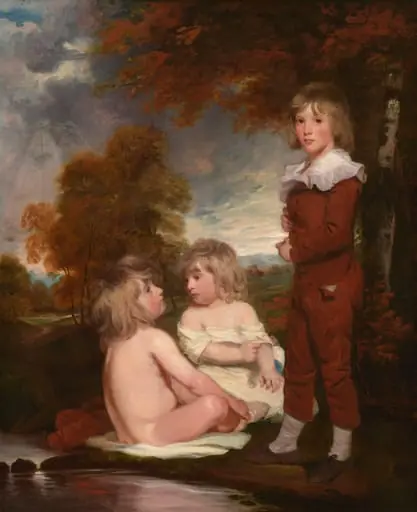
The painting portrays the Angerstein children in a naturalistic woodland setting, suggesting a moment of unstructured play. The arrangement—three girls seated, one boy standing—hints at familial dynamics without overt narrative. The presence of tools like a broom and shovel implies domestic life encroaching on nature, perhaps symbolizing the intersection of cultivated upbringing and childhood freedom. The gaze of the leftmost girl toward the viewer introduces a subtle connection between the private scene and the observer.
Technique & Style
Lawrence employed soft, warm lighting and delicate brushwork to create a sense of intimacy. The children’s clothing—particularly the boy’s red coat and the girls’ white dresses—contrasts gently against the muted greens and browns of the forest. Shadows are rendered with subtle gradation, enhancing volume without harshness. The composition avoids rigid symmetry, favoring a naturalistic grouping that reflects the spontaneity of childhood, while maintaining the polished finish characteristic of early 19th-century British portraiture.
History & Provenance
John Julius Angerstein, the children’s father, was a key figure in British art collecting; his personal collection formed the foundation of the National Gallery in London. The portrait remained within the family until the 19th century, after which it entered public collections. Its survival and continued display reflect both the Angerstein family’s cultural influence and Lawrence’s reputation as a sought-after portraitist among Britain’s affluent classes.
Context
In early 19th-century Britain, portraiture often served to affirm social status through familial imagery. Lawrence’s depiction of children in a pastoral setting aligns with Romantic-era ideals of nature as a nurturing, moral space. Unlike formal studio portraits, this work embraces informality, mirroring broader cultural shifts toward valuing emotional authenticity and domestic life among the upper classes.
Legacy
While not among Lawrence’s most widely reproduced works, the painting exemplifies his ability to merge psychological nuance with aesthetic grace. It contributes to the understanding of how aristocratic families presented their children—not as miniature adults, but as individuals within a cultivated natural world. The piece remains a quiet testament to the evolving representation of childhood in British art during the Napoleonic era.
Own this work as a print
Artist & collection
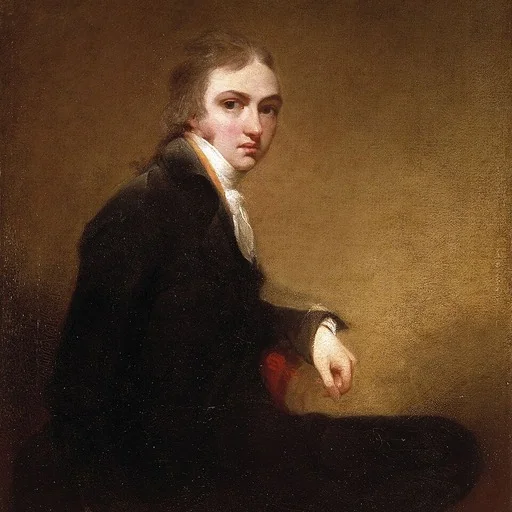
Artist
Sir Thomas Lawrence (13 April 1769 – 7 January 1830) was an English painter who served as the fourth president of the Royal Academy.

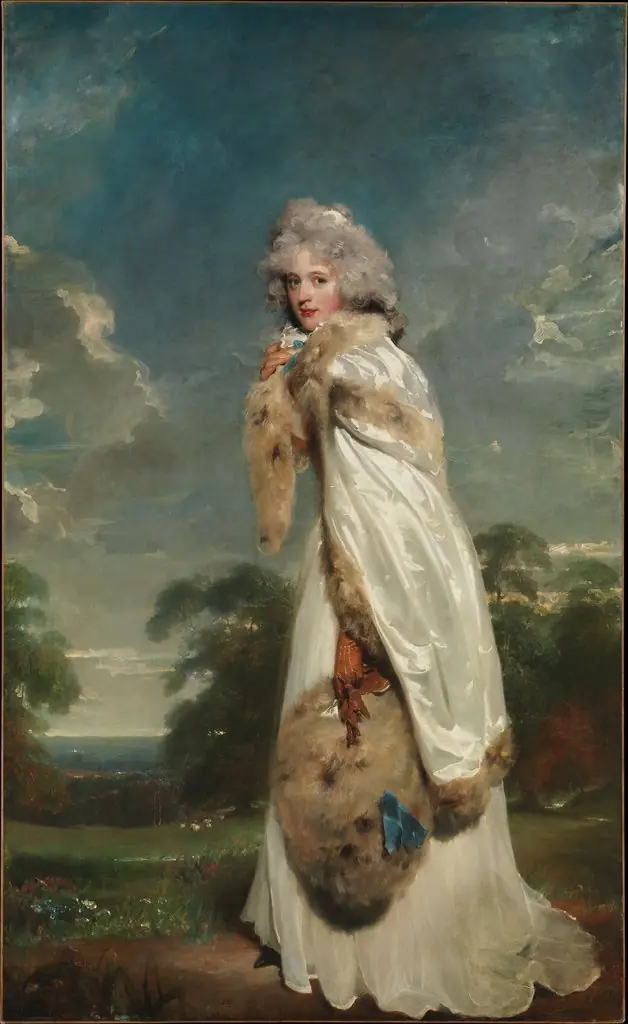 Elizabeth Farren (born about 1759, died 1829), Later Countess of Derby
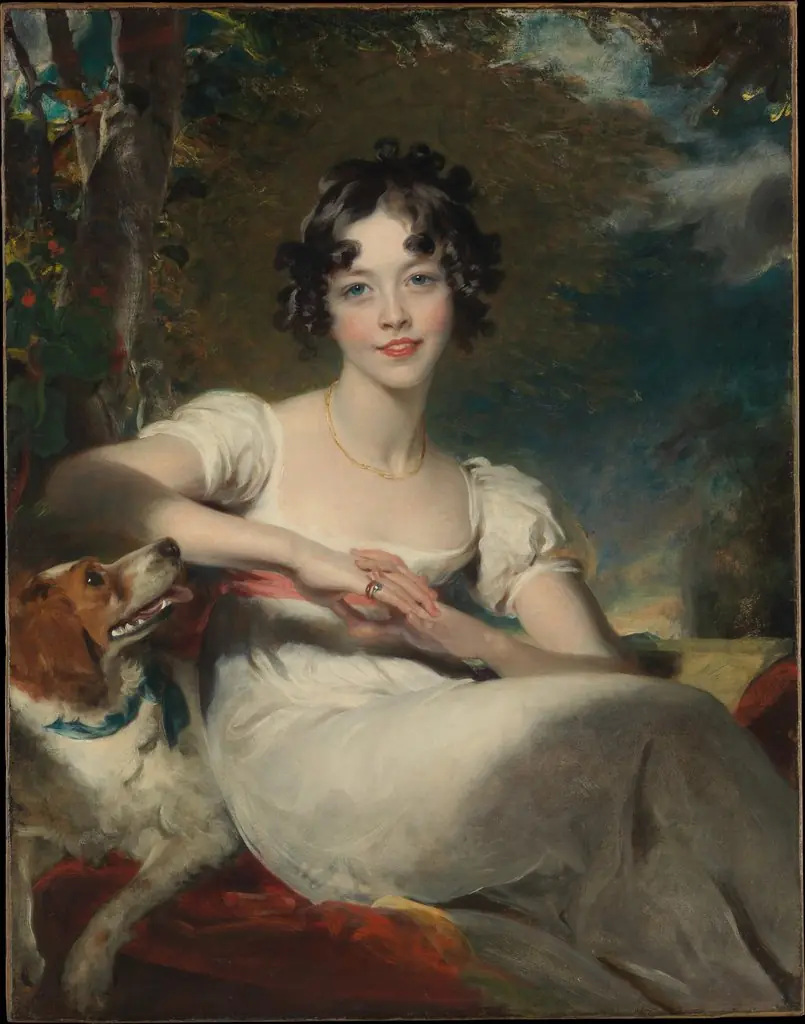 Lady Maria Conyngham (died 1843)
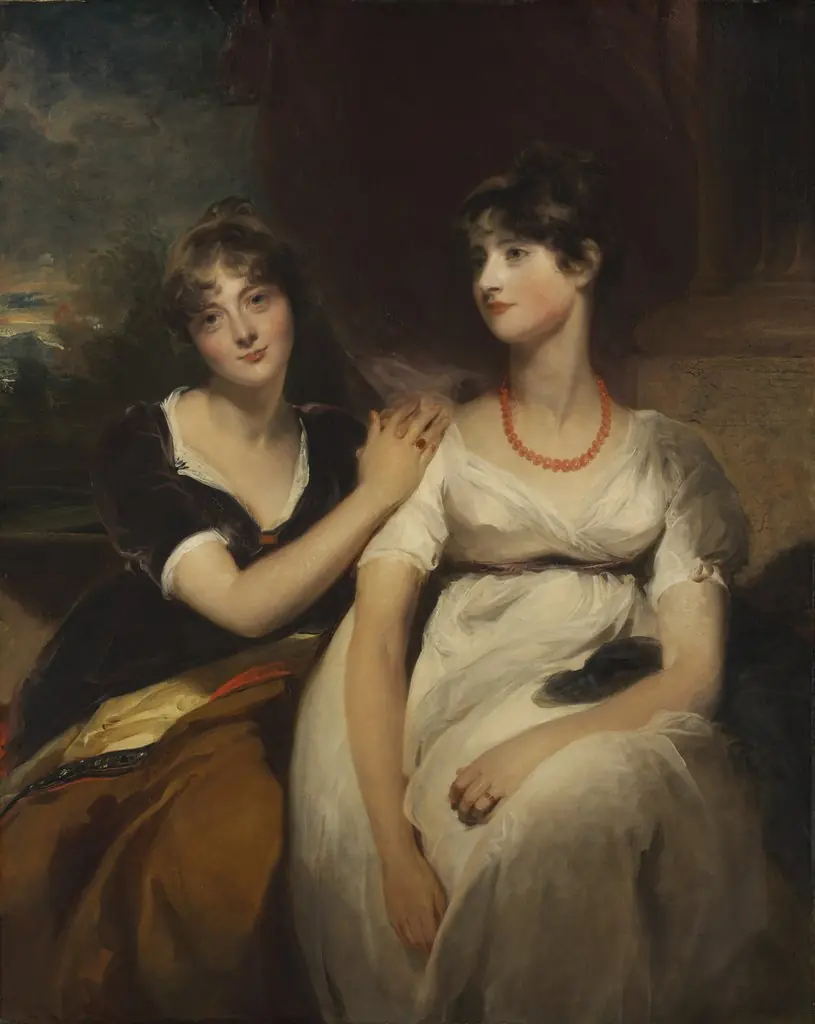 Portrait of Charlotte and Sarah Carteret-Hardy
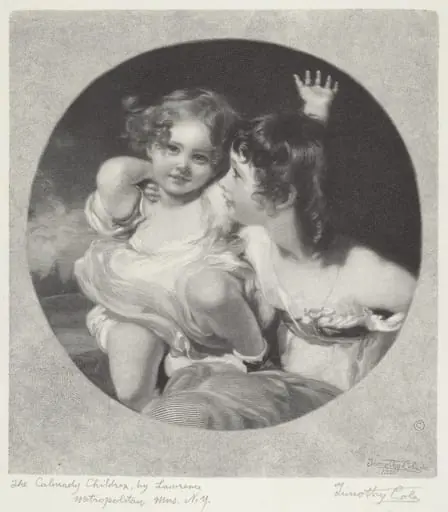
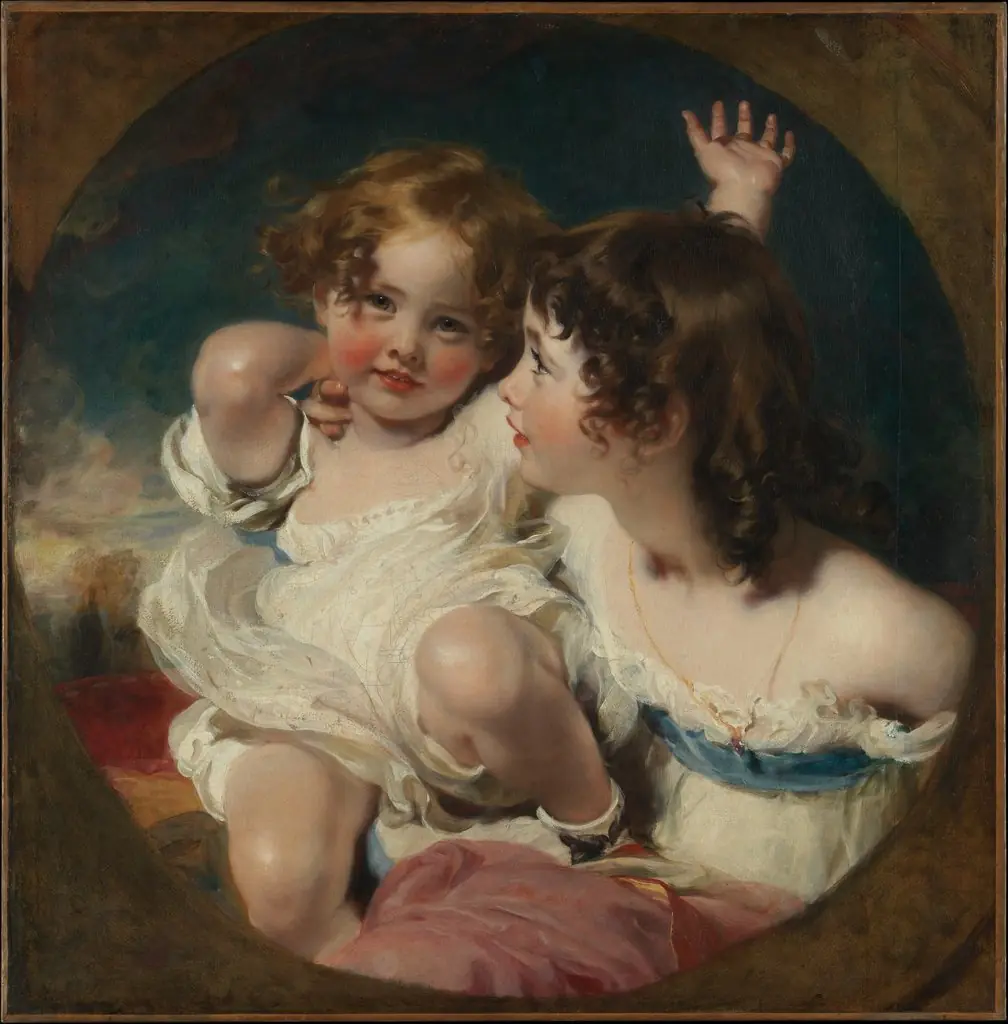 The Calmady Children (Emily, 1818–?1906, and Laura Anne, 1820–1894)
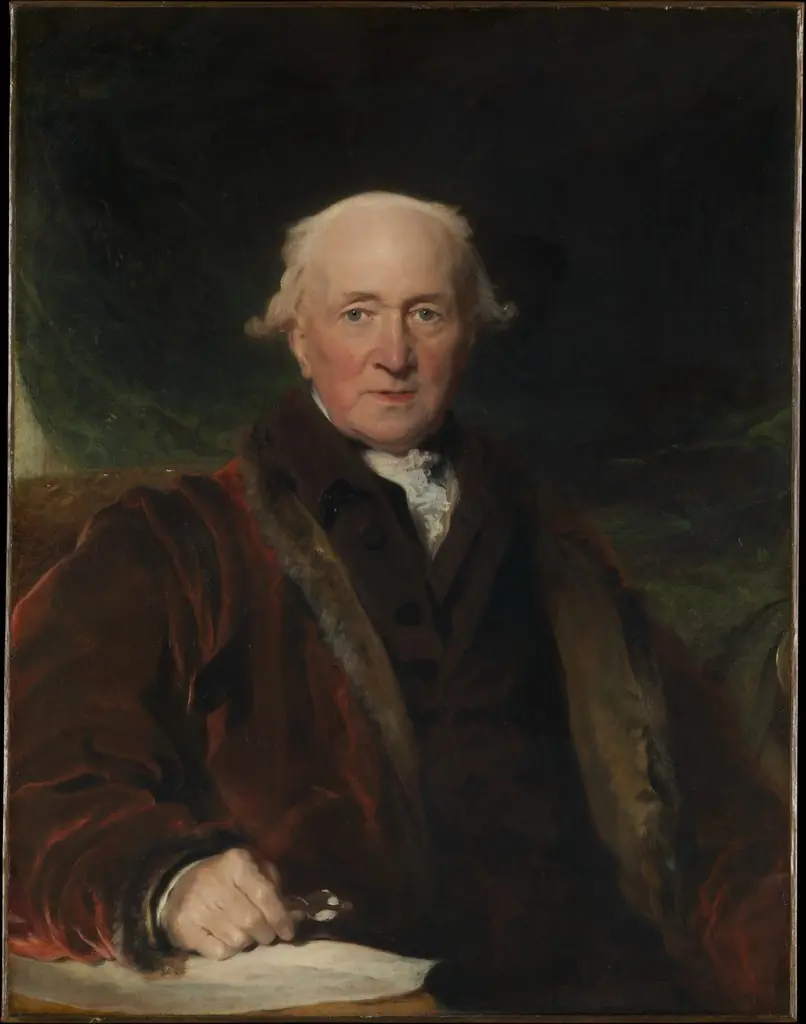 John Julius Angerstein (1736–1823)
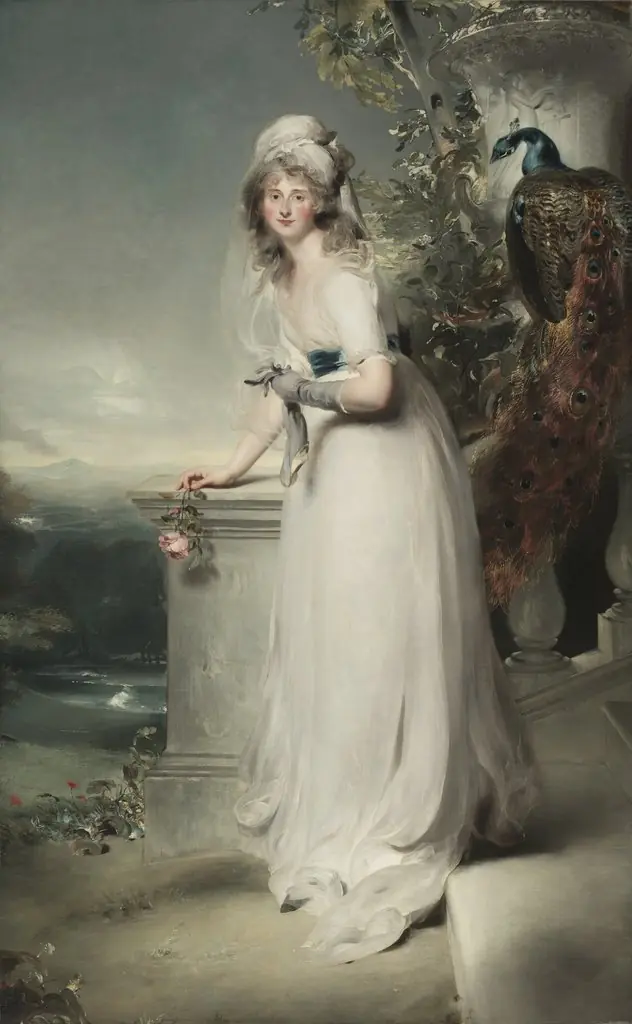 Portrait of Catherine Grey, Lady Manners
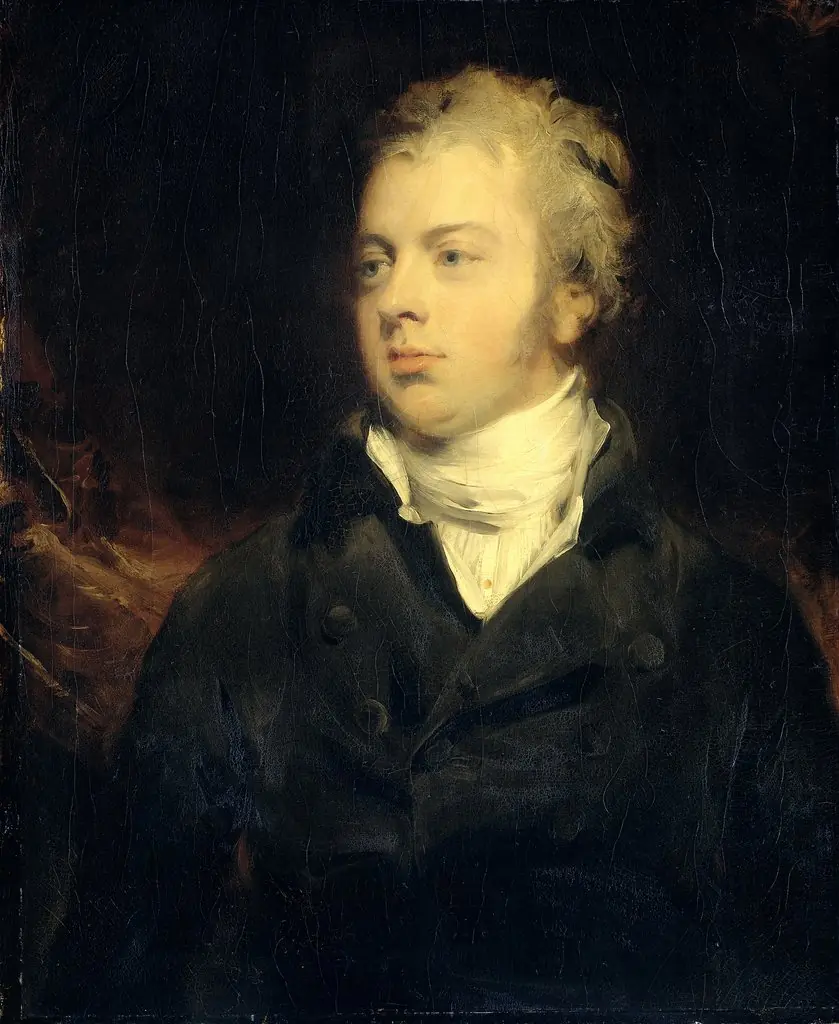 Portrait of Willem Ferdinand Mogge Muilman, President of the Dutch Central Bank
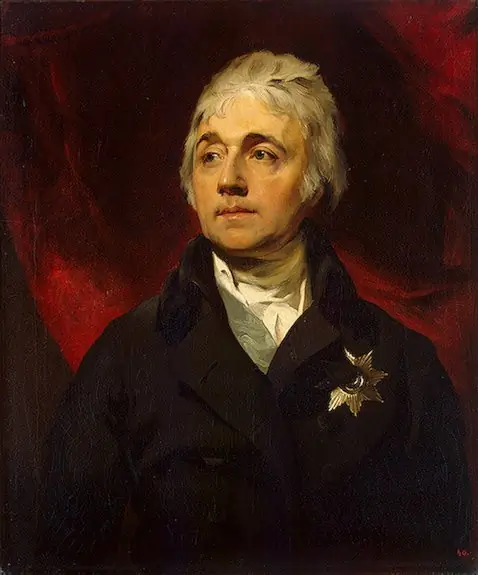 Portrait of Count Semyon Vorontsov (1744-1832)