Artwork
Fort George Island, Florida
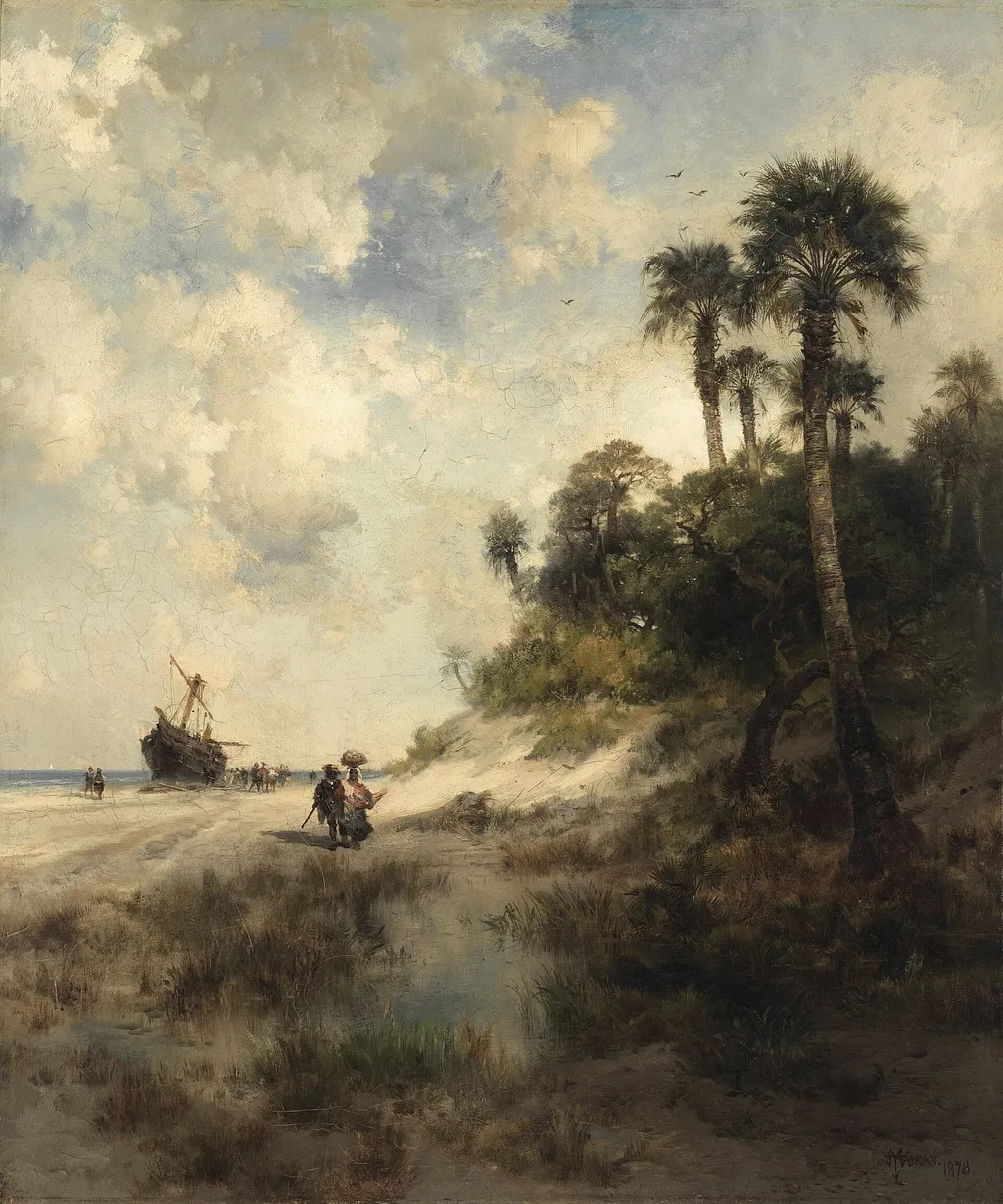
Fort George Island, Florida is an oil painting by the American Impressionist artist Thomas Moran. It dates from 1890 and is held in the collection of the Cleveland Museum of Art.
About this work
Overview
Thomas Moran’s 1890 oil painting *Fort George Island, Florida* presents a tranquil coastal scene. A distant shipwreck lies on the sand while a small group of figures stroll along the shoreline under a sky mottled with clouds. The work is part of the Cleveland Museum of Art’s collection.
Subject & Meaning
The composition captures a quiet moment on a Florida beach, juxtaposing the remnants of a wreck with the gentle activity of beach‑goers. The juxtaposition suggests a passage of time, where human presence coexists with the lingering traces of maritime history.
Technique & Style
Moran employs loose, expressive brushwork and a luminous palette that align with American Impressionist tendencies. Bold strokes convey movement in the clouds and water, while subtle shifts in light create atmospheric depth, drawing the eye from foreground figures to the distant horizon.
History & Provenance
Created toward the end of Moran’s career, the painting reflects his shift from the Rocky Mountain vistas that defined his early reputation toward tropical and coastal subjects. It entered the Cleveland Museum of Art’s holdings, where it remains on display.
Context
Although best known for his Hudson River School landscapes, Moran’s later works, such as this one, illustrate his engagement with the broader American Impressionist movement. The piece exemplifies his exploration of light and color in diverse environments beyond the mountainous West.
Own this work as a print
Artist & collection
Artist
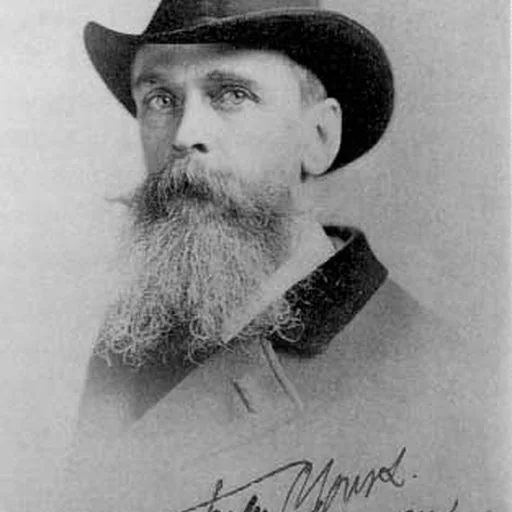
Thomas Moran (February 12, 1837 – August 25, 1926) was an American painter and printmaker of the Hudson River School in New York whose work often featured the Rocky Mountains.