Artwork
The Mountain Rivulet
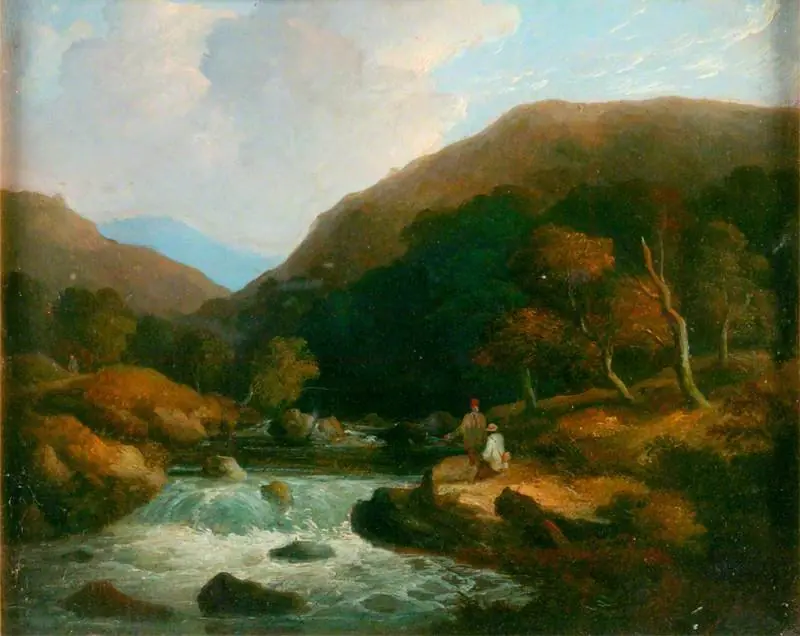
The Mountain Rivulet is an unspecified painting by the British Romanticist artist Thomas Mulvany. It dates from 1838 and is held in the collection of the National Gallery of Ireland.
About this work
Overview
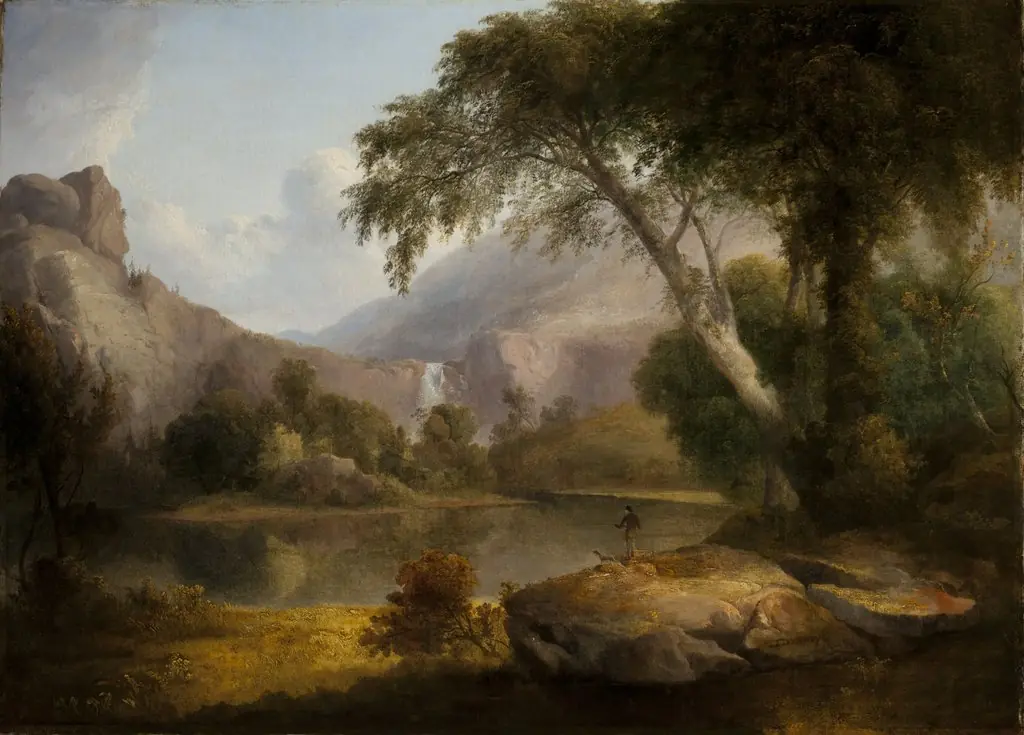
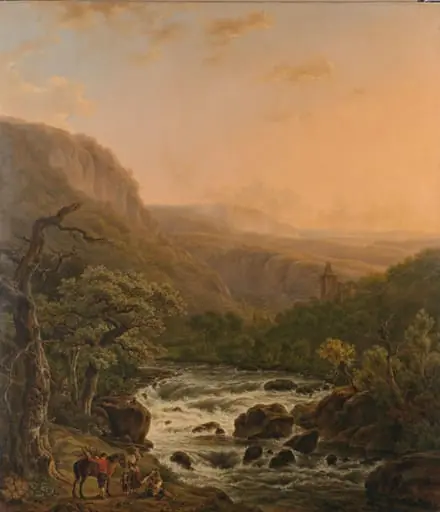
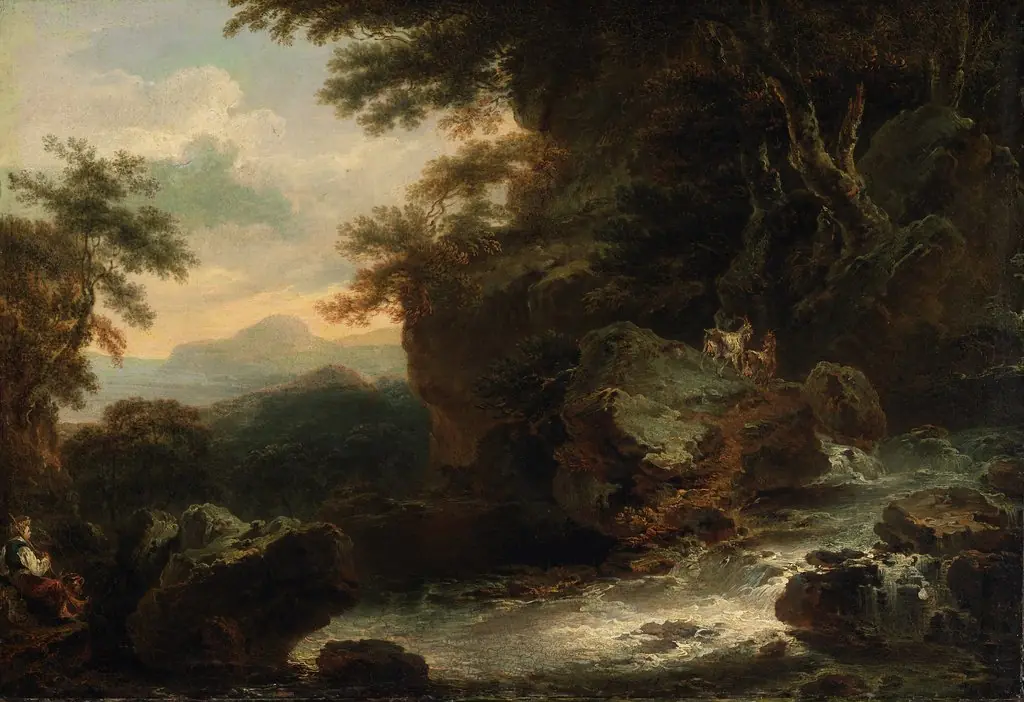
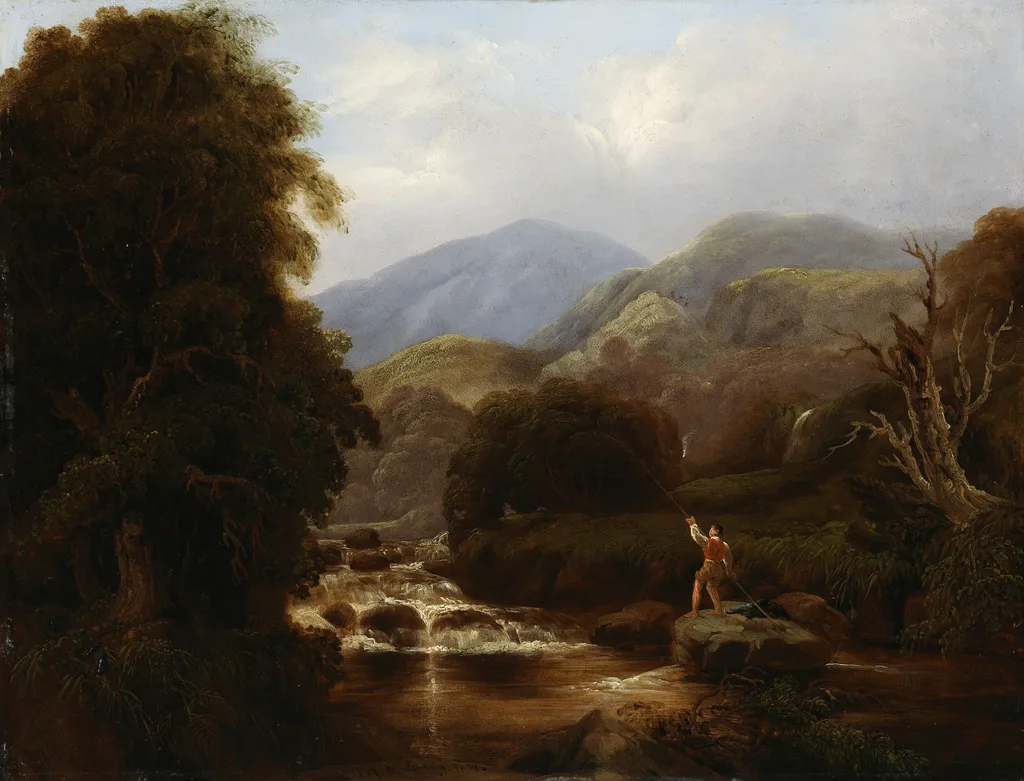
Painted in 1838 by Thomas Mulvany, The Mountain Rivulet is a landscape work held in the National Gallery of Ireland. It presents a quiet rural scene featuring a mountainous backdrop and a winding stream that cuts through the foreground. The composition emphasizes stillness and natural harmony, with minimal human presence and subdued tones that reinforce a contemplative mood.
Subject & Meaning
His stillness suggests introspection rather than activity, aligning the scene with ideals of quietude and communion with nature.
A solitary figure stands on a rocky outcrop, fishing rod in hand, gazing toward the water. His stillness suggests introspection rather than activity, aligning the scene with ideals of quietude and communion with nature. The absence of narrative or dramatic action invites viewers to linger in the moment, reflecting the 19th-century romantic appreciation for solitary contemplation in natural settings.
Technique & Style
Mulvany employs soft, blended brushwork to render foliage, water, and rock with subtle texture. The palette is restrained—dominated by muted greens, earthy browns, and cool grays—enhancing the painting’s tranquil atmosphere. Delicate handling of light on the river’s surface creates a sense of depth, while gentle contrasts between shadow and highlight suggest chiaroscuro without overt theatricality.
History & Provenance
The painting entered the National Gallery of Ireland’s collection in the 19th century, likely acquired during a period of growing institutional interest in Irish landscape art. Its attribution to Mulvany is consistent with documented works from his active years, though few of his paintings survive in public collections, making this piece a rare example of his mature style.
Context
Created during a time when Irish artists were increasingly turning to native scenery as subject matter, the painting reflects a broader cultural shift away from idealized European landscapes toward local, observed environments. Mulvany’s approach aligns with contemporaries who valued quiet realism over dramatic grandeur, contributing to a distinctly Irish visual identity in landscape painting.
Legacy
Though Mulvany is not widely known today, The Mountain Rivulet remains a representative example of early 19th-century Irish landscape practice. Its restrained aesthetic and attention to natural detail influenced later generations of Irish painters who sought to capture the country’s quiet rural beauty without romantic embellishment.
Own this work as a print
Artist & collection