Artwork
The Thames
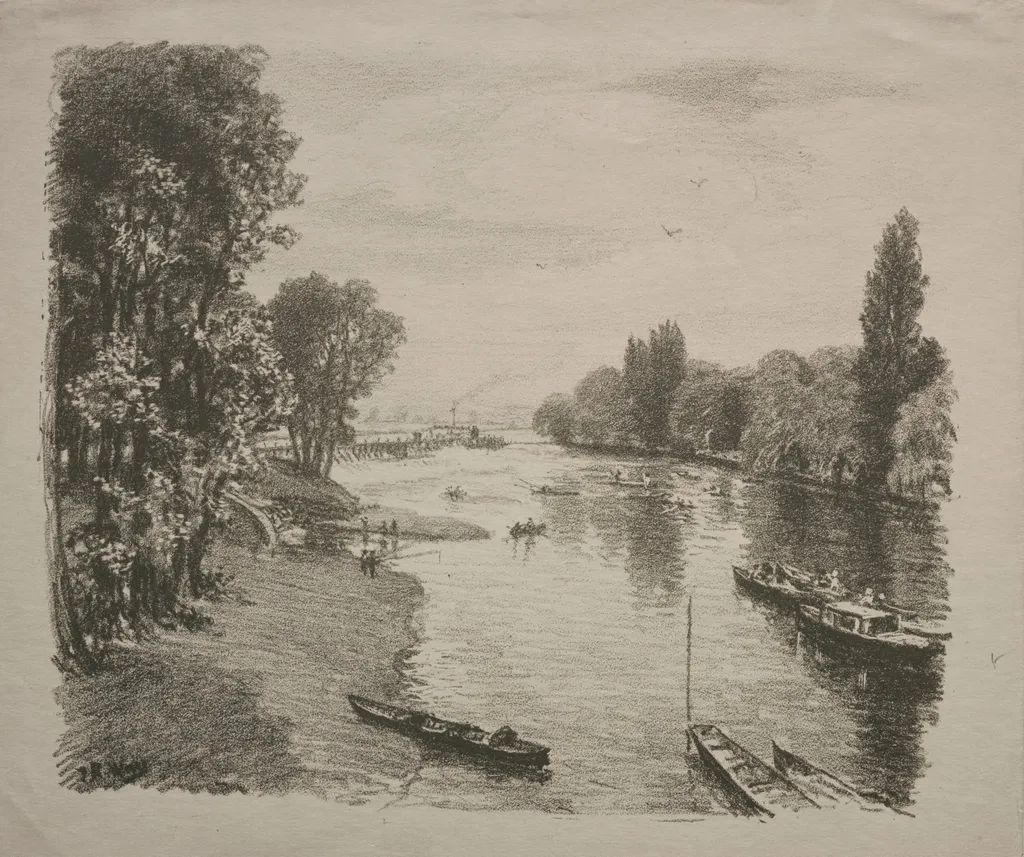
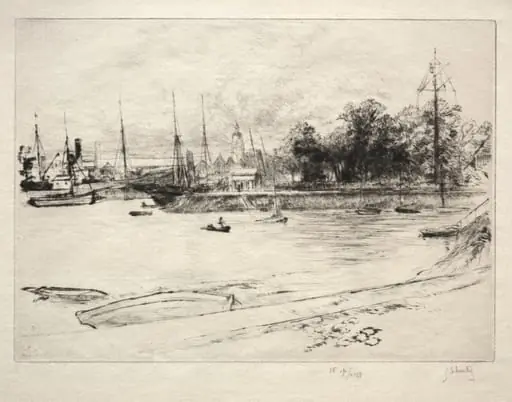
The Thames is a print by Thomas Robert Way. It dates from 1897 and is held in the collection of the Cleveland Museum of Art.
About this work
Overview
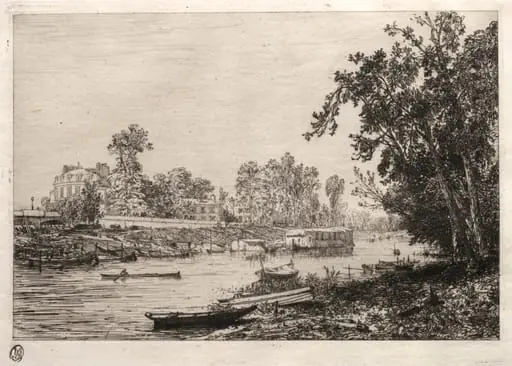
It captures the quiet rhythm of daily life along the water, with modest vessels and modest architecture lining the banks.
Created around 1897 by Thomas Robert Way, The Thames is a print depicting a quiet stretch of the river in London. It captures the quiet rhythm of daily life along the water, with modest vessels and modest architecture lining the banks. The work is part of the collection at The Cleveland Museum of Art, where it is preserved as an example of late 19th-century British printmaking focused on urban and riverside scenes.
Subject & Meaning
The scene portrays an uneventful moment on the Thames, free of grandeur or spectacle. Boats moored near weathered buildings suggest the routine of working river life, emphasizing continuity rather than change. The absence of human figures heightens the sense of stillness, inviting reflection on the quiet endurance of ordinary environments in an era of rapid industrialization.
Technique & Style
Way employed a restrained tonal palette and precise linework typical of etching and drypoint methods. The composition favors soft contrasts over dramatic lighting, avoiding the intense chiaroscuro of earlier traditions. Instead, the work leans toward atmospheric realism, using subtle gradations to suggest light, water, and texture without theatrical emphasis.
History & Provenance
The print was produced during a period when British artists increasingly turned to urban and riverside subjects as subjects worthy of artistic attention. It entered the Cleveland Museum of Art’s collection in the 20th century, likely through a broader acquisition of British prints from the late 1800s. Its provenance reflects growing institutional interest in documenting everyday life through print media.
Context
In the 1890s, London’s Thames was both a working waterway and a symbol of national identity. Artists like Way documented its quieter corners amid the city’s expansion, countering the dominant narratives of progress. This work aligns with a broader movement that valued observation over idealization, capturing the unremarkable with quiet dignity.
Legacy
The Thames endures as a modest but thoughtful record of late Victorian river life. It contributes to the historical archive of British printmaking, illustrating how artists of the time engaged with their surroundings without embellishment. Its preservation in a major museum underscores its value as a document of place and time, rather than as a work of overt artistic ambition.
Artist & collection

Artist
Thomas Robert Way (1861 - 1913) was an English painter of landscapes and portraits, lithographer and printer, who exhibited in London between 1883 and 1893.