Artwork
Jupiter and Antiope
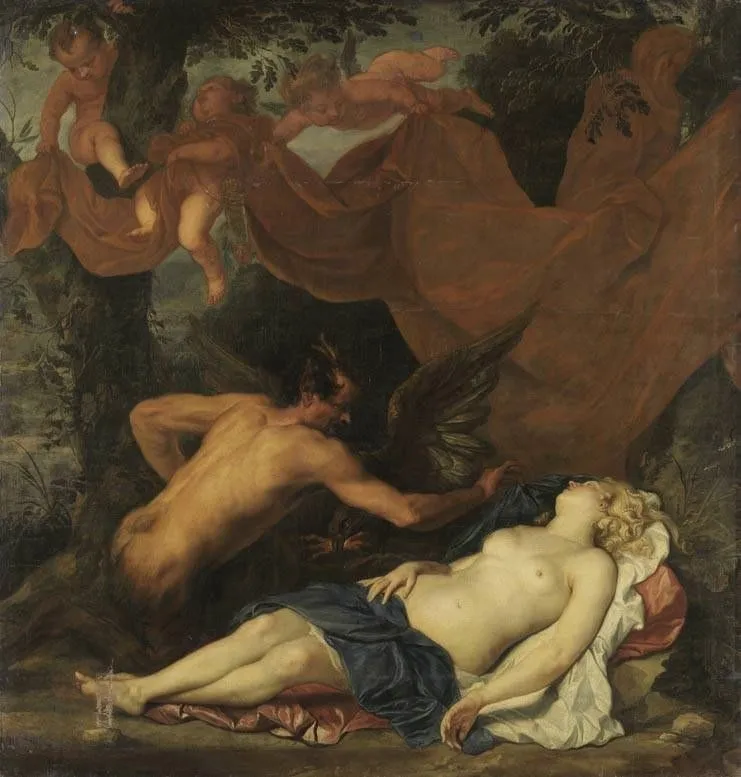
Jupiter and Antiope is an unspecified painting by the Flemish Baroque painting artist Thomas Willeboirts Bosschaert. It dates from 1633 and is held in the collection of the Bavarian State Painting Collections.
About this work
Overview
Thomas Willeboirts Bosschaert’s 1633 canvas, titled Jupiter and Antiope, presents a nocturnal tableau drawn from classical mythology. The work resides in Munich’s Alte Pinakothek, where it is displayed among the museum’s Baroque holdings. It captures a moment of divine intrusion, juxtaposing a vulnerable human figure with a celestial being in a tightly composed scene.
Subject & Meaning
The presence of three cherubic figures hovering above adds a playful, yet voyeuristic, dimension, emphasizing the myth’s themes of seduction and divine power.
The composition illustrates the encounter between the mortal Antiope and the god Jupiter, who assumes the form of a winged, feather‑tailed figure to approach her. Antiope lies semi‑reclined, partially draped, suggesting a state between sleep and awakening. The presence of three cherubic figures hovering above adds a playful, yet voyeuristic, dimension, emphasizing the myth’s themes of seduction and divine power.
Technique & Style
Bosschaert employs a chiaroscuro scheme, allowing a soft, luminous glow to illuminate Antiope’s flesh while the surrounding darkness recedes into deep shadows. The muscular god is rendered with a muted palette, his winged forms merging into the tenebrous background. The brushwork is smooth, creating a polished surface typical of Flemish Baroque, while the cherubs are rendered with a lighter, more delicate touch.
History & Provenance
Completed in 1633, the painting entered the collection of the Bavarian royal family before being transferred to the public domain of the Alte Pinakothek. Its attribution to Willeboirts Bosschaert, a Flemish painter active in the early 17th century, has been consistently affirmed by scholarly catalogues and provenance records dating from the 19th century onward.
Artist & collection
Artist
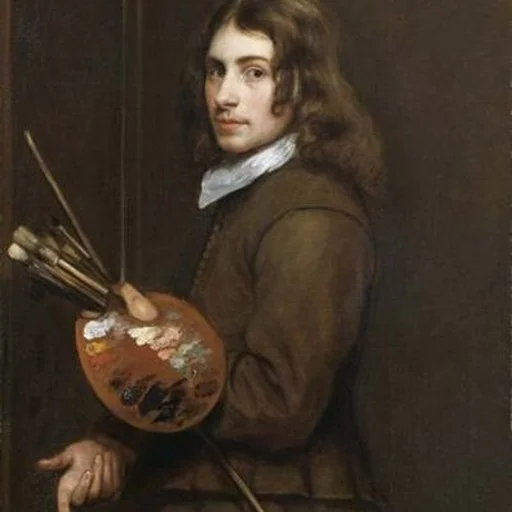
Thomas Willeboirts Bosschaert (1613–1654) was an artist, born in Bergen op Zoom.
