Artwork
The Conversion of Saint Paul
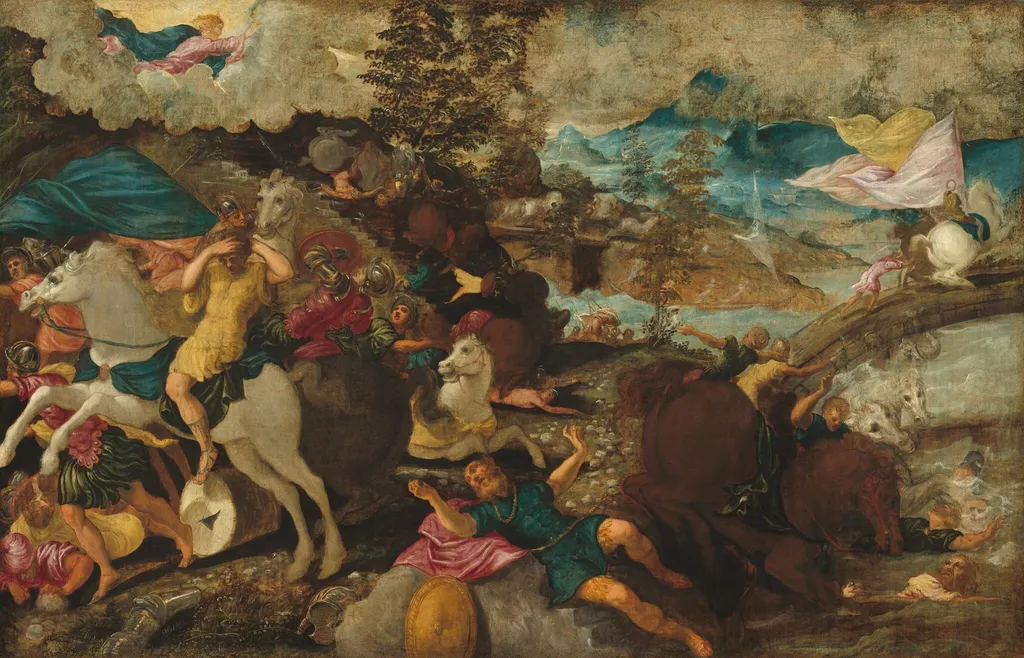
The Conversion of Saint Paul is an oil painting by the Mannerist artist Jacopo Tintoretto. It dates from 1544 and is held in the collection of the National Gallery of Art.
About this work
Overview
Tintoretto's *The Conversion of Saint Paul*, created around 1544, depicts the pivotal biblical narrative of Saul's transformation into Saint Paul.
Tintoretto's *The Conversion of Saint Paul*, created around 1544, depicts the pivotal biblical narrative of Saul's transformation into Saint Paul. Rendered in oil on canvas, this painting exemplifies the Venetian artist's energetic style during the late Renaissance. It presents a dynamic and multi-figure composition, characteristic of both his personal approach and the emerging Mannerist tendencies of the era, capturing a moment of profound spiritual drama.
Subject & Meaning
The artwork illustrates the dramatic instant when Saul, on his journey to Damascus, is confronted by a blinding light and falls from his horse, an event that leads to his conversion and new identity as Saint Paul. The chaotic foreground, filled with figures and horses, underscores the sudden and overwhelming nature of this divine intervention. The central figure, likely Saul, is shown falling from a white horse, emphasizing the physical and spiritual upheaval of the experience.
Technique & Style
Tintoretto's distinctive artistic method, which earned him the nickname *il Furioso*, is evident in the painting's rapid execution and bold brushwork. The composition features muscular figures and dramatic spatial effects, aligning with Mannerist principles. The artist employs strong contrasts between light and dark, known as chiaroscuro, to enhance depth and intensity. Bright colors, such as the yellow and blue robes, stand out against the more muted tones of the background landscape, drawing attention to key elements.
Context
Working in Venice during the mid-16th century, Tintoretto developed an unconventional style that diverged from some classical ideals of the High Renaissance. His contemporaries held varied opinions on his approach, with some praising his innovative energy while others questioned his rapid and less refined technique. This work reflects the artistic ferment of the late Renaissance, a period where new expressive possibilities and dramatic compositions were actively explored by artists.
Own this work as a print
Artist & collection
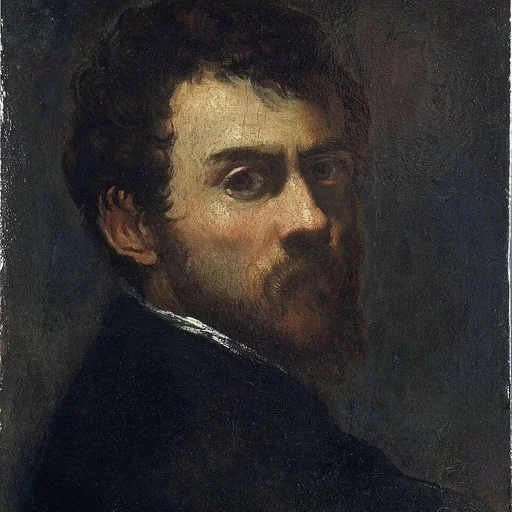
Artist
Jacopo Robusti (late September or early October 1518 – 31 May 1594), best known as Tintoretto ( TIN-tə-RET-oh; Italian: ; Venetian: ), was an Italian Renaissance painter of the Venetian school.