Artwork
The Submersion of Pharaoh's Army in the Red Sea
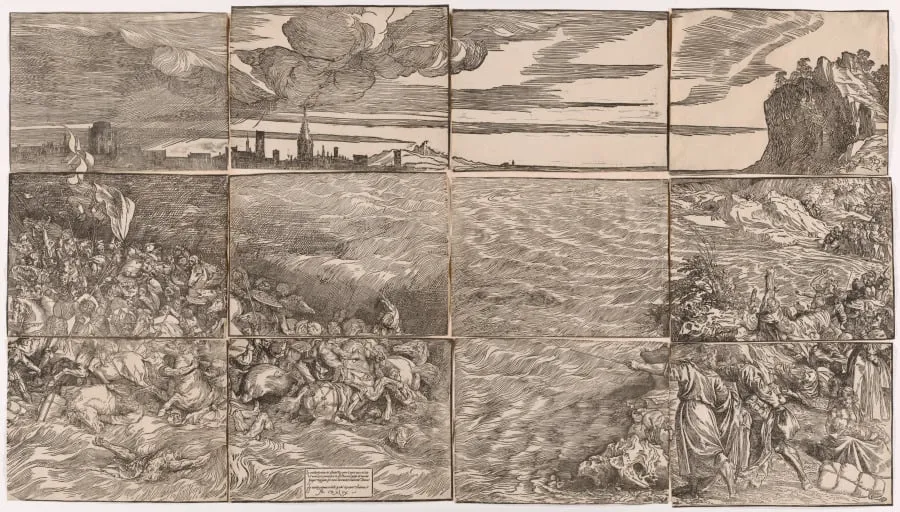
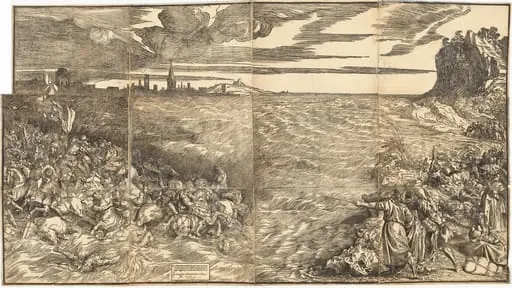
The Submersion of Pharaoh's Army in the Red Sea is a print by the Renaissance artist Titian. It dates from 1514 and is held in the collection of the Cleveland Museum of Art.
About this work
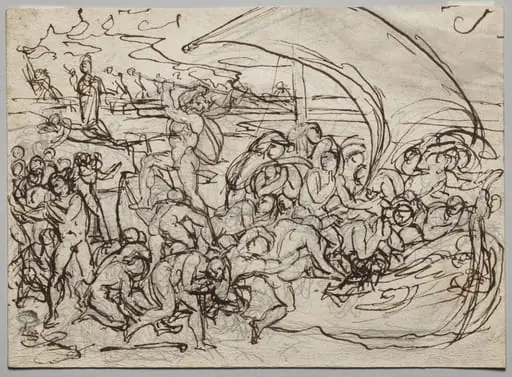
This massive print shows Pharaoh’s soldiers drowning in the Red Sea while Israelites walk safely on dry land.
This massive print shows Pharaoh’s soldiers drowning in the Red Sea while Israelites walk safely on dry land. The woodcut is made of 12 separate blocks joined together—like a giant puzzle print. The chaos is wild: waves crash, bodies twist, and horses rear up in terror.
Titian made the original drawing, but this print came years later. A publisher named Domenico dalle Greche printed it in 1549, long after Titian moved on. Most prints from 1515 were small, but this one was meant to hang on a wall like a painting.
Imagine the noise of the scene. If you like drama like this, check out Titian’s oil paintings at The Cleveland Museum of Art.
Overview
The Submersion of Pharaoh's Army in the Red Sea is a large-scale print composed of 12 separately printed woodcuts, collectively rivaling the size of a history painting and designed for wall display.
Subject & Meaning
Depicting a pivotal biblical scene, the print narrates the downfall of Pharaoh's army as they pursue the Israelites into the Red Sea, emphasizing the dramatic contrast between the Egyptians' turmoil and the Israelites' safe passage.
Technique & Style
Based on a drawing by Titian, the woodcut translates his expressive manner through bold, irregular marks carved by the woodcutter, achieving a dynamic and chaotic visual effect that mirrors the turmoil of the scene.
History & Provenance
Originally created around 1515 from Titian's design, the earliest surviving impressions date from a 1549 edition published by Domenico dalle Greche, with no complete original impressions known to exist.
Context
Unconventional for its time due to its large scale and wall-mounted intent, this print diverges from the typical small-format prints of the era, aligning more closely with the grandeur of history paintings.
Artist & collection
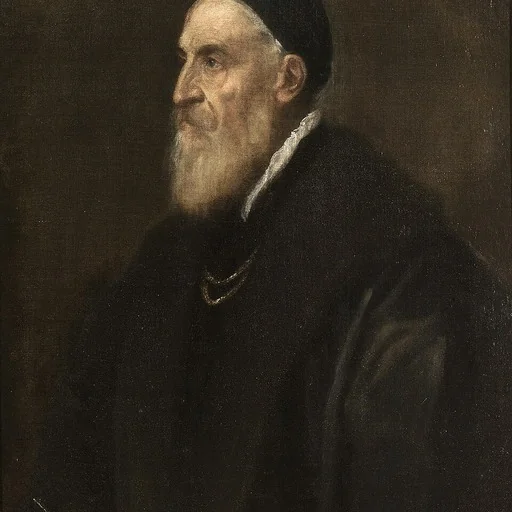
Artist
Tiziano Vecellio (Italian: ; c. 1488/1490 – 27 August 1576), Latinized as Titianus, hence known in English as Titian ( TISH-ən), was an Italian Renaissance painter. The most important artist of Renaissance Venetian…

 The Monumental Tablet
 The Submersion of Pharoah's Army in the Red Sea
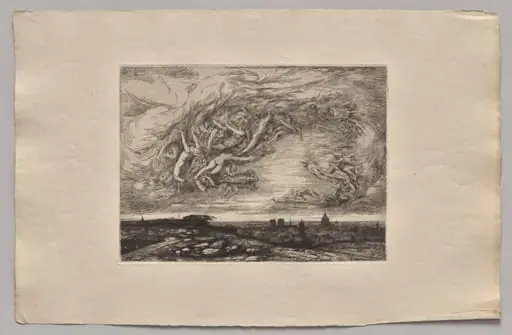 Cholera in Paris
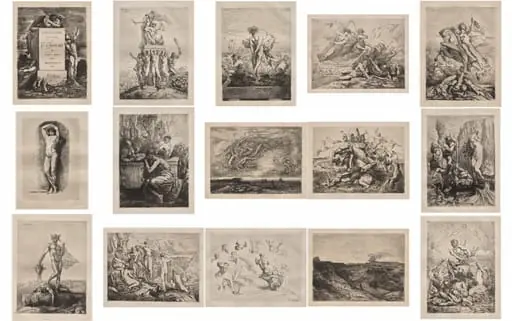 Improvisations sur cuivre
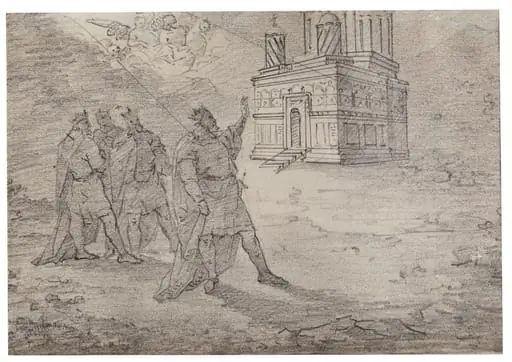 Neagoe Basarab în fața mânăstirii Curtea de Argeș
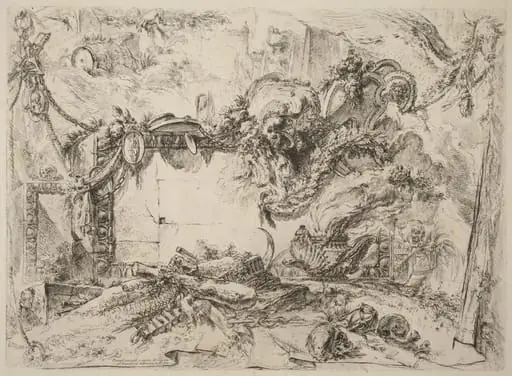 The Monumental Tablet
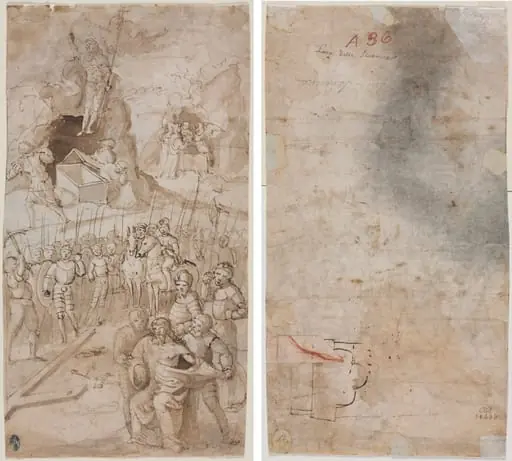 Three Scenes from the Passion of Christ (recto); Architectural Sketch (verso)
![The Triumph of Julius Caesar [no.7 and 8 plus 2 columns], by Andrea Andreani](https://artifactworldgallery.com/img/andrea-andreani--the-triumph-of-julius-caesar-no-7-and-8-plus-2-columns--75ccf1616a5609e2-w320.webp) The Triumph of Julius Caesar [no.7 and 8 plus 2 columns]
The Triumph of Julius Caesar [no.7 and 8 plus 2 columns]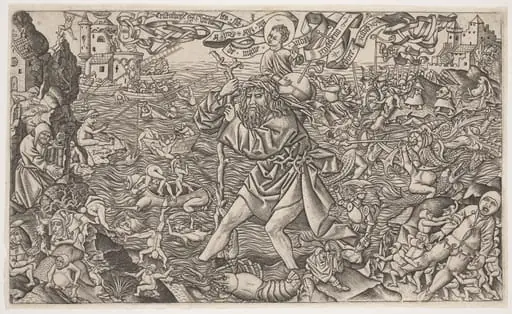 St. Christopher
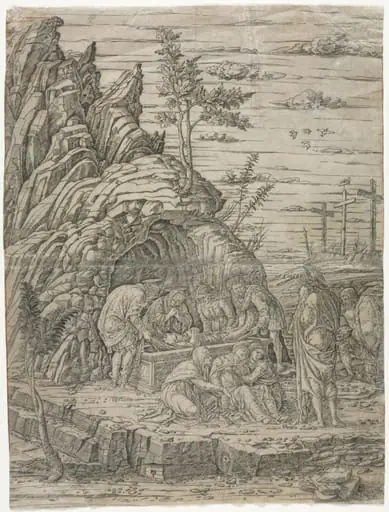 The Entombment with the Four Birds
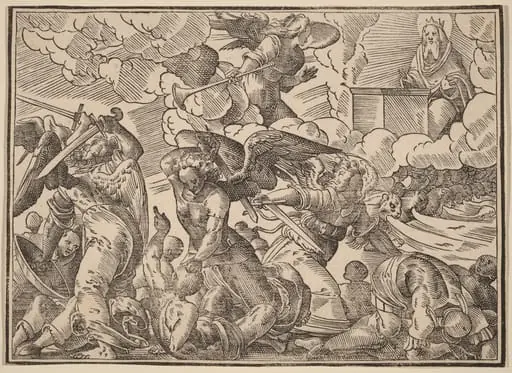 The Four Horsemen of the Apocalypse
 Charon and the Souls of the Dead