Artwork
Portrait of Fabrizio Salvaresio
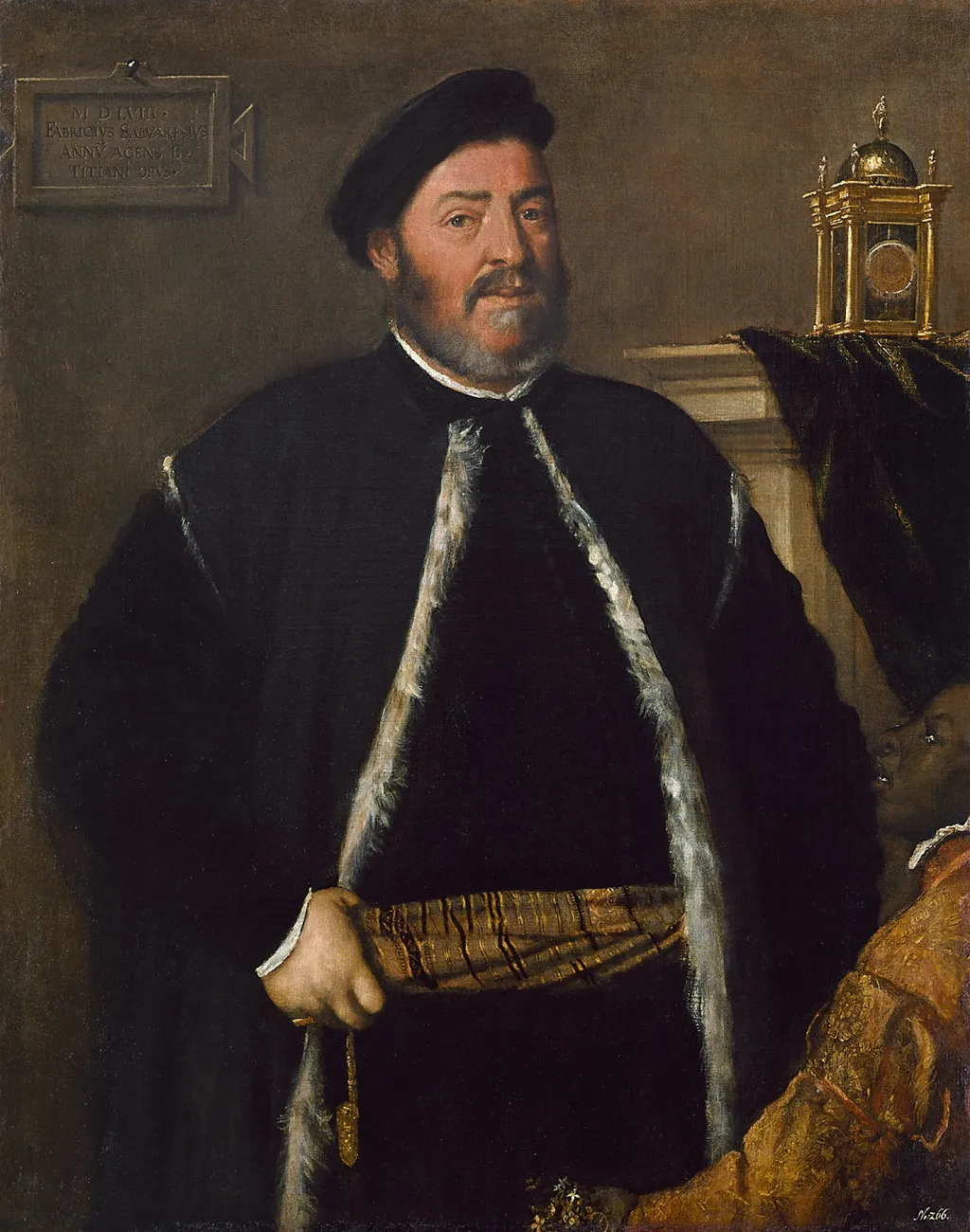
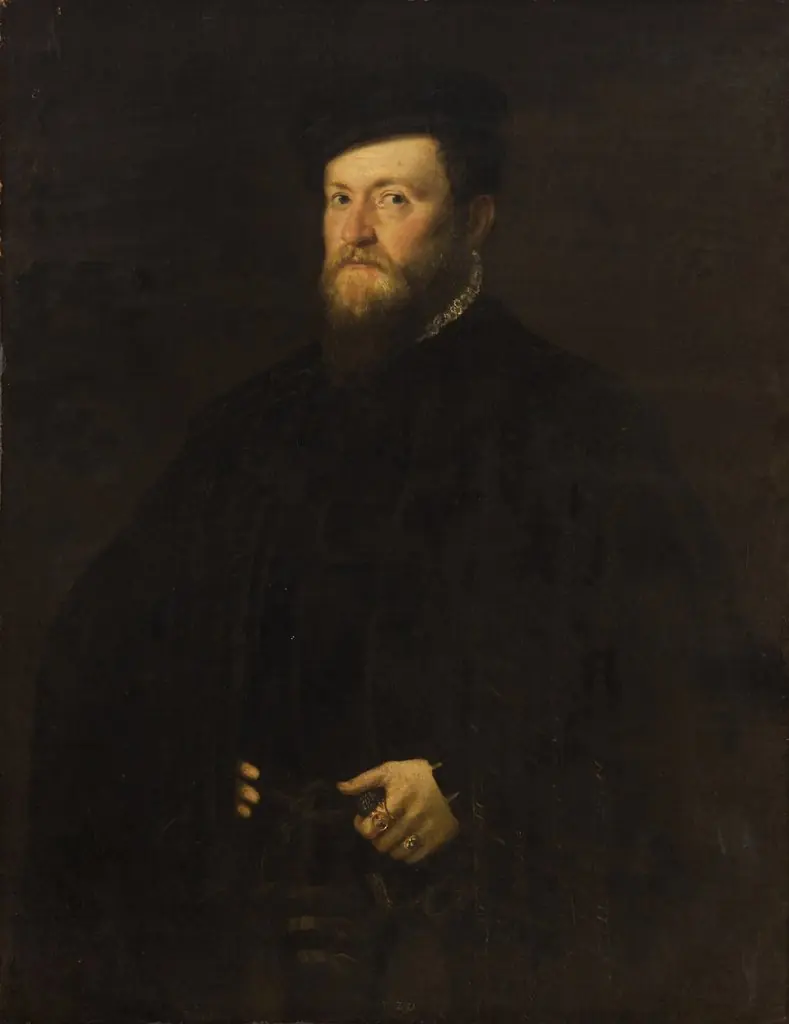
Portrait of Fabrizio Salvaresio is an oil painting by the Mannerist artist Titian. It dates from 1558 and is held in the collection of the Kunsthistorisches Museum.
About this work
Overview
Titian's Portrait of Fabrizio Salvaresio, executed in 1558, depicts the Venetian nobleman in a three-quarter view against a somber, dark background.
Titian's Portrait of Fabrizio Salvaresio, executed in 1558, depicts the Venetian nobleman in a three-quarter view against a somber, dark background. The sitter is dressed in a black robe with a fur-lined cape, a white collar, and a gold chain, while a black hat sits low on his head. To the right, a shelf holds a small clock, and a plaque bearing a Latin inscription is mounted on the wall behind him. These elements function as memento mori, reflecting the sitter's mortality and the passage of time. The inscription identifies the subject and the date of the portrait, a common practice in Titian's late portraiture to assert the sitter's status and the artist's authority. Painted during the final decade of Titian's life, the work exemplifies his mature style, characterized by loose, expressive brushwork and a profound psychological depth. The composition balances the rich textures of the fur and fabric with the stark, shadowed void of the background, focusing attention on the sitter's contemplative expression. This portrait stands as a significant example of late Renaissance portraiture, demonstrating Titian's ability to convey both individual character and universal themes of human transience.
Subject & Meaning
The sitter, identified by his nameplate, is depicted as a dignified gentleman wearing a black robe and a fur‑trimmed cape. A low‑set black hat, a white collar, and a gold chain suggest his social status, while the Latin inscription behind him hints at a scholarly or official role.
Technique & Style
Titian employs a pronounced chiaroscuro, allowing the illuminated face to emerge from the surrounding gloom. The fur of the cape is rendered with fine, almost tactile brushwork, catching highlights that contrast with the matte darkness of the background, emphasizing depth and volume.
History & Provenance
Signed and dated by the artist, the portrait entered the imperial collection in the 17th century and has remained in the Kunsthistorisches Museum’s holdings since that time. Its provenance reflects the work’s movement from private patronage to public exhibition.
Context
Created during the later phase of Titian’s career, the painting exemplifies his mature portraiture, where psychological presence is conveyed through subtle lighting and meticulous rendering of fabrics. The inclusion of a small clock and a wall plaque situates the figure within a learned, perhaps bureaucratic, environment typical of mid‑16th‑century Venetian portraiture.
Artist & collection
Artist
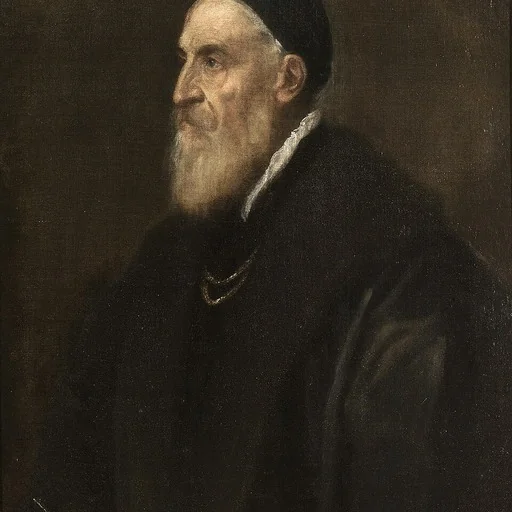
Tiziano Vecellio (Italian: ; c. 1488/1490 – 27 August 1576), Latinized as Titianus, hence known in English as Titian ( TISH-ən), was an Italian Renaissance painter. The most important artist of Renaissance Venetian…