Artwork
Virgin Adoring the Christ Child with St. John the Baptist and Two Angels
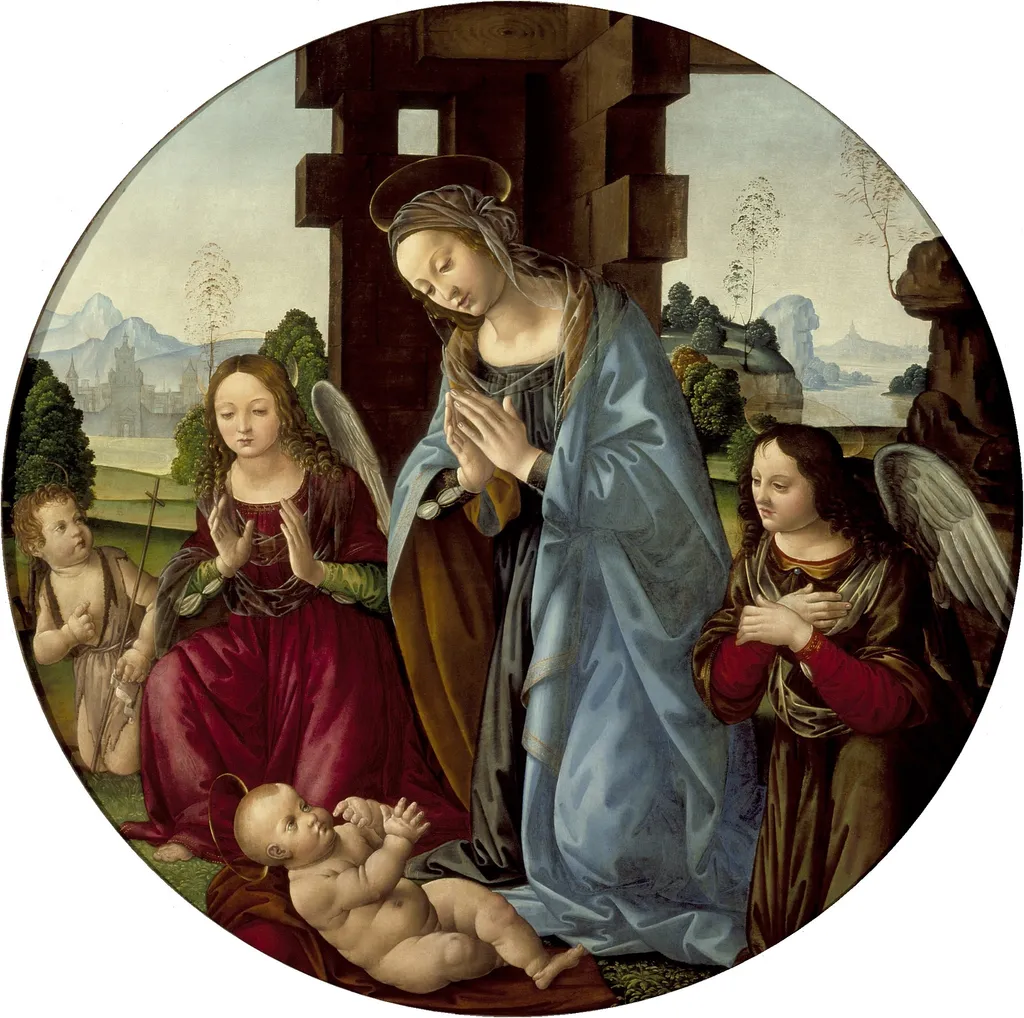
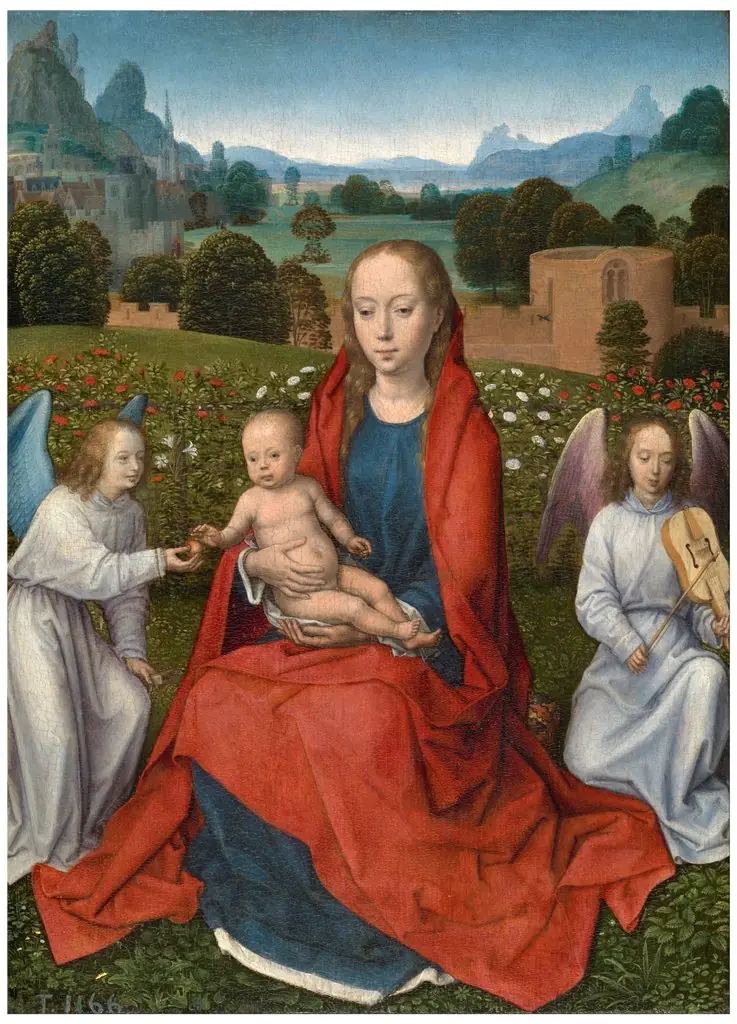
Virgin Adoring the Christ Child with St. John the Baptist and Two Angels is an oil painting by the Early Renaissance artist Tommaso Lunetti. It dates from 1510 and is held in the collection of the Los Angeles County Museum of Art.
About this work
Overview
It resides in the collection of the Los Angeles County Museum of Art, where it serves as an example of early 16th-century Italian religious painting.
Painted in 1510, this oil-on-panel work by Tommaso Lunetti presents a devotional scene centered on the Virgin Mary, the Christ Child, and St. John the Baptist, flanked by two angels. The composition is intimate and still, emphasizing quiet reverence over dramatic action. It resides in the collection of the Los Angeles County Museum of Art, where it serves as an example of early 16th-century Italian religious painting.
Subject & Meaning
The Virgin kneels in prayer before the infant Jesus, who rests on a cloth beside her, while St. John the Baptist, identified by his simple red tunic, observes with solemn attention. Two angels flank the group, one in red, the other in brown, their presence underscoring the sacredness of the moment. The scene reflects a common devotional theme of the period: the Virgin’s contemplation of her son’s divine destiny, witnessed by the future prophet.
Technique & Style
Lunetti employs soft modeling and muted tones to create a gentle, luminous atmosphere. The figures are arranged in a compact, triangular grouping, typical of early Renaissance compositions. The background introduces a distant landscape of hills and water, rendered with subtle atmospheric perspective to suggest depth without distracting from the central figures. Brushwork remains restrained, favoring clarity and calm over ornamental flourish.
History & Provenance
The painting was completed around 1510, likely for private devotion in a religious or aristocratic household. Its early provenance is undocumented, but it entered the collection of the Los Angeles County Museum of Art in the 20th century. Its survival in relatively intact condition reflects careful preservation, though little is known of its movements before modern acquisition.
Context
Created during the High Renaissance, the work aligns with regional trends in central Italy where devotional imagery emphasized emotional restraint and spiritual intimacy. While not by a major master, it reflects the influence of artists like Perugino and Raphael in its balanced forms and serene mood. Such paintings were often commissioned for personal prayer, reinforcing the connection between viewer and sacred narrative.
Legacy
Though not widely exhibited or studied, the painting contributes to the broader understanding of minor workshop practices in early 16th-century Italy. It illustrates how devotional themes were adapted by less prominent artists to meet the spiritual needs of private patrons. Its quiet composition continues to offer insight into the domestic religious culture of its time.
Artist & collection

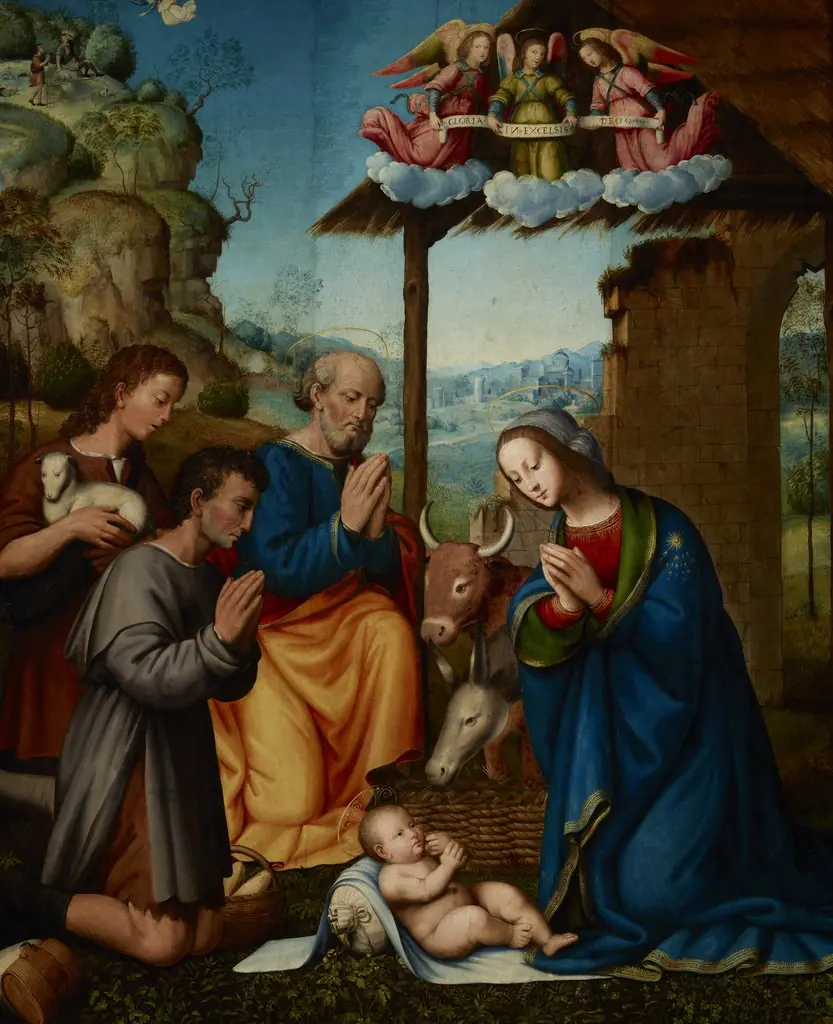
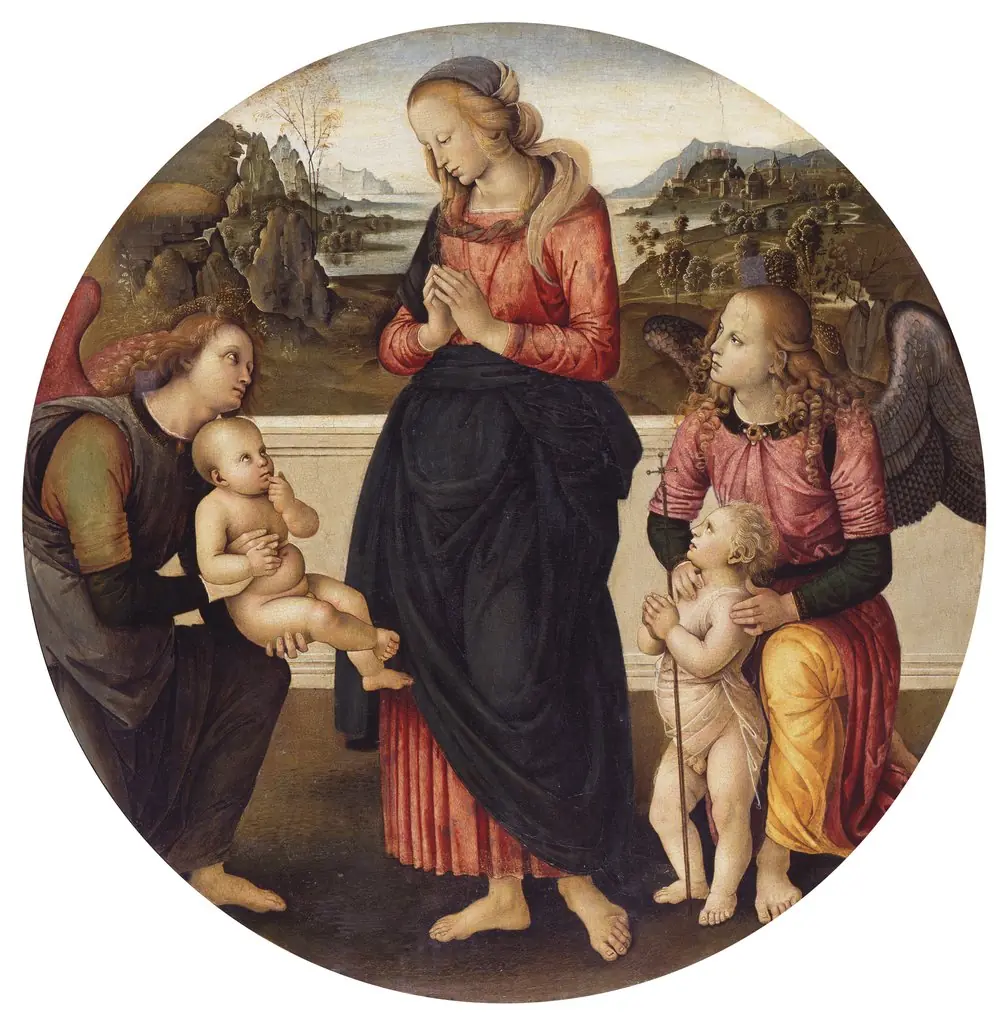 The Virgin Adoring the Child with John the Baptist as a Child and two Angels
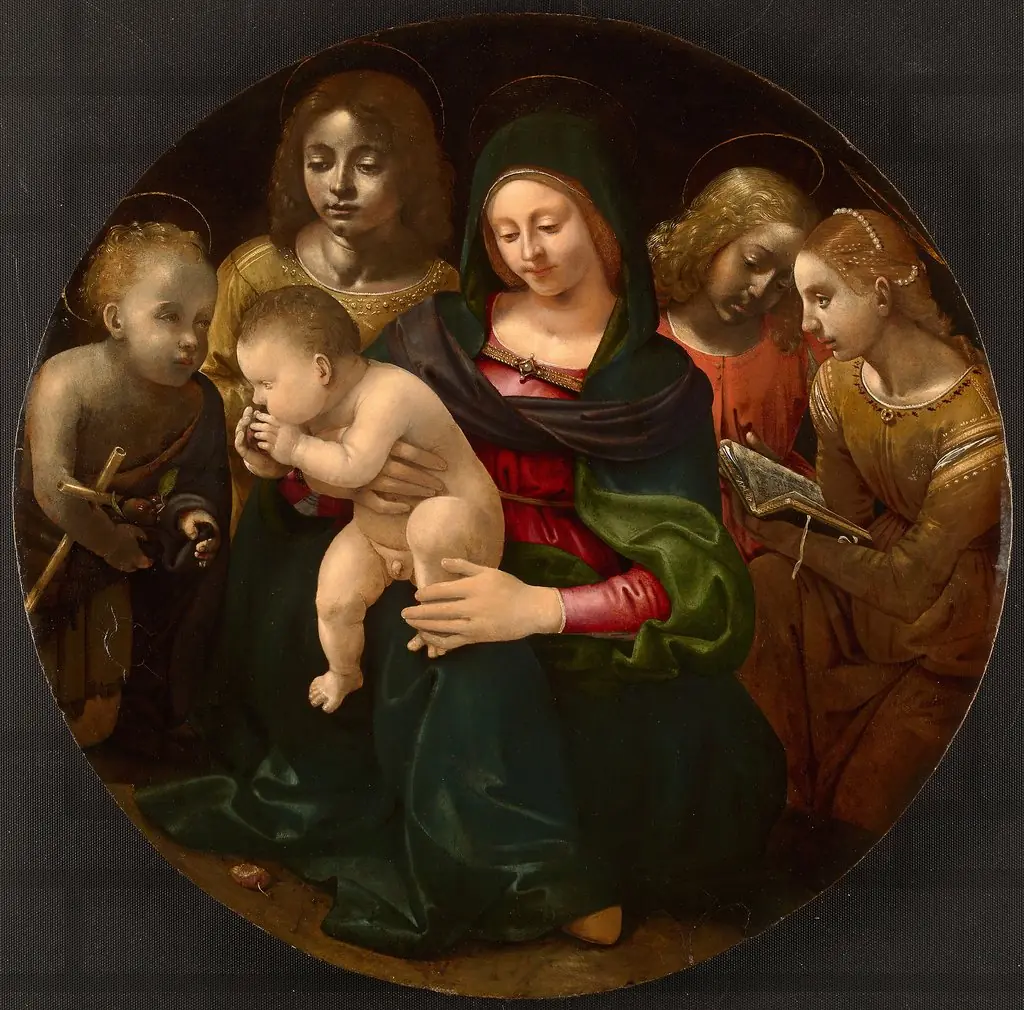 Virgin and Child with the Young Saint John the Baptist, Saint Cecilia, and Angels
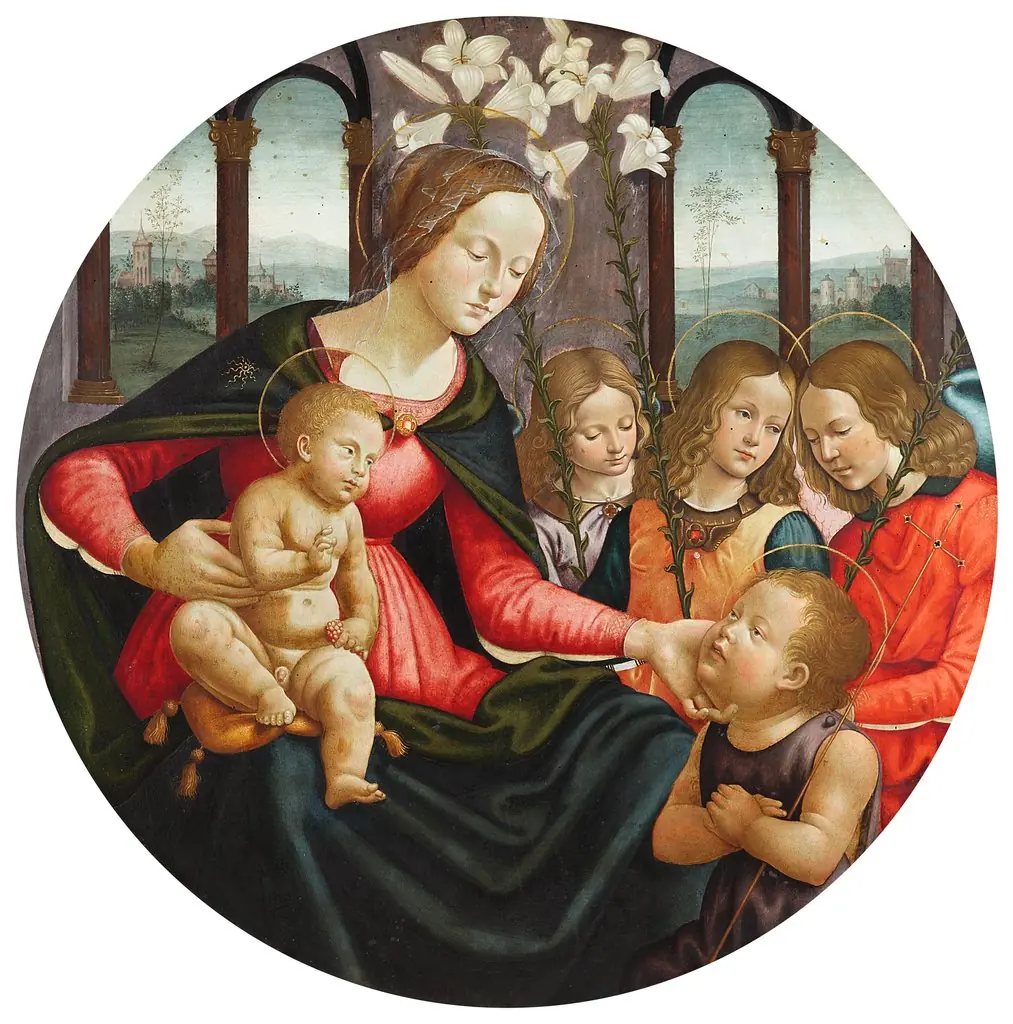 The Virgin and Blessing Child, Young St. John and three Angels
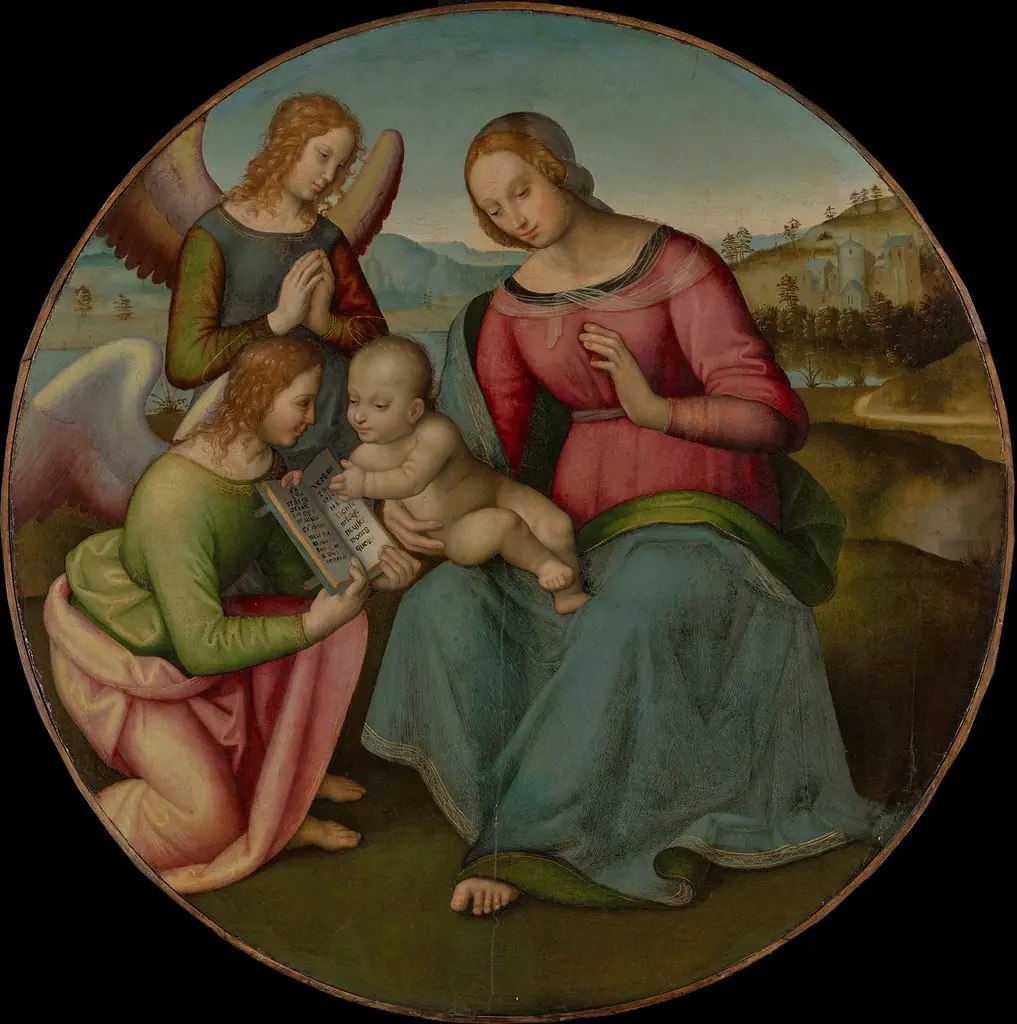 The Virgin and Child with two Angels
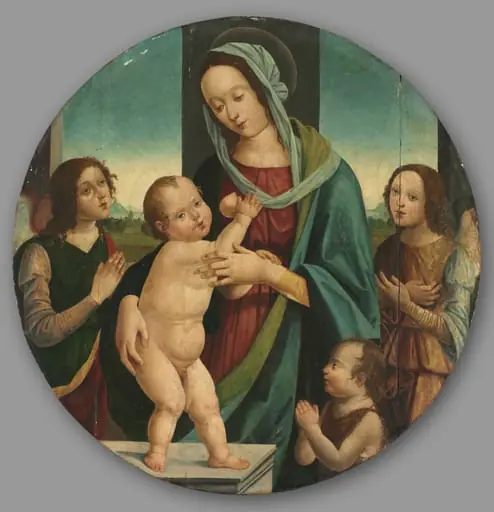 Virgin and Child with John the Baptist and Angels
 Virgin and Child with two angels