Artwork
Peacocks and Bamboo
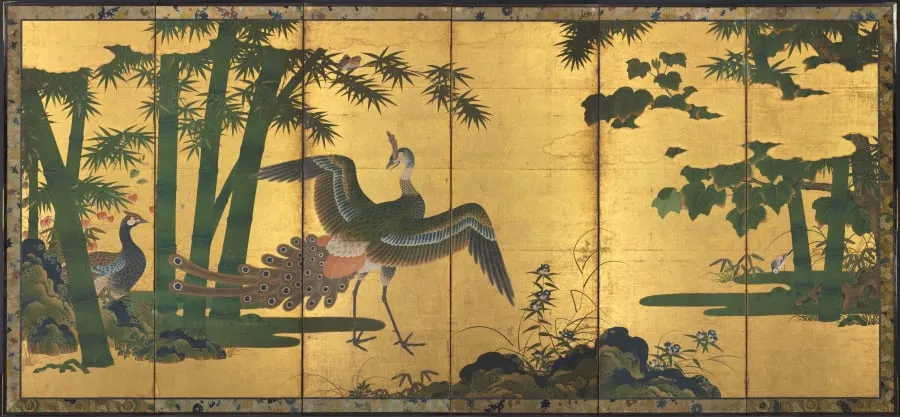
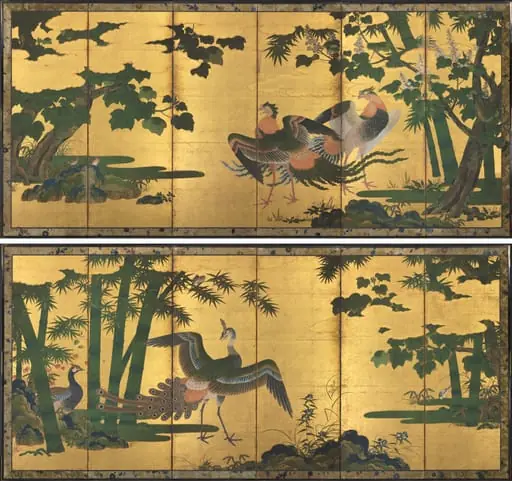
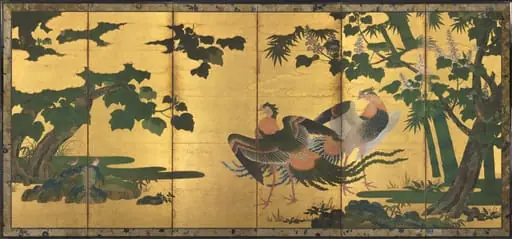
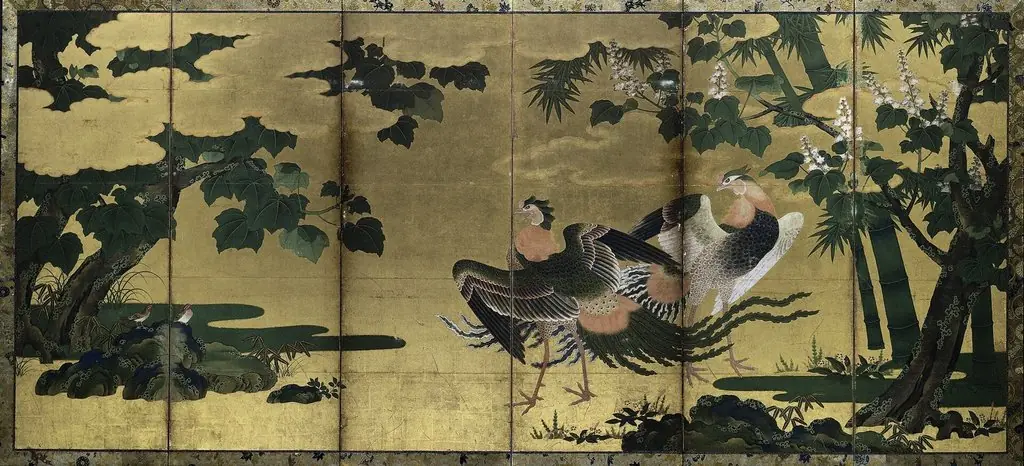
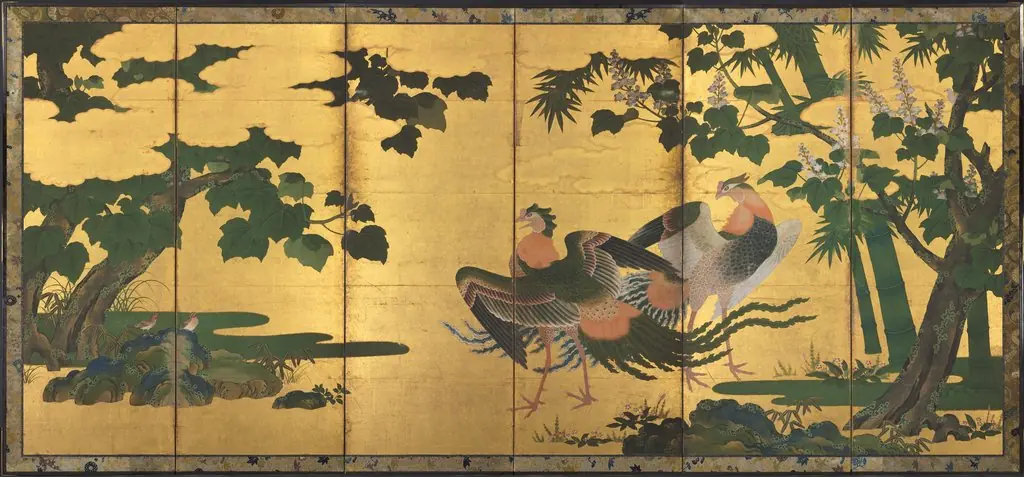
Peacocks and Bamboo is an unspecified painting by the Nihonga artist Tosa Mitsuyoshi. It dates from 1504 and is held in the collection of the Cleveland Museum of Art. The painting presents an opulent scene dominated by two vividly rendered peacocks set against a shimmering gold‑foil ground.
About this work
Overview
A phoenix, rendered in the Japanese tradition, watches the birds from a distant point, completing the fantastical composition.
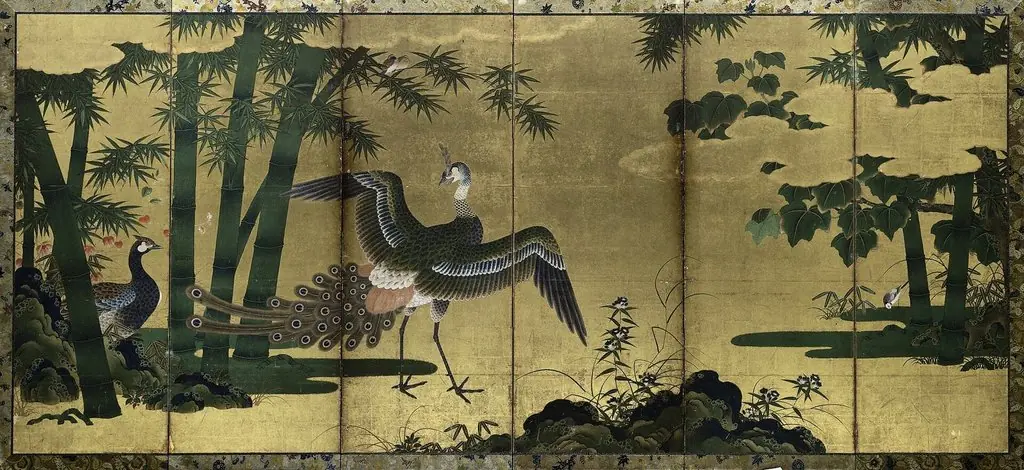
The painting presents an opulent scene dominated by two vividly rendered peacocks set against a shimmering gold‑foil ground. Stylized foliage—including bamboo, paulownia, and clumps of grass—rises from mineral‑green lozenges, while blue‑green rocks dotted with lichen provide a three‑dimensional counterpoint. A phoenix, rendered in the Japanese tradition, watches the birds from a distant point, completing the fantastical composition.
Subject & Meaning
Central to the work are the peacocks, symbols of beauty and elegance, positioned within an imagined natural realm. The phoenix, unlike its Western association with immortality, functions here as a mythic observer, linking the scene to Japanese legend and reinforcing the painting’s theme of harmonious coexistence between the extraordinary and the natural.
Technique & Style
The artist employs a gold‑foil background, a hallmark of Momoyama painting that replaces the restrained ink palettes of earlier periods. Mineral pigments create vivid green lozenges and blue‑green rocks, while the birds are painted with delicate brushwork that emphasizes their iridescent plumage. The overall effect is one of deliberate artificiality, designed to evoke a luxurious, otherworldly landscape.
Context
Created during Japan’s Momoyama period (late 16th century), the work reflects the era’s newfound confidence and a taste for lavish visual statements across artistic media. Patrons and craftsmen collaborated to produce bold, decorative compositions that celebrated wealth and power, marking a departure from the subdued aesthetics of the preceding Muromachi period.
Artist & collection