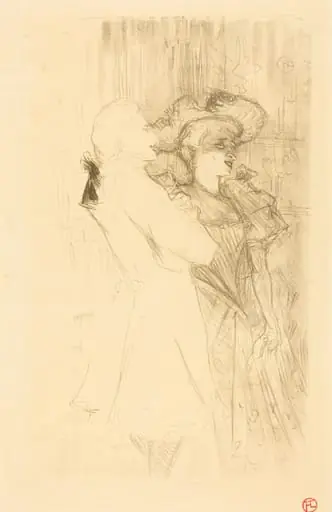
Artwork
Bust of Mademoiselle Marcelle Lender (Mademoiselle Marcelle Lender, en buste)
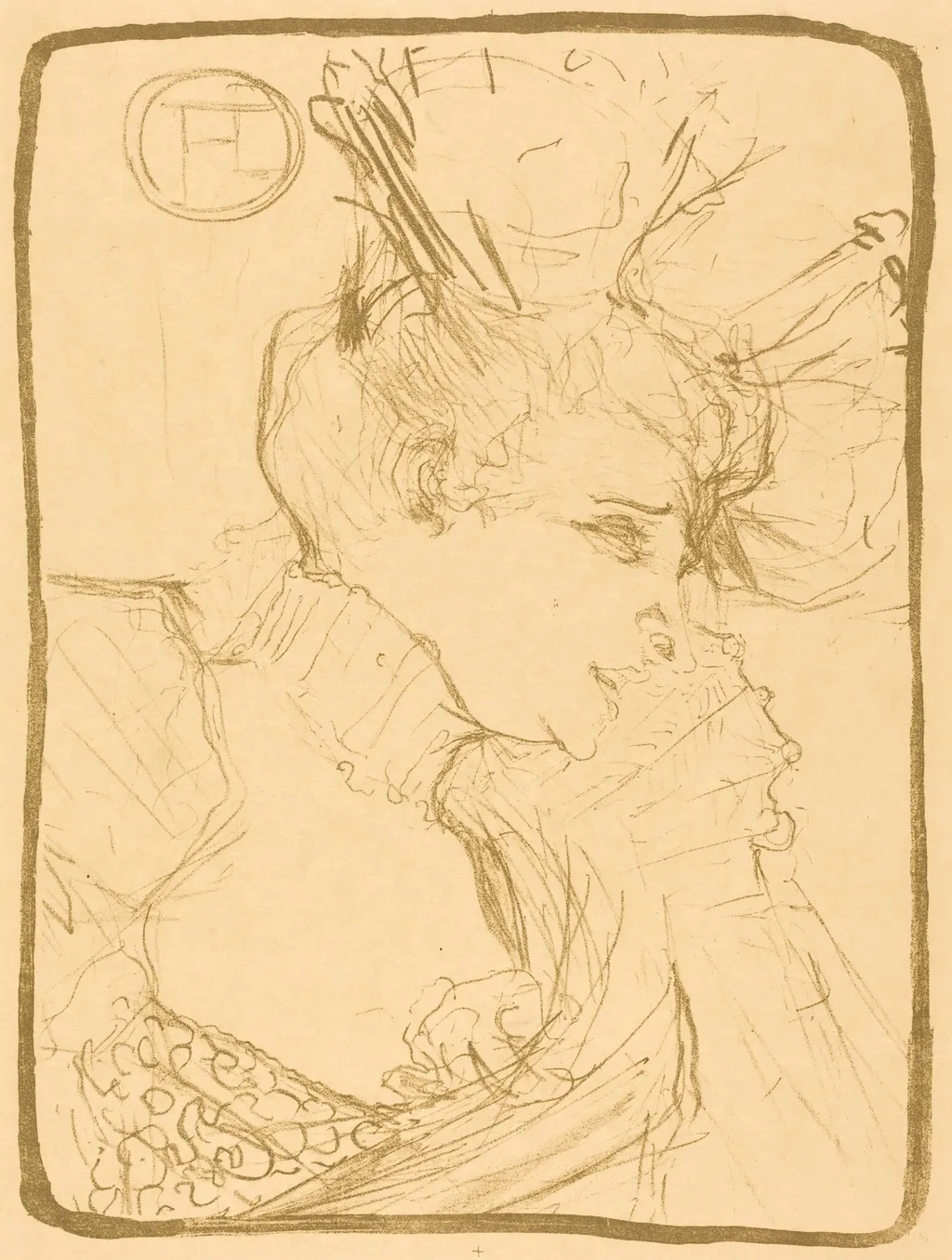
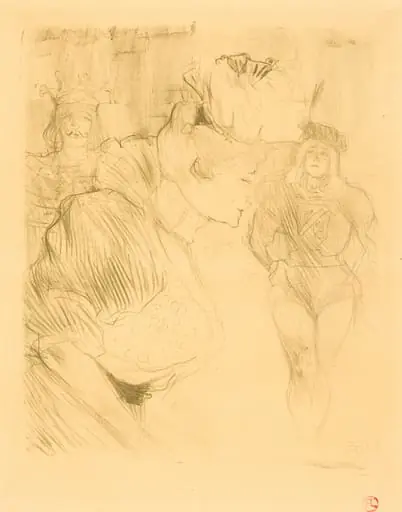
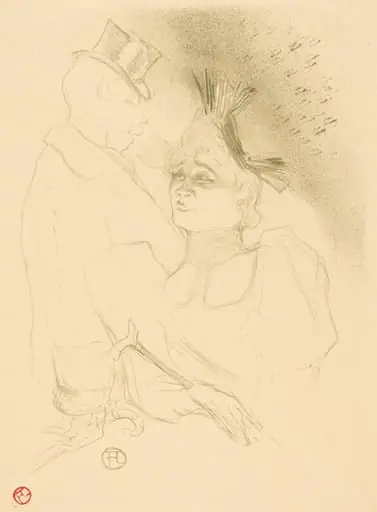
Bust of Mademoiselle Marcelle Lender (Mademoiselle Marcelle Lender, en buste) is an ink print by the Impressionist artist Henri de Toulouse-Lautrec. It dates from 1895 and is held in the collection of the National Gallery of Art.
About this work
Overview
Printed in olive green on imitation Japan paper, the work reflects Lautrec’s preference for capturing live, unguarded expressions rather than formal portraits.
Created in 1895, this lithograph by Henri de Toulouse-Lautrec captures a fleeting moment of the performer Marcelle Lender. Printed in olive green on imitation Japan paper, the work reflects Lautrec’s preference for capturing live, unguarded expressions rather than formal portraits. The medium allowed him to translate the spontaneity of his sketches into printed form, aligning with his interest in the transient energy of Parisian entertainment culture.
Subject & Meaning
The subject is Marcelle Lender, a dancer and singer active in Montmartre’s cabarets. Lautrec portrays her not as an idealized figure but as a working performer—her head tilted, expression subtly amused, hair disheveled. The absence of context and the rawness of her posture suggest intimacy and immediacy, emphasizing her presence as a real person within the vibrant, often overlooked world of stage life.
Technique & Style
Lautrec employed lithography to mimic the urgency of a drawn sketch. The lines are loose, scratchy, and uneven, suggesting rapid execution. The olive-green ink, applied with minimal detail, emphasizes texture over finish. The paper’s yellowed tone and the faint, ambiguous scribbles behind the figure enhance the sense of spontaneity, as if the image were captured in a single, unedited gesture.
History & Provenance
The print was produced during Lautrec’s most active period in Montmartre, when he regularly documented performers he encountered in theaters and cafés. While specific early ownership records are sparse, the work aligns with his broader practice of producing limited-run lithographs for private circulation and exhibition. It was likely distributed among collectors and artists familiar with his circle.
Context
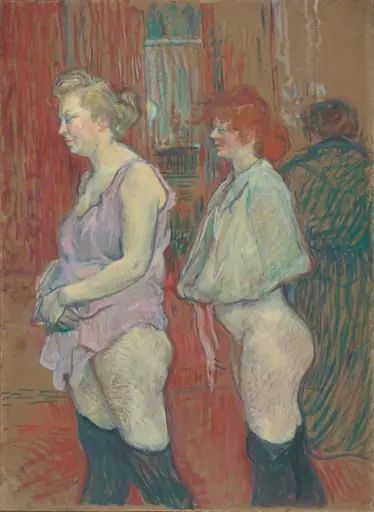
In mid-1890s Paris, lithography became a favored medium for artists seeking to break from academic traditions. Lautrec’s focus on entertainers reflected a broader cultural shift toward documenting urban life’s underbelly. His depictions of dancers, singers, and patrons challenged idealized representations, offering instead candid, humanizing views of those who inhabited the city’s nightlife.
Legacy
This work exemplifies Lautrec’s influence on modern printmaking, demonstrating how lithography could convey psychological depth through minimal means. His approach to capturing performers with empathy and immediacy paved the way for later artists exploring portraiture through expressive line and everyday subjects, anchoring his legacy in the evolution of 20th-century graphic art.
Artist & collection
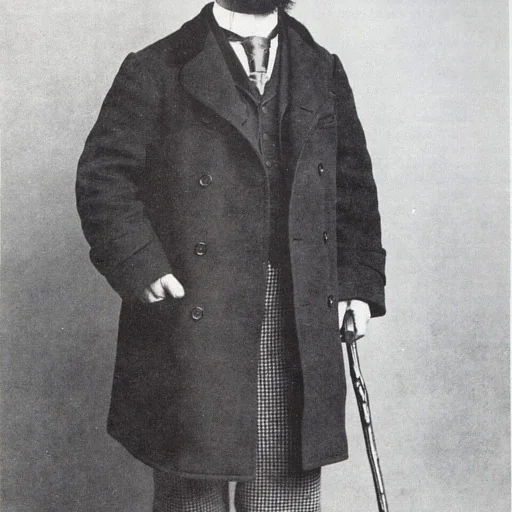
Artist
Comte Henri Marie Raymond de Toulouse-Lautrec-Montfa (24 November 1864 – 9 September 1901), known as Toulouse-Lautrec (French: ), was a French painter, printmaker, draughtsman, caricaturist, and illustrator.