Artwork
The Trap
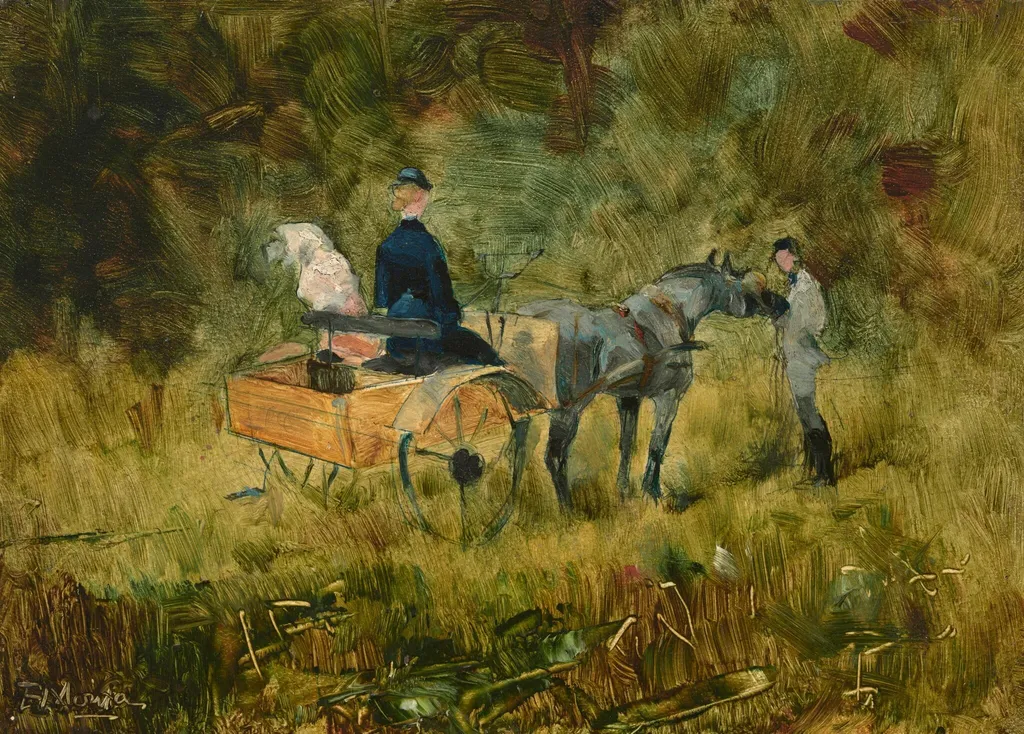
The Trap is an oil painting by the Impressionist artist Henri de Toulouse-Lautrec. It dates from 1880 and is held in the collection of the National Gallery of Art.
About this work
Overview
Created in 1880, *The Trap* is an oil painting executed on a wooden panel. The work belongs to the post‑Impressionist period and reflects the artist’s interest in ordinary scenes rendered with a vivid sense of atmosphere. Its modest dimensions and panel support distinguish it from the larger canvas productions of the era.
Subject & Meaning
The composition depicts a gray horse pulling a brown carriage across an open field, accompanied by two passengers—one in a dark jacket, the other topped with a white hat. The tranquil countryside setting, punctuated by distant trees, suggests a moment of travel or leisure, inviting viewers to consider the everyday rhythms of rural life.
Technique & Style
Toulouse‑Lautrec employs loose, expressive brushwork that captures the interplay of light and shadow across the figures and landscape. The palette is restrained, emphasizing tonal contrasts rather than vivid coloration. This handling conveys a sense of movement in the horse and carriage while maintaining the immediacy characteristic of post‑Impressionist approaches to everyday subjects.
History & Provenance
The artist, born into French aristocracy in 1864, painted *The Trap* during his early career, prior to his more widely known depictions of Parisian nightlife. The work remained in private collections for much of the twentieth century before entering a public museum collection in the early 2000s, where it is displayed alongside other works from his formative period.
Own this work as a print
Artist & collection
Artist
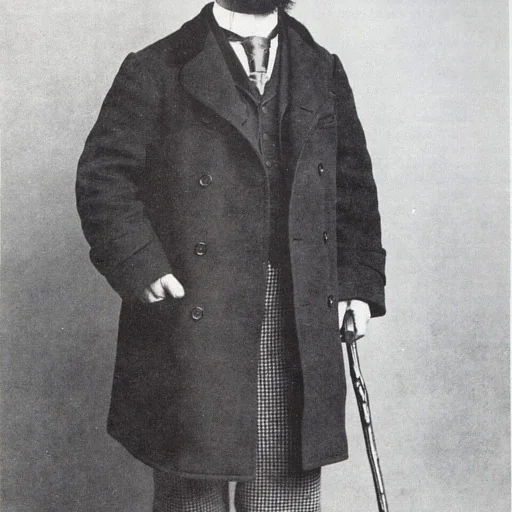
Comte Henri Marie Raymond de Toulouse-Lautrec-Montfa (24 November 1864 – 9 September 1901), known as Toulouse-Lautrec (French: ), was a French painter, printmaker, draughtsman, caricaturist, and illustrator.