Artwork
Χωρίς τίτλο
Χωρίς τίτλο is a drawing by Yorgos Tsakiris. It dates from 1977 and is held in the collection of the Metropolitan Organisation of Museums of Visual Arts of Thessaloniki – MOMus.
About this work
You’ll see tight cross-hatching and scattered numbers and letters pressed into the surface.
This 1977 drawing is a dense field of black marks on paper. You’ll see tight cross-hatching and scattered numbers and letters pressed into the surface. It looks almost like a page from a coded notebook.
The artist mixes words and figures until sense blurs into pattern. It’s not pretty, but it feels urgent—like notes torn from a frantic mind. Tsakiris keeps pushing lines until the paper almost disappears under pressure.
Look up Tsakiris, Yorgos (1955).
Overview
Yorgos Tsakiris, born in 1955, began his career with intense two-dimensional works that merged textual fragments, numerical sequences, and dense graphic marks. By 1977, his drawings had evolved into layered fields of black ink, where legibility gave way to rhythmic abstraction. These works reflect a preoccupation with systems of knowledge and their breakdown, foreshadowing his later shift from flat surfaces to sculptural environments that interrogate biology and structure.
Subject & Meaning
Tsakiris’ 1977 drawing layers Greek and Latin letters with numerals, creating a visual language that hovers between code and chaos. The symbols do not form coherent messages but instead suggest the collapse of rational systems under pressure. The urgency of the marks implies a search for meaning amid fragmentation, evoking the tension between human attempts to order experience and the inherent disorder of biological and psychological processes.
Technique & Style
The drawing is executed with relentless cross-hatching, building dense textures through repeated pressure on paper. Letters and numbers are embedded, not written, as if inscribed by force rather than intention. The surface becomes a ground of exhaustion, where the medium nearly yields to the mark-making. This method rejects aesthetic polish, favoring raw accumulation—a visual analogue to mental or emotional overload.
History & Provenance
Created in 1977, this work belongs to Tsakiris’ early period, preceding his transition to three-dimensional forms around 1980. It reflects the influence of post-war European figuration, particularly Francis Bacon’s visceral mark-making, while anticipating his later interest in biological metaphors. The drawing remains a pivotal document of his artistic evolution, bridging his graphic phase and subsequent sculptural investigations into life processes.
Context
In the late 1970s, Greece was emerging from a period of political upheaval, and many artists turned to abstraction and conceptual practices to explore identity, memory, and systems of control. Tsakiris’ work resonates with this climate, using fragmented language and obsessive mark-making to reflect a society grappling with inherited structures and their disintegration. His approach diverged from traditional representation, aligning with broader European tendencies toward material and psychological inquiry.
Legacy
This drawing anticipates Tsakiris’ later installations featuring living organisms and engineered ecosystems. The dense, unstable field of marks here prefigures his sculptural juxtapositions of organic fragility and industrial rigidity. Though the medium shifts from paper to metal and biology, the underlying concern—how life is contained, measured, and disrupted by human systems—remains constant, anchoring his entire oeuvre in a meditation on control and emergence.
Artist & collection
Artist
Yorgos Tsakiris drew the same blank page for forty years, filling it with thin pencil lines that never told a story, just kept the paper company.
Museum
Metropolitan Organisation of Museums of Visual Arts of Thessaloniki – MOMus
Continue through works from the same source collection.
 Untitled
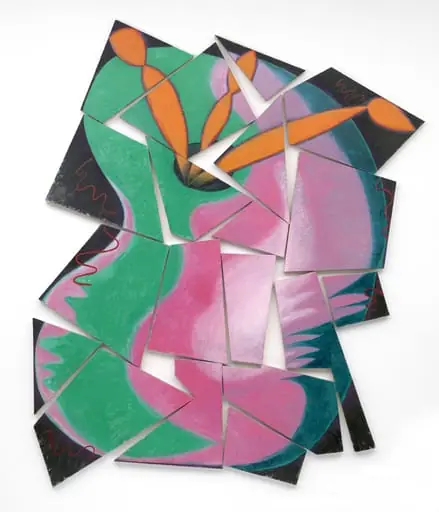 Untitled
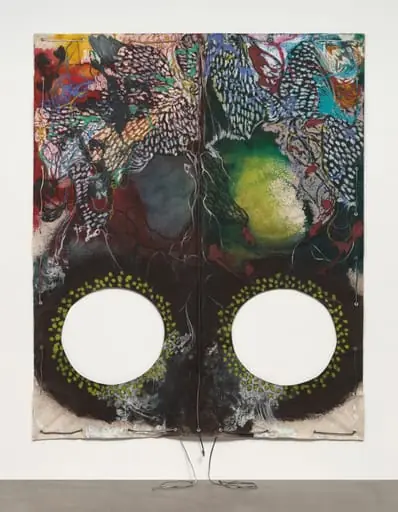 Untitled
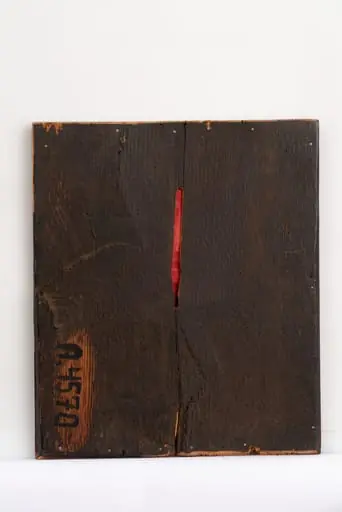 Maica Domnului este pictată în picioare, în partea dreaptă a imaginii, având o atitudine evlavioasă, iar sfântul arhanghel Gavriil, tot în picioare, pictat la aceeași înălțime cu Maica Domnului, în stânga compoziției. Duhul Sfânt, sub forma unui porumbel, se pogoară din slava cerului deasupra Fecioarei Maria. Fondul e decorat cu flori și frunze simple, esențializate. Cromatica icoanei se compune din tonuri de portocaliu, verde, albastru, maro, alb și foiță aurie. Rama icoanei e simplă, băițuită și e formată din îmbinarea a patru baghete de lemn.
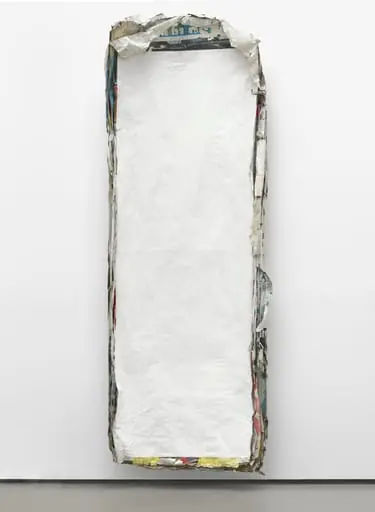 Untitled
 Untitled
 Untitled
 Untitled