Artwork
Archipelago II
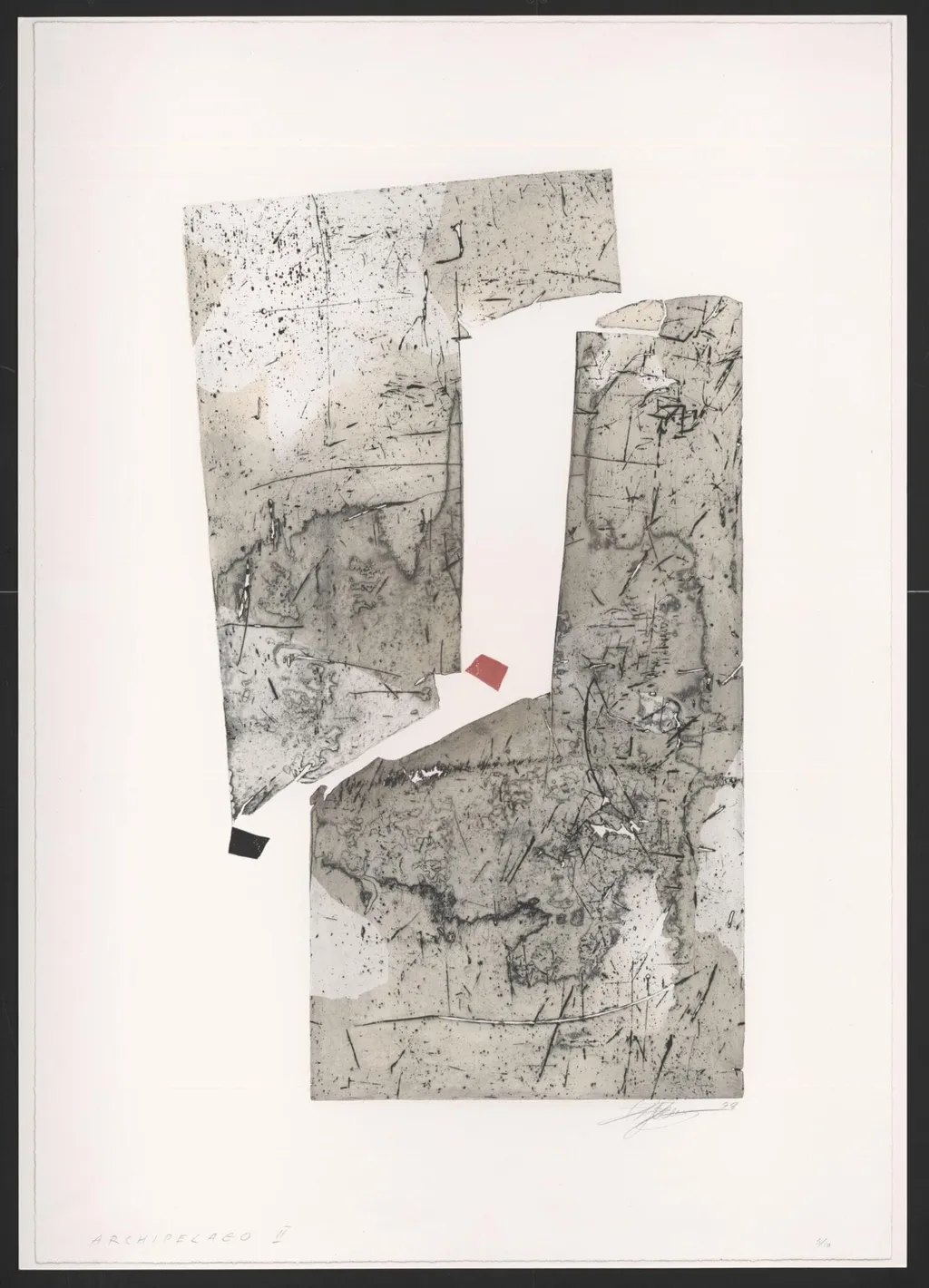
Archipelago II is a print by Sergei Tsvetkov. It dates from 1998 and is held in the collection of the Victoria and Albert Museum.
About this work
Overview
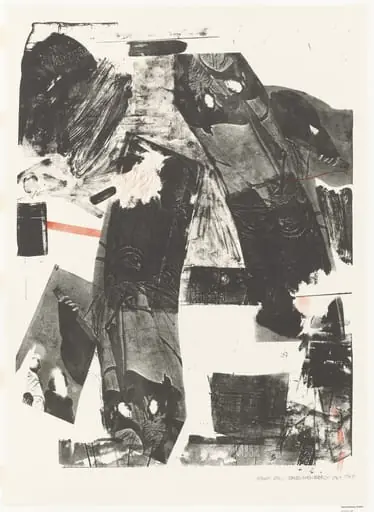
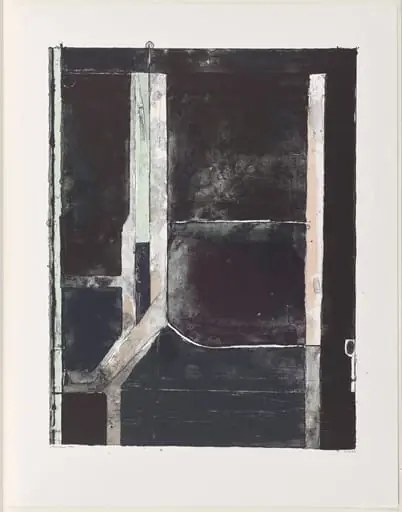
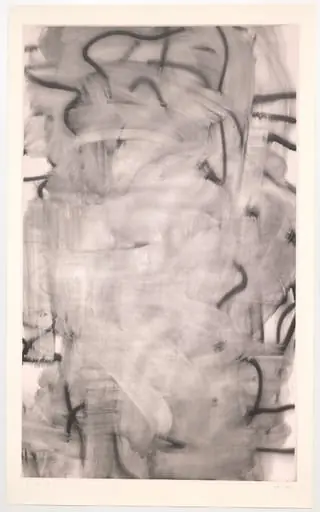
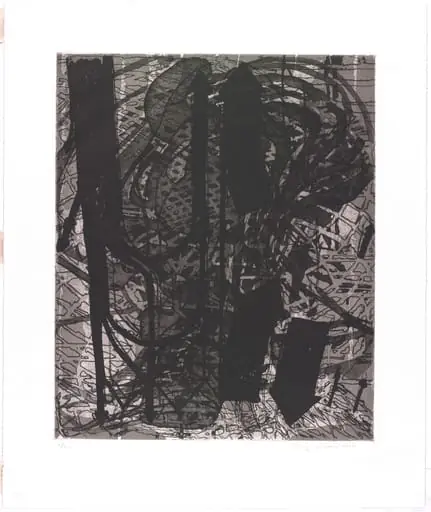
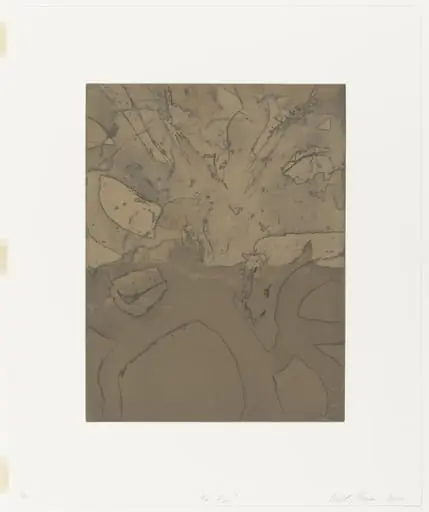
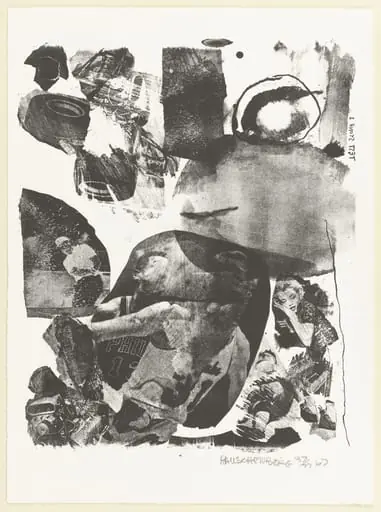
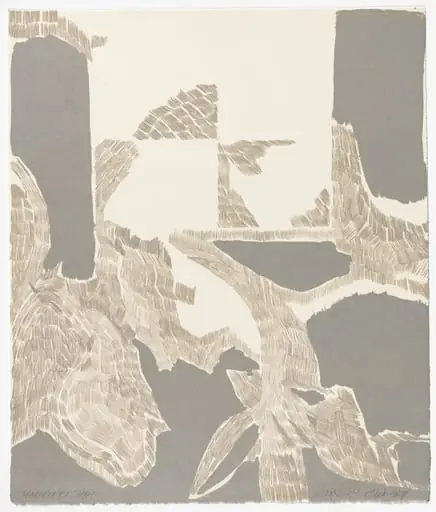
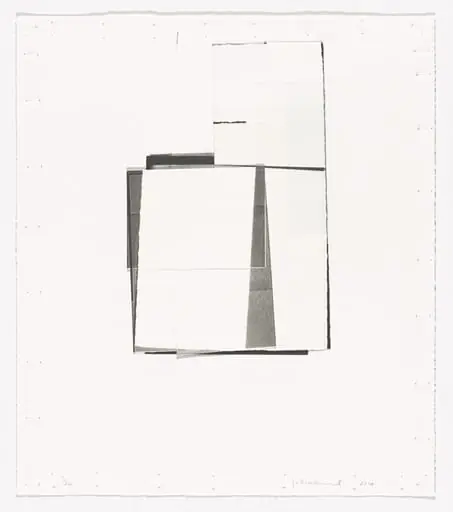
Archipelago II is a print by Sergei Tsvetkov, part of a series created using custom-shaped metal plates and open-bite etching. The resulting imagery avoids clear outlines, instead suggesting fragmented landforms through textured, uneven lines. The work’s abstract quality masks its historical resonance, inviting layered interpretations without prescribing a single reading.
Subject & Meaning
The title alludes to Aleksandr Solzhenitsyn’s The Gulag Archipelago, a harrowing account of Soviet labor camps dispersed across the USSR. Tsvetkov, an émigré, does not depict the camps literally but evokes their absence through eroded, ambiguous forms. The print becomes a quiet memorial—its vagueness mirrors the suppression of collective memory under authoritarian regimes.
Technique & Style
Using deep-bite etching with irregularly cut plates, Tsvetkov achieves a weathered, topographical effect resembling aged maps. The ink pools and uneven lines mimic erosion, obscuring boundaries between land and sea. This method rejects precision, favoring ambiguity; the visual language feels both historical and unstable, reinforcing themes of forgotten landscapes.
History & Provenance
Tsvetkov created this work after leaving the Soviet Union, a period when many artists grappled with suppressed histories.
Tsvetkov created this work after leaving the Soviet Union, a period when many artists grappled with suppressed histories. The print emerged in the 1990s, amid growing international interest in Soviet repression. Its inclusion in collections like the Victoria and Albert Museum reflects its role in post-Soviet artistic discourse, though its origins remain tied to personal and political displacement.
Context
In the decades following the USSR’s collapse, public remembrance of the Gulag system remained fragmented. Artists like Tsvetkov responded not with direct imagery but through metaphor and abstraction. His work aligns with a broader tendency among émigré creators to encode trauma in formal ambiguity, allowing viewers to confront absence without explicit representation.
Legacy
Archipelago II contributes to a visual vocabulary for historical silence. Its abstract form resists easy interpretation, preserving the tension between memory and erasure. The work continues to be referenced in discussions of post-Soviet art, where subtlety becomes a tool for bearing witness when direct expression remains politically or emotionally fraught.
Artist & collection
Artist
Sergei Tsvetkov’s 1998 print Archipelago II shows a quiet stretch of land breaking into water, the landmass rendered in soft greys and pale greens.