Artwork
Genoa Harbour
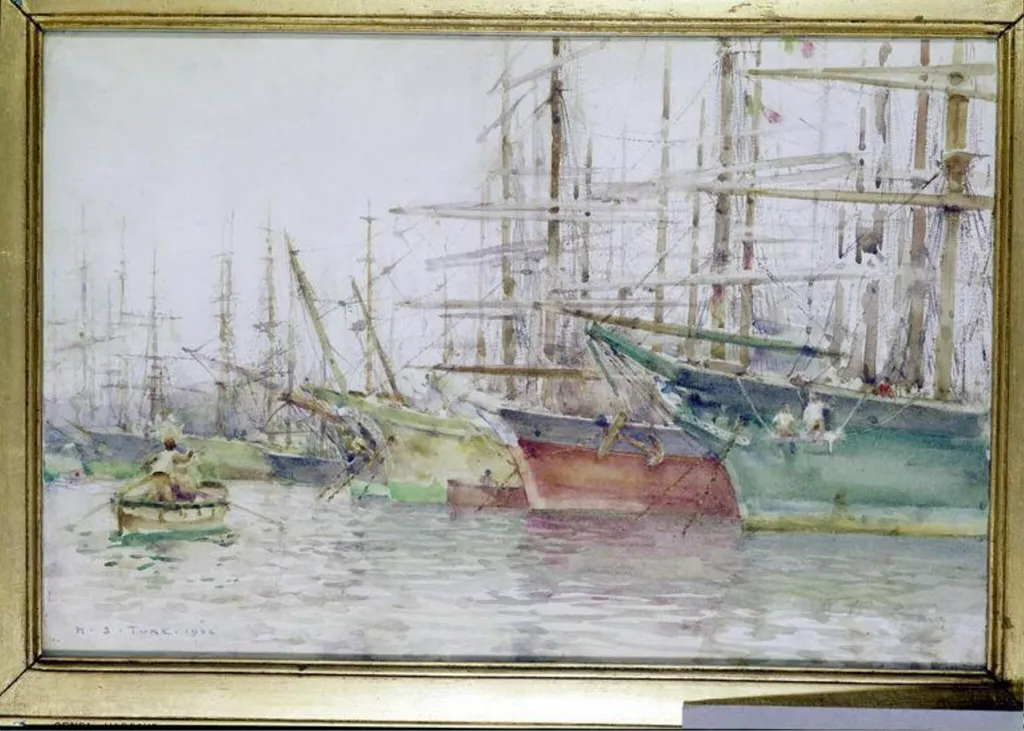
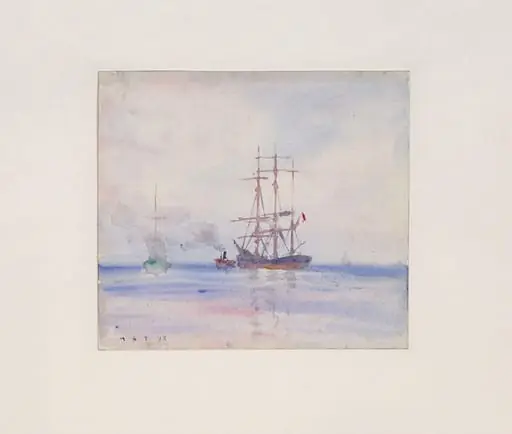
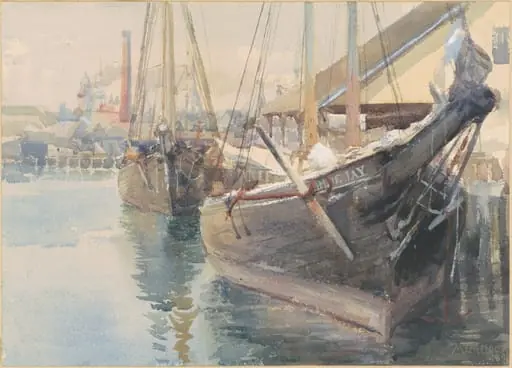
Genoa Harbour is a watercolor work on paper by the Impressionist artist Henry Scott Tuke. It dates from 1904 and is held in the collection of the Victoria and Albert Museum. The work is a watercolour created in 1904 by the artist Tuke, depicting the harbour of Genoa in Italy.
About this work
Overview
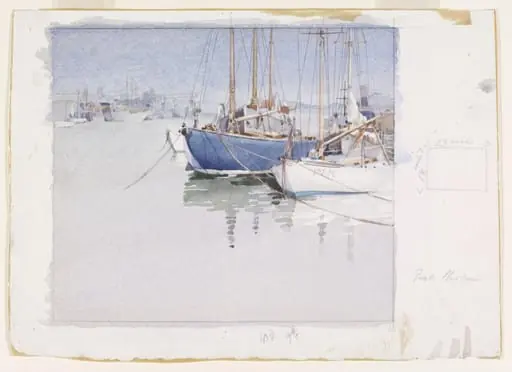
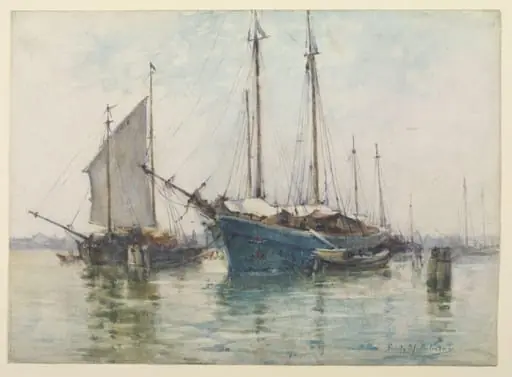
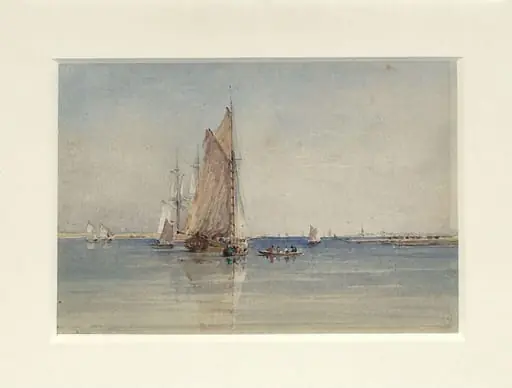
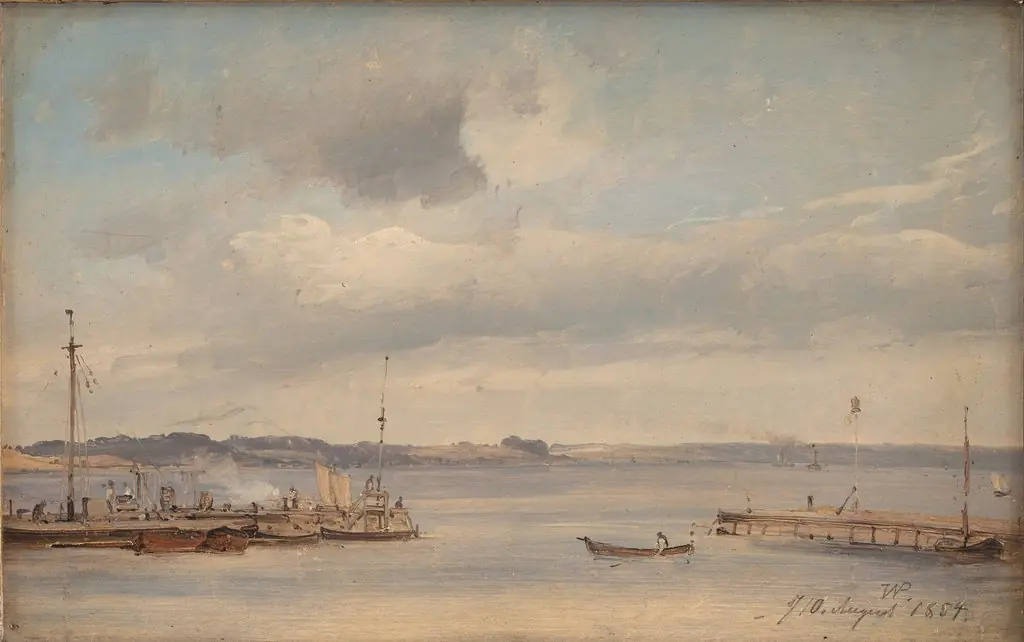
The work is a watercolour created in 1904 by the artist Tuke, depicting the harbour of Genoa in Italy. It presents a line of sizable vessels moored along the quay, with a modest rowing boat moving toward them. The composition is signed and dated by the artist, confirming its authorship and year of execution.
Subject & Meaning
The scene captures a bustling Mediterranean port, emphasizing the contrast between the large, rigged ships and the smaller, human‑scaled rowing craft. The arrangement suggests daily commercial activity, while the calm water and soft lighting convey a tranquil atmosphere within the busy setting.
Technique & Style
Executed with quick, loose brushstrokes, the watercolour relies on a limited palette of blues and greens to render water and sky. Light and shadow are rendered through subtle washes, giving depth to the masts, rigging and the gentle ripple of the sea. The handling of pigment conveys immediacy and atmospheric mood.
History & Provenance
Signed and dated by Tuke, the piece originates from the early twentieth‑century period when watercolour was a favored medium for travel sketches. Its documented provenance traces back to the artist’s own records, though further ownership details remain unrecorded in available sources.
Artist & collection
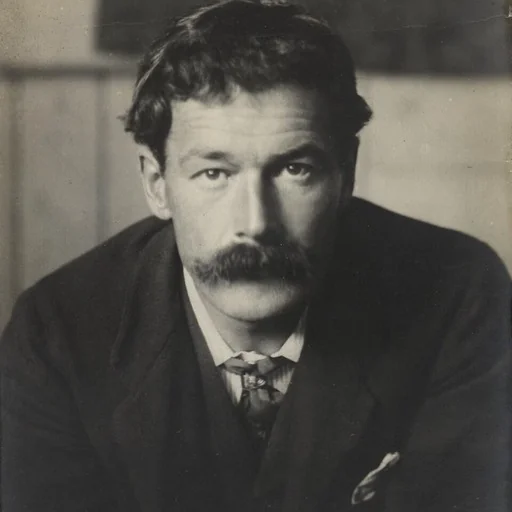
Artist
Henry Scott Tuke (12 June 1858 – 13 March 1929) was an English artist. His most notable work was in the Impressionist style and he is best known for his paintings of nude boys and young men. Trained at the Slade School…