Artwork
London from Greenwich
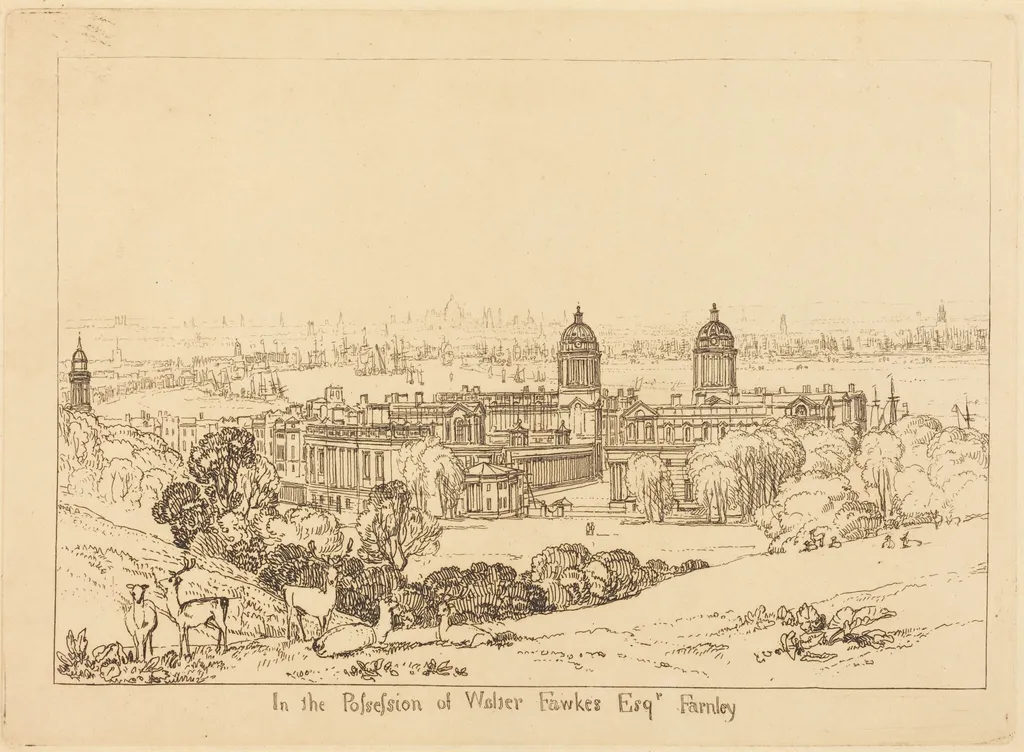
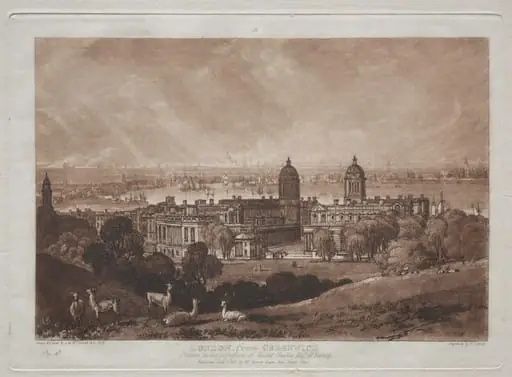
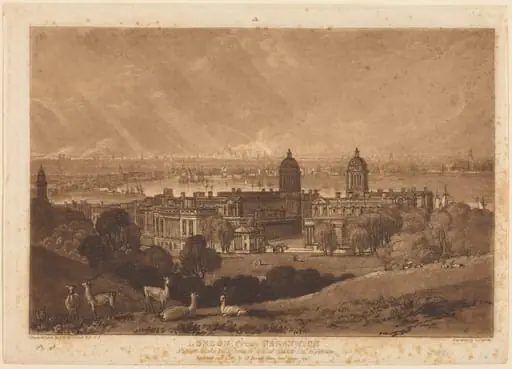
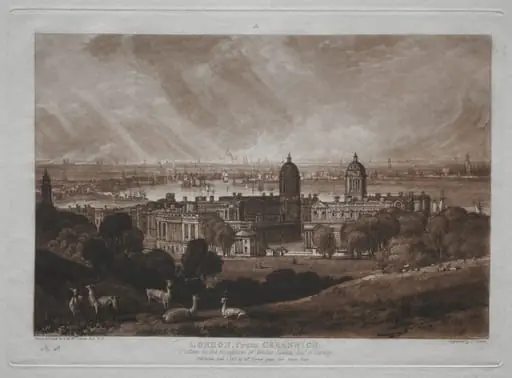
London from Greenwich is an ink print by the Romanticist artist Joseph Mallord William Turner. It dates from 1811 and is held in the collection of the National Gallery of Art. Created in 1811, this etching by J.
About this work
Overview
Unlike oil paintings, the medium allowed for precise line work and subtle tonal gradations, suited to conveying the hazy distance of the city skyline.
Created in 1811, this etching by J.M.W. Turner captures a view of London as seen from Greenwich Park. Rendered in ink on paper, the work belongs to a series of topographical prints Turner produced during this period, blending observational detail with atmospheric suggestion. Unlike oil paintings, the medium allowed for precise line work and subtle tonal gradations, suited to conveying the hazy distance of the city skyline.
Subject & Meaning
The composition presents the Thames as a broad, reflective ribbon, flanked by sparse vegetation in the foreground and distant urban structures. A small island and scattered boats suggest quiet activity, while the city’s spires and chimneys rise faintly on the horizon. The scene avoids grandeur, instead evoking contemplative solitude — a quiet meditation on the relationship between nature and the growing metropolis.
Technique & Style
Turner employed etching to achieve fine, controlled lines and layered washes of ink, creating depth through varying densities of tone. Soft transitions between light and shadow mimic atmospheric perspective, with minimal detail in the distance to suggest haze. The restrained palette of grays, browns, and muted blues reinforces the subdued mood, aligning with early Romantic sensibilities that favored mood over narrative.
History & Provenance
The print was made as part of Turner’s contributions to published collections of British views, likely intended for private collectors and antiquarians. It was produced shortly after his election to the Royal Academy and reflects his growing interest in landscape as a vehicle for emotional resonance. Early ownership records suggest it circulated among patrons interested in topographical art.
Context
In 1811, London was expanding rapidly, and views from the riverbanks became popular subjects for artists and printmakers. Turner’s depiction avoids political or industrial emphasis, focusing instead on the quiet interplay of land, water, and sky. This approach distinguished his work from more documentary styles, aligning him with a broader shift toward subjective interpretation in British art.
Legacy
Though less celebrated than his later watercolors, this etching exemplifies Turner’s early mastery of atmospheric effect in printmaking. It influenced subsequent generations of British printmakers who sought to convey mood through tonal nuance rather than detail. The work remains a key example of how Romantic ideals were adapted to the constraints and possibilities of the etching medium.
Artist & collection
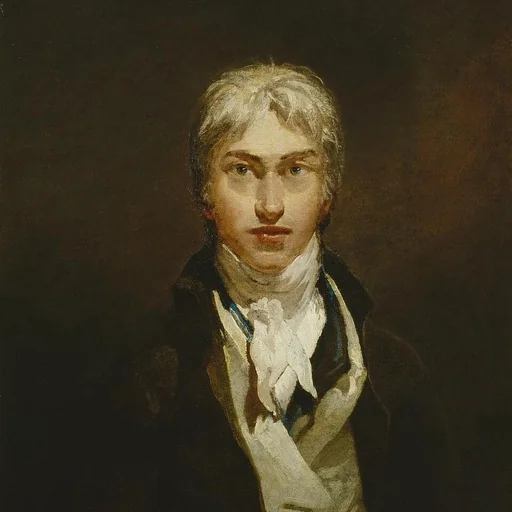
Artist
Joseph Mallord William Turner was born in 1775 at Maiden Lane, Covent Garden, where his father kept a barber and wig-making shop.