Artwork
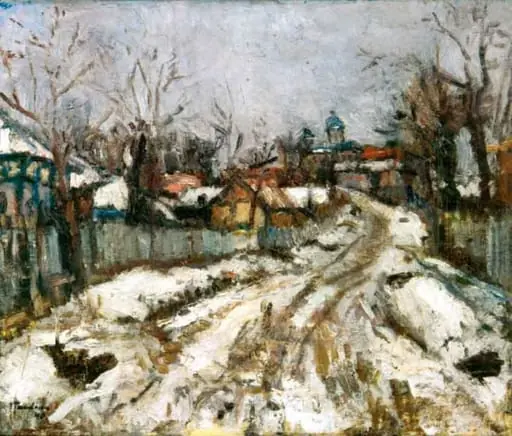
Iarna cu amintiri
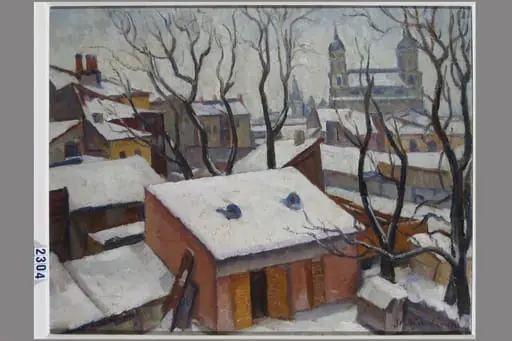
Iarna cu amintiri is a print by Ion Țuculescu. It dates from 1946 and is held in the collection of the Aurelian Sacerdoțeanu Vâlcea County Museum.
About this work
Overview
Its immediate impression is one of emotional immediacy, achieved through vigorous application of pigment and a limited, earth-toned palette.
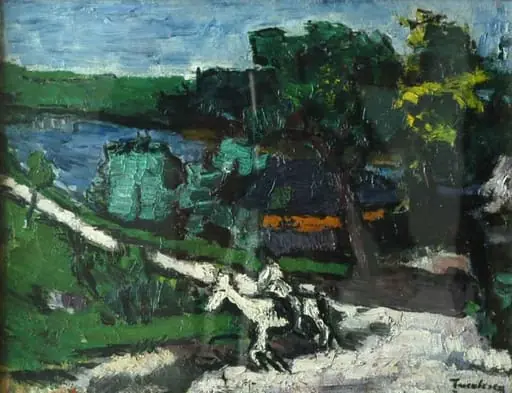
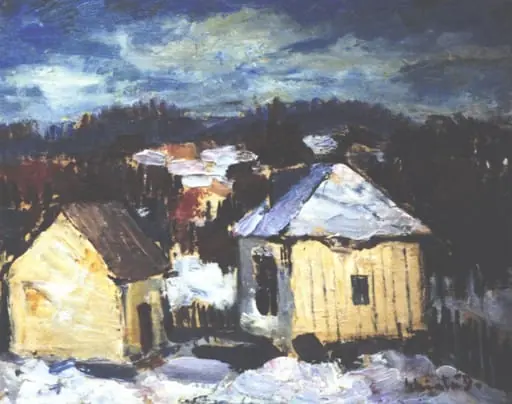
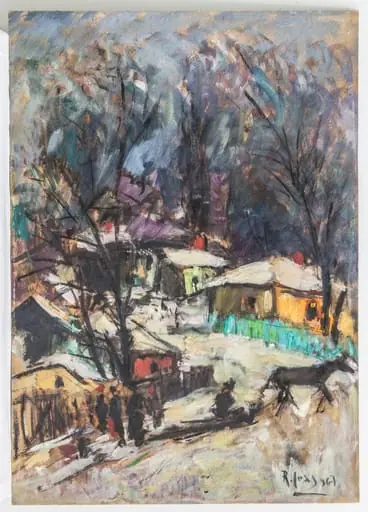
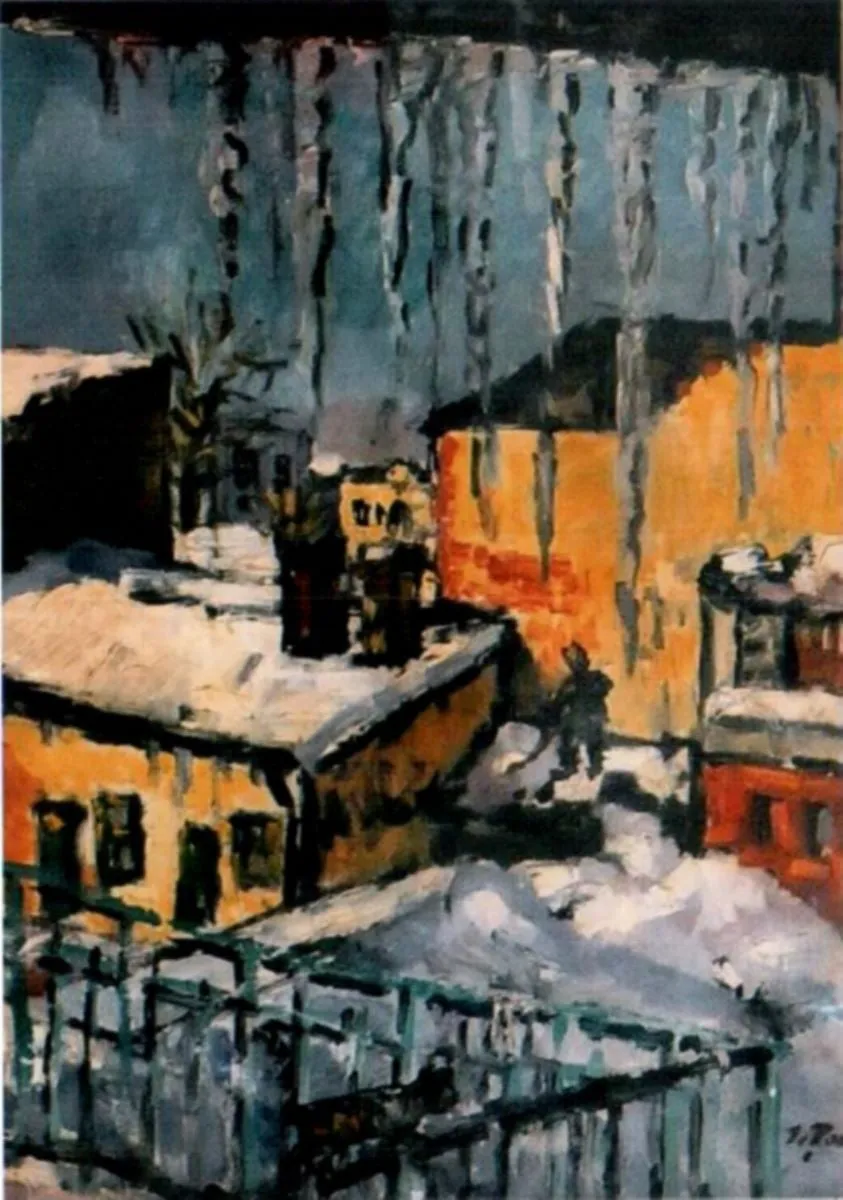
Painted around 1946 by Romanian artist Ion Țuculescu, Iarna cu amintiri captures a winter urban scene with a raw, tactile quality. Executed in oil, the work is part of the collection at the Museum of Ethnography. Its immediate impression is one of emotional immediacy, achieved through vigorous application of pigment and a limited, earth-toned palette. The painting resists idealized representation, favoring a visceral rendering of memory and place.
Subject & Meaning
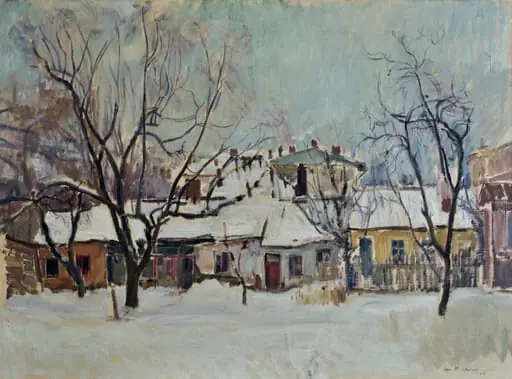
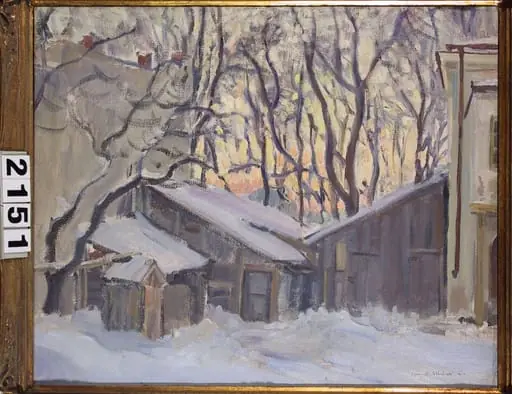
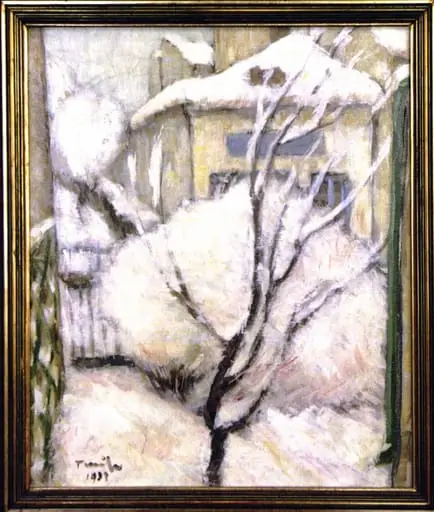
The scene depicts a quiet, snow-covered town, its structures rendered with simplified forms and warm hues against a cold, gray sky. Bare trees and indistinct figures suggest human presence without narrative detail. The title, meaning 'Winter with Memories,' implies a personal recollection rather than a documentary view. The work evokes solitude and the passage of time, with the winter landscape serving as a vessel for introspection rather than a literal depiction.
Technique & Style
Țuculescu employed thick, layered brushwork, applying paint in a manner that emphasizes texture over smoothness. The impasto technique gives the buildings a sculptural presence, their walls rising from the canvas with visible ridges and peaks. The sky and snow are muted and loosely rendered, creating contrast with the more assertive foreground. The brushstrokes are energetic and unrefined, conveying urgency and emotional weight rather than polished finish.
History & Provenance
Created shortly after World War II, the painting emerged during a period of cultural reevaluation in Romania. It entered the Museum of Ethnography’s collection in the mid-20th century, where it has remained. While little is documented about its early ownership, its preservation in an ethnographic institution suggests its value as a cultural artifact reflecting postwar Romanian life, rather than as a purely aesthetic object.
Context
In the mid-1940s, Romanian artists navigated shifting political and social landscapes, often turning to personal, intimate subjects amid national upheaval. Țuculescu’s work diverged from state-sanctioned realism, embracing expressive, almost primitive forms. Iarna cu amintiri aligns with broader European trends of postwar expressionism, where memory and emotion took precedence over objective depiction, offering a quiet counterpoint to official narratives.
Legacy
Though not widely exhibited outside Romania, the painting remains a significant example of Țuculescu’s distinctive approach to landscape and memory. Its raw technique and emotional resonance influenced later generations of Romanian artists seeking alternatives to academic norms. The work endures as a quiet testament to personal experience during a turbulent era, valued for its honesty rather than its popularity.
Artist & collection

Artist
Ion Țuculescu was a Romanian expressionist and abstract oil painter, although professionally he worked as a biologist and physician.
Museum
Aurelian Sacerdoțeanu Vâlcea County Museum
Continue through works from the same source collection.