Artwork
Intrarea în uzină
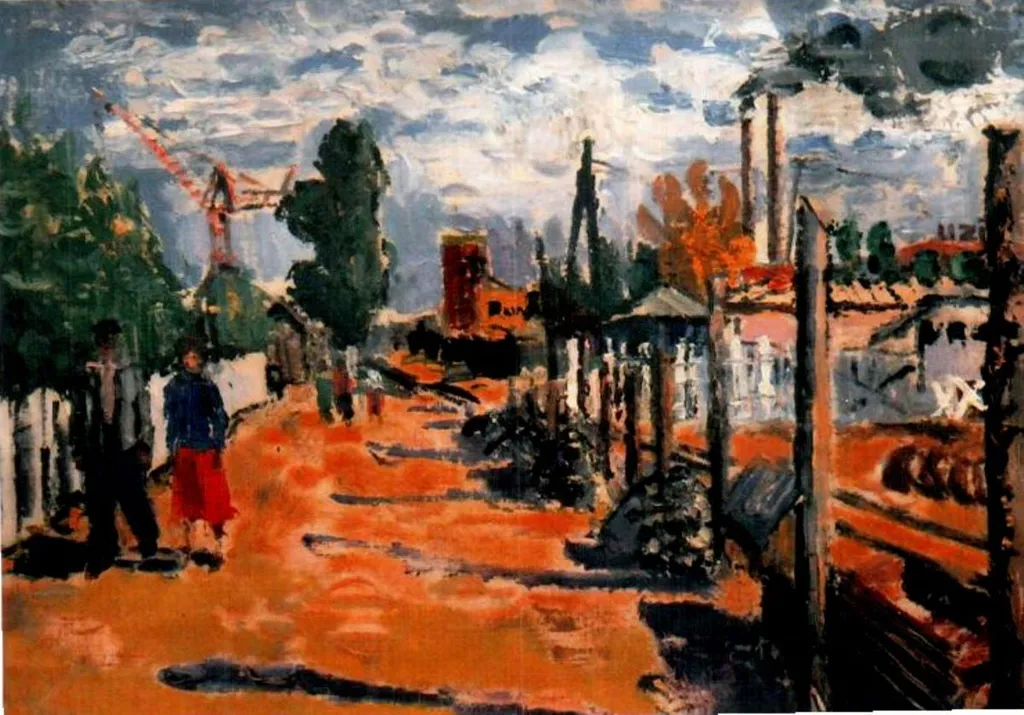
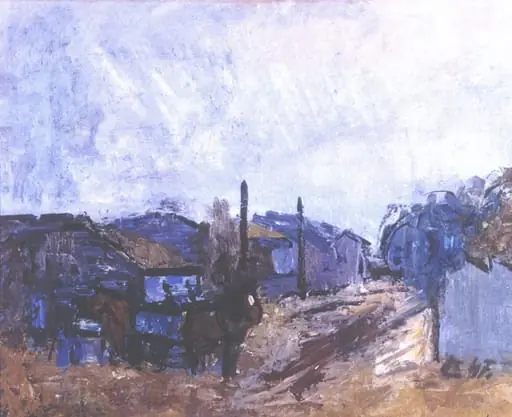
Intrarea în uzină is a print by Ion Țuculescu. It dates from 1946 and is held in the collection of the Aurelian Sacerdoțeanu Vâlcea County Museum.
About this work
Overview
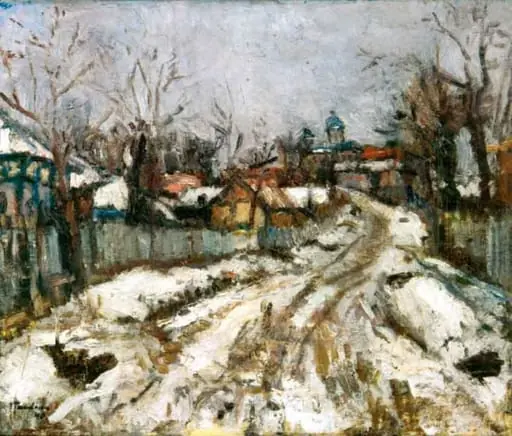
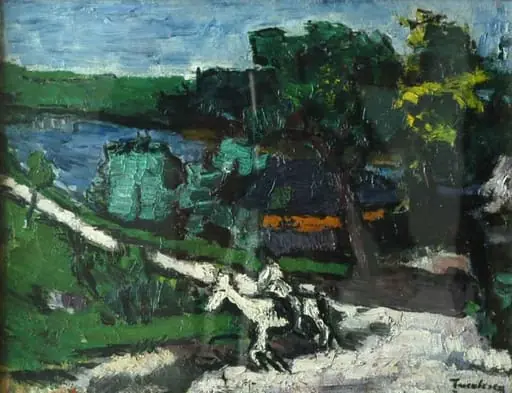
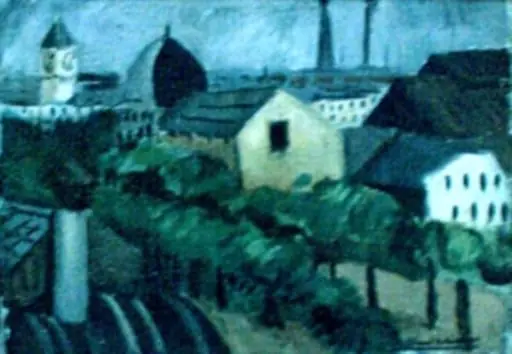
Intrarea în uzină, painted around 1946 by Ion Țuculescu, depicts a quiet procession of figures moving along a muddy path toward an industrial complex.
Intrarea în uzină, painted around 1946 by Ion Țuculescu, depicts a quiet procession of figures moving along a muddy path toward an industrial complex. The scene is rendered with heavy, tactile brushwork and a muted palette dominated by earth tones. It is held in the collection of the Museum of Ethnography, where it stands as a quiet reflection on labor and the changing Romanian landscape in the immediate postwar years.
Subject & Meaning
The painting portrays workers approaching a factory, their figures small against looming structures. The bare trees and overcast sky suggest autumn or early winter, reinforcing a sense of austerity. The wooden fence frames the path, subtly dividing nature from industry. There is no overt drama—only the quiet, repetitive motion of daily labor, hinting at the growing dominance of industrial life in rural communities.
Technique & Style
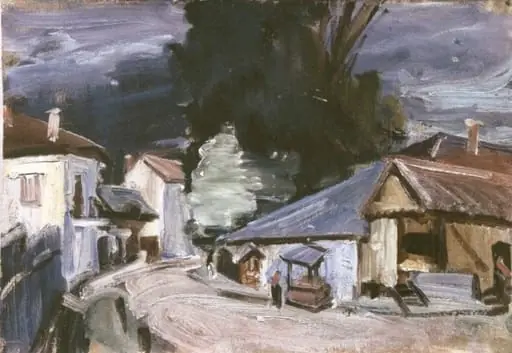
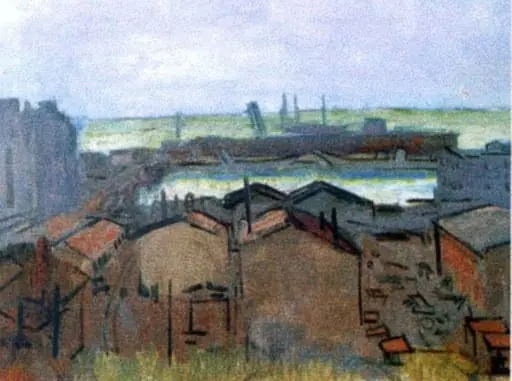
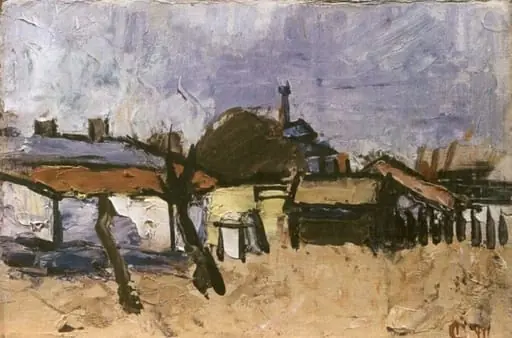
Țuculescu employed impasto to build texture across the canvas, with thick layers of paint creating a tactile surface that mirrors the muddy ground and rough architecture. The brushstrokes are deliberate and unrefined, avoiding smooth transitions. Colors are restrained—ochres, grays, and muted reds—with occasional hints of blue and green adding subtle contrast without disrupting the somber mood.
History & Provenance
Created shortly after World War II, the painting emerged during a period of rapid industrialization in Romania. It entered the Museum of Ethnography’s collection in the mid-20th century, where it was preserved as part of a broader effort to document social and cultural shifts. Its placement in an ethnographic context, rather than a fine arts institution, reflects its perceived role as a record of everyday life.
Context
In the mid-1940s, Romania was transitioning from agrarian traditions toward state-driven industrialization. Factories expanded, and rural populations migrated to urban centers for work. This painting captures that shift not through propaganda, but through observation: the quiet resignation of figures walking toward the smokestacks, framed by a landscape being overtaken by machinery and smoke.
Legacy
Though not widely exhibited outside Romania, Intrarea în uzină remains a significant example of postwar Romanian realism. It avoids idealization, instead offering a grounded view of labor and environmental change. Its presence in an ethnographic museum underscores its value as a cultural document, preserving the visual language of a society in transition.
Artist & collection

Artist
Ion Țuculescu was a Romanian expressionist and abstract oil painter, although professionally he worked as a biologist and physician.
Museum
Aurelian Sacerdoțeanu Vâlcea County Museum
Continue through works from the same source collection.